Search News
TerraVista Metrics (TVM)Industry Portal
TerraVista Metrics (TVM)Hot Articles
TerraVista Metrics (TVM)- What Drives System Interoperability Testing Service Costs in Complex Projects?System interoperability testing service cost depends on integration scope, workflows, environments, and assurance needs. Learn how to budget smarter and reduce project risk.
- Project Planning Sourcing Guides: How to Qualify Suppliers Before Work StartsSourcing guides project planning helps teams qualify suppliers before work begins—verify compliance, delivery capacity, financial strength, and sustainability to reduce risk and protect project outcomes.
- Buyer’s Guide to Kinetic Art: Choosing Safe, Durable Pieces for Public SpacesBuyer guides kinetic art for public spaces: learn how to choose safe, durable, low-maintenance installations with reliable engineering, materials, controls, and lifecycle value.
Popular Tags
TerraVista Metrics (TVM)Industry NewsProduct Selection Criteria: How to Compare Performance, Cost, and Fit for Use
auth.Time
Oct 06, 2026Click Count
Choosing between competing assets, systems, or components rarely fails because of too little information. It usually fails because the information is uneven, promotional, or disconnected from operating reality.
That is why strong product selection criteria matter. They turn vague preference into a consistent method for comparing performance, cost, and fit for use across complex tourism projects.
In tourism development, the stakes are unusually high. A modular cabin, smart room network, attraction component, outdoor installation, or furnishing package must perform well under public use, regulatory scrutiny, and changing climate conditions.
The challenge is not simply choosing the cheapest or most advanced option. The real task is separating supplier claims from verified engineering evidence and long-term business value.
What product selection criteria actually mean in practice
At a basic level, product selection criteria are the standards used to judge whether one option is more suitable than another for a defined application.
That sounds simple, but in practice the criteria must do three things at once. They must measure technical performance, reflect commercial constraints, and match the real conditions of use.
A high insulation rating means little if the structure cannot be transported efficiently. A low purchase price creates little value if maintenance cycles are too frequent.
In other words, product selection criteria are not a checklist of isolated features. They are a decision framework built around outcomes.
For this reason, reliable comparison starts with use conditions. Only after that should technical data, compliance evidence, and cost assumptions be weighed together.
Why this topic matters more in tourism infrastructure
Tourism assets increasingly combine hospitality expectations with engineering demands. A guest sees comfort, design, and convenience. The operator deals with load cycles, utilities, uptime, safety, and asset lifespan.
This is especially visible in sectors where TerraVista Metrics focuses its benchmarking work, including prefabricated eco-structures, smart hotel systems, outdoor leisure gear, attractions, and hospitality furnishing.
Across these sectors, procurement decisions are no longer based on appearance or brochure claims alone. They depend on comparable data, cross-border compliance, sustainability indicators, and operational resilience.
A glamping unit may need thermal efficiency and carbon compliance. A hotel IoT platform must prove interoperability and cybersecurity discipline. A ride component must show fatigue resistance and uptime reliability.
The more integrated the asset, the more important the product selection criteria become. Poor fit at the purchasing stage often multiplies cost later through retrofits, downtime, guest disruption, or failed audits.
The three dimensions that should guide comparison
Performance must be proven, not described
Performance should be tied to measurable outputs. Depending on the asset, that may include structural strength, thermal behavior, data throughput, weather resistance, durability, or energy consumption.
The best product selection criteria use testable metrics rather than adjectives. “Heavy duty” or “premium grade” has little value without test methods, tolerance ranges, and pass conditions.
It is also worth checking whether reported results come from controlled laboratory testing, field performance, third-party validation, or self-declared manufacturer data. These sources are not equal.
Cost should be viewed across the asset life
Cost comparison often starts with capital expenditure, but that is only the visible entry point. Total value depends on installation complexity, maintenance intervals, spare part access, training needs, and energy use.
A lower-priced option may become more expensive after five years if replacement cycles are short or service support is weak. That is why life-cycle thinking belongs inside product selection criteria, not after the shortlist is made.
Fit for use is the filter that prevents bad assumptions
Fit for use asks a direct question: does this option perform well in the exact setting where it will operate?
Climate, occupancy intensity, user behavior, cleaning regimes, digital integration, transport constraints, and local regulations all change what “best” means. A strong solution in one site may be the wrong one elsewhere.
A practical comparison framework
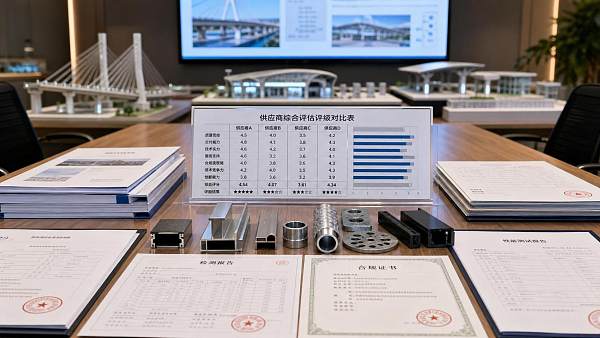
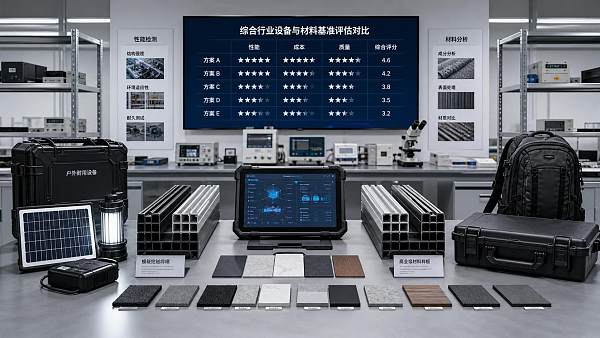
A useful way to structure product selection criteria is to compare options across a limited set of weighted dimensions. This keeps the process consistent without making it rigid.
This type of matrix is especially useful when several options appear similar on paper. It forces trade-offs to be visible rather than assumed.
Where selection errors usually happen
Many flawed decisions come from incomplete comparison, not bad intent. The data may look detailed, yet still hide the real risk.
- Comparing headline specifications without checking test conditions
- Treating certification as proof of full operational suitability
- Ignoring maintenance burden during procurement review
- Assuming a successful reference project matches a different site context
- Overlooking software, controls, or component interoperability
- Failing to account for logistics and supply chain volatility
These issues are common in both physical and digital assets. A furnishing line can underperform through wear resistance failures, just as a smart hotel platform can fail through integration bottlenecks.
The lesson is consistent: product selection criteria should expose hidden operating assumptions before purchase, not after commissioning.
How the framework applies across typical asset categories
Although the principle is universal, the evidence required will differ by category.
Prefabricated and eco-structures
Focus on thermal envelope performance, structural integrity, moisture behavior, transport practicality, and carbon-related compliance. Fit for use often depends on climate zone and foundation conditions.
Smart hotel systems
The critical product selection criteria include interoperability, cybersecurity posture, network stability, update support, and scalability under occupancy peaks.
Outdoor and leisure gear
Materials, abrasion resistance, public-use durability, replacement intervals, and repairability usually matter more than visual appeal or consumer-style branding.
Attractions and mechanical systems
Mechanical fatigue, fail-safe design, inspection access, and documented compliance should carry greater weight than novelty alone.
Hospitality furnishing
Surface durability, cleanability, fire performance, sustainable material sourcing, and long-term appearance retention are usually more relevant than showroom presentation.
Why independent evidence changes the decision quality
An important shift in modern procurement is the move from seller-defined comparison to benchmark-based comparison.
Independent testing, regulatory analysis, and market intelligence make product selection criteria more reliable because they standardize the evidence base.
This is where a benchmarking approach becomes useful. Instead of asking which proposal sounds strongest, the review asks which option performs best against the same measurable reference points.
For global tourism projects, that perspective is valuable because supply chains are international, standards vary by jurisdiction, and technology claims evolve faster than many procurement models.
A sensible next step for better decisions
The most effective starting point is not a vendor list. It is a written comparison model that defines performance thresholds, cost assumptions, compliance requirements, and fit-for-use conditions before proposals are ranked.
Once that framework exists, product selection criteria become easier to defend internally and easier to update as new data appears.
For projects involving tourism infrastructure, hospitality technology, or durable public-use assets, the next useful move is to review where current criteria rely on claims rather than verified evidence.
That single step often reveals the gap between an acceptable purchase and a resilient long-term decision.
Recommended News
 Sep 27, 2026How to Design Scalable System Integration Testing for Multi-Vendor DeploymentsScalable system integration testing for multi-vendor deployments: build resilient, secure, and growth-ready operations with proven interface, resilience, and acceptance strategies.
 Sep 24, 2026Hotel Tourism Benchmarking: Which KPIs Reveal Competitive Market Position?Tourism benchmarking for hotels reveals the KPIs that define competitive position, from RevPAR index and demand quality to profit, guest experience, and asset resilience.
 Sep 20, 2026Supply Chain Analysis: How to Identify Cost, Risk, and Lead-Time BottlenecksSupply chain analysis helps tourism project leaders uncover cost, risk, and lead-time bottlenecks—protecting opening dates, budgets, and guest-ready operations.
 Sep 19, 2026How to Choose Industry Benchmarking Tools That Deliver Actionable Performance InsightsIndustry benchmarking tools: learn how to validate data, compare lifecycle costs, assess compliance, and turn performance evidence into smarter decisions.
 Sep 14, 2026Engineering Performance Testing Trends Reshaping Product Validation WorkflowsEngineering performance testing trend analysis reveals how assembly validation, realistic environmental loads, and digital resilience improve product reliability and reduce field failures.
 Sep 12, 2026Cloud Integration Interoperability Testing: Methods, Metrics, and Release GatesSystem interoperability testing cloud integration: explore practical methods, key metrics, and evidence-based release gates for secure, reliable connected operations.
 Sep 05, 2026What Engineering Performance Testing Should Cover During a Specification ReviewEngineering performance testing for specification review: learn how to verify structural strength, durability, safety, sustainability, and system reliability before costly project decisions.
 Aug 11, 2026How to Evaluate Materials Performance Analysis Services in Europe for Compliance-Critical ProjectsMaterials performance analysis Europe: learn how to compare accredited labs, verify compliance readiness, and choose a provider whose data, methods, and reports stand up to real project scrutiny.
 Jul 27, 2026Product Application Analysis for Procurement: How to Compare Fit, Risk, and ROIProduct application analysis for procurement helps buyers compare fit, compliance risk, lifecycle cost, and ROI with confidence. Learn a practical framework to avoid costly sourcing mistakes.
 Jul 22, 2026How to Evaluate Weather Resistance in Materials Performance Analysis?Materials performance analysis weather resistance explained: learn how to assess UV, moisture, temperature, and corrosion risks to choose durable materials with confidence.
 Jul 15, 2026Cloud Storage for Business: How to Compare Security, Access Speed, and Backup CostsCloud storage for business: compare security, access speed, and backup costs with a practical framework to reduce risk, control spend, and choose the right provider with confidence.
 Jul 14, 2026What Are Standardized Performance Benchmarks Ratings Used For in Vendor Evaluation?Standardized performance benchmarks rating explains how buyers compare vendors with verified data on compliance, durability, and lifecycle value for smarter procurement decisions.
 Jul 13, 2026Product Benchmarking Rating Explained: How to Compare Scores Across SuppliersProduct benchmarking rating explained: learn how to compare supplier scores with confidence, verify methodology, spot hidden risks, and make smarter procurement decisions.
 Jul 13, 2026How to Choose a Product Benchmarking Data Provider for Reliable Market ComparisonsProduct benchmarking data provider selection starts with methodology, transparency, and sector fit. Learn how to compare providers for reliable market insights and smarter procurement decisions.
 Jul 10, 2026Technical Integration Resilience Explained: How to Reduce Downtime Across Connected SystemsTechnical integration resilience explained: learn how to reduce downtime, prevent cascading failures, and improve uptime across connected systems with practical planning insights.
 Jul 08, 2026How to Use Product Benchmarking KPIs to Compare Competing SolutionsProduct benchmarking KPIs help you compare competing solutions with real evidence. Learn how to measure performance, lifecycle cost, compliance, and risk for smarter buying decisions.
 Jul 05, 2026How to Run an Environmental Sustainability Assessment: Metrics, Boundaries, and Trend AnalysisEnvironmental sustainability assessment trend analysis made practical: learn how to set metrics and boundaries, compare lifecycle impacts, and turn sustainability data into smarter decisions.
 Jul 04, 2026Hospitality Design Benchmarks Metrics Explained: Which KPIs Matter for Guestroom Upgrades?Hospitality design benchmarks metrics explained: discover the KPIs that matter most for guestroom upgrades, from lifecycle cost and durability to energy use, maintenance, and guest satisfaction.
 Jul 02, 2026How to Compare Product Category Pricing Models for Better Margin PlanningProduct category pricing model comparison made practical: learn how to evaluate total cost, hidden risks, and lifecycle value to improve margin planning and make smarter sourcing decisions.
 Jun 30, 2026How Technical Explainer Content for Procurement Helps Compare Specs, Risks, and SuppliersTechnical explainer content for procurement helps teams compare specs, uncover supplier risks, and choose solutions that improve compliance, lifecycle value, and long-term performance.
 Jun 29, 2026System Interoperability Testing Vendors: Key Criteria for Compliance and PerformanceSystem interoperability testing vendors compared: discover how to assess compliance, performance, independence, and real-world reliability before costly integration failures happen.
 Jun 28, 2026Product Benchmarking Explained: How to Compare Performance, Cost, and QualityProduct benchmarking explained: learn how to compare performance, cost, and quality with a practical framework that reduces risk, improves supplier selection, and supports smarter long-term decisions.
 Jun 27, 2026How to Build a Product Benchmarking Comparison Matrix for Hospitality Equipment SelectionProduct benchmarking comparison matrix guide for hospitality equipment selection. Learn to compare cost, compliance, durability, and lifecycle value with confidence.
 Jun 25, 2026What Drives System Interoperability Testing Implementation Cost in Multi-Vendor Projects?System interoperability testing implementation cost rises in multi-vendor projects due to scope gaps, retesting, compliance, and downtime risk. Learn how to control costs early.
Quarterly Executive Summaries Delivered Directly.
Join 50,000+ industry leaders who receive our proprietary market analysis and policy outlooks before they hit the public library.