Search News
TerraVista Metrics (TVM)Industry Portal
TerraVista Metrics (TVM)Hot Articles
TerraVista Metrics (TVM)- Industry Reports Library: How to Find Reliable Data for Market ResearchExplore an industry reports library to find reliable market data, verify sources, and compare findings. Learn practical steps to turn research into confident business decisions.
- Do Cracks Around Cabin Joints Require an Engineering Inspection?Do cracks around cabin joints need an engineering inspection? Discover key warning signs, when monitoring is appropriate, and how to choose the right next step before repairs.
- How Do You Verify a Prefab Cabin's Wind-Load Rating?How do I verify a prefab cabin's wind-load rating? Discover the engineering reports, site checks, and anchorage details you need to assess supplier claims and buy with confidence.
Popular Tags
TerraVista Metrics (TVM)Industry NewsClimbing formwork systems compared by cycle time and labor
auth.Time
Oct 15, 2026Click Count
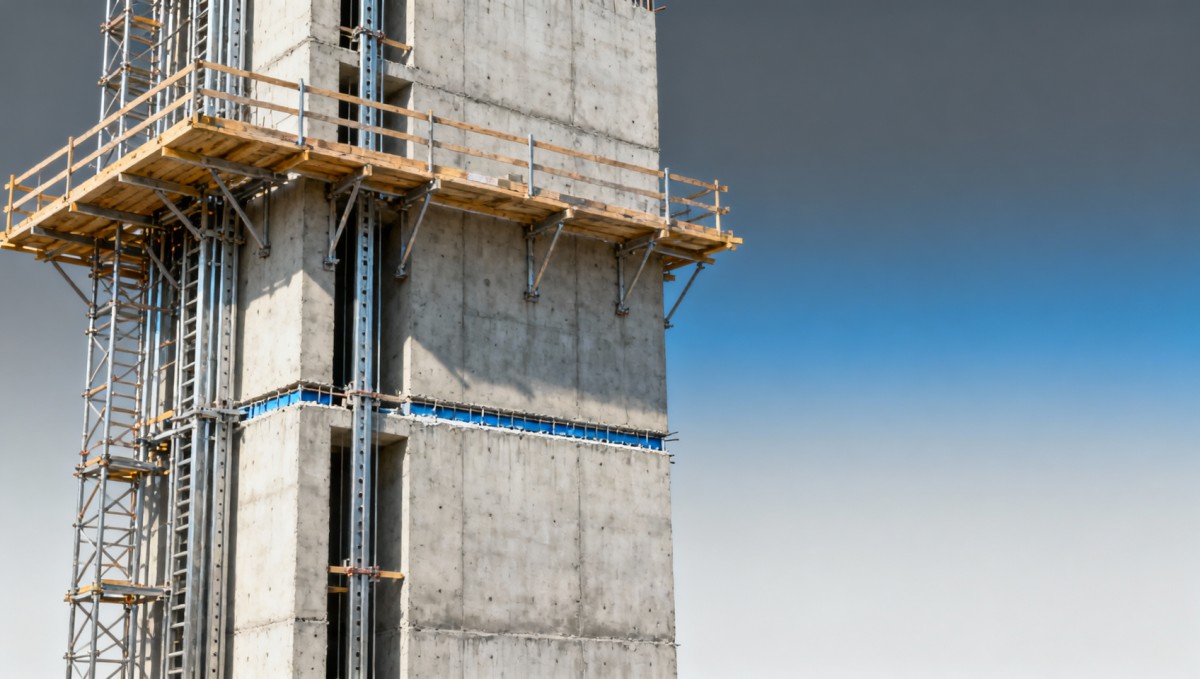
For buyers comparing climbing formwork systems, the real differentiators are cycle time, labor demand, and concrete interface reliability such as water stopper for concrete performance. This overview helps information researchers, procurement teams, and distributors assess measurable efficiency, installation risk, and long-term project value through a practical, benchmark-driven lens.
In tourism infrastructure, climbing formwork is not a niche construction topic. It directly affects delivery schedules for hotel towers, mixed-use resort buildings, observation decks, transport-linked hospitality assets, and vertical service cores in large destination developments. A 4-day versus 6-day floor cycle can shift opening timelines by weeks, while a labor-intensive system can raise safety exposure and site management complexity across the project.
For procurement teams and commercial evaluators, the best system is rarely defined by headline rental rate alone. The more useful benchmark includes crane dependence, crew size, reconfiguration time, concrete finish consistency, water sealing at joints, and the learning curve required to maintain repeatable daily output. These factors matter even more when projects must meet sustainability targets, tight commissioning windows, and long-term asset durability requirements.
Why cycle time matters more than list price

Climbing formwork systems are usually compared in three commercial stages: initial procurement or rental, site deployment, and repetitive floor-to-floor operation. In high-rise hospitality or tourism-oriented structures, the repetitive phase often accounts for the largest schedule impact. If one system saves 1 day per floor over 20 to 30 cycles, the cumulative gain can reach 20 to 30 days, which may outweigh a modest increase in upfront cost.
Cycle time is affected by more than lifting speed. Buyers should examine anchor transfer, shutter adjustment, reinforcement access, platform logistics, and pour preparation. A system advertised as “fast” can still underperform if the crew must spend 2 to 3 extra hours per cycle resetting brackets, aligning panels, or correcting deviations at slab edges and wall openings.
In tourism projects, schedule sensitivity is often linked to seasonal opening windows. Resorts, branded hotels, and attraction-linked commercial towers may face revenue consequences if opening slips into an off-peak quarter. For that reason, benchmarking should focus on actual floor-cycle ranges such as 3–5 days for optimized repetitive cores and 5–7 days for more labor-heavy or crane-dependent setups, rather than relying only on supplier claims.
Typical cycle drivers buyers should verify
A useful review framework separates direct mechanical performance from site execution variables. Procurement teams should ask whether the quoted cycle time assumes a trained crew, standard floor geometry, stable wind conditions, and uninterrupted concrete supply. Without those assumptions clarified, comparisons between self-climbing and crane-lifted systems can become misleading.
- Panel repositioning time per cycle, often ranging from 1.5 to 4 hours depending on geometry and opening density.
- Anchor installation and transfer duration, which can add 0.5 to 1 full shift if access is constrained.
- Dependence on tower cranes for lifting and reset operations, especially during peak logistics congestion.
- Concrete curing and strip timing, frequently affected by climate, admixture strategy, and target finish class.
The table below shows a practical comparison framework for cycle time evaluation. The values are representative operating ranges used in procurement reviews and should be validated against project geometry, wall height, and local labor capability.
The key takeaway is that a faster system only creates value when the project can sustain repetition. On a 25-floor hotel tower, reducing the average cycle from 6 days to 4 days may compress the structure program by nearly 50 days. For developers tracking pre-opening milestones, that delta can influence fit-out sequencing, commissioning, and operator handover.
Labor demand, crew structure, and safety implications
Labor demand is one of the most underestimated variables in climbing formwork selection. Two systems may appear similar in structural output, yet require very different crew profiles. One may operate with 6 to 8 trained workers per cycle, while another needs 10 to 14 workers plus greater crane coordination. For contractors working in labor-constrained markets or on remote destination sites, that difference is commercially significant.
Hospitality and tourism projects often face complex labor conditions: remote resort geography, seasonal workforce fluctuation, multilingual crews, and strict site-safety requirements near public-facing developments. In these cases, reducing manual handling and minimizing repeated edge work can lower both direct labor cost and indirect risk. The result is not only higher productivity, but also better predictability in daily site planning.
A robust procurement review should separate headcount from labor quality. A system that needs fewer people but requires high-skill hydraulic troubleshooting may still be difficult to manage in some regions. By contrast, a more manual system may be easier to repair with basic tools but slower to standardize. Buyers should therefore evaluate labor in four dimensions: number of workers, skill threshold, training duration, and safety exposure per cycle.
What procurement teams should ask about manpower
A supplier quotation should specify recommended crew size for assembly, first climb, and repetitive operation. It should also clarify whether the estimate assumes day shift only or includes double-shift strategies. In many tower projects, the difference between one and two shifts can change effective cycle performance by 15% to 25%.
Core labor checkpoints
- Initial assembly manpower and duration, often 3–7 days depending on platform complexity.
- Recommended operating crew per climbing zone or per core face.
- Training time to stable productivity, commonly 2–5 cycles before output normalizes.
- Safety features that reduce edge exposure, dropped-object risk, and manual repositioning.
The next table helps compare labor-related procurement factors in a more measurable way. It is especially useful for distributors and assessment teams preparing side-by-side supplier reviews.
For decision-makers, the practical conclusion is simple: labor efficiency should be measured as productive output per cycle, not just wage cost per person. On complex tourism projects where schedule certainty matters, a lower-labor climbing formwork system often delivers value through predictability, safer workflows, and fewer stoppages caused by coordination gaps.
Concrete interface reliability and water stopper performance
A climbing formwork system is not only a productivity tool. It also determines the dimensional accuracy and surface quality of the concrete interface. For hospitality buildings, especially basements, pools, retaining structures, water features, podium slabs, and service cores, interface reliability can become a lifecycle issue. Misalignment, honeycombing, poor joint compression, or weak detailing around embedded water stopper for concrete applications can create leakage risks that are expensive to fix after handover.
Buyers should review how the system supports consistent form pressure control, joint sealing, and rebar congestion management. If the formwork cannot maintain stable alignment within typical tolerances such as ±3 mm to ±5 mm across repeated pours, downstream waterproofing and finish work may be affected. This matters particularly in hospitality assets where visible defects and water ingress can quickly damage brand perception.
Where water-retaining or below-grade sections are involved, interface detailing must be checked alongside the climbing system. A water stopper for concrete joint performance depends on correct placement, secure fixation, and enough space to avoid distortion during pouring. If the formwork arrangement crowds the joint zone or complicates vibration access, installation errors become more likely.
Key interface risks during repetitive vertical pours
The most common failures are not always material failures. They are often execution failures created by poor access, rushed resets, or inconsistent tie pressure. Procurement discussions should therefore include concrete finish targets, expected joint class, and whether the supplier provides recommendations for sealing details at construction joints and penetrations.
- Joint leakage risk increases when water stopper positioning deviates or concrete consolidation is incomplete near embedded zones.
- Surface rework rates rise when panel alignment drifts over repeated cycles, especially above 15 to 20 climbs.
- Poor access to inspection points can delay acceptance and trigger remedial sealing or grouting.
The following matrix highlights the relationship between system behavior and concrete interface outcomes. It is useful for projects where waterproofing reliability and finish quality are both procurement priorities.
For buyers in tourism and hospitality supply chains, the procurement lesson is that speed should not be isolated from interface quality. A climbing formwork system that saves 12% in cycle time but increases rework at joints, waterproofing zones, or visible concrete faces may produce a weaker total project outcome.
Procurement criteria for developers, operators, and distributors
A structured sourcing process helps buyers avoid overemphasizing one variable. In practical tendering, a scoring model with 5 to 7 weighted factors is often more effective than open-ended comparison. For climbing formwork systems, the usual categories include cycle performance, labor intensity, safety design, interface quality, spare-part availability, technical support response time, and compatibility with project geometry.
Distributors and agents should add another dimension: transferability across markets. A system that performs well in one flagship tower may still be difficult to distribute if it requires specialized commissioning teams or limited spare-part channels. Buyers in global tourism infrastructure increasingly prefer equipment and support ecosystems that can scale across resorts, hotels, service apartments, and attraction-linked urban developments.
TVM’s benchmark-oriented approach is especially relevant here. In technical procurement, marketing language often hides the real comparison points. A better method is to request measurable data: average climb duration, recommended crew size, allowable geometry variation, panel reuse expectations, maintenance intervals, and support lead time. Even where supplier values differ by site, the presence of clear engineering metrics improves decision quality.
A practical 6-point evaluation checklist
- Confirm repetitive floor-cycle assumptions and whether they include crane waiting time.
- Compare operating crew requirements under normal and peak production conditions.
- Review interface reliability for visible concrete, waterproofed zones, and joint detailing.
- Check spare-part and service response windows, ideally within 24–72 hours for critical items.
- Assess site fit for wind exposure, logistics congestion, and core geometry irregularity.
- Estimate total cost of use, including setup, training, rework risk, and demobilization.
Common sourcing mistakes
One frequent mistake is comparing systems on unit price without mapping them to tower height, repetition count, and labor market conditions. Another is assuming that all water-sensitive concrete zones can be handled by downstream waterproofing alone. In reality, interface quality at the formwork stage often determines whether later sealing layers perform as intended.
A second mistake is ignoring transition costs. If supplier A offers lower rental rates but requires 5 extra days for setup and 2 more workers per cycle over 18 floors, the apparent saving may disappear quickly. Commercial teams should model at least 3 scenarios: base schedule, weather-delayed schedule, and constrained-labor schedule.
For tourism developers building long-lifecycle assets, the best procurement decision usually balances speed, labor discipline, and durable concrete outcomes. This is where data-backed comparison becomes more valuable than presentation-driven sales material.
Implementation, handover planning, and buyer FAQ
Once a climbing formwork system is selected, implementation planning should begin early. A realistic deployment path usually includes 4 stages: engineering review, site assembly, trial cycle validation, and repetitive production. On a standard high-rise core, initial mobilization and assembly may take 3–7 days, while productivity stabilization may require the first 2–4 operating cycles. Buyers should ensure that these early-stage realities are reflected in milestone planning.
Handover planning is equally important for distributors and end users. The support package should define operator training content, inspection frequency, critical spare items, and fault-escalation procedures. For remote tourism projects, a spare-part buffer for wear items and hydraulic components can reduce downtime if replacement lead times exceed 5 to 10 days.
The most effective projects treat climbing formwork as part of the total infrastructure system, not as an isolated temporary works item. That means coordinating with concrete mix strategy, waterproofing details, MEP embed locations, and the finishing sequence required for premium hospitality environments.
How do buyers choose between self-climbing and crane-dependent systems?
If the project has 15 or more repetitive vertical cycles, tight crane utilization, and a strong need for schedule compression, self-climbing systems often justify deeper evaluation. If the structure is lower, less repetitive, or highly irregular, crane-assisted systems may remain commercially practical. The decision should be tested against total operating days, not just equipment cost.
What indicators matter most for water-sensitive concrete zones?
Focus on joint access, panel stability, vibration space, and compatibility with water stopper for concrete installation. In waterproofed basements, pool walls, and service structures, even small interface defects can trigger costly remediation. Inspection checkpoints before each pour are usually more cost-effective than post-pour repair.
How long does supplier support need to continue?
At minimum, support should cover assembly, first climbs, and early repetitive cycles until the crew reaches stable output. For complex or remote projects, buyers often request technical support availability during the first 2 to 6 weeks of operation, with clear escalation contacts for mechanical, hydraulic, and alignment issues.
For developers, procurement teams, and distributors evaluating climbing formwork systems, the most reliable decision framework combines three metrics: cycle time, labor demand, and concrete interface performance. In tourism and hospitality infrastructure, these factors shape not only construction speed but also asset quality, waterproofing durability, and readiness for revenue-generating opening dates.
TerraVista Metrics supports this kind of decision-making through measurable, engineering-led comparison rather than design-led marketing claims. If you need a benchmark-driven review of formwork efficiency, concrete interface risks, or broader tourism infrastructure sourcing criteria, contact us to discuss your project, request a tailored evaluation framework, or explore more solutions for precision-led procurement.
Recommended News
 Oct 04, 2026A Procurement Checklist for Tourism Hardware Equipment in Resorts and Visitor CentersTourism hardware equipment procurement checklist for resorts and visitor centers: compare durability, compliance, lifecycle costs, supplier support, and logistics.
 Sep 23, 2026Planning Smart Classroom Solutions for Hybrid Learning Without Creating AV Support GapsSmart classroom solutions for reliable hybrid learning: standardize workflows, strengthen AV support, and deliver seamless teaching experiences.
 Sep 11, 2026Hotel Security Protocols: A Compliance Checklist for Protecting Guests and StaffSecurity protocols for hospitality: use this practical hotel compliance checklist to protect guests, staff, data, access points, and emergency operations.
 Sep 03, 2026How to Plan Theme Park Infrastructure for Mixed-Use DevelopmentsTheme park infrastructure for mixed use developments: plan resilient utilities, circulation, attractions, hospitality, and digital systems for scalable destinations.
 Aug 23, 2026What Makes Community Based Eco Resort Development Successful in Rural Destinations?Community based eco resort development succeeds when land fit, local participation, infrastructure, and operations align. Discover practical strategies for resilient, high-value rural eco resorts.
 Aug 21, 2026How Many Rooms Should an Eco Resort Have to Balance ROI and Guest Experience?Eco resort development room count directly shapes ROI, infrastructure efficiency, and guest privacy. Learn how to choose the right key range to protect margins and elevate the experience.
 Aug 15, 2026How to Analyze Stainless Steel Fatigue in Cyclic Load ApplicationsStainless steel fatigue analysis helps you spot hidden cyclic load risks early, improve reliability, and prevent costly failures in real-world applications.
 Aug 08, 2026Hospitality Engineering Standards for Resorts: Key Compliance Checks Before Design ApprovalHospitality engineering standards for resorts explained: discover the key compliance checks before design approval to avoid delays, reduce risk, and build guest-ready, resilient resort projects.
 Jul 21, 2026Tourism Destination Infrastructure Solutions: How to Plan Smarter Visitor FacilitiesTourism destination infrastructure solutions for smarter visitor facilities: learn how to reduce risk, improve uptime, and plan scalable, data-backed destinations that perform long term.
 Jul 19, 2026How to Choose Rustproof Hotel Furniture for Coastal and High-Humidity PropertiesRustproof hotel furniture is essential for coastal and high-humidity properties. Learn how to compare materials, finishes, and supplier claims to reduce maintenance costs and extend service life.
 Jul 16, 2026How to Choose Resort Bar Furniture for Outdoor Hospitality SpacesResort bar furniture buying guide for outdoor hospitality spaces: compare materials, durability, comfort, and maintenance to choose stylish, long-lasting commercial pieces.
 Jul 15, 2026Commercial Thermal Efficiency Testing: Key Metrics, Test Methods, and Compliance BasicsCommercial thermal efficiency testing explained: learn key metrics, test methods, common compliance risks, and practical steps to improve performance, cut costs, and make smarter asset decisions.
 Jul 14, 2026Smart Tourism Integration vs Standalone Systems: Which Setup Fits Multi-Site Operations?Smart tourism integration or standalone systems? Discover which setup best fits multi-site tourism operations, improves visibility, compliance, scalability, and guest experience.
 Jul 13, 2026Export Market Opportunities in Latin America: How to Identify Profitable Entry PointsExport market opportunities in Latin America are shifting toward high-margin, compliant sectors. Discover how to spot profitable entry points in tourism, hospitality, and smart infrastructure.
 Jul 12, 2026Carbon Compliance in North America: Key Reporting Rules and Risk Points for ManufacturersCarbon compliance North America: learn the key U.S. and Canada reporting rules, top risk points for manufacturers, and how to strengthen data, supplier checks, and compliance readiness.
 Jul 11, 2026How to Evaluate Coated Surface Structural Performance Testing for Outdoor InstallationsCoated surface structural performance testing for outdoor installations: learn how to assess adhesion, crack resistance, corrosion durability, and real-world structural risk before procurement.
 Jul 10, 2026Outdoor Furniture Durability Cost: Which Materials Last Longer and Cost Less to Maintain?Outdoor furniture durability cost explained: compare aluminum, teak, steel, and HDPE to find materials that last longer, reduce maintenance, and deliver better long-term value.
 Jul 09, 2026Technical Integration Security: Key Standards, System Architecture, and Risk ChecksTechnical integration security explained: explore key standards, system architecture signals, and risk checks to build resilient, compliant, and scalable connected infrastructure.
 Jul 08, 2026Tourism Asset Evaluation in Middle East: Key Metrics for Hotel and Resort ProjectsTourism asset evaluation in Middle East explained through key metrics for hotel and resort projects, covering location, infrastructure, lifecycle cost, sustainability, and technology.
![]() Jul 07, 2026Eco Building Materials Manufacturer Checklist: Certifications, MOQ, and Custom OptionsEco building materials manufacturer checklist covering certifications, MOQ, and custom options. Learn how to compare suppliers, reduce project risk, and choose sustainable materials with confidence.
 Jul 06, 2026Hospitality Fire Safety Standards Explained: Key Compliance Points for Hotels and ResortsHospitality fire safety standards explained for hotels and resorts: learn key compliance points, risk areas, and practical steps to protect guests, assets, and operations.
 Jul 03, 2026How to Specify High Traffic Furniture Weight Capacity for Hotels, Lobbies, and Public AreasHigh traffic furniture weight capacity for hotels, lobbies, and public areas: learn how to verify load ratings, testing standards, and durability specs to reduce risk and choose smarter.
 Jul 03, 2026Hospitality Procurement Finish Standards Explained: How to Compare Durability, Cost, and ComplianceHospitality procurement finish standards explained: compare durability, lifecycle cost, and compliance with a practical framework for smarter sourcing and fewer costly project delays.
 Jun 30, 2026Tourism Equipment Evaluation Compliance: What to Check Before Purchase and Site DeploymentTourism equipment evaluation compliance: learn what to verify before purchase and site deployment to reduce risk, control costs, ensure safety, and choose suppliers with confidence.
Quarterly Executive Summaries Delivered Directly.
Join 50,000+ industry leaders who receive our proprietary market analysis and policy outlooks before they hit the public library.