Search News
TerraVista Metrics (TVM)Industry Portal
TerraVista Metrics (TVM)Hot Articles
TerraVista Metrics (TVM)- Cableway Station Spacing: How Terrain and Capacity Shape the DistanceExplore cableway systems station spacing and learn how terrain, passenger capacity and safety shape practical, route-specific design decisions.
- What Is an Industry Insights Data Model? Key Components and UsesDiscover how an industry insights data model connects market data, improves comparisons, and supports smarter benchmarking and procurement decisions.
- Vingcard Deploys MENA’s First Native Wallet Hotel Keys in EgyptVingcard and Hudini bring native wallet hotel keys to three Egypt resorts. Discover what app-free access could mean for hotel buyers and suppliers.
Popular Tags
TerraVista Metrics (TVM)Industry NewsWater stopper for concrete: PVC, rubber, or bentonite?
auth.Time
Nov 16, 2026Click Count
Choosing the right water stopper for concrete can determine long-term waterproofing performance, maintenance costs, and structural reliability. For procurement teams, technical evaluators, and distributors, comparing PVC, rubber, and bentonite is not just a material question but a durability benchmark—much like assessing a prefab cabin thermal conductivity benchmark or selecting a smart hotel room controller supplier. This guide helps you identify the best solution through performance, application fit, and lifecycle value.
In tourism, hospitality, mixed-use development, transport, and utility projects, concrete joints are common failure points when waterproofing design is underspecified. Basements, pools, retaining walls, service tunnels, water features, wastewater chambers, and underground plant rooms all depend on a compatible joint sealing system. A poor selection can trigger leakage within 6–24 months, while the right water stopper can support stable performance across 10–30 years of service conditions.
For B2B buyers, the decision is rarely about price alone. It involves substrate movement, hydrostatic pressure, installation conditions, repair access, climate exposure, and supply consistency. This is especially relevant for developers and procurement directors working on tourism infrastructure, where maintenance disruption affects guest experience, brand reputation, and operating cost. A material that looks economical at tender stage may become the most expensive option after repeated joint remediation.
Understanding How PVC, Rubber, and Bentonite Water Stoppers Work

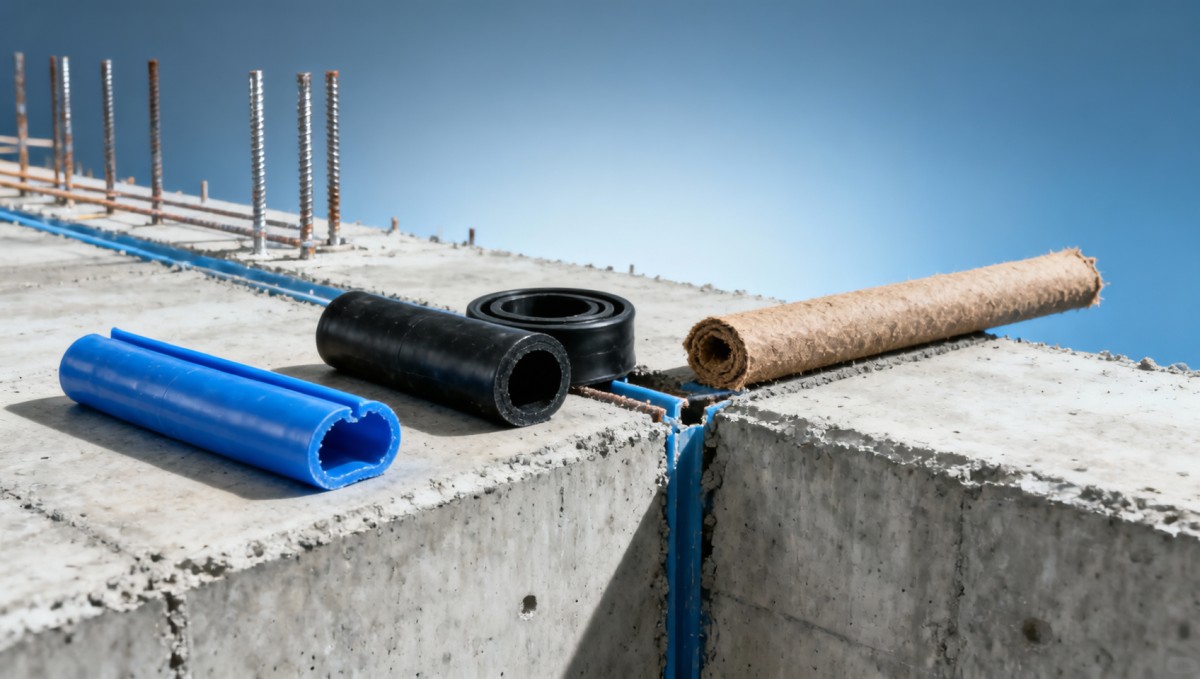
A water stopper for concrete is a joint sealing element installed at construction joints, expansion joints, or movement joints to block water migration through the concrete interface. The three common categories—PVC, rubber, and bentonite—operate differently. PVC and rubber mainly create a physical barrier embedded in concrete, while bentonite expands when exposed to water and seals gaps by swelling.
PVC waterstops are widely used in cast-in-place concrete structures because they offer a balanced mix of flexibility, chemical resistance, and cost efficiency. Common ribbed or center-bulb profiles are selected based on joint type. In many projects, thickness ranges from 4 mm to 10 mm, and roll lengths often vary between 15 m and 25 m. They perform well in water-retaining structures with moderate movement and predictable casting quality.
Rubber waterstops, including natural rubber, neoprene, and synthetic blends, are typically chosen where higher elasticity, repeated movement, or more aggressive environments are expected. They are often preferred for expansion joints, seismic movement zones, and industrial water structures. Depending on formulation, elongation can exceed 300%, which makes rubber more tolerant than rigid alternatives when differential settlement or thermal cycling is a major concern.
Bentonite waterstops are different. Usually supplied as strips or cords, they are installed on hardened concrete before the second pour. When exposed to moisture, they can swell several times their dry volume, filling voids around the joint. They are highly practical for non-moving construction joints, penetrations, and smaller precast interfaces. However, early exposure to rain or groundwater before full confinement can reduce effectiveness and create installation risk.
Where each type fits in practical engineering
For hotel basements, underground MEP rooms, and retaining wall joints, PVC is often the first option because supply chains are mature and profile options are broad. For thermal spa tanks, water parks, bridge podiums, or structures with expansion demand above 10 mm, rubber is often more reliable. For pile caps, lift pits, pipe sleeves, and static construction joints with tight placement access, bentonite can shorten installation time by 20%–30% compared with embedded center-bulb systems.
Key operating principle by material
- PVC: embedded barrier against water passage, best for many standard cast-in-place joints.
- Rubber: high elastic recovery for joints with movement, vibration, or cyclic stress.
- Bentonite: swelling seal for non-moving joints and details that are difficult to embed.
The table below summarizes the core differences buyers should understand before comparing quotations. It is useful for early-stage screening, especially when distributors or sourcing teams are reviewing multiple suppliers without complete design drawings.
The key conclusion is that no single material is universally best. The right water stopper for concrete depends on whether the joint is static or moving, whether installation access is open or congested, and whether long-term water pressure is low, moderate, or high. Procurement teams that separate these three variables early can reduce specification errors significantly.
Performance Comparison: Durability, Movement, Installation, and Lifecycle Cost
When buyers compare PVC, rubber, or bentonite, four metrics usually matter most: movement tolerance, chemical and aging resistance, installation complexity, and total lifecycle cost. Initial material pricing may differ by 15%–60% depending on region, compound grade, and profile size, but the long-term cost impact often depends more on leakage risk and remedial labor than on product cost per meter.
PVC offers a strong value profile for mainstream waterproofing. It performs consistently in many buried structures and water-retaining applications, provided concrete cover, alignment, and splicing are controlled. However, it is less forgiving if the joint experiences significant cyclic movement or if the pour quality creates honeycombing around ribs. In those cases, leakage pathways may develop at the concrete-waterstop interface rather than through the material itself.
Rubber generally performs better where movement matters. It can absorb repeated opening and closing at expansion joints and remain serviceable in temperatures that may challenge some standard PVC formulations. For structures exposed to vibration, settlement, or thermal expansion, rubber can reduce premature joint failure. That said, buyers must confirm compound suitability for oils, chlorinated water, wastewater, or UV exposure, because “rubber” is not a single performance category.
Bentonite is highly competitive in labor efficiency. Installation can be faster because crews do not need to suspend a wide embedded profile at the center of the pour. This is useful for small crews, narrow pile caps, and congested reinforcement zones. But bentonite should not be treated as a direct substitute for movement-capable embedded systems. In joints with repeated opening or washout risk, swelling strips may underperform if confinement is lost.
Decision factors that affect actual project value
The next table compares the three options across procurement-relevant criteria. These ranges are practical engineering references rather than absolute ratings, helping sourcing teams align the right specification with real jobsite conditions.
A useful rule is this: if the structure is expected to move, prioritize movement capacity; if the structure is complex to cast, prioritize installation reliability; if maintenance access is limited, prioritize the system with the lowest consequence of workmanship error. On premium hospitality assets, where repair shutdown can affect occupancy and revenue, lifecycle logic usually outweighs the cheapest upfront quote.
Four metrics procurement teams should request from suppliers
- Material type and compound details, not just the generic label of PVC or rubber.
- Profile dimensions such as bulb size, rib geometry, and nominal thickness in millimeters.
- Recommended joint application: construction joint, expansion joint, or penetration detail.
- Storage, installation, and splicing instructions with clear temperature and exposure limits.
These four checks can filter out many unsuitable offers before trial orders begin. They are especially important for distributors and agents evaluating whether a product line can be responsibly introduced into multiple end-use sectors such as resorts, municipal projects, and commercial basements.
Application Fit: Which Water Stopper for Which Concrete Joint?
Application fit is where many procurement errors happen. A technically sound water stopper may still fail if assigned to the wrong joint type. Construction joints are formed in sequential pours and usually remain relatively static. Expansion joints are designed to move. Pipe penetrations, lift pits, slab-wall intersections, and segmented retaining walls each create different waterproofing demands. Matching the joint condition is therefore more important than choosing by habit or supplier preference.
PVC is commonly specified for water tanks, basements, tunnels, and retaining walls where embedded profiles can be fixed before the second pour. In tourism infrastructure, examples include underground service corridors, spa pools, landscape reservoirs, and wastewater balancing chambers. If concrete placement is well managed and vibration is controlled in 300 mm to 600 mm lift sections, PVC usually delivers dependable performance at competitive cost.
Rubber becomes a stronger candidate when movement is unavoidable. Structures spanning different foundations, long podium decks, thermal water facilities, and transport-linked hospitality projects can all generate expansion stress. Where a joint may open and close repeatedly or where settlement cannot be fully excluded, rubber’s resilience is valuable. In these cases, choosing a cheaper PVC profile may save on purchase cost but increase leakage risk during the first few seasonal cycles.
Bentonite works well in static construction joints, especially around penetrations and congested details where embedding a large center-bulb profile is impractical. Typical use areas include pile cap joints, manholes, lift pits, service trenches, and wall-to-slab transitions. It is also attractive for retrofit-compatible detailing because strips can be applied on prepared surfaces without extensive formwork modification. However, it should be protected from rain and uncontrolled swelling before the next pour.
Practical application matrix
The table below helps project teams match material choice with common structure types. It is not a substitute for design review, but it gives a reliable first-pass filter for sourcing and technical assessment.
For mixed-use or hospitality projects, it is common to combine systems rather than rely on one material across the entire site. A practical specification may use PVC in major construction joints, rubber in movement joints, and bentonite around penetrations and detailing points. This layered procurement approach often improves waterproofing reliability without inflating total package cost disproportionately.
Typical selection mistakes to avoid
- Using bentonite in joints that are expected to move more than a few millimeters over time.
- Choosing PVC for expansion joints without confirming movement profile and thermal behavior.
- Buying rubber waterstops without checking chemical exposure in wastewater or pool treatment systems.
- Ignoring site conditions such as rain exposure, congested reinforcement, or difficult splice access.
These mistakes are avoidable if procurement review starts from joint behavior, not material familiarity. That approach mirrors wider infrastructure benchmarking logic: function first, specification second, brand third.
Procurement Checklist, Installation Control, and Risk Management
Selecting the right water stopper for concrete is only half of the result. The other half comes from procurement discipline and installation control. In practice, many leak claims trace back to poor splicing, wrong profile placement, premature bentonite swelling, insufficient concrete cover, or mismatch between drawing details and site execution. A sound purchasing process should therefore include both product review and field application checks.
For procurement personnel, the first checkpoint is technical documentation. Request profile drawings, nominal dimensions, material composition, recommended applications, storage conditions, and splice method instructions. If the supplier cannot clearly distinguish construction-joint and expansion-joint use, that is a warning sign. Delivery consistency also matters. A project may need 500 m, 2,000 m, or more, and dimensional variation across batches can complicate installation and inspection.
For technical evaluators, site compatibility should be reviewed before purchase approval. Embedded PVC or rubber systems require fixing points, alignment stability, and trained crews. Bentonite strips require dry substrate preparation, proper fastening, and enough time before the next pour without uncontrolled moisture exposure. A realistic pre-installation review usually takes 5 checkpoints and can prevent weeks of downstream repair work.
For distributors and agents, the priority is not just resale margin but application credibility. A product line that covers only one joint type may be difficult to position across diverse customer needs. Offering a technically coherent range—with clear guidance on when to use PVC, rubber, or bentonite—can shorten sales cycles and reduce post-sale disputes. That is especially important in B2B channels where repeat orders depend on technical trust rather than promotional claims.
Five-step control process before approval
- Confirm joint type: static construction joint, movement joint, or penetration detail.
- Review exposure: groundwater, chlorinated water, wastewater, freeze-thaw, or chemical contact.
- Check installation conditions: reinforcement density, pour sequence, weather exposure, and crew skill.
- Verify supply data: dimensions, roll length, splice method, packaging, and storage window.
- Match lifecycle risk: expected maintenance access, failure consequence, and repair cost impact.
The table below can be used as a compact procurement checklist during supplier evaluation or internal approval meetings.
In high-value assets such as resorts, underground hospitality spaces, water recreation venues, and integrated tourism developments, waterproofing defects create more than repair cost. They affect guest areas, MEP uptime, fit-out finishes, and operational continuity. That is why disciplined specification review should be treated as an infrastructure benchmark, not a commodity purchase. If you are comparing product options, supplier capability, or application fit across multiple projects, TerraVista Metrics can help you assess technical data, use-case suitability, and lifecycle value with greater precision. Contact us to discuss your waterproofing selection criteria, request a tailored evaluation framework, or explore broader infrastructure benchmarking support for tourism and hospitality procurement.
Recommended News
 Oct 30, 2026Choosing Woven Rope Resort Furniture for Sun and Salt ExposureChoosing woven rope resort furniture? Discover how to assess UV resistance, coastal corrosion, and supplier evidence for lasting comfort and value.
 Oct 26, 2026Is an Integrated Hotel System Less Risky Than Separate Systems?Is one integrated hotel system less risky than separate systems? Compare outage resilience, security, and recovery to discover the safer architecture for your hotel.
 Oct 18, 2026Can Hotel Room Accessibility Be Improved Without a Full Renovation?Can hotel rooms be made more accessible without a full renovation? Discover practical upgrades to layouts, controls, and bathrooms—and learn when bigger changes are needed.
 Oct 16, 2026How Can You Fix Scratched Luxury Furniture Without Replacing It?How can I repair scratched luxury furniture finishes without replacing the furniture? Discover finish-safe touch-ups, color matching, and expert repair tips to restore elegance and protect value.
 Oct 04, 2026A Procurement Checklist for Tourism Hardware Equipment in Resorts and Visitor CentersTourism hardware equipment procurement checklist for resorts and visitor centers: compare durability, compliance, lifecycle costs, supplier support, and logistics.
 Sep 23, 2026Planning Smart Classroom Solutions for Hybrid Learning Without Creating AV Support GapsSmart classroom solutions for reliable hybrid learning: standardize workflows, strengthen AV support, and deliver seamless teaching experiences.
 Sep 11, 2026Hotel Security Protocols: A Compliance Checklist for Protecting Guests and StaffSecurity protocols for hospitality: use this practical hotel compliance checklist to protect guests, staff, data, access points, and emergency operations.
 Sep 03, 2026How to Plan Theme Park Infrastructure for Mixed-Use DevelopmentsTheme park infrastructure for mixed use developments: plan resilient utilities, circulation, attractions, hospitality, and digital systems for scalable destinations.
 Aug 23, 2026What Makes Community Based Eco Resort Development Successful in Rural Destinations?Community based eco resort development succeeds when land fit, local participation, infrastructure, and operations align. Discover practical strategies for resilient, high-value rural eco resorts.
 Aug 21, 2026How Many Rooms Should an Eco Resort Have to Balance ROI and Guest Experience?Eco resort development room count directly shapes ROI, infrastructure efficiency, and guest privacy. Learn how to choose the right key range to protect margins and elevate the experience.
 Aug 15, 2026How to Analyze Stainless Steel Fatigue in Cyclic Load ApplicationsStainless steel fatigue analysis helps you spot hidden cyclic load risks early, improve reliability, and prevent costly failures in real-world applications.
 Aug 08, 2026Hospitality Engineering Standards for Resorts: Key Compliance Checks Before Design ApprovalHospitality engineering standards for resorts explained: discover the key compliance checks before design approval to avoid delays, reduce risk, and build guest-ready, resilient resort projects.
 Jul 21, 2026Tourism Destination Infrastructure Solutions: How to Plan Smarter Visitor FacilitiesTourism destination infrastructure solutions for smarter visitor facilities: learn how to reduce risk, improve uptime, and plan scalable, data-backed destinations that perform long term.
 Jul 19, 2026How to Choose Rustproof Hotel Furniture for Coastal and High-Humidity PropertiesRustproof hotel furniture is essential for coastal and high-humidity properties. Learn how to compare materials, finishes, and supplier claims to reduce maintenance costs and extend service life.
 Jul 16, 2026How to Choose Resort Bar Furniture for Outdoor Hospitality SpacesResort bar furniture buying guide for outdoor hospitality spaces: compare materials, durability, comfort, and maintenance to choose stylish, long-lasting commercial pieces.
 Jul 15, 2026Commercial Thermal Efficiency Testing: Key Metrics, Test Methods, and Compliance BasicsCommercial thermal efficiency testing explained: learn key metrics, test methods, common compliance risks, and practical steps to improve performance, cut costs, and make smarter asset decisions.
 Jul 14, 2026Smart Tourism Integration vs Standalone Systems: Which Setup Fits Multi-Site Operations?Smart tourism integration or standalone systems? Discover which setup best fits multi-site tourism operations, improves visibility, compliance, scalability, and guest experience.
 Jul 13, 2026Export Market Opportunities in Latin America: How to Identify Profitable Entry PointsExport market opportunities in Latin America are shifting toward high-margin, compliant sectors. Discover how to spot profitable entry points in tourism, hospitality, and smart infrastructure.
 Jul 12, 2026Carbon Compliance in North America: Key Reporting Rules and Risk Points for ManufacturersCarbon compliance North America: learn the key U.S. and Canada reporting rules, top risk points for manufacturers, and how to strengthen data, supplier checks, and compliance readiness.
 Jul 11, 2026How to Evaluate Coated Surface Structural Performance Testing for Outdoor InstallationsCoated surface structural performance testing for outdoor installations: learn how to assess adhesion, crack resistance, corrosion durability, and real-world structural risk before procurement.
 Jul 10, 2026Outdoor Furniture Durability Cost: Which Materials Last Longer and Cost Less to Maintain?Outdoor furniture durability cost explained: compare aluminum, teak, steel, and HDPE to find materials that last longer, reduce maintenance, and deliver better long-term value.
 Jul 09, 2026Technical Integration Security: Key Standards, System Architecture, and Risk ChecksTechnical integration security explained: explore key standards, system architecture signals, and risk checks to build resilient, compliant, and scalable connected infrastructure.
 Jul 08, 2026Tourism Asset Evaluation in Middle East: Key Metrics for Hotel and Resort ProjectsTourism asset evaluation in Middle East explained through key metrics for hotel and resort projects, covering location, infrastructure, lifecycle cost, sustainability, and technology.
![]() Jul 07, 2026Eco Building Materials Manufacturer Checklist: Certifications, MOQ, and Custom OptionsEco building materials manufacturer checklist covering certifications, MOQ, and custom options. Learn how to compare suppliers, reduce project risk, and choose sustainable materials with confidence.
{item.publish_time}{item.title}{item.description}Quarterly Executive Summaries Delivered Directly.
Join 50,000+ industry leaders who receive our proprietary market analysis and policy outlooks before they hit the public library.