Search News
TerraVista Metrics (TVM)Industry Portal
TerraVista Metrics (TVM)Hot Articles
TerraVista Metrics (TVM)- Cableway Station Spacing: How Terrain and Capacity Shape the DistanceExplore cableway systems station spacing and learn how terrain, passenger capacity and safety shape practical, route-specific design decisions.
- What Is an Industry Insights Data Model? Key Components and UsesDiscover how an industry insights data model connects market data, improves comparisons, and supports smarter benchmarking and procurement decisions.
- Vingcard Deploys MENA’s First Native Wallet Hotel Keys in EgyptVingcard and Hudini bring native wallet hotel keys to three Egypt resorts. Discover what app-free access could mean for hotel buyers and suppliers.
Popular Tags
TerraVista Metrics (TVM)Industry NewsHow do sustainable tourism initiatives improve hotel ROI?
auth.Time
Nov 16, 2026Click Count
Sustainable tourism initiatives improve hotel ROI by cutting operating costs, strengthening brand value, and supporting better capital allocation. For hotel buyers, operators, investors, and procurement teams, the real question is not whether sustainability sounds attractive, but whether it produces measurable financial returns. In practice, it often does—when initiatives are tied to energy efficiency, water savings, waste reduction, guest demand, and verified technology performance. The strongest results usually come from combining sustainability goals with smart hotel technology, smart hotel room automation, and benchmark-based procurement decisions that reduce long-term operating risk.
Why hotel decision-makers are asking this question now
Search intent behind this topic is highly practical. Readers are typically not looking for a broad definition of sustainable tourism. They want to know whether sustainability investments actually improve margins, asset value, occupancy, and procurement outcomes.
For information researchers, procurement teams, commercial evaluators, and channel partners, the key concerns are clear:
- Which sustainability initiatives generate measurable ROI rather than brand-only value?
- How fast can a hotel recover the upfront investment?
- Which systems reduce operating costs without creating integration problems?
- How can buyers verify supplier claims on energy, carbon compliance, durability, and performance?
- What data should be used to compare eco-friendly infrastructure and smart hospitality systems?
That means the most useful discussion is one focused on cost savings, revenue impact, risk reduction, lifecycle performance, and decision frameworks—not generic sustainability messaging.
How sustainable tourism initiatives improve hotel ROI in real business terms
Hotels improve ROI when sustainability moves from a marketing idea to an operational system. The return usually comes from five business levers working together.
1. Lower utility and operating costs
Energy-efficient HVAC, lighting controls, water-saving fixtures, greywater systems, insulated prefab hospitality units, and smart occupancy-based room controls can significantly reduce recurring expenses. In many hotel models, utility costs are one of the most controllable expense categories. A sustainability initiative that lowers energy and water use creates direct savings month after month.
2. Higher guest appeal and pricing resilience
Many travelers, especially in premium, eco-luxury, resort, and experiential lodging segments, increasingly favor properties with credible sustainability standards. This can support stronger booking conversion, improved retention, and in some markets, better ADR resilience. Sustainability alone does not guarantee higher room rates, but it can improve competitiveness when guest experience and operational quality are also strong.
3. Better asset longevity and lower maintenance risk
Durable materials, efficient building envelopes, and well-integrated smart systems often reduce wear, improve monitoring, and prevent costly failures. Hotels that choose infrastructure based on verified fatigue resistance, thermal performance, and system compatibility usually avoid hidden maintenance costs that erode ROI over time.
4. Improved access to capital and compliance readiness
In some markets, sustainable hospitality assets are better positioned for green financing, ESG-aligned investment review, or future regulatory compliance. Even where direct incentives are limited, compliance-ready assets reduce the risk of future retrofit costs.
5. Lower procurement error rates
One of the biggest but least discussed ROI drivers is avoiding the wrong purchase. A system that underperforms, breaks down early, or fails to integrate with existing hotel technology can erase expected sustainability gains. This is why benchmarking services and technical verification matter so much in hospitality procurement.
Which sustainable initiatives usually deliver the strongest ROI for hotels
Not all sustainability investments perform equally. For most operators and buyers, the best ROI tends to come from initiatives that directly affect operating cost, room performance, and system visibility.
Energy management and smart hotel technology
Smart hotel technology often delivers one of the clearest ROI paths because it links sustainability with operational control. Centralized energy management, occupancy sensors, intelligent HVAC, and room-level analytics help hotels reduce waste without sacrificing guest comfort.
When smart hotel room automation is integrated properly, the hotel can control lighting, climate, curtains, and device loads based on occupancy status, booking status, or guest preferences. That reduces unnecessary energy use in vacant or partially used rooms and improves resource allocation across the property.
Water efficiency systems
Hotels in resort, island, remote, or water-stressed markets can see especially strong returns from low-flow fixtures, leak detection, pressure control, smart irrigation, and water reuse systems. Water savings are often underestimated in ROI calculations, especially where wastewater and treatment costs are high.
Thermally efficient hospitality structures
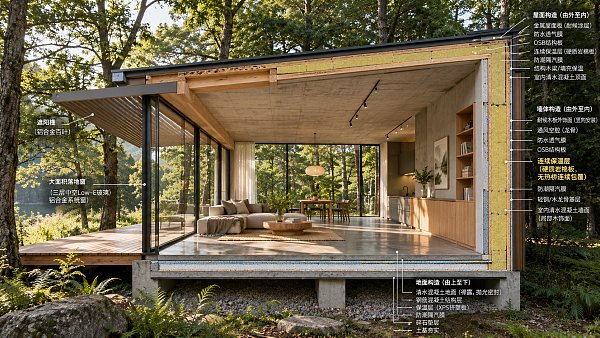
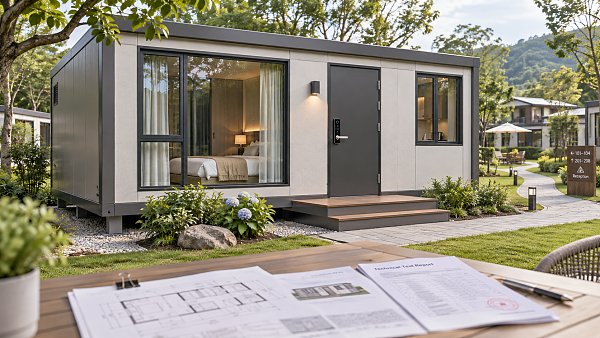
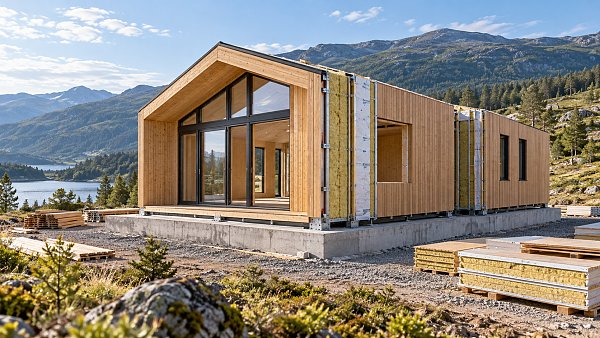
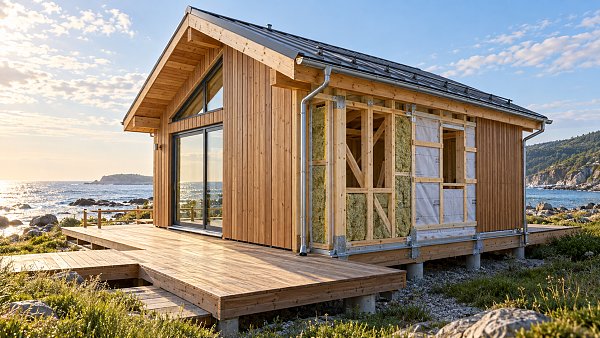
In glamping, eco-resort, modular lodge, and remote tourism projects, thermal efficiency is a major ROI factor. Poor envelope performance increases HVAC load and weakens guest comfort. Eco-friendly prefabricated cabins and hospitality units should therefore be assessed on insulation values, thermal bridging, air tightness, and climate suitability—not appearance alone.
Waste reduction and circular operations
Food waste tracking, refill systems, bulk amenity dispensers, recycling streams, and back-of-house process improvements may not always produce the largest headline savings, but they can improve operational discipline and reduce disposal costs.
Low-maintenance, durable materials
Sustainable materials that also extend replacement cycles can create excellent lifecycle ROI. The key is performance verification. A “green” material that wears out early is not financially sustainable.
Where many hotel sustainability investments fail to produce ROI
The biggest reason initiatives underperform is that they are purchased as image enhancements rather than as engineered business assets. Common ROI failures include:
- Choosing systems without verified performance data
- Focusing on upfront price instead of lifecycle cost
- Installing smart systems that do not integrate with PMS, BMS, or IoT architecture
- Ignoring maintenance complexity and spare-parts availability
- Using generic sustainability claims instead of property-specific performance targets
- Overestimating guest willingness to pay without strengthening experience quality
For procurement teams and commercial evaluators, this is where objective benchmarking becomes essential. Sustainability only improves hotel ROI when the selected solution actually performs under real operating conditions.
How to evaluate ROI before making a sustainability investment
Decision-makers need a framework that goes beyond vendor brochures. A useful ROI assessment should cover both direct and indirect value.
Measure direct financial impact
- Expected reduction in electricity, gas, water, and waste costs
- Maintenance labor and replacement cycle savings
- Potential labor efficiency gains from automation
- Projected payback period and total cost of ownership
Measure commercial impact
- Effect on occupancy and booking conversion
- Potential ADR support in relevant market segments
- Brand differentiation for eco-conscious travelers, partners, and corporate buyers
- Suitability for ESG reporting or green investment narratives
Measure technical and procurement risk
- Durability under local climate and usage intensity
- Integration readiness with existing hotel systems
- Data throughput and reliability for connected devices
- Carbon compliance documentation and material traceability
- Serviceability, warranty structure, and supplier consistency
This is particularly relevant for large hospitality developments, remote tourism infrastructure, and high-spec resort environments, where a wrong procurement decision can affect operations for years.
Why benchmarking matters for sustainable hotel procurement
Benchmarking is what turns sustainability from a claim into a decision tool. For procurement directors, developers, and distributors, credible benchmarking helps answer questions that marketing materials usually avoid:
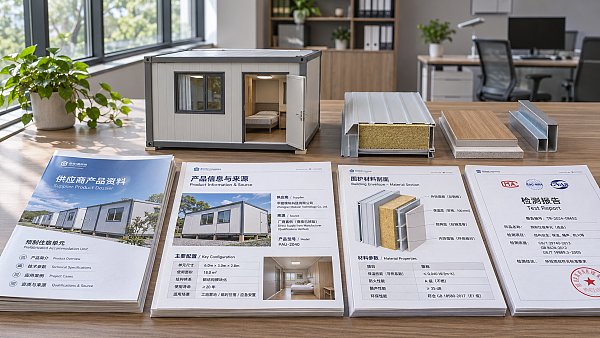
- How does one prefab eco-cabin compare to another in thermal efficiency?
- Can a smart room automation platform handle real hotel data loads reliably?
- Which amusement or hospitality hardware has better material fatigue performance?
- Which supplier can support compliance, integration, and long-term operating stability?
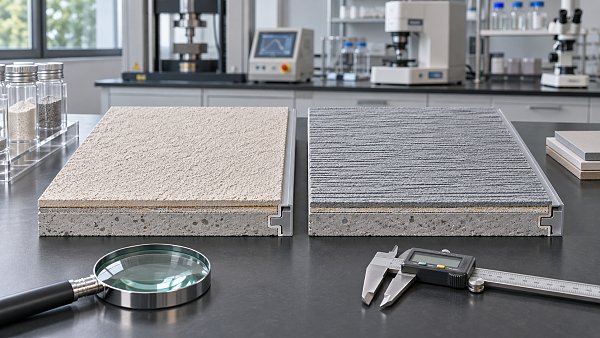
That is where a data-driven platform such as TerraVista Metrics (TVM) becomes strategically useful. By evaluating engineering metrics across tourism and hospitality hardware, TVM helps buyers compare products on measurable criteria rather than visual presentation or unverified promises.
For hotels pursuing sustainable tourism initiatives, this kind of benchmarking can improve ROI in two ways: first, by identifying systems that genuinely save money or increase resilience; second, by preventing capital from being allocated to weak-fit products with hidden lifecycle costs.
How smart hotel room automation supports both sustainability and profitability
Smart hotel room automation is often one of the clearest examples of sustainability delivering ROI. It connects environmental performance with room-level economics.
For example, a properly integrated room automation setup can:
- Adjust HVAC and lighting when guests leave the room
- Support occupancy-based energy control
- Reduce energy waste in unsold rooms
- Provide maintenance alerts before failures become expensive
- Improve guest comfort through personalized room settings
The result is not just lower utility use. It can also support better reviews, lower complaint rates, and more consistent room performance. For business evaluators, that means the ROI case should include both cost savings and guest experience outcomes.
However, the financial result depends on interoperability, system reliability, and ease of deployment. A low-cost automation layer that creates integration issues may cost more over time than a well-benchmarked solution with stronger long-term performance.
What procurement teams, distributors, and evaluators should prioritize
Different stakeholders view hotel ROI through different lenses, but several priorities overlap.
For procurement teams
Prioritize verified efficiency, compatibility, service support, and lifecycle cost. The goal is not simply to buy a sustainable product, but to buy a system that maintains performance under real hospitality conditions.
For commercial evaluators and investors
Focus on measurable savings, payback horizon, asset resilience, and market positioning. Ask whether the initiative improves NOI, reduces future retrofit exposure, or strengthens long-term competitiveness.
For distributors and channel partners
Products with clear benchmarking data are easier to position and defend in commercial conversations. Objective performance proof improves trust and shortens technical due diligence.
For researchers and planners
Look for data sets that connect sustainability inputs with operating outcomes. The most useful analysis is cross-functional, linking engineering performance, guest experience, and financial return.
Final answer: do sustainable tourism initiatives really improve hotel ROI?
Yes—when they are chosen and implemented as performance-driven investments rather than branding exercises. Sustainable tourism initiatives improve hotel ROI by lowering energy and water costs, supporting stronger asset performance, reducing maintenance and compliance risk, and enhancing guest appeal. The highest returns usually come from areas such as smart hotel technology, smart hotel room automation, thermally efficient structures, and well-integrated resource management systems.
For hotel operators, buyers, and investors, the critical takeaway is simple: sustainability creates financial value when it is measurable. That is why benchmarking, technical verification, and lifecycle analysis matter so much. With the right data, hotels can move beyond vague environmental claims and make procurement decisions that improve both sustainability performance and business results.
Recommended News
 Nov 17, 2026What Is an Industry Insights Data Model? Key Components and UsesDiscover how an industry insights data model connects market data, improves comparisons, and supports smarter benchmarking and procurement decisions.
 Nov 16, 2026Maintenance Planning for Outdoor Venues: A Seasonal ChecklistMaintenance planning for outdoor venues made practical: explore a seasonal checklist to reduce risks, prevent downtime, and keep assets ready year-round.
 Nov 15, 2026Choosing Building Materials for Passive Design: Insulation and Thermal MassExplore passive design building materials and discover how to balance insulation and thermal mass for comfortable, efficient cabins and hospitality spaces.
 Nov 14, 2026International Standards Compliance: How to Identify Applicable StandardsMaster international standards compliance: identify applicable requirements, assess evidence, and build a traceable matrix for confident procurement decisions.
 Nov 13, 2026Future-Ready Hotel Systems: How to Evaluate InteroperabilityMake hospitality system interoperability future ready. Discover how to assess APIs, security, workflows and vendor claims before investing.
 Nov 12, 2026Middle East Hotel Pipeline Reaches Record 771 Projects at End of Third QuarterThe Middle East hotel pipeline reached a record 771 projects in Q3 2026. Explore potential opportunities for construction, smart room and furniture suppliers.
 Nov 12, 2026Fatigue Testing Methods: Comparing Axial, Bending and Torsional TestsCompare fatigue testing methods for axial, bending and torsional loads. Learn how to interpret results and choose the right test for your component.
 Nov 11, 2026OpenAI Acquires Travel Agent Startup Odessia as OTA Shares FallOpenAI acquires AI travel agent Odessia as OTA shares fall. Explore what the deal could mean for travel planning, booking, and online travel agencies.
 Nov 11, 2026A Buyer's Guide to Modular Systems: Compatibility, Expansion and CostExplore buyer guides for modular systems and learn how to assess compatibility, plan expansion, uncover hidden costs and compare supplier quotes with confidence.
 Nov 10, 2026Global Tourism Forum Opens in Brussels With Focus on Investment and TrustThe Global Tourism Forum opens in Brussels, spotlighting tourism investment, security and trust. Explore what the talks could mean for destinations and investors.
 Nov 07, 2026Product Benchmarking: How to Compare Material Performance and DurabilityMaster product benchmarking and material comparison with practical tips for evaluating test data, durability and lifecycle costs. Make confident purchasing decisions.
 Nov 06, 2026Supply Chain Intelligence for Procurement: How to Identify Supplier RisksSupply chain intelligence for procurement helps you uncover supplier risks, verify critical evidence, and protect delivery, quality, and compliance.
 Nov 05, 2026Eco-Lodging Materials: How to Verify Certification ClaimsVerify eco lodging materials certification with confidence. Learn how to check claims, trace products and avoid misleading sustainability statements.
 Nov 03, 2026Choosing Sustainable Hospitality Furniture in North America: What Buyers Should CheckSustainable hospitality furniture in North America: discover how to assess durability, certifications, repairability and costs before you buy.
 Nov 02, 2026Integrating Prefabrication into Low-Carbon Building ProjectsExplore prefab integration low carbon strategies to compare emissions, manage logistics, and deliver resilient, energy-efficient hospitality projects.
 Oct 28, 2026Solar Trackers vs. Fixed-Tilt Systems: Which Suits Your Utility-Scale Project?Solar trackers or fixed-tilt systems? Compare energy yield, site constraints, maintenance, and lifetime costs to find the best fit for your utility-scale project.
 Oct 27, 2026Food Export Compliance: What to Check Before Your First Overseas ShipmentFood export compliance starts before dispatch. Discover essential checks for approvals, labels, certificates, and cold-chain controls to help prevent costly delays on your first overseas shipment.
 Oct 25, 2026Synthetic Rattan Resort Furniture: What to Check for Coastal DurabilityBuying synthetic rattan resort furniture? Discover key checks for UV resistance, corrosion protection, and warranty coverage to reduce coastal replacement costs and buy with confidence.
 Oct 24, 2026Which Hospitality Furniture Compliance Standards Apply to U.S. Hotels?Explore hospitality furniture compliance standards for U.S. hotels, from fire safety and ADA requirements to supplier documentation. Make informed purchases and reduce compliance risks.
 Oct 23, 2026Choosing Sustainable Prefab Building Materials: Embodied Carbon and DurabilityChoose prefab sustainable building materials with confidence. Compare embodied carbon, durability, and EPDs to reduce whole-life impacts and make smarter procurement decisions.
 Oct 22, 2026Winnebago Q4 Revenue Falls 17% to $645.1 Million as Full-Year Profit RisesWinnebago Q4 revenue fell 17% to $645.1 million as full-year profit rose. Explore RV shipment trends, product mix shifts and what fiscal 2027 earnings guidance signals.
 Oct 18, 2026Tourism Asset Evaluation Criteria: Assessing Demand, Cash Flow, and Investment RiskExplore tourism asset evaluation criteria to assess demand, cash flow, lifecycle costs, and investment risk. Discover how to identify resilient assets and make smarter investment decisions.
 Oct 16, 2026Integrated Systems for Destination Planning: How to Connect GIS and Visitor DataExplore integrated systems for destination planning that connect GIS and visitor data to reveal bottlenecks, assess capacity, and guide smarter infrastructure investments.
 Oct 21, 2026Furniture Sustainability Testing: What Evidence Supports Green Claims?Furniture sustainability testing helps verify green claims through emissions data, sourcing records, and durability evidence. Discover what to check before approving your next purchase.
{item.publish_time}{item.title}{item.description}Quarterly Executive Summaries Delivered Directly.
Join 50,000+ industry leaders who receive our proprietary market analysis and policy outlooks before they hit the public library.