Search News
TerraVista Metrics (TVM)Industry Portal
TerraVista Metrics (TVM)Hot Articles
TerraVista Metrics (TVM)- Cableway Station Spacing: How Terrain and Capacity Shape the DistanceExplore cableway systems station spacing and learn how terrain, passenger capacity and safety shape practical, route-specific design decisions.
- What Is an Industry Insights Data Model? Key Components and UsesDiscover how an industry insights data model connects market data, improves comparisons, and supports smarter benchmarking and procurement decisions.
- Vingcard Deploys MENA’s First Native Wallet Hotel Keys in EgyptVingcard and Hudini bring native wallet hotel keys to three Egypt resorts. Discover what app-free access could mean for hotel buyers and suppliers.
Popular Tags
TerraVista Metrics (TVM)Industry NewsIs Smart Hotel Management Worth It for Boutique Hotels?
auth.Time
Nov 16, 2026Click Count
For boutique hotels balancing guest experience, efficiency, and procurement risk, the real question is whether smart hotel management delivers measurable value beyond trend appeal. From smart hotel automation and hotel IoT solutions to system integration cost and sustainable tourism solutions, every investment must align with smart hotel design, operational durability, and sustainable tourism standards—especially when property concepts increasingly intersect with wider amusement hardware standards and technical specifications.
For information researchers, procurement teams, business evaluators, and channel partners, this is not only a hospitality question. In tourism projects that combine boutique lodging with themed leisure zones, glamping clusters, family recreation areas, or high-end amusement facilities, hotel management systems increasingly operate as part of a larger technical ecosystem. The decision is less about buying “smart features” and more about validating lifecycle value, integration stability, and operational fit.
A boutique hotel with 20 to 80 keys has a very different financial and operational profile from a city chain hotel. It must protect guest experience, control labor intensity, and avoid fragile technology stacks that create downtime. That is why buyers now look beyond front-end interfaces and ask harder questions about device compatibility, response latency, maintenance intervals, carbon targets, and whether the system can connect cleanly with wider tourism infrastructure.
Why smart hotel management matters more in mixed tourism and amusement settings
In a standalone urban boutique property, smart hotel management may focus on room control, check-in speed, and staffing efficiency. In a resort-linked property or a boutique hotel adjacent to leisure attractions, the scope becomes broader. The management platform may need to coordinate guest flow, access control, energy scheduling, maintenance alerts, and sometimes even interface logic with ticketing, shuttle routing, or entertainment zone operations.
This matters because the operational rhythm of tourism and amusement assets is uneven. Peak demand may compress into 6 to 8 hours per day, while housekeeping, engineering, and facility resets must happen within narrow windows. A smart hotel automation system that reduces check-in time from 6 minutes to 2 minutes or flags HVAC faults before occupancy can generate practical value, especially where guest turnover and expectation levels are both high.
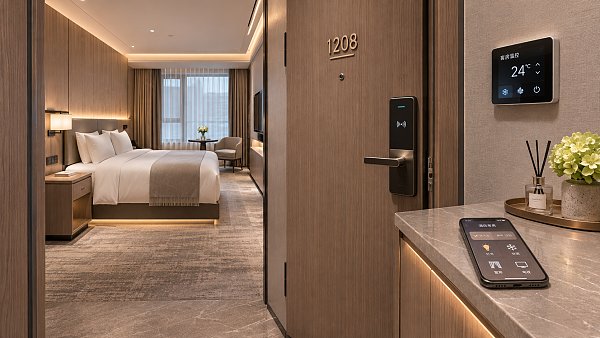
For boutique hotels attached to experience-driven destinations, guest perception is also influenced by technical consistency. A premium cabin resort with immersive lighting, smart locks, and app-based room controls cannot afford repeated failures. In these environments, hotel IoT solutions should be judged the same way amusement hardware is judged: by uptime, durability, safety logic, and fault recovery behavior rather than by visual appeal alone.
Three operational pressures driving adoption
The strongest adoption drivers usually appear in three areas:
- Labor optimization in properties where staffing ratios may range from 0.4 to 0.8 employees per room during normal operation.
- Energy control in climates where cooling, heating, and hot water represent 30% to 45% of site utility costs.
- Service consistency in locations where leisure traffic creates sharp check-in and facility-use surges on weekends and holidays.
The procurement implication is simple: smart hotel management becomes more valuable when the property has dynamic demand, multiple technical subsystems, and a need to coordinate lodging with adjacent tourism or amusement infrastructure. In contrast, a small inn with stable occupancy and limited technical assets may not need a complex deployment.
What boutique hotel buyers should actually measure before investing
A common mistake is to evaluate a smart hotel platform as if it were only software. In reality, the investment spans devices, gateways, network design, room controls, access systems, and integration workflows. That means the buyer should compare not just feature lists, but measurable operating conditions. The most relevant indicators often include device response time, network stability, integration overhead, maintenance frequency, and replacement complexity over a 3 to 5 year horizon.
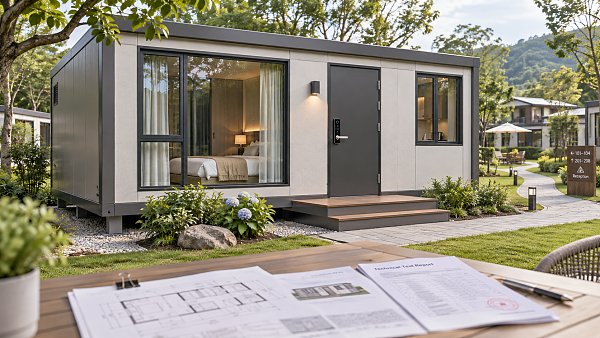
For properties with themed landscapes, modular cabins, or premium leisure equipment, the environmental conditions are especially important. Some rooms may face high humidity, coastal air, dust, or temperature swings from 5°C to 35°C. Smart locks, sensors, and panel controls must maintain stable operation under those conditions. If hardware endurance is not validated, even a well-designed interface will underperform in less than 12 to 24 months.
Buyers should also measure integration depth. A basic smart room package may control lighting and curtains, but a higher-value deployment can also link occupancy status, maintenance workflow, housekeeping dispatch, mini-grid energy logic, and guest messaging. The return profile changes significantly when the system supports coordinated operations rather than isolated automation.
Core evaluation metrics for procurement teams
The table below summarizes practical metrics that boutique hotel and tourism buyers can use when comparing vendors and system architectures.
The key conclusion is that a boutique hotel should not buy on feature abundance alone. A system with fewer functions but stronger device reliability and simpler maintenance may outperform a visually impressive package with unstable field behavior. This is especially true in tourism sites where smart hotel design must coexist with amusement hardware standards, external access systems, and guest safety expectations.
Questions procurement teams should ask vendors
- How many device types can continue core operation during a temporary cloud or gateway outage?
- What is the standard commissioning period for a 30-room, 50-room, or 80-room property?
- Can the system export open-format operating data for owner-side benchmarking and future replacement planning?
- Which parts require on-site replacement versus firmware-level servicing?
Cost, ROI, and where smart systems create real value for boutique hotels
The answer to whether smart hotel management is worth it depends on the property’s operating model. For a small, design-led hotel with low daily turnover and highly personalized service, the value may be selective rather than full-scale. For a boutique resort connected to leisure amenities, glamping units, or themed attractions, the ROI tends to improve because automation supports both guest convenience and operational control across a wider asset base.
Cost should be viewed in four layers: hardware acquisition, software licensing, system integration, and ongoing support. Many buyers focus on the first number and underestimate the third. In practice, integration can represent 15% to 35% of project scope, especially when linking PMS, smart locks, room controls, energy management, and site-level infrastructure. If the hotel is part of a tourism destination with mobility, ticketing, or themed facility interfaces, integration planning becomes even more important.
On the value side, labor savings are only one part of the equation. Smart systems can also reduce room energy waste, lower complaint frequency, improve room readiness visibility, and support premium positioning. In boutique environments, a smoother arrival and room experience can protect ADR more effectively than broad discounting. That is why some owners accept a 24 to 36 month payback horizon if the system also strengthens brand perception and technical resilience.
Typical value patterns by property type
The comparison below shows how value drivers change depending on the operating context.
The most important takeaway is that “worth it” depends on matching smart hotel automation to the property’s revenue logic and technical environment. Overbuying creates cost drag, while underbuying can leave a premium tourism asset with fragmented operations and avoidable guest friction.
Integration, durability, and sustainability: the overlooked decision factors
In tourism infrastructure, system value is often won or lost after installation. A smart platform may look convincing in a showroom but fail in a real project if gateways are poorly placed, protocols do not align, or field hardware degrades under site conditions. Boutique hotels located within amusement-oriented destinations face even more variables, including vibration exposure, irregular occupancy patterns, public-area traffic, and outdoor-to-indoor operational transitions.
Durability should therefore be treated as a procurement gate, not a maintenance afterthought. Buyers should check enclosure suitability, connector quality, battery serviceability, and replacement logistics. In outdoor room clusters or semi-open reception zones, ingress protection, corrosion resistance, and operating temperature ranges become practical decision criteria. A difference of one maintenance visit per quarter across 40 rooms can materially change annual service cost.
Sustainability is also becoming more operational. Rather than broad claims, buyers should look for systems that support measurable control actions: occupancy-based HVAC setbacks, lighting schedules, water-heating coordination, and room-level energy data. Even without citing a fixed savings percentage, these functions make it easier to align daily operation with sustainable tourism solutions and internal carbon reporting frameworks.
A practical checklist for technical due diligence
Before final approval, technical teams and commercial evaluators should review the following points together:
- Map all required interfaces, including PMS, lock systems, HVAC, lighting, and any tourism-site platforms that share occupancy or access logic.
- Test fallback behavior during network loss, power fluctuation, and gateway restart scenarios lasting 5 to 15 minutes.
- Confirm spare-parts planning for high-turnover components, especially batteries, lock modules, room panels, and gateway devices.
- Define a phased deployment schedule, typically 2 to 4 stages, to reduce disruption to soft opening or active operations.
- Request measurable commissioning criteria such as response time, room status accuracy, and alarm handling reliability.
This diligence process mirrors how advanced leisure and amusement hardware is benchmarked. TerraVista Metrics operates from the principle that tourism infrastructure decisions should be based on raw engineering performance, not aesthetic presentation. For buyers comparing smart hotel design with adjacent tourism hardware standards, this approach reduces procurement ambiguity and improves long-term decision quality.
How boutique hotels should implement smart management without overengineering
Implementation should begin with operational priorities, not with a catalog. Boutique hotels usually gain the best result from phased deployment. Phase 1 often covers access control, room status visibility, and essential HVAC or lighting automation. Phase 2 may add guest-facing controls, energy analytics, and service workflow integration. Phase 3, where justified, can extend into broader tourism ecosystem coordination such as shuttle timing, attraction access logic, or destination app connectivity.
This phased method protects both budget and operational learning. It allows owners to validate whether the first 20 to 30 rooms perform as expected before expanding to villas, cabins, or annex buildings. It also reduces the risk of installing functions that front-line teams will not use. In boutique environments, a well-adopted 70% solution often creates more value than a poorly managed 100% rollout.
Training is another overlooked factor. Even when the system is technically sound, value can be diluted if engineering, housekeeping, front office, and management teams use different workflows. A practical training plan should cover at least 4 user groups and include daily operation, alarm handling, guest exception management, and basic troubleshooting. For distributed leisure properties, remote support procedures should be documented before opening day.
Recommended implementation roadmap
The table below outlines a realistic deployment path for boutique hotels and mixed tourism properties.
The best implementation strategy is usually modular. It preserves future flexibility, reduces stranded investment, and allows the owner to compare actual operating gains against procurement assumptions. For distributors and project partners, a modular roadmap also makes channel support and after-sales planning more manageable.
Common mistakes to avoid
- Choosing closed systems that limit future integration with destination-level platforms.
- Ignoring environmental durability in outdoor, coastal, or high-humidity projects.
- Overinvesting in guest-facing novelty while underinvesting in staff workflow efficiency.
- Launching without acceptance criteria for uptime, device response, and fault escalation.
FAQ for researchers, procurement teams, and distribution partners
How do I know if a boutique hotel is too small for smart hotel management?
A small property is not automatically unsuitable. The better question is whether there are at least 2 to 3 operational pain points that automation can address, such as labor-intensive check-in, inconsistent room readiness, or high utility waste. A 15-room property may only need selective controls, while a 40-room leisure-linked boutique hotel can often justify a broader deployment if occupancy patterns are variable and staffing is lean.
What should distributors and agents look for before representing a smart hotel solution?
They should evaluate installation complexity, spare-parts logic, protocol openness, and after-sales burden. A channel-friendly product is not just easy to sell; it is serviceable within realistic field conditions. If one failed room panel requires specialized factory intervention and a 3-week replacement cycle, the distribution model becomes difficult in remote tourism markets.
How long is a normal delivery and commissioning cycle?
For boutique properties, a normal hardware supply and commissioning cycle often falls within 4 to 12 weeks, depending on room count, customization level, and integration depth. A basic 20-room deployment may move faster, while a multi-zone resort with cabins, public areas, and amusement-linked interfaces will usually need a longer commissioning window and staged acceptance.
Which metrics matter most during acceptance testing?
Focus on room status accuracy, command response speed, lock reliability, alarm clarity, and continuity during network disruption. It is also useful to check whether staff can complete the most common tasks in a limited number of steps. For example, room release, maintenance closure, and occupancy-triggered energy adjustment should each be executable in a clear, repeatable workflow.
Can smart hotel systems support sustainable tourism goals without major complexity?
Yes, if the project focuses on controllable functions rather than oversized platforms. Occupancy-linked HVAC, timed lighting logic, remote shutdown for vacant rooms, and room-level monitoring can be introduced without turning the property into a highly complex control environment. The most effective sustainable tourism solutions are usually those that staff can maintain consistently over 12 months or more.
Smart hotel management is worth it for boutique hotels when it is specified as infrastructure, not fashion. The strongest business case appears in properties connected to tourism, leisure, glamping, or amusement-oriented environments where guest experience, technical coordination, and operational discipline must work together. In those settings, the right platform can improve control, support sustainability goals, and reduce long-term procurement risk.
For buyers who need defensible decisions, the priority is to benchmark real performance: integration depth, environmental durability, maintenance logic, and measurable operating value. TerraVista Metrics supports this approach by translating manufacturing and system capability into engineering-based evaluation criteria that help tourism architects, operators, and procurement teams build with greater precision.
If you are assessing smart hotel automation, hotel IoT solutions, or tourism hardware compatibility for a boutique hotel or mixed leisure destination, contact us to discuss a tailored evaluation framework, request technical comparison support, or explore more procurement-focused solutions.
Recommended News
 Nov 17, 2026What Is an Industry Insights Data Model? Key Components and UsesDiscover how an industry insights data model connects market data, improves comparisons, and supports smarter benchmarking and procurement decisions.
 Nov 16, 2026Maintenance Planning for Outdoor Venues: A Seasonal ChecklistMaintenance planning for outdoor venues made practical: explore a seasonal checklist to reduce risks, prevent downtime, and keep assets ready year-round.
 Nov 15, 2026Choosing Building Materials for Passive Design: Insulation and Thermal MassExplore passive design building materials and discover how to balance insulation and thermal mass for comfortable, efficient cabins and hospitality spaces.
 Nov 14, 2026International Standards Compliance: How to Identify Applicable StandardsMaster international standards compliance: identify applicable requirements, assess evidence, and build a traceable matrix for confident procurement decisions.
 Nov 13, 2026Future-Ready Hotel Systems: How to Evaluate InteroperabilityMake hospitality system interoperability future ready. Discover how to assess APIs, security, workflows and vendor claims before investing.
 Nov 12, 2026Middle East Hotel Pipeline Reaches Record 771 Projects at End of Third QuarterThe Middle East hotel pipeline reached a record 771 projects in Q3 2026. Explore potential opportunities for construction, smart room and furniture suppliers.
 Nov 12, 2026Fatigue Testing Methods: Comparing Axial, Bending and Torsional TestsCompare fatigue testing methods for axial, bending and torsional loads. Learn how to interpret results and choose the right test for your component.
 Nov 11, 2026OpenAI Acquires Travel Agent Startup Odessia as OTA Shares FallOpenAI acquires AI travel agent Odessia as OTA shares fall. Explore what the deal could mean for travel planning, booking, and online travel agencies.
 Nov 11, 2026A Buyer's Guide to Modular Systems: Compatibility, Expansion and CostExplore buyer guides for modular systems and learn how to assess compatibility, plan expansion, uncover hidden costs and compare supplier quotes with confidence.
 Nov 10, 2026Global Tourism Forum Opens in Brussels With Focus on Investment and TrustThe Global Tourism Forum opens in Brussels, spotlighting tourism investment, security and trust. Explore what the talks could mean for destinations and investors.
 Nov 07, 2026Product Benchmarking: How to Compare Material Performance and DurabilityMaster product benchmarking and material comparison with practical tips for evaluating test data, durability and lifecycle costs. Make confident purchasing decisions.
 Nov 06, 2026Supply Chain Intelligence for Procurement: How to Identify Supplier RisksSupply chain intelligence for procurement helps you uncover supplier risks, verify critical evidence, and protect delivery, quality, and compliance.
 Nov 05, 2026Eco-Lodging Materials: How to Verify Certification ClaimsVerify eco lodging materials certification with confidence. Learn how to check claims, trace products and avoid misleading sustainability statements.
 Nov 03, 2026Choosing Sustainable Hospitality Furniture in North America: What Buyers Should CheckSustainable hospitality furniture in North America: discover how to assess durability, certifications, repairability and costs before you buy.
 Nov 02, 2026Integrating Prefabrication into Low-Carbon Building ProjectsExplore prefab integration low carbon strategies to compare emissions, manage logistics, and deliver resilient, energy-efficient hospitality projects.
 Oct 28, 2026Solar Trackers vs. Fixed-Tilt Systems: Which Suits Your Utility-Scale Project?Solar trackers or fixed-tilt systems? Compare energy yield, site constraints, maintenance, and lifetime costs to find the best fit for your utility-scale project.
 Oct 27, 2026Food Export Compliance: What to Check Before Your First Overseas ShipmentFood export compliance starts before dispatch. Discover essential checks for approvals, labels, certificates, and cold-chain controls to help prevent costly delays on your first overseas shipment.
 Oct 25, 2026Synthetic Rattan Resort Furniture: What to Check for Coastal DurabilityBuying synthetic rattan resort furniture? Discover key checks for UV resistance, corrosion protection, and warranty coverage to reduce coastal replacement costs and buy with confidence.
 Oct 24, 2026Which Hospitality Furniture Compliance Standards Apply to U.S. Hotels?Explore hospitality furniture compliance standards for U.S. hotels, from fire safety and ADA requirements to supplier documentation. Make informed purchases and reduce compliance risks.
 Oct 23, 2026Choosing Sustainable Prefab Building Materials: Embodied Carbon and DurabilityChoose prefab sustainable building materials with confidence. Compare embodied carbon, durability, and EPDs to reduce whole-life impacts and make smarter procurement decisions.
 Oct 22, 2026Winnebago Q4 Revenue Falls 17% to $645.1 Million as Full-Year Profit RisesWinnebago Q4 revenue fell 17% to $645.1 million as full-year profit rose. Explore RV shipment trends, product mix shifts and what fiscal 2027 earnings guidance signals.
 Oct 18, 2026Tourism Asset Evaluation Criteria: Assessing Demand, Cash Flow, and Investment RiskExplore tourism asset evaluation criteria to assess demand, cash flow, lifecycle costs, and investment risk. Discover how to identify resilient assets and make smarter investment decisions.
 Oct 16, 2026Integrated Systems for Destination Planning: How to Connect GIS and Visitor DataExplore integrated systems for destination planning that connect GIS and visitor data to reveal bottlenecks, assess capacity, and guide smarter infrastructure investments.
 Oct 21, 2026Furniture Sustainability Testing: What Evidence Supports Green Claims?Furniture sustainability testing helps verify green claims through emissions data, sourcing records, and durability evidence. Discover what to check before approving your next purchase.
{item.publish_time}{item.title}{item.description}Quarterly Executive Summaries Delivered Directly.
Join 50,000+ industry leaders who receive our proprietary market analysis and policy outlooks before they hit the public library.