Search News
TerraVista Metrics (TVM)Industry Portal
TerraVista Metrics (TVM)Hot Articles
TerraVista Metrics (TVM)- How to Evaluate Spark Plug Suppliers for Consistent Quality and Lead TimesSpark plugs supplier evaluation guide: compare quality control, traceability, fitment, total cost, and reliable lead times to secure dependable engine maintenance supply.
- What Drives System Interoperability Testing Service Costs in Complex Projects?System interoperability testing service cost depends on integration scope, workflows, environments, and assurance needs. Learn how to budget smarter and reduce project risk.
- Project Planning Sourcing Guides: How to Qualify Suppliers Before Work StartsSourcing guides project planning helps teams qualify suppliers before work begins—verify compliance, delivery capacity, financial strength, and sustainability to reduce risk and protect project outcomes.
Popular Tags
TerraVista Metrics (TVM)Industry NewsVerified Performance Certification: What It Proves During Product Qualification
auth.Time
Oct 07, 2026Click Count
Certification is evidence, but only for the conditions it actually covers
A verified performance certification can materially improve a product qualification decision, provided the evaluator treats it as a defined body of evidence rather than a universal endorsement. It can demonstrate that a specified product configuration met specified performance requirements under a documented test method, sample condition, and acceptance criterion. That is highly useful. It does not automatically prove that every product variant, every production batch, every installation method, or every operating environment will perform identically.
For technical evaluators, the practical question is not whether a certificate exists. It is whether the certification closes the risks that matter to the intended deployment. A modular guest unit may have verified thermal performance, yet the report may not address moisture management at poorly controlled site interfaces. A smart hotel controller may meet an electrical or communications standard, while interoperability with the property management system remains unproven. Outdoor furniture may pass a laboratory durability test but still fail prematurely when exposed to salt spray, frequent cleaning chemicals, or public misuse.
The value of verified performance certification lies in its ability to replace broad supplier claims with traceable, comparable evidence. During qualification, that evidence should be used to narrow uncertainty, define residual risk, and establish the controls required before a product is approved for purchase or installation.
What a verified performance certification should prove
At its strongest, a performance certification links four elements: the product that was assessed, the requirement it was assessed against, the method used to assess it, and the result achieved. Each element matters. A document that only states “tested,” “compliant,” or “certified” without these links may have little qualification value.
For example, a meaningful certification for a prefabricated accommodation structure may identify the wall, roof, window, insulation, and sealing configuration tested; state whether the evaluation concerned thermal transmission, structural loading, fire behavior, water penetration, or another property; identify the applicable method; and record the measured or classified result. The evaluator can then compare that evidence with project requirements, climate exposure, local regulations, and the proposed construction details.
For a hospitality furnishing package, the relevant proof may concern load resistance, surface abrasion, stability, flammability, chemical resistance, emissions, or repeated-use performance. For amusement equipment, the qualification file may need evidence relating to mechanical integrity, safety functions, fatigue exposure, controls, operating limits, and inspection requirements. In a connected hotel environment, performance evidence can extend beyond the physical device to network behavior, cybersecurity controls, interface compatibility, and failure handling.
A certificate is therefore most useful when it answers a precise statement: this identifiable product, in this configuration, achieved this result under these conditions. That level of specificity allows a technical team to decide whether the evidence is transferable to the planned application.
Why compliance alone may not be enough for qualification
Compliance certifications and verified performance certifications can overlap, but they serve different decisions. Compliance evidence generally addresses whether a product meets a mandatory or referenced requirement. Performance evidence addresses how the product behaves against a measurable need. A product may satisfy a baseline compliance obligation while still being poorly suited to a demanding operational environment.
This distinction is especially relevant in tourism assets, where commercial use can be harsher than domestic or light-duty assumptions. A seating product installed in a high-turnover lobby, a glamping unit deployed in a wet and windy location, or a trail fixture exposed to heavy seasonal traffic may face repeated stresses outside the assumptions behind a minimum approval route.
Technical evaluators should separate three questions:
- Does the product meet the legal, regulatory, contractual, or site-entry requirements that apply to the project?
- Does it achieve the measurable performance needed for its intended operating environment?
- Can the supplier repeatedly deliver the certified configuration through the life of the contract?
A verified performance certification may provide a strong answer to the second question and partial support for the first. It rarely answers the third on its own. Production consistency, change control, incoming material control, factory quality systems, installation quality, and commissioning records remain separate qualification concerns.
This is where evaluation teams can make an expensive mistake: accepting a certificate as a substitute for product control. The report may be valid, yet the supplied product may differ from the assessed sample in material grade, component source, firmware version, assembly method, dimensions, coating system, or installation detail. The evidence has not necessarily become false; its relevance to the delivered item has weakened.
Read the scope before reading the conclusion
The conclusion page is usually the fastest part of a certification to read and the least sufficient part on which to approve a product. The qualification review should begin with the scope. A certificate is bounded by the product identity and conditions documented in the assessment. Those boundaries determine whether the result can be relied upon.
At a minimum, evaluators should look for the following information:
- Product identification: model number, revision, drawing reference, configuration, bill of materials, dimensions, materials, coatings, software version, or other identifiers appropriate to the product.
- Performance characteristic: the exact property evaluated, such as load capacity, ingress resistance, thermal behavior, cycle endurance, electrical safety, connectivity, or emissions.
- Test or assessment method: the referenced standard, protocol, procedure, environmental condition, loading sequence, measurement approach, and pass/fail criteria.
- Sample basis: how many samples were assessed, whether they were production-representative, and whether samples were selected, supplied, conditioned, or modified in a way that affects interpretation.
- Limitations and exclusions: product variants, accessories, installation conditions, maintenance assumptions, operating temperatures, exposure classes, user loads, or interfaces outside the assessment scope.
- Document status: issue date, expiry where applicable, revision status, certification body identity, and any surveillance, renewal, or follow-up obligations.
A broad product-family statement deserves particular attention. Product families can be commercially convenient, but performance does not always scale predictably across dimensions, component options, or manufacturing locations. A larger enclosure may have different structural behavior. A substitute adhesive may alter fire, emissions, or durability performance. A controller using different firmware may change network compatibility or security behavior. Where the report covers a family, the evaluator should establish exactly why the proposed variant is included.
The same discipline applies to installation-dependent products. A water-resistance result for a facade element, for instance, may depend on a prescribed fixing pattern, sealant, flashing, joint treatment, substrate, drainage route, or mounting orientation. Certification of the component does not validate an installation that departs from the tested assembly.
Test conditions must resemble the service conditions that create risk
Independent verification is valuable because it uses a defined procedure. Yet a defined procedure is only useful when it is relevant to the decision. Technical qualification should compare laboratory conditions with foreseeable service conditions rather than assuming that a successful test recreates every field exposure.
Consider a commercial outdoor product intended for a coastal destination. A report demonstrating static load resistance may support one part of the assessment. It may say little about corrosion resistance, ultraviolet exposure, wind-driven contamination, repeated wetting and drying, cleaning practices, vandalism, or the effect of dissimilar metals at joints. The right response is not to dismiss the certificate. It is to identify the additional evidence required for the actual exposure profile.
For prefabricated buildings and eco-structures, transferability often depends on climate, foundation conditions, transport route, assembly sequence, ventilation design, occupancy pattern, and local code requirements. A strong structural result cannot settle a condensation concern. A favorable thermal value cannot by itself establish whole-building energy performance. Product-level results need to be interpreted alongside the complete system design.
Digital systems introduce a different version of the same issue. A smart-room device can be certified for a communications protocol or electrical characteristic while still creating operational problems through inadequate bandwidth planning, unstable integrations, unsupported software combinations, poorly managed credentials, or unclear responsibility for patches. The evidence should be mapped to the deployed architecture, including interfaces that sit outside the device certificate.
Where the service environment is more severe than the certification environment, qualification should define a compensating measure. This may be a more demanding test report, a restricted-use condition, additional protective detailing, a pilot installation, enhanced inspection, an adjusted maintenance interval, or a requirement to obtain project-specific confirmation from an appropriately qualified party. The measure should be proportional to the consequence of failure. A cosmetic finish issue and a safety-critical mechanical failure do not require the same evidence threshold.
Independence improves confidence, but it does not remove the need for technical review
A certification issued by an independent organization can reduce concerns about unsupported supplier claims, especially when the organization has recognized competence for the relevant scope. Independence helps protect the integrity of the assessment process. It does not eliminate the evaluator’s responsibility to determine whether the scope, method, sample, and result fit the intended use.
The quality of the certification path should be assessed in practical terms. Is the issuing body identifiable? Is the report traceable to a stated method? Does the documentation distinguish measured results from declarations? Are deviations, observations, and limitations recorded? Is there a way to confirm validity? Does the organization’s stated capability align with the product and performance characteristic assessed?
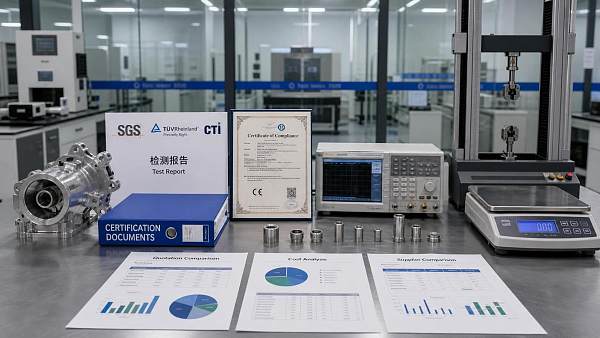
Technical teams should also distinguish between a test report, a certificate, a supplier declaration, and a mark displayed on product literature. Each can be useful, but they are not interchangeable. A test report may contain detailed raw evidence but apply only to the submitted sample. A certificate may provide an easier approval reference but contain less technical detail. A declaration may be required within a regulatory process yet depend on the manufacturer’s underlying evidence. A logo on a brochure is not proof unless it can be traced to a valid, applicable document.
When documentation is commercially sensitive, suppliers may be reluctant to release full reports. That does not remove the need for technical substantiation. A controlled review, redacted report, direct confirmation from the issuing body, or a structured compliance matrix can be appropriate, depending on the procurement model and criticality of the product. The approval record should still show why the evidence was accepted.
Certification must remain connected to the delivered product
Product qualification is often treated as a gate before procurement. For critical assets, it should also create controls that continue through delivery, installation, and handover. Otherwise, the project can approve an evidence-backed product and receive a materially different one.
A practical qualification file should identify the approved configuration and state what changes require review. Those changes may include substitutions of raw materials or critical components, movement to another factory, changes in fabrication process, revised drawings, altered dimensions, new suppliers, software updates, modified control logic, or installation changes. The required response may range from document review to retesting, recertification, or renewed engineering approval.
For repeatable manufactured goods, batch traceability and incoming inspection can provide a bridge between certification and supply. For installed systems, the bridge may include approved drawings, installer competence, inspection hold points, commissioning records, functional tests, and final as-built documentation. For software-enabled systems, configuration records, version control, interface testing, and patch responsibilities can be equally important.
This is particularly relevant where a product’s claimed performance depends on a system rather than an isolated item. Thermal, fire, water, acoustic, structural, electrical, and digital performance can all be degraded by incorrect interfaces. A certification should therefore inform the installation and commissioning plan, not remain attached only to a procurement submission.
Use certification to make an approval decision, not to avoid one
The most effective qualification process converts evidence into a clear decision. Approval should not simply say that a certificate was received. It should state whether the product is approved for the proposed use, which configuration is approved, what conditions apply, what gaps remain, and who owns the remaining actions.
For lower-risk products, a valid and applicable certification may be enough to support routine acceptance. For products with high safety, operational continuity, durability, or integration consequences, the decision will often need several evidence layers: verified performance results, applicable compliance documents, design review, supplier manufacturing controls, installation requirements, and acceptance testing.
A useful final question is simple: if this product fails in the way that matters most at the site, does the certification directly address that failure mode? If the answer is yes, the evidence may be central to approval. If the answer is partly, the certification still has value, but it should be paired with targeted verification rather than treated as complete proof.
That approach gives verified performance certification its proper role during product qualification. It is a disciplined basis for confidence in defined conditions, and a practical tool for exposing where confidence still needs to be earned.
Recommended News
 Oct 08, 2026What Drives System Interoperability Testing Service Costs in Complex Projects?System interoperability testing service cost depends on integration scope, workflows, environments, and assurance needs. Learn how to budget smarter and reduce project risk.
 Oct 03, 2026Verified Performance Certification: What It Proves During Product QualificationVerified performance certification helps teams qualify products with confidence. Learn how to assess scope, test conditions, and delivery controls before approval.
 Oct 01, 2026Multiaxial Material Fatigue Analysis for Predicting Service Life Under Variable LoadsMultiaxial material fatigue analysis helps predict service life under variable loads, enabling safer procurement, lower lifecycle risk, and durable tourism infrastructure.
 Sep 28, 2026What Does Tourism Destination Infrastructure Cost? A Budgeting Guide for DevelopersTourism destination infrastructure price guide for developers: budget utilities, systems, installation, lifecycle costs, and contingencies for smarter investments.
 Sep 26, 2026Regulatory Compliance Procurement Support: How to Vet Suppliers Before Contract AwardRegulatory compliance procurement support helps buyers vet suppliers, verify evidence, manage risks, and secure compliant assets before contract award.
 Sep 15, 2026System Integration Testing for Device Integration: Key Interfaces and Failure RisksSystem integration testing device integration: identify critical interfaces, hidden failure risks, recovery gaps, and acceptance evidence before connected devices go live.
 Sep 01, 2026How to Use a Tourism Standards Database to Verify Safety and Compliance RequirementsTourism standards database guide: verify safety, compliance, evidence scope, test conditions, and jurisdiction requirements with confidence.
 Aug 31, 2026Material Performance Validation: Tests and Acceptance Criteria for Critical PartsMaterial performance validation: discover essential tests and acceptance criteria that help critical parts withstand loads, corrosion, fatigue, and real-world service conditions.
 Aug 26, 2026What Is a CMS and How Do You Choose One for a Growing Business Website?CMS explained for growing business websites: learn how to choose a CMS that supports SEO, workflows, integrations, and long-term scalability without costly rebuilds.
 Aug 24, 2026How to Build a Technical Procurement Content Workflow for Faster Vendor EvaluationTechnical procurement content workflow strategies for faster vendor evaluation: standardize intake, compare evidence clearly, surface risks early, and cut costly procurement delays.
 Aug 20, 2026How to Evaluate Sustainable Concrete Alternatives for Low-Carbon Building ProjectsSustainable concrete alternatives: learn how to compare carbon data, structural performance, code compliance, and supply risk to choose low-carbon concrete solutions with confidence.
 Aug 17, 2026What Does Product Category Insights Reveal About Buyer Demand and Market Positioning?Product category insights reveal buyer demand, key product attributes, and market positioning. Learn how to spot reliable signals, compare segments, and make smarter decisions.
 Aug 13, 2026How to Use Industry Benchmarking to Improve Specification Planning DecisionsIndustry benchmarking for specification planning helps technical evaluators make smarter procurement decisions, reduce risk, and improve long-term performance with evidence-based standards.
 Aug 12, 2026Technical Certification Pricing Model: What Drives Cost and How to Compare QuotesTechnical certification pricing model explained: learn what drives cost, spot hidden risks in low quotes, and compare certification proposals with confidence before you approve budget.
 Aug 09, 2026How to Evaluate Tourism Equipment for Eco Resorts Without Compromising Guest ExperienceTourism equipment evaluation for eco resorts made practical: learn how to balance sustainability, durability, and guest comfort to avoid costly mistakes and choose smarter.
 Aug 07, 2026How to Evaluate LEED Standards for Environmental Sustainability in Building ProjectsEnvironmental sustainability assessment LEED standards explained: learn how to evaluate prerequisites, credits, costs, and project risks to achieve smarter, more reliable green building outcomes.
 Aug 05, 2026Why Eco Structures in the Middle East Are Shifting Toward Modular, Off-Grid DesignsEco structures in Middle East markets are moving to modular, off-grid designs for faster delivery, lower operating risk, and stronger climate resilience. Discover what is driving the shift.
 Jul 30, 2026Industry Insights for Market Expansion: How to Identify High-Potential Regions?Industry insights for market expansion: learn how to identify high-potential regions by assessing demand, infrastructure, compliance, and supply chain readiness for smarter growth.
 Jul 14, 2026How to Apply a Tourism Innovation Validation Framework to Assess New Visitor ProjectsTourism innovation validation framework explained: learn how to assess new visitor projects, reduce delivery risk, verify compliance, and make smarter investment decisions.
 Jul 13, 2026Import Market Research Checklist: How to Assess Demand, Tariffs, and Supplier RiskImport market research made practical: learn how to assess real demand, model tariffs, and reduce supplier risk with a clear checklist for smarter sourcing decisions.
 Jul 11, 2026Fade Resistant Durability: Which Test Methods Matter for Long-Term Outdoor Use?Fade resistant durability starts with the right test data. Discover which methods best predict long-term outdoor performance, color stability, and lower lifecycle risk.
 Jul 09, 2026Electronic Gadgets for Travel and Daily Use: How to Pick Features That MatterElectronic gadgets for travel and daily use should deliver real value. Learn how to compare battery life, portability, durability, and connectivity before you buy.
 Jul 08, 2026Regulatory Compliance Framework Explained: Core Elements, Gaps, and Audit ReadinessRegulatory compliance framework explained for modern organizations: learn core elements, common gaps, and audit readiness strategies to reduce risk, improve control, and strengthen decisions.
![]() Jul 07, 2026Faucets and Mixers Buying Guide: Types, Valve Options, and Finish SelectionFaucets and mixers buying guide covering fixture types, valve options, and finish selection. Compare durability, comfort, maintenance, and performance before you buy.
Quarterly Executive Summaries Delivered Directly.
Join 50,000+ industry leaders who receive our proprietary market analysis and policy outlooks before they hit the public library.