Search News
TerraVista Metrics (TVM)Industry Portal
TerraVista Metrics (TVM)Hot Articles
TerraVista Metrics (TVM)- Cableway Station Spacing: How Terrain and Capacity Shape the DistanceExplore cableway systems station spacing and learn how terrain, passenger capacity and safety shape practical, route-specific design decisions.
- What Is an Industry Insights Data Model? Key Components and UsesDiscover how an industry insights data model connects market data, improves comparisons, and supports smarter benchmarking and procurement decisions.
- Vingcard Deploys MENA’s First Native Wallet Hotel Keys in EgyptVingcard and Hudini bring native wallet hotel keys to three Egypt resorts. Discover what app-free access could mean for hotel buyers and suppliers.
Popular Tags
TerraVista Metrics (TVM)Industry NewsWater Stopper for Concrete: Where Leaks Usually Start
auth.Time
Nov 16, 2026Click Count
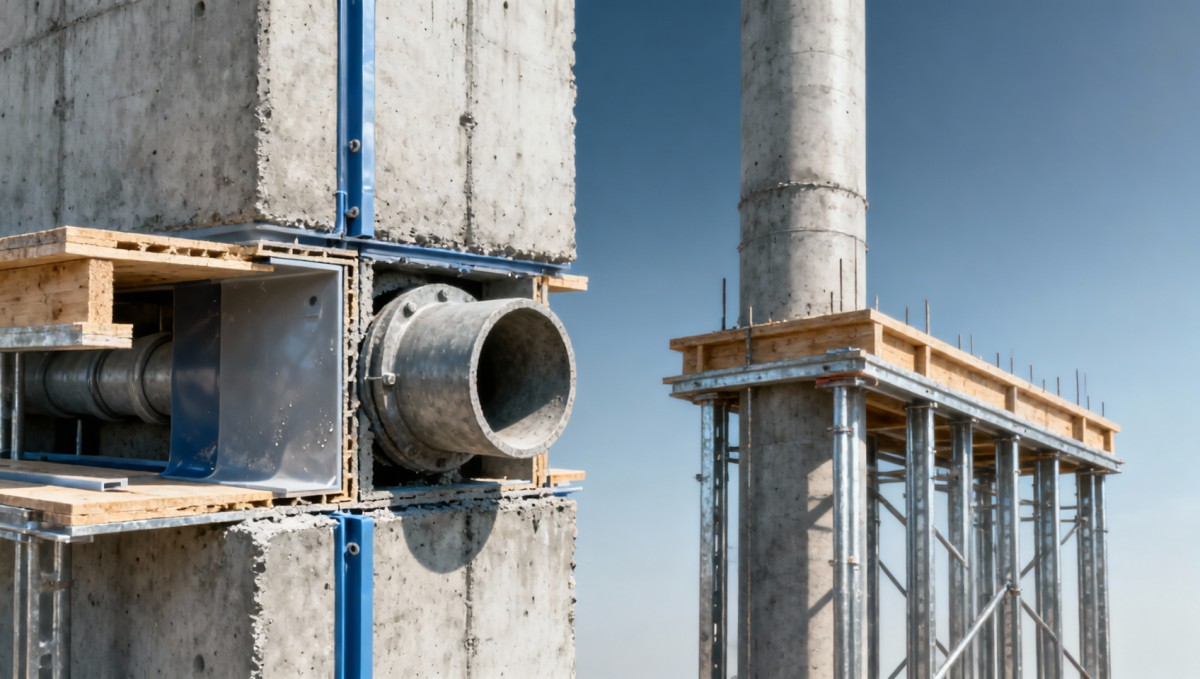
In concrete construction, leaks often begin at the smallest weak points—and choosing the right water stopper for concrete is critical to long-term durability. For buyers comparing climbing formwork systems, fiberglass formwork panels, plastic concrete formwork, and steel column formwork OEM solutions, understanding how sealing performance connects with structural hardware can prevent costly failures and improve procurement decisions from the start.
For tourism infrastructure developers, hotel project teams, and procurement evaluators, this issue is not limited to basements, retaining walls, or water tanks. Leak control directly affects asset life, operating continuity, guest safety, and maintenance budgets. In projects such as resort villas, prefab hospitality units, service corridors, podium structures, and leisure facilities, a weak joint can turn into a high-frequency repair point within 6–24 months.
TerraVista Metrics (TVM) approaches this topic from a benchmarking perspective. Rather than treating a water stopper for concrete as an isolated accessory, procurement teams should assess it alongside formwork rigidity, joint tolerance, installation discipline, material compatibility, and lifecycle risk. This article outlines where leaks usually start, how sealing interacts with formwork systems, and what B2B buyers should verify before selecting suppliers or OEM manufacturing partners.
Where Concrete Leaks Usually Begin in Real Project Conditions

Most concrete leak paths do not begin through the middle of a well-cured slab. They usually start at construction joints, expansion joints, pipe penetrations, tie-rod holes, cold joints, or poorly consolidated corners. In practical site conditions, even a 1–3 mm gap at a joint interface can become a water migration channel when hydrostatic pressure increases during rainfall, groundwater rise, or cleaning cycles.
This is especially relevant in mixed-use tourism developments where structures may include underground utility zones, pool decks, spa enclosures, landscape retaining walls, and modular hospitality units. Each of these areas experiences different moisture loads. A resort service basement may face continuous lateral water pressure, while a glamping platform foundation may face cyclical wetting and drying over 12 months of seasonal operation.
A water stopper for concrete works by interrupting water travel across a joint, but its success depends on positioning, concrete vibration quality, and the dimensional stability of the surrounding formwork. If the formwork deflects, shifts, or opens under pour pressure, the water stopper may become misaligned, folded, or partially exposed, reducing its effective sealing width.
Leak origins also differ by structural detail. Vertical walls often fail at lift joints; columns may leak at base transitions; slab penetrations often fail around embedded sleeves; and prefabricated interfaces may fail where different materials shrink at different rates. For procurement teams, this means that product selection should start with leak-origin mapping, not only unit price comparison.
High-risk leak points buyers should review
- Construction joints in walls and slabs poured in 2 stages or more.
- Pipe sleeves and MEP penetrations where movement or vibration may occur.
- Tie-hole and anchoring locations left by temporary formwork accessories.
- Transitions between prefab and cast-in-place concrete components.
- Expansion zones exposed to thermal movement of 5–15 mm or more.
The table below summarizes the most common leak starting points and the procurement implications attached to each one.
The key conclusion is simple: buyers should not ask only whether a water stopper for concrete is available. They should ask where the project is most likely to leak, what joint geometry exists, and whether the formwork package helps preserve sealing geometry under real pouring loads.
How Water Stoppers Interact with Formwork Systems
In procurement reviews, water stopping performance is often separated from formwork selection, even though the two are tightly linked. A well-specified PVC, rubber, or hydrophilic water stopper can still fail if the formwork allows deformation, misalignment, or grout loss. In many projects, dimensional inconsistency greater than ±2 mm at the joint edge is enough to compromise embedment continuity.
Climbing formwork systems are commonly used for tall walls, cores, tanks, and infrastructure shafts. Their main advantage is repeatable alignment over multiple lifts. For water stopping, this reduces the risk of offset joints between pours. However, the buyer should verify lifting accuracy, panel tightness, and anchoring stability, because repeated cycles can amplify small alignment errors after 8–12 lifts.
Fiberglass formwork panels can support smoother finishes and lower weight handling, but they should be assessed for edge stiffness and fastening quality. In wet-area structures, a panel that flexes excessively near corners can disturb the cover around the water stopper. Plastic concrete formwork may improve handling efficiency and reduce cleaning effort, yet lower rigidity in some configurations may require closer spacing of supports to maintain tight joints.
Steel column formwork OEM solutions are often selected where repeatability, dimensional consistency, and high reuse counts matter. For leak-sensitive column bases, plinths, and service shafts, steel formwork can help control geometry more precisely. The trade-off is weight, handling equipment, and corrosion management over long project cycles, especially in coastal tourism developments with saline exposure.
Comparing common formwork options in leak-sensitive concrete work
The following comparison helps procurement teams connect sealing reliability with structural hardware decisions instead of treating formwork and joint protection as separate budget items.
The practical takeaway is that a water stopper for concrete performs best when installed inside a formwork system that maintains line, level, and embedment consistency. Procurement teams evaluating OEM offers should request joint details, support spacing recommendations, and expected tolerance ranges rather than relying only on catalog photos or generic claims.
Key specification questions for supplier review
- What stopper material is proposed for static joints versus movement joints?
- What embedment depth and center-bulb arrangement are recommended for the joint type?
- What panel deflection limit is expected under normal pour pressure?
- What installation accessories or fixing clips are included?
- How many reuse cycles can the formwork maintain before tolerance drift becomes a risk?
Selection Criteria for Buyers: From Material Type to Procurement Risk
Selecting a water stopper for concrete should begin with joint function. Static joints in water-retaining or below-grade structures may use PVC or rubber profiles, while limited-gap construction joints may use hydrophilic strips where design allows. The right choice depends on expected movement, exposure condition, joint width, and installation method. Buyers should avoid selecting a stopper simply because it is the lowest-cost line item in the package.
For B2B evaluation, at least 4 dimensions should be checked: material suitability, dimensional stability, compatibility with the formwork layout, and inspection feasibility after installation. In projects with procurement cycles of 2–6 weeks, missing one of these checkpoints can create rework costs far above the original product price, especially when access becomes difficult after finishes or MEP installation.
Material choice matters because different stopper types respond differently to pressure, chemical exposure, and movement. PVC profiles are widely used for cast-in joints, but they need correct anchoring during the pour. Hydrophilic strips can expand when exposed to water, yet premature exposure before casting can reduce performance. Rubber profiles may be preferred in some movement zones, but they require correct sizing and splicing discipline.
Procurement teams serving tourism and hospitality developments should also connect leak risk to operational value. A leak in a service tunnel may interrupt maintenance only, but a leak in a spa wall, premium suite podium, or guest circulation zone can trigger room downtime, finish replacement, and reputational damage. This is why joint sealing deserves the same review rigor as energy systems, façade assemblies, or smart hospitality hardware integration.
Buyer decision matrix
The matrix below can be used during technical comparison meetings, RFQ reviews, or supplier qualification discussions.
The most effective buyers usually apply a total-risk view. If one option saves 3% on purchase cost but increases installation uncertainty, downtime risk, or repair probability, it is rarely the better commercial choice over a 5–10 year asset horizon.
Common buyer mistakes
- Approving a stopper profile without reviewing the exact joint detail drawing.
- Comparing only material price, while excluding labor sensitivity and repair access cost.
- Ignoring how OEM formwork tolerance affects stopper placement accuracy.
- Assuming all wet-area concrete requires the same sealing solution across different structures.
Implementation, Inspection, and Lifecycle Maintenance
Even the correct specification can fail without disciplined execution. A practical leak-control workflow should include 5 stages: joint mapping, material approval, mock-up or method review, installation inspection before concrete placement, and post-pour verification. On larger hospitality or tourism infrastructure projects, this sequence reduces ambiguity between procurement, engineering, and site execution teams.
Before pouring, installers should confirm centerline placement, splice integrity, end treatment, and fixing stability. During the pour, vibration should be sufficient to eliminate voids without displacing the water stopper. After stripping formwork, the team should check for honeycombing, exposed edges, grout leakage marks, and tie-hole sealing condition. These steps are often completed within 24–72 hours after stripping, when corrections are still manageable.
Lifecycle thinking is equally important in tourism assets because operational disruption carries a visible cost. Water ingress behind decorative surfaces, wellness facilities, guest-facing retaining walls, or smart utility corridors may trigger repeated closures or equipment damage. A small joint defect can remain hidden for months before becoming a repair event during peak occupancy, when access windows are shortest and service impact is highest.
For distributors, agents, and procurement managers, this means product supply should be supported by documentation quality. Installation guides, storage conditions, splice procedures, and recommended inspection checklists can add as much value as the material itself. In many cases, the difference between a stable project and a claim-prone project is not only the product grade but the quality of technical handoff.
Suggested inspection checklist
- Confirm joint type and required stopper profile before installation begins.
- Check that stored materials are dry, protected, and not prematurely activated by water exposure.
- Verify fixing points at regular intervals so the stopper remains centered during the pour.
- Inspect splices and corners visually before closing the formwork.
- Record post-strip defects and repair within the first 3–7 days when feasible.
FAQ for procurement and evaluation teams
How do I know whether a water stopper for concrete is suitable for my project?
Start with joint classification, expected water exposure, and movement condition. A static basement wall joint, a pool edge detail, and a prefab hospitality platform interface may require different solutions. Review drawings, pour sequence, and access constraints before approving a material.What lead time should buyers expect?
For standard profiles and common accessories, lead time may fall within 7–15 days depending on quantity and finishing requirements. For custom OEM coordination with formwork packages, review periods and production alignment may extend procurement to 2–4 weeks.Is formwork really that important to sealing performance?
Yes. If the formwork shifts, opens, or deflects during pouring, the stopper may move off-center or lose embedment quality. That is why buyers comparing climbing formwork systems, fiberglass formwork panels, plastic concrete formwork, and steel column formwork OEM options should include leak-control criteria in the hardware assessment.What should distributors and agents request from manufacturers?
Ask for dimensional details, material handling guidance, recommended application range, packaging consistency, and installation notes. These documents help downstream buyers make more accurate comparisons and reduce claims related to misuse or unclear site conditions.A reliable water stopper for concrete is not just a product choice; it is a coordination decision that links joint design, formwork behavior, installation control, and long-term asset performance. For tourism infrastructure, hospitality developments, and mixed-use concrete projects, the cost of getting this wrong often appears later as shutdowns, finish damage, and preventable maintenance cycles.
TVM helps decision-makers evaluate construction components through measurable engineering logic rather than marketing language alone. If you are comparing sealing solutions, formwork systems, or OEM hardware packages for leak-sensitive concrete applications, now is the right time to review your specifications, verify supplier assumptions, and align procurement with lifecycle performance. Contact us to discuss your project criteria, request a tailored evaluation framework, or explore more solution-focused benchmarking support.
Recommended News
 Nov 17, 2026What Is an Industry Insights Data Model? Key Components and UsesDiscover how an industry insights data model connects market data, improves comparisons, and supports smarter benchmarking and procurement decisions.
 Nov 16, 2026Maintenance Planning for Outdoor Venues: A Seasonal ChecklistMaintenance planning for outdoor venues made practical: explore a seasonal checklist to reduce risks, prevent downtime, and keep assets ready year-round.
 Nov 15, 2026Choosing Building Materials for Passive Design: Insulation and Thermal MassExplore passive design building materials and discover how to balance insulation and thermal mass for comfortable, efficient cabins and hospitality spaces.
 Nov 14, 2026International Standards Compliance: How to Identify Applicable StandardsMaster international standards compliance: identify applicable requirements, assess evidence, and build a traceable matrix for confident procurement decisions.
 Nov 13, 2026Future-Ready Hotel Systems: How to Evaluate InteroperabilityMake hospitality system interoperability future ready. Discover how to assess APIs, security, workflows and vendor claims before investing.
 Nov 12, 2026Middle East Hotel Pipeline Reaches Record 771 Projects at End of Third QuarterThe Middle East hotel pipeline reached a record 771 projects in Q3 2026. Explore potential opportunities for construction, smart room and furniture suppliers.
 Nov 12, 2026Fatigue Testing Methods: Comparing Axial, Bending and Torsional TestsCompare fatigue testing methods for axial, bending and torsional loads. Learn how to interpret results and choose the right test for your component.
 Nov 11, 2026OpenAI Acquires Travel Agent Startup Odessia as OTA Shares FallOpenAI acquires AI travel agent Odessia as OTA shares fall. Explore what the deal could mean for travel planning, booking, and online travel agencies.
 Nov 11, 2026A Buyer's Guide to Modular Systems: Compatibility, Expansion and CostExplore buyer guides for modular systems and learn how to assess compatibility, plan expansion, uncover hidden costs and compare supplier quotes with confidence.
 Nov 10, 2026Global Tourism Forum Opens in Brussels With Focus on Investment and TrustThe Global Tourism Forum opens in Brussels, spotlighting tourism investment, security and trust. Explore what the talks could mean for destinations and investors.
 Nov 07, 2026Product Benchmarking: How to Compare Material Performance and DurabilityMaster product benchmarking and material comparison with practical tips for evaluating test data, durability and lifecycle costs. Make confident purchasing decisions.
 Nov 06, 2026Supply Chain Intelligence for Procurement: How to Identify Supplier RisksSupply chain intelligence for procurement helps you uncover supplier risks, verify critical evidence, and protect delivery, quality, and compliance.
 Nov 05, 2026Eco-Lodging Materials: How to Verify Certification ClaimsVerify eco lodging materials certification with confidence. Learn how to check claims, trace products and avoid misleading sustainability statements.
 Nov 03, 2026Choosing Sustainable Hospitality Furniture in North America: What Buyers Should CheckSustainable hospitality furniture in North America: discover how to assess durability, certifications, repairability and costs before you buy.
 Nov 02, 2026Integrating Prefabrication into Low-Carbon Building ProjectsExplore prefab integration low carbon strategies to compare emissions, manage logistics, and deliver resilient, energy-efficient hospitality projects.
 Oct 28, 2026Solar Trackers vs. Fixed-Tilt Systems: Which Suits Your Utility-Scale Project?Solar trackers or fixed-tilt systems? Compare energy yield, site constraints, maintenance, and lifetime costs to find the best fit for your utility-scale project.
 Oct 27, 2026Food Export Compliance: What to Check Before Your First Overseas ShipmentFood export compliance starts before dispatch. Discover essential checks for approvals, labels, certificates, and cold-chain controls to help prevent costly delays on your first overseas shipment.
 Oct 25, 2026Synthetic Rattan Resort Furniture: What to Check for Coastal DurabilityBuying synthetic rattan resort furniture? Discover key checks for UV resistance, corrosion protection, and warranty coverage to reduce coastal replacement costs and buy with confidence.
 Oct 24, 2026Which Hospitality Furniture Compliance Standards Apply to U.S. Hotels?Explore hospitality furniture compliance standards for U.S. hotels, from fire safety and ADA requirements to supplier documentation. Make informed purchases and reduce compliance risks.
 Oct 23, 2026Choosing Sustainable Prefab Building Materials: Embodied Carbon and DurabilityChoose prefab sustainable building materials with confidence. Compare embodied carbon, durability, and EPDs to reduce whole-life impacts and make smarter procurement decisions.
 Oct 22, 2026Winnebago Q4 Revenue Falls 17% to $645.1 Million as Full-Year Profit RisesWinnebago Q4 revenue fell 17% to $645.1 million as full-year profit rose. Explore RV shipment trends, product mix shifts and what fiscal 2027 earnings guidance signals.
 Oct 18, 2026Tourism Asset Evaluation Criteria: Assessing Demand, Cash Flow, and Investment RiskExplore tourism asset evaluation criteria to assess demand, cash flow, lifecycle costs, and investment risk. Discover how to identify resilient assets and make smarter investment decisions.
 Oct 16, 2026Integrated Systems for Destination Planning: How to Connect GIS and Visitor DataExplore integrated systems for destination planning that connect GIS and visitor data to reveal bottlenecks, assess capacity, and guide smarter infrastructure investments.
 Oct 21, 2026Furniture Sustainability Testing: What Evidence Supports Green Claims?Furniture sustainability testing helps verify green claims through emissions data, sourcing records, and durability evidence. Discover what to check before approving your next purchase.
{item.publish_time}{item.title}{item.description}Quarterly Executive Summaries Delivered Directly.
Join 50,000+ industry leaders who receive our proprietary market analysis and policy outlooks before they hit the public library.