Search News
TerraVista Metrics (TVM)Industry Portal
TerraVista Metrics (TVM)Hot Articles
TerraVista Metrics (TVM)- What Drives System Interoperability Testing Service Costs in Complex Projects?System interoperability testing service cost depends on integration scope, workflows, environments, and assurance needs. Learn how to budget smarter and reduce project risk.
- Project Planning Sourcing Guides: How to Qualify Suppliers Before Work StartsSourcing guides project planning helps teams qualify suppliers before work begins—verify compliance, delivery capacity, financial strength, and sustainability to reduce risk and protect project outcomes.
- Buyer’s Guide to Kinetic Art: Choosing Safe, Durable Pieces for Public SpacesBuyer guides kinetic art for public spaces: learn how to choose safe, durable, low-maintenance installations with reliable engineering, materials, controls, and lifecycle value.
Popular Tags
TerraVista Metrics (TVM)Industry NewsGlamping Site Supplier Selection: A Checklist for Quality, Lead Times, and Support
auth.Time
Oct 06, 2026Click Count
Start with the operating model, not the unit brochure
Glamping site supplier selection is often treated as a design and price comparison exercise. That approach can work for a small seasonal installation with low occupancy expectations, but it is weak for a commercial site expected to operate through changing weather, repeated guest turnover, and a multi-year payback period.
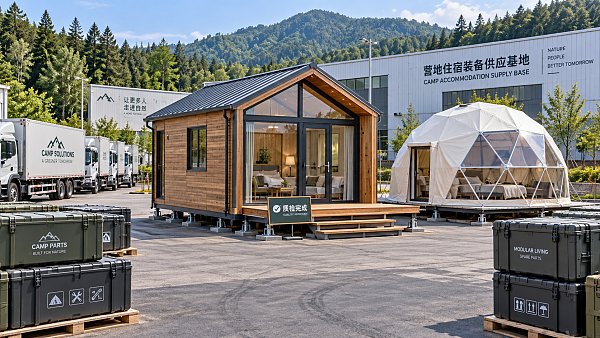
A supplier should be assessed against the conditions the site will actually impose: climate, ground conditions, access constraints, operating season, housekeeping practices, maintenance capability, local permitting, and the level of guest comfort being sold. A visually compelling tent, dome, cabin, or modular lodge may be entirely suitable in one setting and a costly operational problem in another.
Before issuing requests for quotation, procurement teams should write a short operating brief that suppliers must respond to. It should define the intended number of units, expected opening date, target occupancy pattern, maximum and minimum seasonal conditions, utility strategy, foundation approach, transport access, accessibility requirements, and who will install and maintain the units. This document makes quotations comparable and exposes suppliers that rely on broad claims rather than project-specific engineering.
The first decision is also a commercial one: is the supplier being asked to provide a product, a delivered building package, or a complete site solution? Those scopes carry very different responsibilities. A unit supplier may price the shell attractively while excluding foundations, drainage interfaces, internal finishes, utility connections, installation equipment, site supervision, and commissioning. None of those exclusions is inherently unacceptable, but they must be visible before the procurement team compares capital cost.
Quality evidence should be traceable to the proposed configuration
Quality is difficult to judge from photographs, renderings, and a showroom sample. In glamping infrastructure, the visible finish is only one layer of performance. The buyer needs evidence that the structure, enclosure, floor system, openings, insulation, and connection details suit the intended site.
Ask suppliers to identify the exact specification behind their proposal, including materials, thicknesses or grades where applicable, finishing systems, insulation build-up, glazing type, roof or membrane construction, floor assembly, corrosion protection, and fastening methods. Product names alone are not enough. A supplier may show a premium reference unit while quoting a different membrane, frame finish, window package, or interior standard.
For fabric-based structures, the relevant questions extend beyond visual appearance and waterproof claims. Procurement should establish how the material performs under prolonged ultraviolet exposure, wind movement, condensation, cleaning, tension changes, and repair. Ask how seams, zippers, penetrations, vents, and window interfaces are detailed. Water ingress often begins at transitions rather than across the main fabric surface.
For modular cabins and rigid eco-structures, scrutinize the interfaces between factory-built components and site work. Roof junctions, floor edges, bathroom wet zones, external cladding, lifting points, and utility penetrations can determine whether an otherwise sound unit remains durable after transport and installation. Thermal performance also depends on continuity at those junctions, not simply on the insulation listed in a sales sheet.
A useful supplier response should include the following:
- A configuration-specific specification and drawing set, rather than generic catalogue pages.
- Information on the structural design basis, including the environmental loads and installation assumptions used for the proposal.
- Material documentation and relevant fire, electrical, structural, or environmental compliance records required by the destination jurisdiction.
- Details of factory quality controls, incoming material checks, and final inspection before dispatch.
- Clear identification of work performed in-house and work outsourced to third parties.
- A schedule of recommended inspection, cleaning, adjustment, and replacement activities.
Certificates deserve careful reading. A certificate may apply to a material, a component, a manufacturing process, or a different product configuration. It does not automatically validate the completed unit on the proposed site. Procurement should ask what the document covers, which version of the product it applies to, who issued it, and whether the local authority or insurer will accept it for the intended use.
Where a site involves challenging weather, elevated fire exposure, public access, or year-round accommodation, independent technical review may be warranted before contract award. This is especially useful when a supplier’s documentation is internally inconsistent, when overseas production is involved, or when a novel structure is being introduced into a regulatory environment designed around conventional buildings.
Test lead-time credibility, not just the promised delivery date
A quoted lead time is a planning assumption, not a delivery plan. The distinction matters because a delayed unit shipment can affect groundworks, utility coordination, staffing, booking launch dates, and financing milestones. A supplier that says it can deliver in a given number of weeks should be able to explain what starts that clock and what could move it.
Lead time commonly has several separate phases: design freeze, engineering approval, material procurement, factory production, quality inspection, packing, transport, customs or port handling where relevant, site installation, and final handover. A short factory production period can distract from longer delays in approvals, specialized components, freight capacity, or site readiness.
Ask for a milestone schedule with named dependencies. It should show when the buyer must approve drawings, release deposits, confirm finishes, prepare foundations, provide crane or vehicle access, and complete utilities. It should also identify the supplier’s responsibilities for production release, pre-shipment inspection, packing, export documentation, shipping coordination, installation labor, and commissioning.
Capacity claims should also be checked against the supplier’s order profile. A factory may be capable of producing a prototype quickly yet unable to deliver a phased rollout of dozens of units with consistent quality. Ask about the production line allocated to the order, the maximum batch size the supplier can handle, and how it will manage concurrent projects. For repeatable hospitality accommodation, consistency between units matters as much as the quality of the first unit shown.
Contract language should distinguish between estimated and committed dates. It should define the accepted delivery point, the process for reporting delay, the handling of buyer-caused delays, and the remedies available when supplier-controlled milestones are missed. A contract cannot remove every disruption, but it prevents a vague target date from becoming the only basis for managing a critical opening schedule.
Assess installation as part of the supply package
Many glamping assets fail commercially at the handover boundary between supplier and site contractor. The factory may deliver a sound unit, while the project still suffers from water pooling, inadequate anchoring, poor ventilation, electrical faults, or inaccessible service routes. These are not always product defects, but they become the operator’s problem.
Procurement should map every interface before selecting a supplier. Who designs and signs off on the foundation? Who verifies ground bearing conditions? Who supplies anchors and confirms their suitability? Who connects water, wastewater, power, heating, ventilation, and data? Who seals external connections after installation? Who is responsible for site drainage around the unit?
This is particularly important for remote sites, sloping terrain, protected landscapes, and locations with restricted vehicle access. A supplier’s standard installation method may depend on a crane, flat hardstanding, wide turning radii, or pre-cast foundations that the site cannot accommodate. Transport feasibility should be tested using the actual access route, not a generic delivery assumption.
Request an installation method statement or equivalent project plan early in the process. It should state the required crew, lifting equipment, installation duration, weather limitations, temporary storage needs, site safety responsibilities, and handover tests. If installation is delegated to a local partner, establish whether that partner is trained, authorized, insured, and able to obtain spare parts without delay.
After-sales support determines the cost of a defect
Support is easy to underrate when the unit is new and the procurement decision is focused on opening day. Yet a glamping site sells occupied nights. A leaking roof, failed HVAC component, damaged window, torn membrane, or unavailable fitting can take a unit out of inventory during its most valuable period.
Evaluate support as an operating system rather than a warranty statement. A warranty may be limited in duration, exclude labor or travel, require specific maintenance records, or cover only factory defects. Those conditions may be reasonable, but the operator needs to understand how a problem will be diagnosed and resolved in practice.
Ask suppliers to provide their response process for defects, the escalation route, typical spare-parts availability, repair manuals, and the skills required on site. Clarify which spare parts should be held by the operator at opening, particularly for proprietary hardware or components with uncertain transport times. For a remote destination, it may be more valuable to carry a small stock of critical parts than to rely on urgent international dispatch.
Support quality can also be assessed through documentation. Strong suppliers usually provide clear unit records, installation instructions, maintenance schedules, component lists, and a defined handover process. Weak documentation shifts knowledge into individual emails and makes routine maintenance dependent on the original project contact.
Do not assume that a global supplier automatically offers global service. Determine where technical staff are located, whether remote troubleshooting is available, how field repairs are authorized, and whether local service can be arranged during the operating season. The correct support model depends on site scale. A single-unit retreat may accept a slower response time; a larger resort with centralized operations may need defined service levels and a trained local maintenance team.
Use total operating exposure to make the final comparison
The lowest purchase price can be the right choice only when the lower specification matches the operating model and the risk is understood. It becomes a poor choice when savings are created by excluding items that will later be purchased at higher cost, or by accepting a unit that requires frequent intervention, seasonal closure, or premature replacement.
A practical final comparison should place each supplier against the same decision criteria: verified technical fit, completeness of scope, delivery confidence, installation readiness, compliance pathway, service capability, and long-term maintenance burden. Weighting will vary by project. A weather-exposed destination may prioritize enclosure durability and anchoring; a fast-opening resort may give greater weight to production control and installation capacity; a remote location may prioritize repairability and local support.
Procurement teams should resist the temptation to solve uncertainty through more polished presentations. The better response is to convert uncertainty into specific evidence requests, assumptions, milestones, and contractual responsibilities. By the time a supplier is selected, the buyer should be able to explain why the proposed unit fits the site, what is included in the delivered scope, how the opening date will be protected, and who will act when the asset needs attention after guests arrive.
Recommended News
 Oct 07, 2026Project Planning Sourcing Guides: How to Qualify Suppliers Before Work StartsSourcing guides project planning helps teams qualify suppliers before work begins—verify compliance, delivery capacity, financial strength, and sustainability to reduce risk and protect project outcomes.
 Oct 05, 2026Regulatory Compliance Vendor Comparison: How to Assess Audit Readiness and RiskRegulatory compliance vendor comparison made practical: assess audit readiness, evidence quality, change control, and supply-chain risk before award. Learn how to choose defensible suppliers.
 Sep 18, 2026Technical Procurement in Southeast Asia: Evaluating Suppliers, Compliance, and Lead TimesTechnical procurement Southeast Asia: evaluate suppliers, compliance, lead times, and total cost to secure reliable, project-ready assets. Read the practical guide.
 Sep 17, 2026Glamping Site Supplier Selection: A Checklist for Quality, Lead Times, and SupportGlamping site supplier selection made simple: assess quality, lead-time reliability, installation readiness, and after-sales support for a resilient, profitable site.
 Sep 10, 2026How to Evaluate Resort Slide System Suppliers for Safety, Capacity, and Project SupportResort slide systems supplier evaluation guide: compare safety evidence, real capacity, durable materials, and project support for confident resort investments.
 Aug 27, 2026Hospitality Supplier Comparison: A Procurement Framework for Quality, Cost, and ReliabilityHospitality supplier comparison: evaluate quality, total cost, compliance, and service reliability to reduce procurement risk and protect guest experience.
 Aug 14, 2026Bedding Sets Wholesale: How to Choose the Right Supplier for Hotels and RetailersBedding sets wholesale for hotels and retailers: learn how to choose the right supplier for quality, compliance, and reliable delivery.
 Aug 11, 2026ITB China 2026 Closes With 900 Global ExhibitorsITB China 2026 closes with 900 global exhibitors from 85 countries, highlighting China’s growing role in tourism sourcing, travel tech, and cross-border supply chain opportunities.
 Aug 06, 2026How to Evaluate a Marine Hospitality Solutions Provider for Guest Experience and ROIMarine hospitality solutions provider evaluation starts with performance, not visuals. Learn how to assess guest experience, compliance, integration, and lifecycle ROI before you invest.
 Jul 20, 2026Supplier Capability Verification: How to Assess Quality, Capacity, and Delivery RiskSupplier capability verification helps buyers assess quality, production capacity, and delivery risk with a practical framework to reduce sourcing surprises and make smarter procurement decisions.
 Jul 14, 2026Global Sourcing Procurement Planning: Key Cost, Risk, and Lead-Time Factors to CompareGlobal sourcing procurement planning: compare total landed cost, lead-time reliability, compliance, and supplier risk to avoid hidden losses and make smarter sourcing decisions.
 Jul 12, 2026Hotel Furnishing for Guest Rooms: What to Check Before Comparing Suppliers and QuotesHotel furnishing for guest rooms: learn what to verify before comparing suppliers and quotes, from materials and compliance to lead times and lifecycle cost.
 Jul 09, 2026High-End Furniture Quotation Explained: What Drives Price and How to Compare OffersHigh-end furniture quotation explained: learn what drives price, how to compare offers, spot hidden risks, and choose durable, compliant value for hospitality projects.
 Jul 08, 2026How to Choose a Thermal Efficiency Testing Service Provider for Compliance and ROIThermal efficiency testing service provider selection affects more than compliance. Learn how to compare scope, reporting, and ROI to reduce risk, control costs, and choose with confidence.
![]() Jul 07, 2026How to Choose a Smart Home Devices Wholesale Supplier in China for Stable OEM OrdersSmart home devices wholesale supplier in China selection starts with OEM stability, compliance, and quality control. Learn how to avoid sourcing risks and secure reliable long-term orders.
 Jul 05, 2026How to Use Sourcing Guides Category Education to Compare Suppliers and Reduce Buying RiskSourcing guides category education helps buyers compare suppliers with real evidence, cut procurement risk, and evaluate compliance, durability, integration, and total cost with confidence.
 Jul 04, 2026Plastic Machinery Buying Guide: Key Machine Types, Output Needs, and Cost FactorsPlastic machinery buying guide covering key machine types, real output planning, and total cost factors. Compare suppliers smarter, reduce risk, and choose equipment that supports quality and ROI.
 Jul 03, 2026Metal Fabrication Processes Compared: Cutting, Bending, Welding, and When to Use EachMetal fabrication choices shape cost, strength, finish, and lead time. Compare cutting, bending, and welding to choose the right process for durable, efficient results.
 Jul 02, 2026Product Category ISO Standards: How to Check Compliance Requirements Before SourcingProduct category ISO standards are the first check before sourcing. Learn how to verify real compliance, reduce risk, avoid delays, and choose suppliers with confidence.
 Jul 01, 2026How to Use an Exporters Directory with Verified Suppliers for Safer Sourcing DecisionsExporters directory with verified suppliers: learn how to screen exporters, spot weak claims, reduce sourcing risk, and build a safer shortlist for smarter buying decisions.
 Jun 30, 2026CNC Machining Price Breakdown: What Drives Cost for Materials, Tolerances, and Volume?CNC machining price explained: see how materials, tolerances, and production volume affect cost, risk, and quote accuracy to help buyers source smarter and save more.
 Jun 29, 2026How to Evaluate a Technical Integration Solutions Provider for Multi-System ProjectsTechnical integration solutions provider selection starts with risk, not demos. Learn how to assess interoperability, security, compliance, and long-term reliability for multi-system projects.
 Jun 28, 2026Hospitality Equipment Comparison: What to Evaluate Before Buying for Hotels and ResortsHospitality equipment comparison for hotels and resorts: evaluate durability, compliance, integration, sustainability, and lifecycle cost before buying to avoid costly mistakes.
 Jun 24, 2026Trade Resources for Importers in China: How to Vet Suppliers and Compare TermsTrade resources for importers in China help you vet suppliers, compare terms, and uncover quality or compliance risks early for smarter, safer sourcing decisions.
Quarterly Executive Summaries Delivered Directly.
Join 50,000+ industry leaders who receive our proprietary market analysis and policy outlooks before they hit the public library.