Search News
TerraVista Metrics (TVM)Industry Portal
TerraVista Metrics (TVM)Hot Articles
TerraVista Metrics (TVM)- What Drives System Interoperability Testing Service Costs in Complex Projects?System interoperability testing service cost depends on integration scope, workflows, environments, and assurance needs. Learn how to budget smarter and reduce project risk.
- Project Planning Sourcing Guides: How to Qualify Suppliers Before Work StartsSourcing guides project planning helps teams qualify suppliers before work begins—verify compliance, delivery capacity, financial strength, and sustainability to reduce risk and protect project outcomes.
- Buyer’s Guide to Kinetic Art: Choosing Safe, Durable Pieces for Public SpacesBuyer guides kinetic art for public spaces: learn how to choose safe, durable, low-maintenance installations with reliable engineering, materials, controls, and lifecycle value.
Popular Tags
TerraVista Metrics (TVM)Industry NewsHow to Evaluate Resort Slide System Suppliers for Safety, Capacity, and Project Support
auth.Time
Oct 06, 2026Click Count
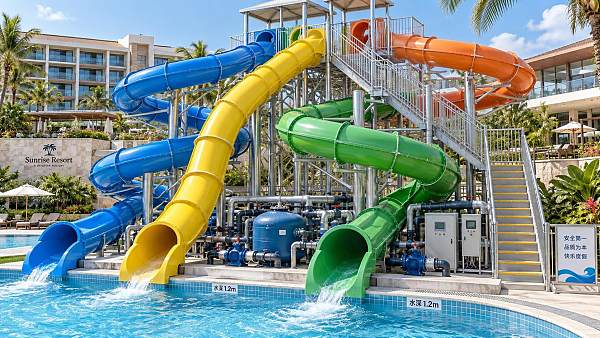
Selecting a resort slide systems supplier is an engineering and operational decision before it becomes a procurement decision. A visually appealing concept, a low equipment quote, or a familiar product catalog does not establish that a system will operate safely at the required throughput, fit the site, or remain serviceable after opening day.
For project managers, the most dependable supplier is usually the one that can turn the attraction concept into a documented operating system: defined rider limits, verified structural loads, compatible foundations, clear water and electrical interfaces, installation accountability, inspection support, and a credible path for replacement parts. Suppliers should be compared on that complete scope, not on slide appearance or unit price alone.
Start with the operating brief, not the supplier catalog
A resort slide system may serve a compact family pool, a destination water park, a hotel rooftop, an indoor leisure complex, or a mixed-use recreation zone. Those environments create very different constraints. A supplier cannot be evaluated properly until the project team has translated the business concept into an operating brief.
That brief should define who will use the slide, how the attraction will be supervised, what peak-day demand looks like, whether the ride will be seasonal or year-round, and what conditions the site imposes. Indoor systems may face humidity management and confined installation access. Coastal resorts may need stronger consideration of corrosion exposure. Remote sites may depend heavily on a supplier's commissioning capability and spare-parts logistics. A slide positioned as a family amenity may prioritize accessibility, rapid rider turnover, and low supervision burden over extreme speed or visual complexity.
These decisions affect the technical package. A supplier proposing a ride before clarifying the guest profile, dispatch method, available water flow, platform location, and maintenance access is offering a concept, not yet a project-ready solution.
Before requesting final proposals, establish a shared set of project assumptions:
- Expected guest demographics, including height, age, weight, and rider-combination limits where relevant.
- Target operating hours, seasonal exposure, and anticipated peak usage.
- Available footprint, elevation changes, structural support conditions, and construction access.
- Water-treatment interfaces, pumping capacity, drainage routing, electrical supply, and controls requirements.
- Local permitting, inspection, and operating requirements that apply to the planned location.
- Owner responsibilities for staffing, daily checks, maintenance labor, and replacement-part inventory.
This baseline makes comparisons more meaningful. Without it, two bids may appear to cover the same attraction while assuming different foundations, different control systems, different installation boundaries, or radically different operating capacities.
Safety evaluation should examine the evidence behind the claim
“Designed to international standards” is too broad to use as a selection criterion. The project team should ask which standards govern the design, fabrication, installation, inspection, and operation of the proposed system, and how the supplier demonstrates conformity for the destination market. Applicable requirements vary by jurisdiction and project type, so a generic certificate or a statement about prior exports is not enough on its own.
A capable resort slide systems supplier should be able to provide a traceable technical record. This normally includes design drawings, engineering calculations where applicable, material specifications, load information for supports and foundations, rider restrictions, operating procedures, inspection requirements, and documentation for installed safety components. The detail expected will differ by attraction, but the documents should correspond to the exact system being offered rather than to a broad product family.
Assess the safety case at three levels. First, assess the ride itself: slide geometry, entry and exit design, restraint or raft requirements, seams and joints, surface finish, splash-down behavior, rider separation, and signage. Second, assess the supporting system: towers, stairs, platforms, handrails, anchor points, pumps, controls, sensors, lighting, and emergency stops. Third, assess the operating environment: lifeguard sightlines, queue control, wet walking surfaces, weather procedures, evacuation routes, and access for rescue or maintenance.
The boundary between supplied equipment and site works deserves particular attention. A supplier may engineer the flume but exclude the steel structure, concrete works, filtration upgrades, electrical distribution, or local safety barriers. None of those exclusions is inherently problematic. The risk arises when interfaces are only described at a high level and then discovered during installation.
Ask suppliers to identify safety-critical interfaces in writing, including who has design responsibility, who approves changes, and what information must be released before construction begins. This is especially important when a local contractor is assembling sections, fabricating supports, or integrating controls from multiple vendors.
Do not treat certification as a substitute for site acceptance
Third-party review, certification, or inspection may be required by the authority having jurisdiction, insurer, lender, or owner. Even where the supplier has a strong compliance record, the installed system still needs a disciplined acceptance process. Site geometry, water delivery, support tolerances, access conditions, drainage, and control integration can all affect the final result.
Procurement documents should therefore distinguish between factory documentation and project acceptance. The supplier proposal should explain commissioning activities, functional checks, water-flow adjustments, operator training, punch-list closure, and the records delivered at handover. A slide can be manufactured correctly and still enter service with avoidable operational risk if commissioning is treated as an informal final visit.
Capacity is an operational calculation, not a catalog number
Resort owners often focus on claimed throughput because it influences guest satisfaction and revenue assumptions. Yet a published rider-per-hour figure usually depends on controlled dispatch intervals, staff availability, rider eligibility, queue behavior, water flow, raft handling, and a consistent operating routine. It should be read as a modeled condition, not a guaranteed daily outcome.
Project managers should ask the supplier to explain how its capacity estimate was developed. For a body slide, the relevant assumptions may include dispatch spacing, run duration, exit clearance, and rider restrictions. For tube slides or multi-rider attractions, raft retrieval, loading time, permitted rider combinations, lift or conveyor arrangements, and recovery after a stopped dispatch may have a larger effect. Family attractions can be particularly sensitive to loading and supervision time, even if the slide itself clears riders quickly.
Capacity also needs to be evaluated at the system level. A high-throughput slide feeding into a small landing pool, narrow exit zone, limited raft storage area, or constrained staircase can create congestion elsewhere. Similarly, a slide may be technically capable of rapid dispatch but require additional attendants to operate at that rate safely. The labor plan belongs in the decision, because an attraction whose modeled capacity depends on staffing that the operator will not maintain is mis-sized from the start.
Rather than asking which supplier promises the highest number, request a scenario-based capacity schedule. It should state the normal dispatch rhythm, maximum operating assumptions, expected staffing arrangement, rider eligibility limits, and the point at which the system must slow down. Compare those assumptions with the resort's expected guest mix and operating model.
For projects with several water attractions, model the guest journey as well. Guests do not experience capacity as a spreadsheet total. They experience queue length, wait time, clarity of rules, availability of tubes, and whether family groups can participate together. A balanced attraction mix may produce a better operating outcome than one headline slide with a theoretical peak throughput that is difficult to sustain.
Material durability must be matched to the site and maintenance plan
Slides are exposed to repeated loading, water chemistry, ultraviolet light, cleaning practices, wind, humidity, temperature cycles, and constant contact with guests and equipment. Materials should be evaluated for their behavior in the intended environment, along with the supplier's quality controls for fabrication, joining, coating, and finishing.
For fiberglass or composite flumes, the assessment should go beyond color and surface appearance. Ask about the laminate design, reinforcement strategy, gel-coat or surface protection system, joint construction, fastening method, and inspection approach for wear or cracking. For steel structures and fasteners, examine corrosion protection, material grades, drainage details, coating repair expectations, and compatibility between dissimilar metals. In high-salinity or high-humidity locations, minor omissions in these details can become recurring maintenance issues.
Water quality is another practical consideration. The slide supplier may not control treatment chemistry, but it should state operating conditions that can affect materials, seals, coatings, or equipment. The owner should ensure that those conditions are aligned with the pool designer, treatment specialist, and operations team. Assigning each party a narrow scope without reconciling these requirements is a common route to warranty disputes later.
Durability also depends on maintainability. A complex slide may be acceptable when inspection routes are safe, components can be reached without major disassembly, replacement sections can be identified precisely, and operators have practical maintenance instructions. It is less attractive when routine work requires specialized access equipment, long shutdowns, or components with unclear lead times.
Test project support before awarding the contract
Installation and post-handover support are often the differentiators between suppliers with similar-looking equipment. The proposal should make the support model visible: who develops installation drawings, who attends the site, who manages erection tolerances, who performs commissioning, and who remains responsible when a problem spans several trades.
Review the supplier's project controls with the same discipline used for other major engineered packages. Look for a realistic document-release schedule, defined approval gates, packing and shipment information, installation sequencing, site prerequisites, change-control procedures, and a clear list of owner-furnished items. A supplier that can explain its interface plan early is more likely to be prepared for the conditions that affect schedule and cost.
Questions worth putting directly into the tender process include:
- Which components are fabricated in-house, and which are sourced from third parties?
- What drawings and technical data will be issued before foundations, structural works, and utility rough-ins are finalized?
- What site conditions must be complete before installation personnel mobilize?
- How are field changes evaluated, approved, documented, and reflected in as-built records?
- What training is provided for operators, maintenance personnel, and emergency-response staff?
- What spare parts are recommended for opening and ongoing operation, and how are urgent replacements handled?
- What support is available after the warranty period, including technical advice, refurbishment, and component identification?
References can be useful, but they should be approached with specific questions. A site visit or reference discussion is more valuable when it examines commissioning quality, seasonal maintenance, parts availability, responsiveness during defects, and how the supplier handled deviations from the original installation plan. A polished completed attraction says little about the quality of support behind the walls, beneath the deck, and after the initial opening period.
Make the award decision on comparable lifecycle obligations
The lowest equipment price can conceal a larger project cost if it excludes engineering coordination, structure, controls integration, commissioning days, training, shipping constraints, spare parts, or future maintenance access. Conversely, a higher proposal may include services that reduce construction uncertainty and shorten the path to operational readiness. The correct comparison is the cost and accountability of delivering a safe, operable attraction through its intended service life.
A practical evaluation matrix can weight four areas: safety and compliance evidence; capacity and operating fit; technical durability and maintainability; and project delivery and lifecycle support. Commercial terms should then be reviewed alongside those scores, rather than replacing them. Any unresolved interface, undocumented capacity assumption, or vague handover obligation should be treated as a commercial and schedule risk, even when the supplier has a strong visual design.
The final choice should leave the project team with more than a selected slide. It should provide a defined operating envelope, a coordinated installation path, a documented acceptance process, and a support structure that remains usable once the resort moves from construction into daily guest operations.
Recommended News
 Oct 07, 2026Project Planning Sourcing Guides: How to Qualify Suppliers Before Work StartsSourcing guides project planning helps teams qualify suppliers before work begins—verify compliance, delivery capacity, financial strength, and sustainability to reduce risk and protect project outcomes.
 Oct 05, 2026Regulatory Compliance Vendor Comparison: How to Assess Audit Readiness and RiskRegulatory compliance vendor comparison made practical: assess audit readiness, evidence quality, change control, and supply-chain risk before award. Learn how to choose defensible suppliers.
 Sep 18, 2026Technical Procurement in Southeast Asia: Evaluating Suppliers, Compliance, and Lead TimesTechnical procurement Southeast Asia: evaluate suppliers, compliance, lead times, and total cost to secure reliable, project-ready assets. Read the practical guide.
 Sep 17, 2026Glamping Site Supplier Selection: A Checklist for Quality, Lead Times, and SupportGlamping site supplier selection made simple: assess quality, lead-time reliability, installation readiness, and after-sales support for a resilient, profitable site.
 Sep 10, 2026How to Evaluate Resort Slide System Suppliers for Safety, Capacity, and Project SupportResort slide systems supplier evaluation guide: compare safety evidence, real capacity, durable materials, and project support for confident resort investments.
 Aug 27, 2026Hospitality Supplier Comparison: A Procurement Framework for Quality, Cost, and ReliabilityHospitality supplier comparison: evaluate quality, total cost, compliance, and service reliability to reduce procurement risk and protect guest experience.
 Aug 14, 2026Bedding Sets Wholesale: How to Choose the Right Supplier for Hotels and RetailersBedding sets wholesale for hotels and retailers: learn how to choose the right supplier for quality, compliance, and reliable delivery.
 Aug 11, 2026ITB China 2026 Closes With 900 Global ExhibitorsITB China 2026 closes with 900 global exhibitors from 85 countries, highlighting China’s growing role in tourism sourcing, travel tech, and cross-border supply chain opportunities.
 Aug 06, 2026How to Evaluate a Marine Hospitality Solutions Provider for Guest Experience and ROIMarine hospitality solutions provider evaluation starts with performance, not visuals. Learn how to assess guest experience, compliance, integration, and lifecycle ROI before you invest.
 Jul 20, 2026Supplier Capability Verification: How to Assess Quality, Capacity, and Delivery RiskSupplier capability verification helps buyers assess quality, production capacity, and delivery risk with a practical framework to reduce sourcing surprises and make smarter procurement decisions.
 Jul 14, 2026Global Sourcing Procurement Planning: Key Cost, Risk, and Lead-Time Factors to CompareGlobal sourcing procurement planning: compare total landed cost, lead-time reliability, compliance, and supplier risk to avoid hidden losses and make smarter sourcing decisions.
 Jul 12, 2026Hotel Furnishing for Guest Rooms: What to Check Before Comparing Suppliers and QuotesHotel furnishing for guest rooms: learn what to verify before comparing suppliers and quotes, from materials and compliance to lead times and lifecycle cost.
 Jul 09, 2026High-End Furniture Quotation Explained: What Drives Price and How to Compare OffersHigh-end furniture quotation explained: learn what drives price, how to compare offers, spot hidden risks, and choose durable, compliant value for hospitality projects.
 Jul 08, 2026How to Choose a Thermal Efficiency Testing Service Provider for Compliance and ROIThermal efficiency testing service provider selection affects more than compliance. Learn how to compare scope, reporting, and ROI to reduce risk, control costs, and choose with confidence.
![]() Jul 07, 2026How to Choose a Smart Home Devices Wholesale Supplier in China for Stable OEM OrdersSmart home devices wholesale supplier in China selection starts with OEM stability, compliance, and quality control. Learn how to avoid sourcing risks and secure reliable long-term orders.
 Jul 05, 2026How to Use Sourcing Guides Category Education to Compare Suppliers and Reduce Buying RiskSourcing guides category education helps buyers compare suppliers with real evidence, cut procurement risk, and evaluate compliance, durability, integration, and total cost with confidence.
 Jul 04, 2026Plastic Machinery Buying Guide: Key Machine Types, Output Needs, and Cost FactorsPlastic machinery buying guide covering key machine types, real output planning, and total cost factors. Compare suppliers smarter, reduce risk, and choose equipment that supports quality and ROI.
 Jul 03, 2026Metal Fabrication Processes Compared: Cutting, Bending, Welding, and When to Use EachMetal fabrication choices shape cost, strength, finish, and lead time. Compare cutting, bending, and welding to choose the right process for durable, efficient results.
 Jul 02, 2026Product Category ISO Standards: How to Check Compliance Requirements Before SourcingProduct category ISO standards are the first check before sourcing. Learn how to verify real compliance, reduce risk, avoid delays, and choose suppliers with confidence.
 Jul 01, 2026How to Use an Exporters Directory with Verified Suppliers for Safer Sourcing DecisionsExporters directory with verified suppliers: learn how to screen exporters, spot weak claims, reduce sourcing risk, and build a safer shortlist for smarter buying decisions.
 Jun 30, 2026CNC Machining Price Breakdown: What Drives Cost for Materials, Tolerances, and Volume?CNC machining price explained: see how materials, tolerances, and production volume affect cost, risk, and quote accuracy to help buyers source smarter and save more.
 Jun 29, 2026How to Evaluate a Technical Integration Solutions Provider for Multi-System ProjectsTechnical integration solutions provider selection starts with risk, not demos. Learn how to assess interoperability, security, compliance, and long-term reliability for multi-system projects.
 Jun 28, 2026Hospitality Equipment Comparison: What to Evaluate Before Buying for Hotels and ResortsHospitality equipment comparison for hotels and resorts: evaluate durability, compliance, integration, sustainability, and lifecycle cost before buying to avoid costly mistakes.
 Jun 24, 2026Trade Resources for Importers in China: How to Vet Suppliers and Compare TermsTrade resources for importers in China help you vet suppliers, compare terms, and uncover quality or compliance risks early for smarter, safer sourcing decisions.
Quarterly Executive Summaries Delivered Directly.
Join 50,000+ industry leaders who receive our proprietary market analysis and policy outlooks before they hit the public library.