Search News
TerraVista Metrics (TVM)Industry Portal
TerraVista Metrics (TVM)Hot Articles
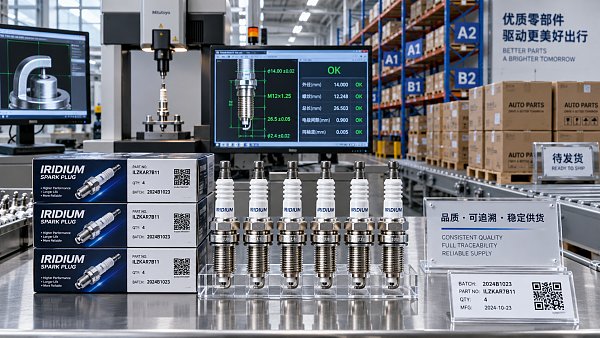
TerraVista Metrics (TVM)- How to Evaluate Spark Plug Suppliers for Consistent Quality and Lead TimesSpark plugs supplier evaluation guide: compare quality control, traceability, fitment, total cost, and reliable lead times to secure dependable engine maintenance supply.
- What Drives System Interoperability Testing Service Costs in Complex Projects?System interoperability testing service cost depends on integration scope, workflows, environments, and assurance needs. Learn how to budget smarter and reduce project risk.
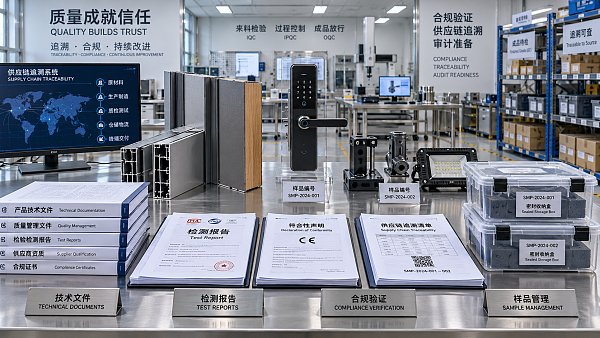
- Project Planning Sourcing Guides: How to Qualify Suppliers Before Work StartsSourcing guides project planning helps teams qualify suppliers before work begins—verify compliance, delivery capacity, financial strength, and sustainability to reduce risk and protect project outcomes.
Popular Tags
TerraVista Metrics (TVM)Industry NewsMedical Lab Supplies Shortages Usually Start With One Weak Link
auth.Time
Oct 07, 2026Click Count
Medical lab supplies shortages rarely happen all at once—they usually begin with one weak link in sourcing, quality control, logistics, or supplier verification. For procurement professionals, identifying that vulnerability early is critical to preventing costly delays, compliance risks, and operational disruption. This article explores how a single breakdown can cascade through the supply chain and what buyers can do to build more resilient purchasing strategies.
For buyers managing multi-site operations, regulated environments, or cross-border sourcing, the issue is not only availability. It is continuity. A missing lot of sterile swabs, delayed reagent packs, or inconsistent specimen containers can interrupt testing schedules within 24 to 72 hours, trigger emergency purchasing, and increase total acquisition cost far beyond the original unit price.
That is why procurement teams increasingly evaluate medical lab supplies with the same discipline used in other infrastructure-heavy sectors: measurable durability, verified process control, dependable lead times, and traceable supplier performance. In complex supply chains, one weak link is enough to expose every hidden assumption.
Where Medical Lab Supplies Shortages Usually Begin
Most shortages do not start with a dramatic factory shutdown. They begin with smaller failures that appear manageable in isolation. A procurement team may accept a 7-day delay on packaging film, overlook inconsistent incoming inspection, or rely on a single freight route for 80% of monthly volume. Each decision seems efficient until demand rises or one node fails.
1. Single-source dependency
Many laboratories and distributors still rely on one primary source for high-rotation medical lab supplies such as pipette tips, sample tubes, collection kits, gloves, and absorbent consumables. If one supplier accounts for more than 60% to 70% of a category, even a short disruption can drain stock buffers quickly. In fast-moving operations, a 2-week interruption may create a 4- to 6-week recovery period because replenishment, qualification, and backlog clearing happen sequentially.
2. Weak incoming quality controls
A second weak link is quality variance that goes undetected at receipt. Medical lab supplies may arrive on time but still fail dimensional consistency, seal integrity, sterility packaging checks, or compatibility with automated systems. A defect rate of even 1% to 3% can be disruptive when the item feeds high-volume laboratory workflows. Once rejected stock is quarantined, procurement must replace not just quantity, but validated quantity.
3. Incomplete supplier verification
A supplier may look strong on price and catalog breadth yet remain weak on process transparency. Buyers often discover gaps too late: undocumented subcontracting, unstable raw material sourcing, limited batch traceability, or poor change-notification discipline. In practice, this means the same SKU can perform differently across lots shipped 30 to 90 days apart.
4. Logistics that are optimized for cost, not resilience
International procurement of medical lab supplies is especially vulnerable when shipment planning is too lean. Ocean freight may save 8% to 15% on landed cost compared with air, but a missed consolidation window or customs hold can erase that benefit fast. If there is no secondary route, no regional warehousing, and no safety stock, the shortage begins long before shelves are empty.
The table below outlines common weak links and the operational consequences procurement teams should watch for when reviewing supply chain risk in medical lab supplies.
The key takeaway is that shortages are often detectable before they become visible. Procurement leaders who track concentration risk, rejection rates, documentation quality, and route redundancy can intervene earlier and with lower cost.
How One Breakdown Cascades Through the Supply Chain
The reason a single weak link matters is simple: medical lab supplies are deeply interconnected with scheduling, validation, labor planning, and downstream service obligations. One delayed component may halt a procedure, but the broader damage comes from the chain reaction around it.
From delayed item to operational disruption
Consider a routine procurement cycle for specimen containers or disposable filter tips. If a supplier misses the promised ship date by 10 days, receiving plans must be adjusted. If the substitute lot requires extra inspection, another 2 to 4 days are added. If internal users ration inventory during uncertainty, consumption patterns become distorted, making forecasting less reliable for the next order cycle.
The 5-step cascade
- Lead time variance appears at order confirmation.
- Safety stock is consumed faster than planned.
- Emergency substitution is requested.
- Inspection, compatibility, or documentation issues delay release.
- Testing schedules, service levels, or customer commitments are affected.
Indirect cost is usually higher than the price gap
Buyers sometimes focus too narrowly on per-unit savings. Yet when medical lab supplies fail to arrive or fail qualification, the indirect costs can exceed the original price difference by 2x or 3x. Expedited freight, extra receiving labor, deviation handling, and lost throughput all create hidden spend. For procurement teams measured on continuity as well as cost, total supply assurance is the more useful metric.
Regulated workflows amplify the impact
In controlled environments, not every replacement is plug-and-play. Some medical lab supplies require documented equivalency checks, packaging review, or instrument fit testing before release. That means a shortage cannot always be solved by buying “similar” items from a new vendor within 48 hours. The true recovery window may stretch to 1 to 3 weeks, depending on internal controls.
What Procurement Teams Should Evaluate Before a Shortage Happens
The best purchasing strategy is preventive rather than reactive. Buyers need a framework that measures the resilience of medical lab supplies sourcing beyond catalog price. This is where structured verification becomes valuable: not marketing claims, but auditable operating signals.
Four core evaluation dimensions
A practical procurement review should include at least 4 dimensions: supply continuity, lot consistency, documentation reliability, and logistics flexibility. Each dimension should be reviewed quarterly for critical categories and at least semiannually for lower-risk items.
The table below can be used as a simple scorecard when comparing suppliers of medical lab supplies for recurring contracts or dual-source setup.
This kind of scorecard helps procurement move from anecdotal judgments to repeatable decisions. It also makes supplier reviews more constructive, because performance gaps are tied to measurable criteria instead of general dissatisfaction.
Questions buyers should ask suppliers
- What percentage of this medical lab supplies category is produced in-house versus subcontracted?
- How many weeks of raw material coverage are typically maintained?
- Can the supplier provide lot traceability and change-notification procedures?
- What is the normal lead time range: 2 weeks, 4 weeks, or 8 weeks?
- Is there an alternate shipping plan if the primary route is disrupted?
- How are nonconforming lots contained, reported, and replaced?
Why data-led verification matters
In industrial and infrastructure procurement, buyers increasingly use independent benchmarks to verify durability, throughput, and consistency before scaling a purchase. The same mindset is valuable for medical lab supplies. Decision-makers need clearer signals on process robustness, not just polished catalogs. A data-driven screening approach can reduce supplier ambiguity and improve contract confidence, especially when sourcing across borders or balancing cost against continuity.
Building a More Resilient Purchasing Strategy
A resilient sourcing model does not require excessive inventory or unnecessary complexity. It requires targeted redundancy, disciplined qualification, and better visibility. For most procurement teams, improvement can begin with 3 categories of action over the next 30, 60, and 90 days.
30-day actions: identify concentration and exposure
Start by classifying medical lab supplies into critical, important, and routine categories. Critical items are those that stop operations within 1 to 3 days if unavailable. Important items may allow a short workaround. Routine items have lower disruption impact. Once classified, calculate supplier concentration, average lead time, and on-hand coverage for each top category.
60-day actions: qualify alternatives and tighten specifications
The next phase is to reduce avoidable ambiguity. Tighten product specifications for high-risk medical lab supplies, including packaging requirements, dimensional tolerances where relevant, labeling format, and documentation needs. Qualify at least one alternate source for the top 20% of SKUs that carry the greatest operational impact. Even if that backup source handles only 15% to 25% of annual volume, it reduces dependence.
90-day actions: redesign replenishment and review cadence
By day 90, buyers should align reorder points with actual supply variability instead of static assumptions. If one supplier’s lead time ranges from 21 to 35 days, reorder logic should reflect that spread. Monthly supplier reviews for critical medical lab supplies can track fill rate, lot acceptance, and route performance, while quarterly reviews can address broader sourcing strategy.
Common mistakes to avoid
- Choosing solely on unit price without factoring expedite risk.
- Assuming all equivalent items are immediately interchangeable.
- Overlooking packaging, labeling, or sterilization documentation.
- Using one freight model for every category regardless of urgency.
- Failing to review supplier changes until performance declines.
A Broader Procurement Lesson for Technical Supply Chains
Although medical lab supplies are the focus here, the underlying lesson applies across technical procurement categories. Whether the item is a laboratory consumable, a smart hospitality subsystem, or a prefabricated infrastructure component, buyers need better filters for technical trust. Marketing language is rarely enough when continuity, compliance, and performance are on the line.
This is the value of an evidence-based procurement mindset. Organizations such as TerraVista Metrics support decision-makers by translating manufacturing and supply capability into comparable benchmarks and practical screening criteria. For procurement teams, that means fewer assumptions, clearer supplier differentiation, and more confidence when selecting sources for critical operations.
When one weak link can interrupt output, the goal is not just to buy faster. It is to buy with precision. The strongest purchasing strategies for medical lab supplies are built on verified process data, realistic lead-time planning, and structured fallback options rather than hope.
If your team is reviewing high-risk sourcing categories, refining supplier benchmarks, or building a more resilient procurement framework, now is the right time to act. Explore more solutions, request a tailored evaluation approach, or contact us to discuss how better technical screening can support smarter purchasing decisions.
Recommended News
 Oct 10, 2026How to Evaluate Spark Plug Suppliers for Consistent Quality and Lead TimesSpark plugs supplier evaluation guide: compare quality control, traceability, fitment, total cost, and reliable lead times to secure dependable engine maintenance supply.
 Oct 07, 2026Project Planning Sourcing Guides: How to Qualify Suppliers Before Work StartsSourcing guides project planning helps teams qualify suppliers before work begins—verify compliance, delivery capacity, financial strength, and sustainability to reduce risk and protect project outcomes.
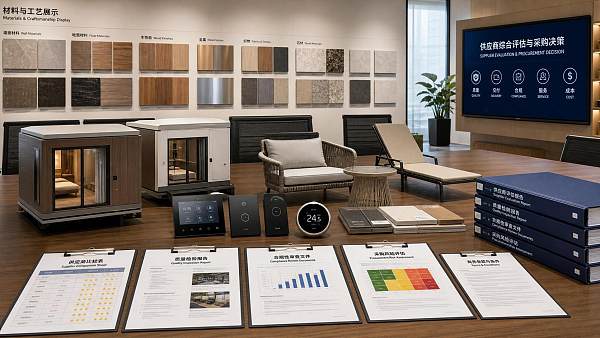
 Oct 05, 2026Regulatory Compliance Vendor Comparison: How to Assess Audit Readiness and RiskRegulatory compliance vendor comparison made practical: assess audit readiness, evidence quality, change control, and supply-chain risk before award. Learn how to choose defensible suppliers.
 Sep 18, 2026Technical Procurement in Southeast Asia: Evaluating Suppliers, Compliance, and Lead TimesTechnical procurement Southeast Asia: evaluate suppliers, compliance, lead times, and total cost to secure reliable, project-ready assets. Read the practical guide.
 Sep 17, 2026Glamping Site Supplier Selection: A Checklist for Quality, Lead Times, and SupportGlamping site supplier selection made simple: assess quality, lead-time reliability, installation readiness, and after-sales support for a resilient, profitable site.
 Sep 10, 2026How to Evaluate Resort Slide System Suppliers for Safety, Capacity, and Project SupportResort slide systems supplier evaluation guide: compare safety evidence, real capacity, durable materials, and project support for confident resort investments.
 Aug 27, 2026Hospitality Supplier Comparison: A Procurement Framework for Quality, Cost, and ReliabilityHospitality supplier comparison: evaluate quality, total cost, compliance, and service reliability to reduce procurement risk and protect guest experience.
 Aug 14, 2026Bedding Sets Wholesale: How to Choose the Right Supplier for Hotels and RetailersBedding sets wholesale for hotels and retailers: learn how to choose the right supplier for quality, compliance, and reliable delivery.
 Aug 11, 2026ITB China 2026 Closes With 900 Global ExhibitorsITB China 2026 closes with 900 global exhibitors from 85 countries, highlighting China’s growing role in tourism sourcing, travel tech, and cross-border supply chain opportunities.
 Aug 06, 2026How to Evaluate a Marine Hospitality Solutions Provider for Guest Experience and ROIMarine hospitality solutions provider evaluation starts with performance, not visuals. Learn how to assess guest experience, compliance, integration, and lifecycle ROI before you invest.
 Jul 20, 2026Supplier Capability Verification: How to Assess Quality, Capacity, and Delivery RiskSupplier capability verification helps buyers assess quality, production capacity, and delivery risk with a practical framework to reduce sourcing surprises and make smarter procurement decisions.
 Jul 14, 2026Global Sourcing Procurement Planning: Key Cost, Risk, and Lead-Time Factors to CompareGlobal sourcing procurement planning: compare total landed cost, lead-time reliability, compliance, and supplier risk to avoid hidden losses and make smarter sourcing decisions.
 Jul 12, 2026Hotel Furnishing for Guest Rooms: What to Check Before Comparing Suppliers and QuotesHotel furnishing for guest rooms: learn what to verify before comparing suppliers and quotes, from materials and compliance to lead times and lifecycle cost.
 Jul 09, 2026High-End Furniture Quotation Explained: What Drives Price and How to Compare OffersHigh-end furniture quotation explained: learn what drives price, how to compare offers, spot hidden risks, and choose durable, compliant value for hospitality projects.
 Jul 08, 2026How to Choose a Thermal Efficiency Testing Service Provider for Compliance and ROIThermal efficiency testing service provider selection affects more than compliance. Learn how to compare scope, reporting, and ROI to reduce risk, control costs, and choose with confidence.
![]() Jul 07, 2026How to Choose a Smart Home Devices Wholesale Supplier in China for Stable OEM OrdersSmart home devices wholesale supplier in China selection starts with OEM stability, compliance, and quality control. Learn how to avoid sourcing risks and secure reliable long-term orders.
 Jul 05, 2026How to Use Sourcing Guides Category Education to Compare Suppliers and Reduce Buying RiskSourcing guides category education helps buyers compare suppliers with real evidence, cut procurement risk, and evaluate compliance, durability, integration, and total cost with confidence.
 Jul 04, 2026Plastic Machinery Buying Guide: Key Machine Types, Output Needs, and Cost FactorsPlastic machinery buying guide covering key machine types, real output planning, and total cost factors. Compare suppliers smarter, reduce risk, and choose equipment that supports quality and ROI.
 Jul 03, 2026Metal Fabrication Processes Compared: Cutting, Bending, Welding, and When to Use EachMetal fabrication choices shape cost, strength, finish, and lead time. Compare cutting, bending, and welding to choose the right process for durable, efficient results.
 Jul 02, 2026Product Category ISO Standards: How to Check Compliance Requirements Before SourcingProduct category ISO standards are the first check before sourcing. Learn how to verify real compliance, reduce risk, avoid delays, and choose suppliers with confidence.
 Jul 01, 2026How to Use an Exporters Directory with Verified Suppliers for Safer Sourcing DecisionsExporters directory with verified suppliers: learn how to screen exporters, spot weak claims, reduce sourcing risk, and build a safer shortlist for smarter buying decisions.
 Jun 30, 2026CNC Machining Price Breakdown: What Drives Cost for Materials, Tolerances, and Volume?CNC machining price explained: see how materials, tolerances, and production volume affect cost, risk, and quote accuracy to help buyers source smarter and save more.
 Jun 29, 2026How to Evaluate a Technical Integration Solutions Provider for Multi-System ProjectsTechnical integration solutions provider selection starts with risk, not demos. Learn how to assess interoperability, security, compliance, and long-term reliability for multi-system projects.
 Jun 28, 2026Hospitality Equipment Comparison: What to Evaluate Before Buying for Hotels and ResortsHospitality equipment comparison for hotels and resorts: evaluate durability, compliance, integration, sustainability, and lifecycle cost before buying to avoid costly mistakes.
Quarterly Executive Summaries Delivered Directly.
Join 50,000+ industry leaders who receive our proprietary market analysis and policy outlooks before they hit the public library.