Search News
TerraVista Metrics (TVM)Industry Portal
TerraVista Metrics (TVM)Hot Articles
TerraVista Metrics (TVM)- How to Evaluate Spark Plug Suppliers for Consistent Quality and Lead TimesSpark plugs supplier evaluation guide: compare quality control, traceability, fitment, total cost, and reliable lead times to secure dependable engine maintenance supply.
- What Drives System Interoperability Testing Service Costs in Complex Projects?System interoperability testing service cost depends on integration scope, workflows, environments, and assurance needs. Learn how to budget smarter and reduce project risk.
- Project Planning Sourcing Guides: How to Qualify Suppliers Before Work StartsSourcing guides project planning helps teams qualify suppliers before work begins—verify compliance, delivery capacity, financial strength, and sustainability to reduce risk and protect project outcomes.
Popular Tags
TerraVista Metrics (TVM)Industry NewsMetal Fabrication Processes Compared: Cutting, Bending, Welding, and When to Use Each
auth.Time
Oct 07, 2026Click Count
Why does metal fabrication choice matter so early in a project?
Metal fabrication affects much more than part geometry. It shapes cost, structural performance, maintenance needs, delivery timing, and inspection requirements.
That matters in tourism infrastructure, where exposed metal components often work hard and stay visible. A canopy frame, service platform, smart hotel enclosure, or ride support bracket cannot rely on appearance alone.
The more practical question is not simply which process is stronger. It is which metal fabrication process fits the load, finish, quantity, site conditions, and compliance path.
Across modular cabins, outdoor leisure systems, amusement hardware, and hospitality furnishing, the wrong process can create rework, distortion, coating failure, or slow approvals.
This is why data-led benchmarking has become more valuable. TerraVista Metrics follows this logic by linking manufacturing performance with real deployment standards, not brochure claims.
In practice, understanding cutting, bending, and welding gives a better base for comparing supplier capability, lead time promises, and lifecycle value.
What do cutting, bending, and welding actually do in metal fabrication?
These three steps solve different production problems, even when they appear in the same assembly.
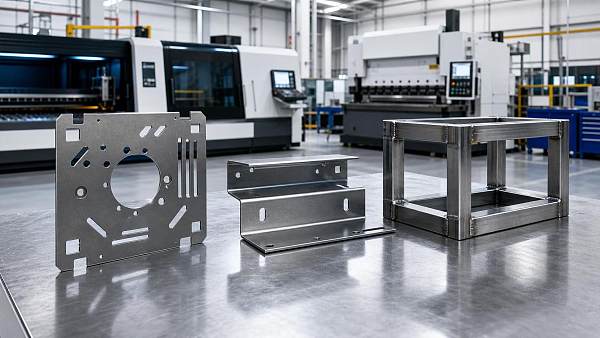
Cutting creates the starting shape
Cutting removes material to produce blanks, holes, slots, profiles, or trim edges. Common methods include laser cutting, plasma cutting, waterjet cutting, and mechanical sawing.
The best method depends on thickness, edge quality, tolerance, speed, and heat sensitivity. Thin stainless panels need something different from thick structural plate.
Bending changes shape without splitting the part
Bending forms angles, channels, flanges, and box sections by applying force. It is often done with press brakes, roll formers, or tube benders.
A bent component can reduce part count and improve consistency. It may also remove the need for extra brackets or welded corners.
Welding joins separate pieces into one assembly
Welding fuses metals together using heat, pressure, or both. MIG, TIG, spot welding, and flux-cored welding are common choices.
Welding is essential when a project needs structural continuity, sealed joints, or large assemblies that cannot be made from one formed part.
A useful way to read metal fabrication is simple. Cutting defines, bending forms, and welding assembles. Most real products use all three in sequence.
Which process should be prioritized for different applications?
The choice depends on function first. A decorative panel, a weatherproof enclosure, and a structural support do not ask the same thing from metal fabrication.
For example, prefabricated eco-structures often depend on cut and bent sheet metal for cladding trims, rain control, and service housings.
Smart hotel systems may use precision cutting for control panels, then bending for enclosures, followed by limited welding for racks or support brackets.
Outdoor and attraction environments usually lean harder on welded assemblies because vibration, public loading, and weather exposure demand stronger joints.
Hospitality furnishing is slightly different. Visual quality often matters as much as strength, so clean bend lines and controlled weld finishing become part of the procurement decision.
How do cost, speed, and quality usually compare?
There is no single cheapest metal fabrication method in every case. Cost moves with volume, material grade, tolerances, labor intensity, and downstream finishing.
Cutting is often the fastest entry step, especially with CNC laser systems. It works well for repeatable flat parts and shortens setup time for prototypes.
Bending becomes economical when one folded part can replace several joined pieces. That can save welding hours, inspection time, and consumables.
Welding usually adds the most labor and skill dependency. It can also introduce distortion, surface cleanup work, and more demanding quality checks.
A better comparison looks like this:
- For fast prototyping, cutting often leads.
- For part reduction, bending often improves total value.
- For load-bearing assemblies, welding often remains necessary.
- For visible finishes, less welding usually means less rework.
Lead time also depends on sequencing. A simple welded frame may still take longer than a more complex bent part because fitting, tacking, inspection, and correction consume time.
This is one reason benchmark-driven sourcing matters. Verified production data is more reliable than a supplier quote that ignores tolerance stack-up or finishing workload.
Where do teams make the wrong call on metal fabrication?
The most common mistake is selecting a process from drawings alone. Fabrication decisions should reflect use conditions, maintenance access, transport limits, and compliance obligations.
Mistaking appearance for performance
A smooth sample may still hide weak joint design, poor heat control, or unsuitable material thickness. This is especially risky in public-facing infrastructure.
Overusing welding
Some assemblies are welded because it feels stronger. In reality, a well-designed bent part can be lighter, cleaner, and easier to produce consistently.
Ignoring coating and corrosion effects
Heat from welding can affect protective finishes and corrosion resistance. Coastal tourism sites, humid resorts, and outdoor attractions need this checked early.
Assuming all tolerances are equal
Cutting tolerances, bend allowances, and weld shrinkage interact. If they are reviewed separately, final fit-up problems often appear during installation.
In practical reviews, a few questions help expose risk before ordering:
- Will the part be structural, decorative, or both?
- Is repeatability more important than field adjustability?
- Will the component face salt, moisture, impact, or vibration?
- Can one bent part replace a welded multi-part assembly?
- What inspections are required before handover?
How should you decide which metal fabrication route to specify?
A sound decision usually starts with function, then moves to risk, then to commercial comparison. That order prevents price from driving a poor technical choice.
When the application supports guest-facing infrastructure, it also helps to review supplier evidence beyond samples. Process records, weld qualifications, corrosion testing, and dimensional reports often tell the real story.
That approach aligns with the wider shift toward verified engineering data across tourism development. It reduces the gap between attractive specification language and real operational durability.
If a design still feels undecided, compare two fabrication routes against the same criteria: unit cost, total installed cost, maintenance risk, delivery certainty, and compliance effort.
What is the practical takeaway before moving to procurement?
Metal fabrication works best when cutting, bending, and welding are treated as coordinated decisions, not isolated shop steps.
Cutting is best for accurate profiles and repeatable blanks. Bending is valuable when it reduces parts and improves finish quality. Welding is critical when structural continuity and assembly strength lead the requirement.
The stronger decision is usually the one supported by application data, environmental exposure, and inspection needs. That is especially true for tourism assets expected to perform under public use and visible scrutiny.
Before issuing final specifications, map each component against load, finish, climate, volume, and maintenance access. Then compare suppliers on verified fabrication capability, not general claims.
A short technical review at this stage can prevent expensive corrections later. It also creates a clearer basis for choosing the right metal fabrication process for durable, efficient project delivery.
Recommended News
 Oct 10, 2026How to Evaluate Spark Plug Suppliers for Consistent Quality and Lead TimesSpark plugs supplier evaluation guide: compare quality control, traceability, fitment, total cost, and reliable lead times to secure dependable engine maintenance supply.
 Oct 07, 2026Project Planning Sourcing Guides: How to Qualify Suppliers Before Work StartsSourcing guides project planning helps teams qualify suppliers before work begins—verify compliance, delivery capacity, financial strength, and sustainability to reduce risk and protect project outcomes.
 Oct 05, 2026Regulatory Compliance Vendor Comparison: How to Assess Audit Readiness and RiskRegulatory compliance vendor comparison made practical: assess audit readiness, evidence quality, change control, and supply-chain risk before award. Learn how to choose defensible suppliers.
 Sep 18, 2026Technical Procurement in Southeast Asia: Evaluating Suppliers, Compliance, and Lead TimesTechnical procurement Southeast Asia: evaluate suppliers, compliance, lead times, and total cost to secure reliable, project-ready assets. Read the practical guide.
 Sep 17, 2026Glamping Site Supplier Selection: A Checklist for Quality, Lead Times, and SupportGlamping site supplier selection made simple: assess quality, lead-time reliability, installation readiness, and after-sales support for a resilient, profitable site.
 Sep 10, 2026How to Evaluate Resort Slide System Suppliers for Safety, Capacity, and Project SupportResort slide systems supplier evaluation guide: compare safety evidence, real capacity, durable materials, and project support for confident resort investments.
 Aug 27, 2026Hospitality Supplier Comparison: A Procurement Framework for Quality, Cost, and ReliabilityHospitality supplier comparison: evaluate quality, total cost, compliance, and service reliability to reduce procurement risk and protect guest experience.
 Aug 14, 2026Bedding Sets Wholesale: How to Choose the Right Supplier for Hotels and RetailersBedding sets wholesale for hotels and retailers: learn how to choose the right supplier for quality, compliance, and reliable delivery.
 Aug 11, 2026ITB China 2026 Closes With 900 Global ExhibitorsITB China 2026 closes with 900 global exhibitors from 85 countries, highlighting China’s growing role in tourism sourcing, travel tech, and cross-border supply chain opportunities.
 Aug 06, 2026How to Evaluate a Marine Hospitality Solutions Provider for Guest Experience and ROIMarine hospitality solutions provider evaluation starts with performance, not visuals. Learn how to assess guest experience, compliance, integration, and lifecycle ROI before you invest.
 Jul 20, 2026Supplier Capability Verification: How to Assess Quality, Capacity, and Delivery RiskSupplier capability verification helps buyers assess quality, production capacity, and delivery risk with a practical framework to reduce sourcing surprises and make smarter procurement decisions.
 Jul 14, 2026Global Sourcing Procurement Planning: Key Cost, Risk, and Lead-Time Factors to CompareGlobal sourcing procurement planning: compare total landed cost, lead-time reliability, compliance, and supplier risk to avoid hidden losses and make smarter sourcing decisions.
 Jul 12, 2026Hotel Furnishing for Guest Rooms: What to Check Before Comparing Suppliers and QuotesHotel furnishing for guest rooms: learn what to verify before comparing suppliers and quotes, from materials and compliance to lead times and lifecycle cost.
 Jul 09, 2026High-End Furniture Quotation Explained: What Drives Price and How to Compare OffersHigh-end furniture quotation explained: learn what drives price, how to compare offers, spot hidden risks, and choose durable, compliant value for hospitality projects.
 Jul 08, 2026How to Choose a Thermal Efficiency Testing Service Provider for Compliance and ROIThermal efficiency testing service provider selection affects more than compliance. Learn how to compare scope, reporting, and ROI to reduce risk, control costs, and choose with confidence.
![]() Jul 07, 2026How to Choose a Smart Home Devices Wholesale Supplier in China for Stable OEM OrdersSmart home devices wholesale supplier in China selection starts with OEM stability, compliance, and quality control. Learn how to avoid sourcing risks and secure reliable long-term orders.
 Jul 05, 2026How to Use Sourcing Guides Category Education to Compare Suppliers and Reduce Buying RiskSourcing guides category education helps buyers compare suppliers with real evidence, cut procurement risk, and evaluate compliance, durability, integration, and total cost with confidence.
 Jul 04, 2026Plastic Machinery Buying Guide: Key Machine Types, Output Needs, and Cost FactorsPlastic machinery buying guide covering key machine types, real output planning, and total cost factors. Compare suppliers smarter, reduce risk, and choose equipment that supports quality and ROI.
 Jul 03, 2026Metal Fabrication Processes Compared: Cutting, Bending, Welding, and When to Use EachMetal fabrication choices shape cost, strength, finish, and lead time. Compare cutting, bending, and welding to choose the right process for durable, efficient results.
 Jul 02, 2026Product Category ISO Standards: How to Check Compliance Requirements Before SourcingProduct category ISO standards are the first check before sourcing. Learn how to verify real compliance, reduce risk, avoid delays, and choose suppliers with confidence.
 Jul 01, 2026How to Use an Exporters Directory with Verified Suppliers for Safer Sourcing DecisionsExporters directory with verified suppliers: learn how to screen exporters, spot weak claims, reduce sourcing risk, and build a safer shortlist for smarter buying decisions.
 Jun 30, 2026CNC Machining Price Breakdown: What Drives Cost for Materials, Tolerances, and Volume?CNC machining price explained: see how materials, tolerances, and production volume affect cost, risk, and quote accuracy to help buyers source smarter and save more.
 Jun 29, 2026How to Evaluate a Technical Integration Solutions Provider for Multi-System ProjectsTechnical integration solutions provider selection starts with risk, not demos. Learn how to assess interoperability, security, compliance, and long-term reliability for multi-system projects.
 Jun 28, 2026Hospitality Equipment Comparison: What to Evaluate Before Buying for Hotels and ResortsHospitality equipment comparison for hotels and resorts: evaluate durability, compliance, integration, sustainability, and lifecycle cost before buying to avoid costly mistakes.
Quarterly Executive Summaries Delivered Directly.
Join 50,000+ industry leaders who receive our proprietary market analysis and policy outlooks before they hit the public library.