Search News
TerraVista Metrics (TVM)Industry Portal
TerraVista Metrics (TVM)Hot Articles
TerraVista Metrics (TVM)- How to Evaluate Spark Plug Suppliers for Consistent Quality and Lead TimesSpark plugs supplier evaluation guide: compare quality control, traceability, fitment, total cost, and reliable lead times to secure dependable engine maintenance supply.
- What Drives System Interoperability Testing Service Costs in Complex Projects?System interoperability testing service cost depends on integration scope, workflows, environments, and assurance needs. Learn how to budget smarter and reduce project risk.
- Project Planning Sourcing Guides: How to Qualify Suppliers Before Work StartsSourcing guides project planning helps teams qualify suppliers before work begins—verify compliance, delivery capacity, financial strength, and sustainability to reduce risk and protect project outcomes.
Popular Tags
TerraVista Metrics (TVM)Industry NewsTechnical Procurement in Southeast Asia: Evaluating Suppliers, Compliance, and Lead Times
auth.Time
Oct 07, 2026Click Count
Technical Procurement in Southeast Asia Starts With a Different Question
Technical procurement in Southeast Asia is often framed as a price comparison exercise: identify factories, request quotations, compare specifications, and negotiate terms. That approach can work for standardized, low-consequence items. It is much less reliable for tourism assets, hospitality systems, prefabricated structures, attraction equipment, and other products where installation quality, regulatory acceptance, service access, and operating conditions matter as much as the unit price.
The central procurement question is therefore not simply whether a supplier can manufacture the product. It is whether that supplier can deliver a compliant, documented, supportable asset into a specific project location within a schedule that still protects the project business case.
Southeast Asia offers strong manufacturing and assembly capability across a broad range of categories, but the region is not a single sourcing market. Supplier maturity, logistics infrastructure, local approval processes, material availability, and after-sales capacity differ considerably by country and by product class. A procurement team that treats the region as interchangeable can underestimate both lead-time exposure and compliance risk.
For technical buyers, the most useful evaluation combines four questions: Can the supplier build the required configuration? Can it prove compliance for the destination market? Can it manage the delivery and installation interfaces? And can it support the asset after handover?
Evaluate Capability Beyond the Product Catalogue
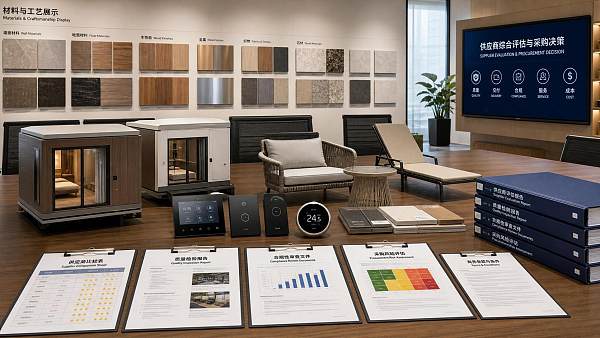
Catalogues, renders, and polished sample rooms can establish that a supplier understands the desired aesthetic. They do not establish engineering capability. This distinction matters particularly for modular cabins, smart hotel systems, commercial furniture, outdoor infrastructure, and amusement equipment, where an attractive first impression can conceal a weak materials specification, incomplete control architecture, or poor tolerance management.
Begin by separating the supplier's claimed scope from its controlled scope. A supplier may design, assemble, source, install, or coordinate a product, but those are not equivalent responsibilities. Procurement teams should identify which parts of the final deliverable are manufactured in-house, which are purchased from named subcontractors, and which depend on local contractors at the destination.
For a prefabricated hospitality unit, for example, the structural frame, insulation, glazing, electrical systems, plumbing fixtures, finishes, transport packaging, foundations, and installation may each have different origins. A supplier capable of producing the shell may have limited control over the moisture resistance of interior boards, the compatibility of local electrical fittings, or the site crew's installation method. The commercial offer should make those boundaries visible.
Request evidence tied to the actual configuration
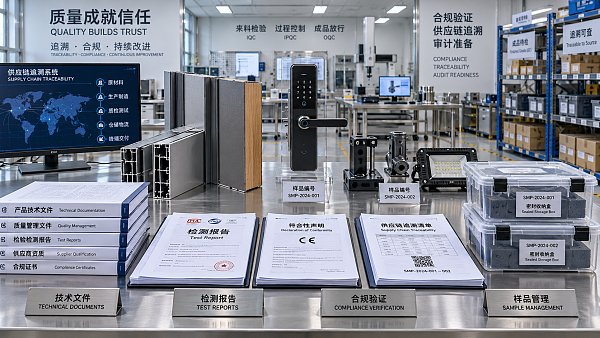
Technical documents are most valuable when they relate to the precise product being purchased. Generic brochures and broad declarations can be useful background, but they should not substitute for configuration-specific evidence. If the delivered design differs in dimensions, materials, electrical load, software version, mounting method, or environmental exposure, earlier documents may not fully apply.
- Detailed drawings showing dimensions, interfaces, material callouts, and installation assumptions.
- A bill of materials identifying safety-critical, durability-critical, and branded components.
- Performance specifications expressed in measurable terms, such as load limits, ingress protection, temperature operating range, energy use, or network capacity where relevant.
- Factory quality-control procedures and inspection points for the items that create the largest downstream risk.
- Commissioning, maintenance, spare-parts, and warranty documentation.
- A clear list of exclusions, especially civil works, local connections, certifications, software licenses, and site installation activities.
The purpose is not to create paperwork for its own sake. It is to test whether the supplier can translate a commercial brief into an engineered deliverable. Suppliers with strong technical control can usually explain tolerances, interfaces, failure modes, and documentation ownership without relying on broad assurances.
For systems that combine hardware and software, procurement should also ask who owns system integration. A smart room installation can include locks, HVAC controls, occupancy sensors, guest interfaces, network equipment, property-management-system connections, and cloud services. Buying each component from a credible supplier does not guarantee that the whole system will function reliably. The party responsible for integration testing, cybersecurity settings, fault escalation, and future software updates should be named before purchase order release.
Compliance Must Be Mapped to the Project Location
A product may be lawful to manufacture or sell in its country of origin while still failing to meet the requirements applied at the destination site. This is one of the most expensive misunderstandings in cross-border procurement. The risk rises where products affect building safety, electrical systems, public use, fire performance, accessibility, environmental controls, or data handling.
Compliance should be approached as a project matrix rather than a supplier checkbox. The matrix links each component or system to the approval route that applies in the receiving market. Some requirements will be national; others may be imposed by local authorities, developers, insurers, hotel operators, landlords, or financing conditions. A product certificate alone may not satisfy all of them.
For tourism and hospitality procurement, the following categories commonly deserve early review:
- Structural and building requirements: load assumptions, wind and rain exposure, foundations, fire separation, escape routes, material performance, and local permit documentation for modular or permanent structures.
- Electrical and mechanical requirements: voltage and frequency compatibility, cable and protection ratings, equipment labeling, grounding arrangements, cooling loads, and requirements for installation by locally licensed personnel.
- Public safety requirements: guards, emergency stops, restraint systems, signage, inspection records, maintenance protocols, and authority approvals for attractions or high-use leisure equipment.
- Environmental and material requirements: restrictions on substances, timber provenance where applicable, waste treatment obligations, energy-related specifications, and project-level sustainability commitments.
- Digital and data requirements: data location, access controls, device security, software support periods, interoperability, and contractual responsibility for a connected hotel system.
Procurement should avoid assuming that a familiar international standard resolves every local issue. International standards can provide a strong technical baseline, particularly where project owners need consistent specifications across multiple sites. Yet a local authority may require separate testing, a recognized local certification body, translated documents, local labels, or an installation sign-off. The correct question is: which evidence will the project approver accept, and at what stage must it be available?
That question should be asked before the supplier is selected, not after equipment has been manufactured. Late compliance discovery creates difficult options: redesign the asset, seek a project exemption, replace components, ship additional parts, or accept a delay while documents are reissued. The initial saving from a low quotation can disappear quickly if an incomplete approval package holds up opening.
Contract for documentation, not just delivery
Purchase orders should identify the required documents as deliverables with dates, review rights, and acceptance criteria. This is especially important when formal approval depends on technical files that are generated during manufacturing or commissioning.
A practical approach is to divide documents into three gates: pre-production documents for design approval, pre-shipment documents for release, and handover documents for operations and maintenance. The final category is frequently undervalued. Site teams need wiring diagrams, equipment schedules, software credentials, parts lists, manuals, inspection records, and training material to run the asset safely after the supplier leaves.
Where a supplier proposes an equivalent material or component, the change-control process should be explicit. Material substitutions are common when lead times tighten or components become unavailable. Some changes are harmless; others can alter fire performance, corrosion resistance, electrical reliability, guest-facing finish quality, or certification status. No substitution should be accepted solely because it is described as equivalent in commercial terms.
Lead Time Is a Supply-Chain Model, Not a Date in a Quotation
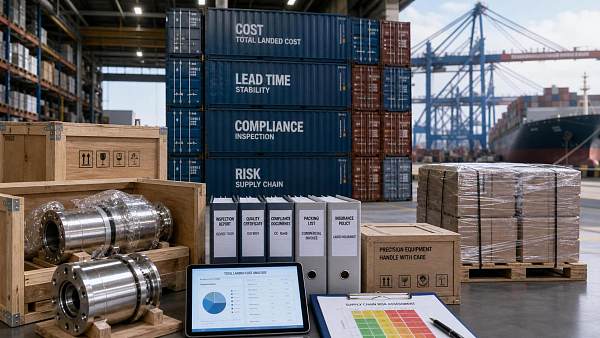
Quoted lead times are often interpreted as factory production time. For a technical project, the relevant period runs from a stable specification to a commissioned, accepted asset. It includes engineering review, material procurement, prototype or sample approval where needed, manufacturing, inspection, packing, inland transport, export handling, sea or air freight, import clearance, final delivery, installation, testing, and handover.
Each step has different owners. A supplier may control fabrication but have no control over a delayed design approval, a missing import document, port congestion, a destination site that is not ready, or a local contractor whose work is needed before commissioning. Procurement needs an integrated schedule with dependencies, rather than a single delivery promise.
Longer lead times are not automatically a warning sign. A supplier that identifies engineering, procurement, inspection, and commissioning stages may be presenting a more credible plan than one offering a short, undifferentiated number. The concern is unexplained compression. If a complex integrated system appears to have the same lead time as a standard furniture order, procurement should examine what has been excluded from the promise.
Seasonality also matters. Factory loading, regional holidays, weather disruption, port capacity, and site construction sequences can affect timing. These factors do not make sourcing from Southeast Asia unpredictable, but they make buffer design necessary. The sensible buffer sits around critical interfaces and approval points, rather than being added blindly to every activity.
Compare Total Landed and Operating Cost
A low ex-works or free-on-board price can be misleading when products require specialized packaging, destination assembly, local certification, software subscriptions, proprietary consumables, or frequent replacement parts. Technical procurement should compare the cost of obtaining an operational asset, then consider the cost of keeping it operational through the intended life of the project.
This does not require a perfect lifecycle model. It does require that buyers identify material cost drivers before choosing a supplier. For hospitality furnishing, these may include replacement rates, cleanability, spare finishes, warranty response, and the ability to reorder matching items later. For outdoor equipment, corrosion performance, repairability, storage needs, and public-use wear may carry more weight than the initial acquisition cost. For a smart hotel platform, ongoing license fees, integration work, hardware replacement, network requirements, and technical support can exceed assumptions made at the request-for-quotation stage.
Commercial comparison should therefore distinguish between included and excluded costs. Freight, duties, insurance, local testing, installation supervision, tools, training, commissioning travel, spare parts, and system integration are all potential sources of budget drift. A consistent bid sheet helps, but it must be paired with technical clarification. Two offers can look comparable in a spreadsheet while describing materially different scopes.
Use Supplier Selection to Reduce Project Dependencies
The best supplier is not always the largest factory, the cheapest bidder, or the company with the most extensive catalogue. For a given project, a strong choice is often the supplier with the fewest unmanaged dependencies: clear control over design and critical components, documentation that matches the destination requirements, realistic logistics planning, and an identifiable route to service support.
That perspective changes the supplier review meeting. Instead of asking only, “Can you meet this price and delivery date?” procurement can ask: “What must happen outside your factory for this asset to be accepted and operational?” The answer reveals where the buyer needs contingency, where responsibility should be allocated in the contract, and whether the supplier's proposal is mature enough for the project timetable.
For technical procurement in Southeast Asia, disciplined evaluation is less about adding layers of process than making the essential uncertainties visible early. A supplier that can provide traceable engineering information, destination-relevant compliance evidence, and a credible end-to-end schedule may cost more at the quotation stage. In projects where opening dates, guest safety, asset uptime, and long-term maintenance matter, that difference is often the cost of avoiding a much larger disruption later.
Recommended News
 Oct 10, 2026How to Evaluate Spark Plug Suppliers for Consistent Quality and Lead TimesSpark plugs supplier evaluation guide: compare quality control, traceability, fitment, total cost, and reliable lead times to secure dependable engine maintenance supply.
 Oct 07, 2026Project Planning Sourcing Guides: How to Qualify Suppliers Before Work StartsSourcing guides project planning helps teams qualify suppliers before work begins—verify compliance, delivery capacity, financial strength, and sustainability to reduce risk and protect project outcomes.
 Oct 05, 2026Regulatory Compliance Vendor Comparison: How to Assess Audit Readiness and RiskRegulatory compliance vendor comparison made practical: assess audit readiness, evidence quality, change control, and supply-chain risk before award. Learn how to choose defensible suppliers.
 Sep 18, 2026Technical Procurement in Southeast Asia: Evaluating Suppliers, Compliance, and Lead TimesTechnical procurement Southeast Asia: evaluate suppliers, compliance, lead times, and total cost to secure reliable, project-ready assets. Read the practical guide.
 Sep 17, 2026Glamping Site Supplier Selection: A Checklist for Quality, Lead Times, and SupportGlamping site supplier selection made simple: assess quality, lead-time reliability, installation readiness, and after-sales support for a resilient, profitable site.
 Sep 10, 2026How to Evaluate Resort Slide System Suppliers for Safety, Capacity, and Project SupportResort slide systems supplier evaluation guide: compare safety evidence, real capacity, durable materials, and project support for confident resort investments.
 Aug 27, 2026Hospitality Supplier Comparison: A Procurement Framework for Quality, Cost, and ReliabilityHospitality supplier comparison: evaluate quality, total cost, compliance, and service reliability to reduce procurement risk and protect guest experience.
 Aug 14, 2026Bedding Sets Wholesale: How to Choose the Right Supplier for Hotels and RetailersBedding sets wholesale for hotels and retailers: learn how to choose the right supplier for quality, compliance, and reliable delivery.
 Aug 11, 2026ITB China 2026 Closes With 900 Global ExhibitorsITB China 2026 closes with 900 global exhibitors from 85 countries, highlighting China’s growing role in tourism sourcing, travel tech, and cross-border supply chain opportunities.
 Aug 06, 2026How to Evaluate a Marine Hospitality Solutions Provider for Guest Experience and ROIMarine hospitality solutions provider evaluation starts with performance, not visuals. Learn how to assess guest experience, compliance, integration, and lifecycle ROI before you invest.
 Jul 20, 2026Supplier Capability Verification: How to Assess Quality, Capacity, and Delivery RiskSupplier capability verification helps buyers assess quality, production capacity, and delivery risk with a practical framework to reduce sourcing surprises and make smarter procurement decisions.
 Jul 14, 2026Global Sourcing Procurement Planning: Key Cost, Risk, and Lead-Time Factors to CompareGlobal sourcing procurement planning: compare total landed cost, lead-time reliability, compliance, and supplier risk to avoid hidden losses and make smarter sourcing decisions.
 Jul 12, 2026Hotel Furnishing for Guest Rooms: What to Check Before Comparing Suppliers and QuotesHotel furnishing for guest rooms: learn what to verify before comparing suppliers and quotes, from materials and compliance to lead times and lifecycle cost.
 Jul 09, 2026High-End Furniture Quotation Explained: What Drives Price and How to Compare OffersHigh-end furniture quotation explained: learn what drives price, how to compare offers, spot hidden risks, and choose durable, compliant value for hospitality projects.
 Jul 08, 2026How to Choose a Thermal Efficiency Testing Service Provider for Compliance and ROIThermal efficiency testing service provider selection affects more than compliance. Learn how to compare scope, reporting, and ROI to reduce risk, control costs, and choose with confidence.
![]() Jul 07, 2026How to Choose a Smart Home Devices Wholesale Supplier in China for Stable OEM OrdersSmart home devices wholesale supplier in China selection starts with OEM stability, compliance, and quality control. Learn how to avoid sourcing risks and secure reliable long-term orders.
 Jul 05, 2026How to Use Sourcing Guides Category Education to Compare Suppliers and Reduce Buying RiskSourcing guides category education helps buyers compare suppliers with real evidence, cut procurement risk, and evaluate compliance, durability, integration, and total cost with confidence.
 Jul 04, 2026Plastic Machinery Buying Guide: Key Machine Types, Output Needs, and Cost FactorsPlastic machinery buying guide covering key machine types, real output planning, and total cost factors. Compare suppliers smarter, reduce risk, and choose equipment that supports quality and ROI.
 Jul 03, 2026Metal Fabrication Processes Compared: Cutting, Bending, Welding, and When to Use EachMetal fabrication choices shape cost, strength, finish, and lead time. Compare cutting, bending, and welding to choose the right process for durable, efficient results.
 Jul 02, 2026Product Category ISO Standards: How to Check Compliance Requirements Before SourcingProduct category ISO standards are the first check before sourcing. Learn how to verify real compliance, reduce risk, avoid delays, and choose suppliers with confidence.
 Jul 01, 2026How to Use an Exporters Directory with Verified Suppliers for Safer Sourcing DecisionsExporters directory with verified suppliers: learn how to screen exporters, spot weak claims, reduce sourcing risk, and build a safer shortlist for smarter buying decisions.
 Jun 30, 2026CNC Machining Price Breakdown: What Drives Cost for Materials, Tolerances, and Volume?CNC machining price explained: see how materials, tolerances, and production volume affect cost, risk, and quote accuracy to help buyers source smarter and save more.
 Jun 29, 2026How to Evaluate a Technical Integration Solutions Provider for Multi-System ProjectsTechnical integration solutions provider selection starts with risk, not demos. Learn how to assess interoperability, security, compliance, and long-term reliability for multi-system projects.
 Jun 28, 2026Hospitality Equipment Comparison: What to Evaluate Before Buying for Hotels and ResortsHospitality equipment comparison for hotels and resorts: evaluate durability, compliance, integration, sustainability, and lifecycle cost before buying to avoid costly mistakes.
Quarterly Executive Summaries Delivered Directly.
Join 50,000+ industry leaders who receive our proprietary market analysis and policy outlooks before they hit the public library.