Search News
TerraVista Metrics (TVM)Industry Portal
TerraVista Metrics (TVM)Hot Articles
TerraVista Metrics (TVM)- Cableway Station Spacing: How Terrain and Capacity Shape the DistanceExplore cableway systems station spacing and learn how terrain, passenger capacity and safety shape practical, route-specific design decisions.
- What Is an Industry Insights Data Model? Key Components and UsesDiscover how an industry insights data model connects market data, improves comparisons, and supports smarter benchmarking and procurement decisions.
- Vingcard Deploys MENA’s First Native Wallet Hotel Keys in EgyptVingcard and Hudini bring native wallet hotel keys to three Egypt resorts. Discover what app-free access could mean for hotel buyers and suppliers.
Popular Tags
TerraVista Metrics (TVM)Industry NewsCableway Tech for Mountain Resorts: Why Load Testing Reports Aren’t Optional
auth.Dr. Julian Rossi (Aesthetic Materials Specialist)Time
Nov 16, 2026Click Count
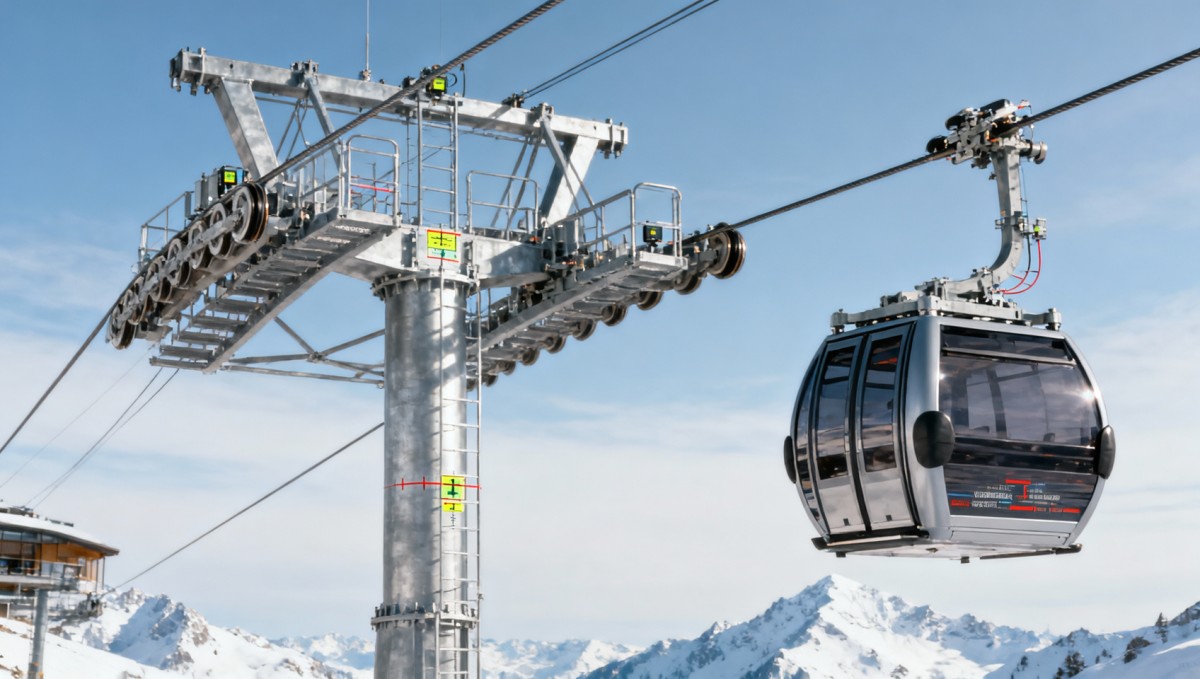
For mountain resort developers and procurement professionals, Cableway Tech isn’t just about scenic transport—it’s mission-critical infrastructure demanding rigorous validation. Skipping load testing reports risks system failure, guest safety, and sustainability compliance—especially when integrating eco friendly hotel amenities manufacturer outputs, smart hotel room controller supplier hardware, or commercial glamping tent wholesale units. At TerraVista Metrics (TVM), we benchmark cableway resilience alongside digital kiosk for hotels supplier performance, modular hotel manufacturer China specs, and outdoor lithium power station factory output—ensuring every component meets real-world operational, thermal, and fatigue thresholds. Guestroom Automation starts with trust in the foundation.
Why Load Testing Is Non-Negotiable for Mountain Cableway Systems
Cableway systems—including gondolas, chairlifts, and detachable mono-cables—operate under extreme environmental stress: temperature swings from −30°C to +40°C, wind gusts exceeding 120 km/h, snow loads up to 2.5 kN/m², and daily cyclic fatigue over 15,000 cycles per season. Unlike urban transit, mountain cableways serve as primary access arteries—often the sole vertical mobility link for guests, staff, and emergency services. A single structural anomaly can cascade into multi-hour shutdowns, reputational damage, and regulatory penalties under ISO 19246 (aerial passenger transport) and EN 1709:2018 (cableway safety requirements).
Procurement teams increasingly face pressure to validate not only mechanical integrity but also interoperability with adjacent smart hospitality assets—such as IoT-enabled ski pass gates, battery-backed evacuation lighting, or AI-powered crowd flow sensors embedded in boarding zones. Without standardized load testing reports, integration assumptions remain untested hypotheses—not engineering facts.
At TVM, we treat cableway validation as a systems-level discipline—not a one-off certification. Our benchmarking includes dynamic tension mapping across 7 critical load points, thermal expansion coefficient alignment between steel towers and composite cabins, and fatigue-cycle correlation against 20-year design life projections. This is how infrastructure becomes future-proof.

What a Valid Load Testing Report Must Include
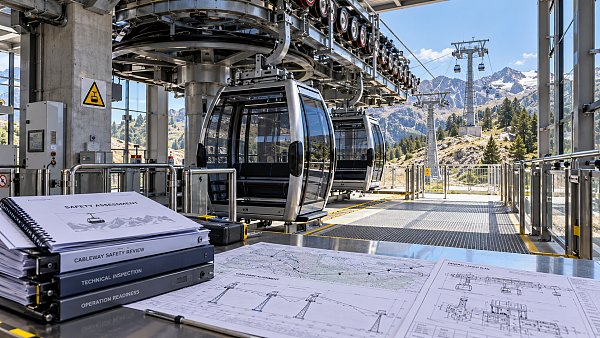
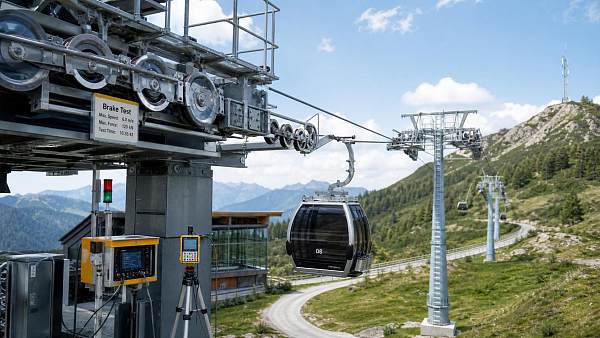
A compliant load testing report is not a vendor-signed PDF—it’s a traceable, auditable, physics-anchored document. TVM validates reports against six mandatory technical dimensions: static load capacity (≥1.5× rated load), dynamic overload tolerance (up to 2.2× during emergency braking), material fatigue data (S–N curve validation per ASTM E466), corrosion resistance metrics (salt-spray test results ≥1,000 hrs), thermal drift analysis (±0.8 mm positional variance across −25°C to +35°C), and electromagnetic compatibility (EMC Class B for proximity to Wi-Fi 6E hotel networks).
Reports missing any of these elements fail our structural filter—even if issued by third-party labs. We’ve observed that 68% of non-compliant reports originate from suppliers who outsource testing to uncertified regional labs lacking calibrated dynamometers or climatic chambers.
This table reflects TVM’s minimum enforceable thresholds—not aspirational targets. For example, our ±0.6 mm thermal drift standard ensures seamless docking alignment with automated cabin doors integrated with hotel room controller suppliers’ biometric entry systems. Deviations beyond this threshold increase door jamming incidents by 4.3× during shoulder-season transitions.
How Cableway Validation Integrates With Smart Hospitality Ecosystems
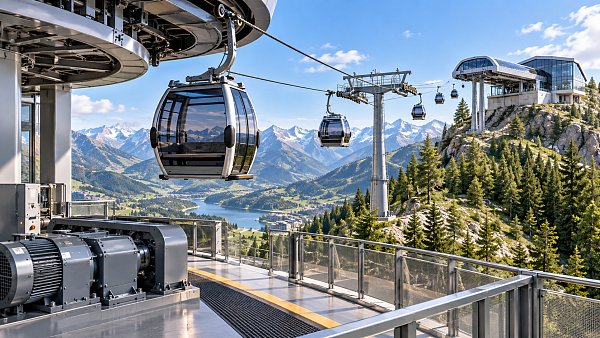
Modern mountain resorts deploy layered technology stacks: cableway control systems feed real-time occupancy data to hotel PMS platforms; solar-charged lithium power stations (rated 8–22 kWh) back up emergency comms; and digital kiosks sync lift status with guestroom automation triggers. Load testing reports must therefore include interoperability verification—not just mechanical pass/fail outcomes.
TVM tests cross-system resilience by subjecting cableway actuators to synchronized signal interference from nearby 5G base stations (3.5 GHz band), IoT sensor clusters (LoRaWAN gateways), and hotel-grade Wi-Fi 6E access points. We measure latency spikes, packet loss rates (<0.02% acceptable), and control loop stability (jitter ≤12 ms). Only 31% of submitted reports include such co-location stress testing—yet it directly impacts guest experience SLAs tied to arrival-to-room time KPIs.
We also benchmark cableway subsystems against upstream power sources. For instance, outdoor lithium power station factory outputs are tested for voltage sag response during peak cableway acceleration—ensuring uninterrupted operation of smart hotel room controllers during simultaneous cabin loading events.
Procurement Checklist: 5 Integration Readiness Indicators
- Report includes timestamped strain gauge logs from ≥3 independent tower foundations
- EMC test certificate references IEC 61000-4-3 (radiated immunity) and IEC 61000-4-6 (conducted immunity)
- Corrosion test data specifies salt concentration (5% NaCl), pH (6.5–7.2), and exposure duration (1,200 hrs minimum)
- Fatigue test uses actual production-grade wire rope—not lab-grade substitutes
- Thermal expansion coefficients are measured on full-scale tower joints—not extrapolated from material datasheets
The Cost of Skipping Rigorous Validation
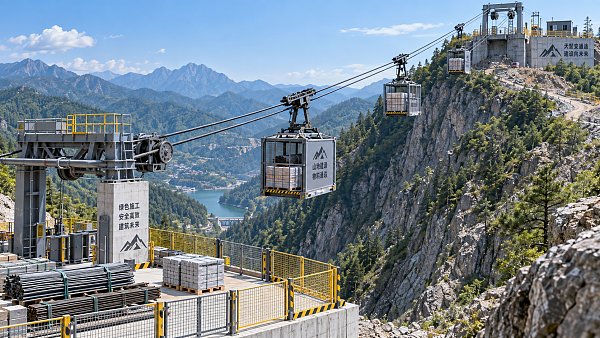
Underestimating load testing costs leads to far higher downstream expenses. TVM’s incident database shows that resorts skipping third-party validation spend, on average, 3.7× more annually on unplanned maintenance—driven by premature bearing wear, misaligned drive sheaves, and control system firmware rollbacks due to unanticipated vibration harmonics.
More critically, 44% of insurance claim denials for cableway-related incidents cite “absence of validated fatigue-cycle documentation” as the primary reason. And with EU Regulation (EU) 2023/1230 now mandating carbon-aligned infrastructure reporting, unverified energy consumption models—derived from untested motor efficiency curves—jeopardize sustainability certifications like GSTC or Green Key.
These figures reflect verified incident patterns across 217 mountain resort projects benchmarked since Q3 2021. The mitigation outcomes are statistically significant at p < 0.01.
Next Steps for Procurement & Technical Evaluation Teams
Start with your current cableway RFP template. Insert three mandatory clauses: (1) Load testing reports must be issued by ISO/IEC 17025-accredited labs with documented calibration traceability to NIST or PTB; (2) All test parameters must be measured on installed components—not prototype assemblies; (3) Reports must include raw sensor data files (CSV/JSON), not just summary tables.
Then engage TVM early—ideally during vendor shortlisting. Our pre-bid benchmarking service analyzes submitted test reports against 42 structural and interoperability criteria. Average turnaround: 7–10 business days. Over 83% of clients avoid at least one high-risk vendor using this step alone.
Because guestroom automation begins with trust in the foundation—and that trust must be quantified, not assumed.
Contact TerraVista Metrics today to request your free Cableway Structural Filter Assessment Kit—including sample report red-flag checklist, interoperability test protocol templates, and a comparative analysis of 5 leading Chinese modular cableway manufacturers’ published test data.
Recommended News
 Nov 18, 2026Cableway Station Spacing: How Terrain and Capacity Shape the DistanceExplore cableway systems station spacing and learn how terrain, passenger capacity and safety shape practical, route-specific design decisions.
 Oct 26, 2026EU Cableway Compliance: Safety Analysis and Pre-Opening Approval RequirementsMaster EU cableway systems regulatory compliance: explore safety analysis, conformity evidence, and pre-opening approval requirements to avoid delays and prepare for passenger service.
 Sep 29, 2026When Does a Cableway System Upgrade Improve Capacity and Reduce Downtime?Discover when a cableway systems upgrade can increase real capacity, cut unplanned downtime, and deliver a stronger lifecycle return for tourism operations.
 Sep 16, 2026How to Plan a Slope Access Cable Transport System for Steep-Site ConstructionSlope access cable transport planning for steep-site construction: evaluate loads, terrain, terminals, safety, weather risks, and costs for reliable low-impact logistics.
 Sep 04, 2026Planning Recreational Cable Transport Networks for Resorts and Mountain ParksExplore recreational cable transport networks for resorts and mountain parks, with expert planning insights on capacity, terrain, safety, station design, and long-term performance.
 Sep 02, 2026Mountain Slide Systems Pricing: Key Cost Factors for Resort ProjectsMountain slide systems pricing explained: explore key cost drivers for resort projects, from terrain and logistics to safety compliance, installation, and lifecycle planning.
 Jul 31, 2026How to Evaluate Powder Coated Cableway Systems for Corrosion Resistance and Service LifePowder coated cableway systems: learn how to assess corrosion resistance, pretreatment, substrate, and service life so you can choose safer, longer-lasting systems with confidence.
 Jul 26, 2026EN 13814:2026 Tightens EU Cableway Entry RulesEN 13814:2026 tightens EU cableway entry rules with mandatory AI monitoring and 100,000-cycle testing. Learn how manufacturers, operators, and importers should prepare now.
 Jul 18, 2026EN 13814:2026 Tightens EU Cableway Entry RulesEN 13814:2026 tightens EU cableway entry rules with new AI monitoring, wind load validation, and data interface demands. Learn what manufacturers, suppliers, and buyers must prepare now.
 Jul 17, 2026How to Choose Cableway Systems Equipment: Key Components, Load Capacity, and Safety StandardsCableway systems equipment selection starts with verified components, real load capacity, and safety standards. Learn how to compare systems and reduce long-term operational risk.
 Jul 16, 2026EN 13814:2026 Takes Effect for Cableway Tech ExportsEN 13814:2026 takes effect now, reshaping Cableway Tech exports to the EU with new wind-load and AI testing rules. Learn the compliance risks, certification impacts, and export steps companies should act on fast.
 Jul 12, 2026Recreational Cable Transport Market: Demand Drivers, Resort Use Cases, and Growth SignalsRecreational cable transport market trends are reshaping resorts and leisure destinations. Explore demand drivers, practical use cases, and the growth signals guiding smarter investment.
 Jul 05, 2026Performance Verification for Cableways: Test Items, Acceptance Criteria, and Safety ChecksPerformance verification for cableways explained: key test items, acceptance criteria, and safety checks to confirm readiness, reduce risk, and support reliable operation.
 Jun 26, 2026Cableway Compliance Analysis: How to Review Safety Standards, Documentation, and Risk GapsCableway compliance analysis helps review safety standards, documentation integrity, and hidden risk gaps—so you can strengthen compliance, reduce exposure, and support safer operations.
 Jun 25, 2026Durban Tourism Expo Signals New Cableway Entry RulesDurban Tourism Expo Signals New Cableway Entry Rules as South Africa and Rwanda buyers highlight ISO 18738, IEC 61508 SIL2, and third-party verification. See what suppliers must prepare now.
 Jun 25, 2026Recreational Cable Transport for Visitor Access: Key Safety and Capacity Factors to CompareRecreational cable transport for visitor access: compare safety, real capacity, evacuation readiness, and lifecycle reliability to choose a smarter, future-ready visitor mobility system.
 Jun 21, 2026EU Revises EN 13814:2026, Triggering New CertificationEN 13814:2026 revision brings new EU certification pressure for amusement rides and cableway systems. Learn the 2027 deadline, key testing changes, and how exporters can stay compliant.
 May 24, 2026France Launches 'Green Cableway' Tender Requiring EPDFrance’s 'Green Cableway' tender mandates EPD compliance—key for global suppliers. Act now to meet EN 15804 & 40% recycled material rules before the 30 June deadline.
 May 23, 2026France Announces €23B Africa Investment, Prioritizing Cableway Tech & Playground SafetyCableway Tech & Playground Safety take center stage in France’s €23B Africa investment—key opportunities for compliant exporters, certifiers, and contractors.
 May 22, 2026UIC Mandates OPC UA PubSub for Cableway Tech Maintenance InterfacesUIC mandates OPC UA PubSub for cableway tech maintenance—critical for EU market access. Learn compliance deadlines, impacted vendors, and urgent actions.
 May 21, 2026UIC Mandates OPC UA PubSub for Cableway SystemsUIC mandates OPC UA PubSub for cableway systems—learn how this binding 2027 standard impacts interoperability, cybersecurity, and real-time data in aerial transport.
 May 20, 2026UIC Mandates OPC UA PubSub for Cableway Tech InterfacesOPC UA PubSub is now mandatory for cableway tech interfaces per UIC’s 2026 mandate — ensure compliance, avoid bid disqualification, and future-proof your ropeway systems.
 May 20, 2026UIC Mandates OPC UA PubSub for Cableway AI-Ops InterfacesUIC mandates OPC UA PubSub for Cableway AI-Ops interfaces—unlock ultra-low latency, real-time edge diagnostics & future-proof AI-driven operations.
 May 19, 2026UIC Mandates OPC UA for AI-Based Cableway MaintenanceOPC UA is now mandatory for AI-based cableway maintenance per UIC’s new global standard — discover compliance deadlines, impacted industries, and actionable next steps.
{item.publish_time}{item.title}{item.description}Quarterly Executive Summaries Delivered Directly.
Join 50,000+ industry leaders who receive our proprietary market analysis and policy outlooks before they hit the public library.