Search News
TerraVista Metrics (TVM)Industry Portal
TerraVista Metrics (TVM)Hot Articles
TerraVista Metrics (TVM)- How to Evaluate Spark Plug Suppliers for Consistent Quality and Lead TimesSpark plugs supplier evaluation guide: compare quality control, traceability, fitment, total cost, and reliable lead times to secure dependable engine maintenance supply.
- What Drives System Interoperability Testing Service Costs in Complex Projects?System interoperability testing service cost depends on integration scope, workflows, environments, and assurance needs. Learn how to budget smarter and reduce project risk.
- Project Planning Sourcing Guides: How to Qualify Suppliers Before Work StartsSourcing guides project planning helps teams qualify suppliers before work begins—verify compliance, delivery capacity, financial strength, and sustainability to reduce risk and protect project outcomes.
Popular Tags
TerraVista Metrics (TVM)Industry NewsHow to Plan a Slope Access Cable Transport System for Steep-Site Construction
auth.Dr. Julian Rossi (Aesthetic Materials Specialist)Time
Oct 07, 2026Click Count
How to Plan a Slope Access Cable Transport System for Steep-Site Construction
Steep construction sites create a material-handling problem long before they create a building problem. A project may have an approved cabin layout, a sound foundation concept, and prefabricated components ready to ship, yet still lose weeks because pallets, steel, concrete tools, glazing, or utility equipment cannot move safely from the delivery point to the workface.
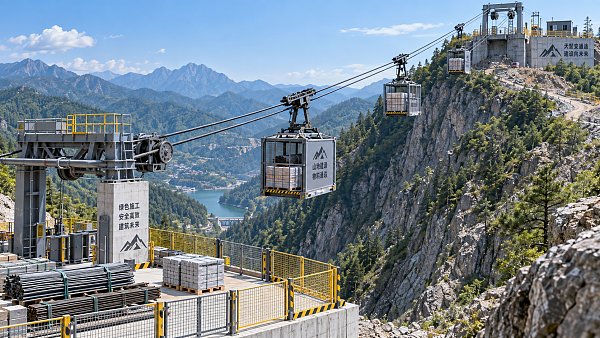
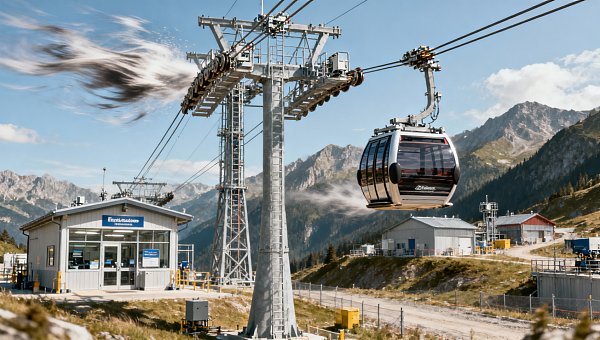
A slope access cable transport system can be a practical answer where access roads are uneconomic, environmentally disruptive, or physically impossible. It is commonly considered for mountain resorts, hillside hotels, glamping developments, remote viewing platforms, attraction infrastructure, and other projects where the final site sits above a narrow valley road or unstable hillside track. But “install a cable system” is not a complete plan. The right solution depends on the terrain, the material flow, the ground conditions, the construction sequence, and the level of operational risk the project can accept.
The most expensive mistake is treating cable transport as a last-minute logistics accessory. On steep sites, it is often part of the temporary works strategy, the environmental strategy, and the critical path at the same time.
Start with the material journey, not the equipment catalogue
Project teams often begin by asking what load a cableway can carry. That question matters, but it comes too early. The first task is to map every movement between the public-road unloading point, the lower terminal, the intermediate work zones, and the upper construction area. A slope access cable transport plan should show more than a straight line on a topographic drawing. It should identify where trucks can turn, where loads can be transferred, where packages can be staged, and whether workers will be tempted to stand beneath suspended loads because the site has not provided a protected route.
For a prefabricated eco-lodge project, for example, the main constraint may not be the total tonnage. It may be the longest module, the most awkward façade panel, or a crate that cannot be tilted without damaging its contents. For an attraction project, the deciding load may be a drive assembly or a long structural member required only once. A system sized solely around routine pallets may become useless on the exact day it is most needed.
Build a load register before seeking supplier proposals. Record the approximate mass, dimensions, lifting points, packaging limitations, arrival date, destination point, and required handling orientation for each major item. Separate repetitive daily loads from exceptional lifts. This allows the engineering team to distinguish between a system intended for frequent material supply and one that must also handle a handful of critical oversized components.
Questions that expose weak planning early
- Can the delivery vehicle safely unload each item at the lower station?
- Does the longest item remain within clearance limits throughout the route?
- Will loads arrive as loose pallets, bundled materials, containers, or prefabricated assemblies?
- What happens when rain, wind, fog, or lightning interrupts lifting operations?
- Can the site continue useful work during an outage, or does every trade depend on the cable route?
- Is return transport needed for waste, excavated material, damaged packaging, or reusable formwork?
That final question is routinely underestimated. Downhill return capacity can materially improve site housekeeping and reduce the temptation to stockpile waste on slopes. It may also affect the choice between a simple inclined hoist arrangement and a more capable material cableway with controlled loading and unloading procedures.
Read the slope as an engineering system
A steep slope is not defined only by its gradient. The route may cross broken rock, loose colluvium, forested ground, drainage channels, exposed ridges, retaining structures, or areas where the apparent ground surface conceals weak soils. Each condition changes the feasibility of towers, anchors, terminal foundations, and emergency access.
Survey data should include the alignment, elevation profile, cross-slope geometry, obstacles, likely rockfall paths, watercourses, and areas vulnerable to erosion. A desktop topographic model is useful for early options, but it should not replace an on-site survey. Small deviations in terminal position or a local ridge can change rope clearance, support requirements, and the amount of vegetation disturbance needed for the corridor.
Ground investigation is equally important. Cable transport systems transfer substantial forces into terminal foundations and, where used, anchors or support towers. A visually solid hillside may have fractured rock, shallow weathered material, or saturated soil layers that do not behave as assumed. The geotechnical assessment needs to inform the temporary works design, not arrive after a procurement decision has already been made.
There is also a practical distinction between a route that is technically possible and one that is buildable. If a tower location can only be accessed by rope technicians or costly temporary platforms, it may introduce more construction risk than it solves. In some terrain, a longer span between better-founded locations is preferable; in others, intermediate supports are needed to maintain clearance and control line behavior. This is a design decision, not a generic preference.
Choose the transport concept around duty cycle and control
“Cable transport” covers several very different arrangements. A material ropeway or cable crane may suit long-span delivery across inaccessible ground. An inclined cable hoist may suit a relatively direct hillside route where a carriage can travel on a defined alignment. In some projects, a temporary winch-and-platform arrangement can move standardized loads effectively, while more complex developments may need a purpose-designed system with engineered terminals, braking, communication, and load-control features.
The correct choice depends on the number of daily cycles, travel distance, payload shape, loading time, required placement accuracy, and whether personnel transport is contemplated. The last point needs particular caution. A system intended for materials should not be casually used to carry workers because the site schedule is tight. Personnel transport introduces a separate level of design, regulatory review, rescue planning, inspection, and operating discipline. Treating a materials line as an informal staff shuttle is a serious planning failure.
A useful procurement discipline is to ask vendors to state the assumptions behind their proposed capacity. Rated capacity is only one figure. The project needs to understand the operating load, rope configuration, duty cycle, travel speed, braking method, control arrangement, electrical demand, and restrictions related to wind or other environmental conditions. If these assumptions are vague, competing quotations cannot be compared fairly.
Design terminals as working areas, not just endpoints
Many slope access cable transport systems are constrained less by the line itself than by the lower and upper terminals. The lower terminal must receive vehicles, unload safely, hold incoming material without blocking public access, and protect workers from suspended-load zones. The upper terminal must permit controlled unloading on a constrained platform, often while other trades are working nearby.
A terminal that has no room for a forklift, pallet jack, telehandler, or manual handling route will create slow and unsafe transfers. Likewise, an upper station positioned too close to the final building can cause conflicts with façade installation, crane operations, guest-path construction, or later landscaping. The temporary system needs a decommissioning plan from the start. Consider how the equipment will be removed once the project has progressed beyond the point where it is needed.
For hospitality and tourism developments, this is particularly relevant because visual impact can influence approvals and the final guest experience. A temporary line may be justified during construction, but its route, anchor points, and disturbed ground should be selected with restoration in mind. Minimizing road cuts is valuable only if the cable corridor does not leave a more difficult scar across the landscape.
Safety planning must cover normal work and abnormal events
The system should be planned under the applicable local lifting, temporary works, electrical, occupational safety, and environmental requirements. Exact obligations vary by jurisdiction, project type, and whether the installation is classified as lifting equipment, a cableway, or another temporary transport arrangement. The project should confirm these requirements with competent local professionals and the relevant authorities rather than relying on a supplier’s standard documentation alone.
In daily operation, the essential controls are straightforward but easy to weaken under programme pressure: trained operators, defined load limits, approved lifting accessories, exclusion zones, communication between terminals, pre-use checks, and a clear rule that nobody travels beneath a suspended load. The difficult part is maintaining those controls when multiple subcontractors arrive, materials pile up, and a delayed delivery is waiting at the road.
Abnormal events deserve equal attention. A credible plan should address power loss, brake or control faults, line obstruction, severe weather, dropped-load response, medical access, and recovery of a load stranded mid-route. It should also identify who has authority to stop operations. If the answer is “everyone,” the practical answer is often no one. Name the responsible role and make escalation routes explicit.
Build the cost model around disruption, not only installation price
The cheapest quotation can be misleading if it excludes foundations, surveys, power supply, operator training, inspection, weather downtime, spares, removal, or site restoration. Conversely, a more substantial temporary system can be economical if it avoids repeated helicopter lifts, extensive road construction, oversized earthworks, or long manual carrying distances.
A sensible comparison includes capital cost, mobilization time, expected daily throughput, labour at both terminals, maintenance support, weather restrictions, and the consequences of an outage. The final variable is often overlooked. If the cable route is the only way to deliver concrete supplies, mechanical equipment, or interior packages, an unavailable winch or damaged rope may halt several work packages at once.
Phasing can reduce this exposure. Some teams use road-based delivery for early earthworks, deploy cable transport during the period of highest uphill material demand, then retain a lighter arrangement for finishing works and waste removal. The optimal sequence depends on the construction programme and site constraints, but it is usually better than assuming one access method must serve every stage.
Use independent technical review before committing
A cable system proposal should be reviewed as a package of assumptions: load schedule, terrain model, geotechnical basis, equipment configuration, temporary works interfaces, operational procedures, inspection requirements, and supplier support. This is especially important when procurement involves international manufacturers whose documentation, terminology, and standard design practices may not align neatly with local project requirements.
For destination developers, the question is rarely just whether a system can move materials uphill. It is whether the system supports a reliable, low-impact build without creating hidden liabilities in safety, logistics, landscape restoration, or future operations. TerraVista Metrics approaches this kind of procurement question through verified engineering data, compliance analysis, and supply-chain comparison rather than product claims alone. That distinction matters when a temporary construction decision can influence the delivery of an entire resort, glamping site, or hillside attraction.
A well-planned slope access cable transport system is not simply a substitute for a road. It is a controlled logistics corridor with structural, operational, and environmental consequences. Define the real loads, investigate the ground, test the terminal workflow, plan for weather and failure, and make sure the proposed equipment is being evaluated against the way the site will actually be built. That is where steep-site access becomes manageable rather than merely ambitious.
Recommended News
 Sep 29, 2026When Does a Cableway System Upgrade Improve Capacity and Reduce Downtime?Discover when a cableway systems upgrade can increase real capacity, cut unplanned downtime, and deliver a stronger lifecycle return for tourism operations.
 Sep 16, 2026How to Plan a Slope Access Cable Transport System for Steep-Site ConstructionSlope access cable transport planning for steep-site construction: evaluate loads, terrain, terminals, safety, weather risks, and costs for reliable low-impact logistics.
 Sep 04, 2026Planning Recreational Cable Transport Networks for Resorts and Mountain ParksExplore recreational cable transport networks for resorts and mountain parks, with expert planning insights on capacity, terrain, safety, station design, and long-term performance.
 Sep 02, 2026Mountain Slide Systems Pricing: Key Cost Factors for Resort ProjectsMountain slide systems pricing explained: explore key cost drivers for resort projects, from terrain and logistics to safety compliance, installation, and lifecycle planning.
 Jul 31, 2026How to Evaluate Powder Coated Cableway Systems for Corrosion Resistance and Service LifePowder coated cableway systems: learn how to assess corrosion resistance, pretreatment, substrate, and service life so you can choose safer, longer-lasting systems with confidence.
 Jul 26, 2026EN 13814:2026 Tightens EU Cableway Entry RulesEN 13814:2026 tightens EU cableway entry rules with mandatory AI monitoring and 100,000-cycle testing. Learn how manufacturers, operators, and importers should prepare now.
 Jul 18, 2026EN 13814:2026 Tightens EU Cableway Entry RulesEN 13814:2026 tightens EU cableway entry rules with new AI monitoring, wind load validation, and data interface demands. Learn what manufacturers, suppliers, and buyers must prepare now.
 Jul 17, 2026How to Choose Cableway Systems Equipment: Key Components, Load Capacity, and Safety StandardsCableway systems equipment selection starts with verified components, real load capacity, and safety standards. Learn how to compare systems and reduce long-term operational risk.
 Jul 16, 2026EN 13814:2026 Takes Effect for Cableway Tech ExportsEN 13814:2026 takes effect now, reshaping Cableway Tech exports to the EU with new wind-load and AI testing rules. Learn the compliance risks, certification impacts, and export steps companies should act on fast.
 Jul 12, 2026Recreational Cable Transport Market: Demand Drivers, Resort Use Cases, and Growth SignalsRecreational cable transport market trends are reshaping resorts and leisure destinations. Explore demand drivers, practical use cases, and the growth signals guiding smarter investment.
 Jul 05, 2026Performance Verification for Cableways: Test Items, Acceptance Criteria, and Safety ChecksPerformance verification for cableways explained: key test items, acceptance criteria, and safety checks to confirm readiness, reduce risk, and support reliable operation.
 Jun 26, 2026Cableway Compliance Analysis: How to Review Safety Standards, Documentation, and Risk GapsCableway compliance analysis helps review safety standards, documentation integrity, and hidden risk gaps—so you can strengthen compliance, reduce exposure, and support safer operations.
 Jun 25, 2026Durban Tourism Expo Signals New Cableway Entry RulesDurban Tourism Expo Signals New Cableway Entry Rules as South Africa and Rwanda buyers highlight ISO 18738, IEC 61508 SIL2, and third-party verification. See what suppliers must prepare now.
 Jun 25, 2026Recreational Cable Transport for Visitor Access: Key Safety and Capacity Factors to CompareRecreational cable transport for visitor access: compare safety, real capacity, evacuation readiness, and lifecycle reliability to choose a smarter, future-ready visitor mobility system.
 Jun 21, 2026EU Revises EN 13814:2026, Triggering New CertificationEN 13814:2026 revision brings new EU certification pressure for amusement rides and cableway systems. Learn the 2027 deadline, key testing changes, and how exporters can stay compliant.
 May 24, 2026France Launches 'Green Cableway' Tender Requiring EPDFrance’s 'Green Cableway' tender mandates EPD compliance—key for global suppliers. Act now to meet EN 15804 & 40% recycled material rules before the 30 June deadline.
 May 23, 2026France Announces €23B Africa Investment, Prioritizing Cableway Tech & Playground SafetyCableway Tech & Playground Safety take center stage in France’s €23B Africa investment—key opportunities for compliant exporters, certifiers, and contractors.
 May 22, 2026UIC Mandates OPC UA PubSub for Cableway Tech Maintenance InterfacesUIC mandates OPC UA PubSub for cableway tech maintenance—critical for EU market access. Learn compliance deadlines, impacted vendors, and urgent actions.
 May 21, 2026UIC Mandates OPC UA PubSub for Cableway SystemsUIC mandates OPC UA PubSub for cableway systems—learn how this binding 2027 standard impacts interoperability, cybersecurity, and real-time data in aerial transport.
 May 20, 2026UIC Mandates OPC UA PubSub for Cableway Tech InterfacesOPC UA PubSub is now mandatory for cableway tech interfaces per UIC’s 2026 mandate — ensure compliance, avoid bid disqualification, and future-proof your ropeway systems.
 May 20, 2026UIC Mandates OPC UA PubSub for Cableway AI-Ops InterfacesUIC mandates OPC UA PubSub for Cableway AI-Ops interfaces—unlock ultra-low latency, real-time edge diagnostics & future-proof AI-driven operations.
 May 19, 2026UIC Mandates OPC UA for AI-Based Cableway MaintenanceOPC UA is now mandatory for AI-based cableway maintenance per UIC’s new global standard — discover compliance deadlines, impacted industries, and actionable next steps.
 May 18, 2026UIC Mandates OPC UA for Cableway AI OperationsUIC mandates OPC UA for cableway AI operations—learn how this binding 2027 regulation impacts exporters, integrators, and suppliers globally.
 May 17, 2026UIC Mandates OPC UA for Cableway AI Ops Starting Oct 2026UIC mandates OPC UA for cableway AI ops from Oct 2026—critical for Chinese exporters, integrators & stack providers targeting EU, Japan & Chile markets.
Quarterly Executive Summaries Delivered Directly.
Join 50,000+ industry leaders who receive our proprietary market analysis and policy outlooks before they hit the public library.