Search News
TerraVista Metrics (TVM)Industry Portal
TerraVista Metrics (TVM)Hot Articles
TerraVista Metrics (TVM)- How to Evaluate Spark Plug Suppliers for Consistent Quality and Lead TimesSpark plugs supplier evaluation guide: compare quality control, traceability, fitment, total cost, and reliable lead times to secure dependable engine maintenance supply.
- What Drives System Interoperability Testing Service Costs in Complex Projects?System interoperability testing service cost depends on integration scope, workflows, environments, and assurance needs. Learn how to budget smarter and reduce project risk.
- Project Planning Sourcing Guides: How to Qualify Suppliers Before Work StartsSourcing guides project planning helps teams qualify suppliers before work begins—verify compliance, delivery capacity, financial strength, and sustainability to reduce risk and protect project outcomes.
Popular Tags
TerraVista Metrics (TVM)Industry NewsPlanning Recreational Cable Transport Networks for Resorts and Mountain Parks
auth.Dr. Julian Rossi (Aesthetic Materials Specialist)Time
Oct 07, 2026Click Count
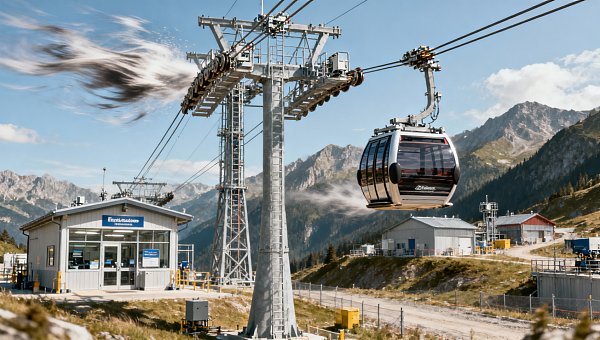
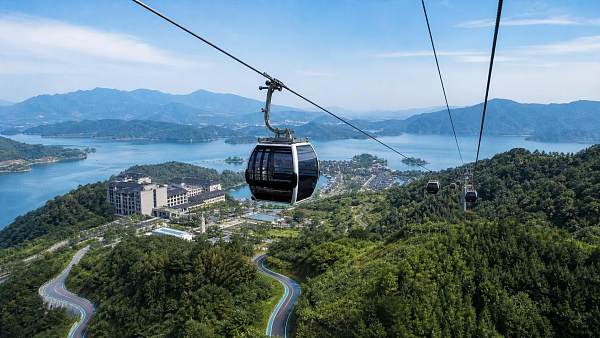
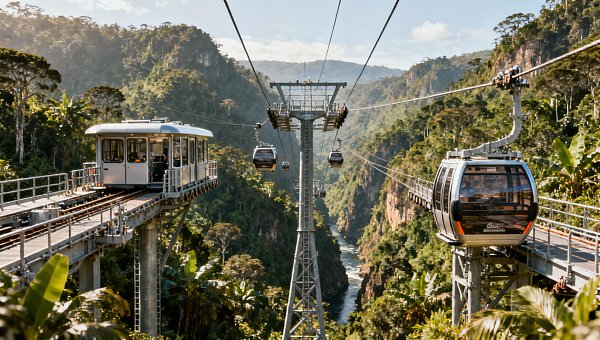
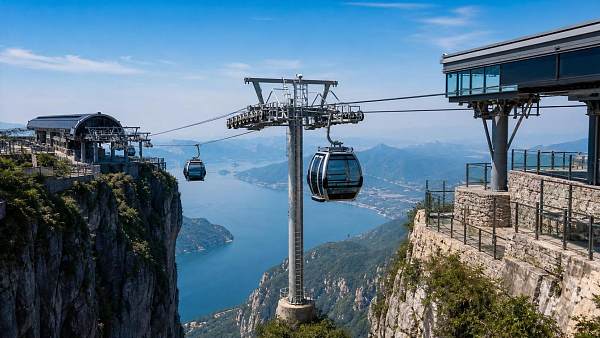
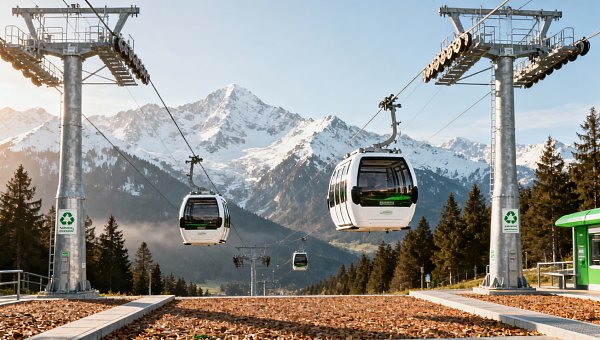
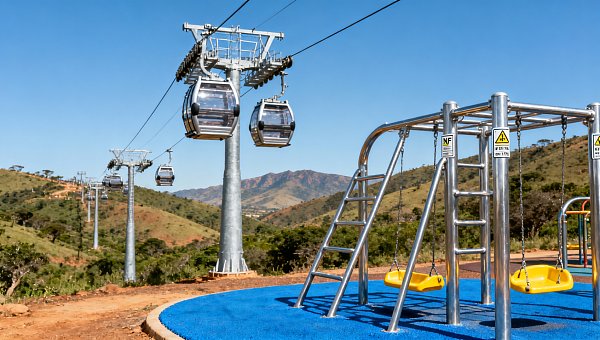
A resort cableway succeeds when it moves guests reliably through the terrain that the destination actually has, not the terrain suggested by a concept image. The first planning decision is therefore operational: define the movement problem before selecting a lift type. A short uphill connection from a parking area to a village, a high-volume link between two ski sectors, and a scenic ride to a ridge may all use cabins or chairs, yet their loading patterns, wind exposure, evacuation constraints, and maintenance windows are fundamentally different.
For recreational cable transport networks, the route, station locations, and required service pattern should be treated as one system. A line that appears efficient on a contour map can become difficult to operate when the lower terminal is exposed to queue surges, the upper terminal has limited snow-storage space, or the alignment crosses terrain that restricts access for tower installation and rescue. Early engineering work should test those relationships while route changes are still inexpensive.
Start with the passenger flow, not the vehicle
Capacity is often reduced to a headline figure, but stated hourly capacity only describes a theoretical condition. It assumes a defined carrier spacing, loading speed, passenger loading behavior, and uninterrupted circulation. The useful planning question is how many people need to pass through a point during the busiest credible period, and whether arrivals occur steadily or in short peaks.
A base-area gondola serving accommodations, rental facilities, and day visitors often experiences concentrated demand shortly before lessons, opening times, and evening events. A lift between dispersed attractions may have lower peak volume but require better tolerance of wheelchairs, strollers, luggage, or bicycles. These uses affect cabin configuration, platform geometry, dwell time, storage space, and the control logic needed at stations. A nominally smaller system with well-designed entry circulation can outperform a larger line whose platforms repeatedly slow down.
Demand must also be separated by direction. Morning uphill demand and afternoon downhill demand may be asymmetric. In a mountain park, the return trip can become the limiting movement when weather changes, an event ends, or a trail closes. Designing only for the most visible direction creates an apparent capacity surplus that disappears when guests need to leave at the same time.
Translate the operating concept into design inputs
- Peak arrival profile: Record whether demand comes from scheduled shuttle arrivals, hotel departures, lift-to-lift transfers, ticketed attractions, or unscheduled walk-up traffic. A short, sharp arrival wave needs queue holding capacity and access control, rather than merely a faster rope speed.
- Trip purpose: Sightseeing passengers tend to travel in groups and carry little equipment; ski and bike traffic require different boarding clearances, storage arrangements, and turnaround time. Mixed use should be defined explicitly instead of assumed to be interchangeable.
- Service continuity: A line that is the only route to lodging, an emergency access point, or a major attraction has a different availability requirement from a secondary scenic ride. Redundancy may be provided through alternate roads, walking routes, backup transport, or network connections rather than by oversizing one installation.
- Seasonal change: Snow, mud, frozen ground, summer storms, foliage, and event operations can alter both demand and maintenance access. A route suitable for winter-only use may require substantial additional work for reliable year-round service.
Route selection is a terrain and access exercise
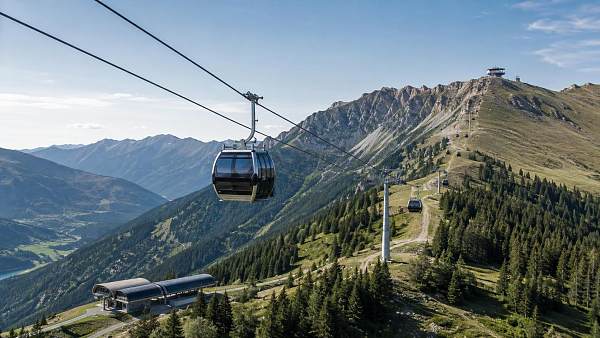
The shortest horizontal alignment is not automatically the preferred alignment. Large elevation changes increase the importance of rope profile, tower positions, station elevation, and wind behavior. A route that avoids a visible ridge may enter a valley where crosswinds, drainage, icing, or fog are more persistent. Conversely, placing towers on exposed terrain can increase installation difficulty and inspection exposure even if the rope line is mechanically straightforward.
Topographic survey data must be detailed enough to model rope clearance across the full operating envelope. Ground clearance is affected by carrier position, rope sag, span length, loading condition, temperature, and local terrain variation. A clearing that seems adequate in summer may be narrowed by snow accumulation, while tree growth can become a recurring clearance issue on forested corridors. The alignment should reserve practical access to every tower and allow for vegetation management without creating a maintenance route that destabilizes slopes or disrupts drainage.
Geotechnical investigation should begin before tower locations are treated as fixed. Tower foundation demand is shaped by uplift, lateral load, local rock quality, groundwater, freeze-thaw behavior, and the ability to build and inspect the foundation. A strong surface indication does not confirm consistent bearing conditions below grade. Where fractured rock, steep fill, or water-saturated material is present, moving a tower several meters can be more effective than forcing a complex foundation solution onto the preliminary alignment.
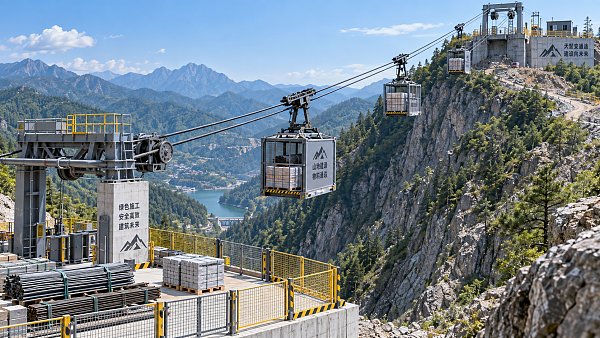
Construction access deserves the same attention as the finished line. Components can be large, heavy, and awkward to move on constrained mountain roads. The selected route should identify where foundations can be excavated, where concrete can be placed, how tower sections can be delivered or lifted, and whether temporary works create conflicts with guest access, wildlife restrictions, watercourses, or existing utilities. Helicopter installation can reduce ground disturbance in some locations, but it introduces weather dependency, lift planning, and strict staging requirements. It should be a route-specific decision rather than a generic assumption.
Choose system architecture from use conditions
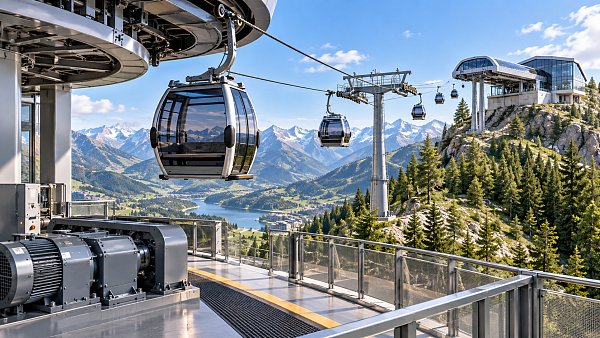
Detachable gondolas, chairlifts, aerial tramways, funiculars, pulse systems, and surface-based alternatives solve different spatial problems. The appropriate choice follows the combination of route length, elevation, expected volume, boarding needs, wind regime, visual intent, and station footprint. A single large-cabin system can suit a scenic ascent with distinct departure cycles, while continuous circulation is often better for a heavily used inter-resort connection. Neither approach is inherently more flexible once station and ropeway geometry are fixed.
Wind analysis requires more than a regional weather record. Ridge acceleration, cross-valley flow, rotor effects behind terrain, and gust direction relative to the line can matter more than the average conditions measured at a distant weather station. Data collection should cover the intended corridor and elevations where feasible, while the design review considers carrier swing, tower passage behavior, and thresholds for reduced-speed or suspended operation. The result is not a promise of uninterrupted service; it is an operating basis that makes expected limitations visible before they are embedded in the guest journey.
Snow and ice deserve similar specificity. Rime accumulation, wet snow adhesion, freeze-thaw cycles, and ice shedding can affect line operation differently. The issue is not simply whether a site receives snow. The relevant questions concern the character of accumulation, exposure of sheaves and grips, station drainage, access for clearing, and the time required to return equipment to service after an event.
Station planning determines whether the line feels reliable
Stations concentrate the interfaces that are easiest to underestimate: arrivals, ticket scanning, queues, loading, unloading, equipment handling, accessibility, emergency egress, electrical rooms, rope handling, maintenance access, and public circulation. A station can look compact in a masterplan and still require a substantial operational footprint once these functions are separated safely.
Queue areas should be sized around expected peaks, but their layout matters as much as their area. Queueing that spills into a ski circulation zone, pedestrian promenade, vehicle drop-off lane, or restaurant terrace creates conflicts that no control system fully resolves. The path into the station should make the next action obvious without relying on temporary barriers. At unloading, passengers need a clear route away from the carrier path before they encounter stairs, elevators, viewing decks, trailheads, or retail space.
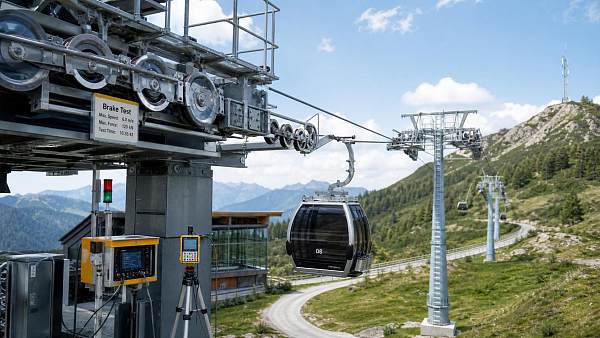
The relationship between station architecture and mechanical equipment must remain visible during design development. Drive machinery, tension systems, electrical distribution, access platforms, ventilation, drainage, and lifting paths impose real volumes and clearances. Enclosing them in a highly customized building envelope can complicate inspection, replacement, and emergency work for the life of the system. Architectural coordination is strongest when maintenance paths, roof openings, structural loads, and fire separation are resolved alongside the equipment layout, not after it.
Safety planning must include degraded operation
A cable transport network needs a defined response for conditions outside normal operation: power loss, communication failure, high winds, fire near a station, medical incidents, blocked access roads, severe weather, and prolonged stoppage. The necessary response depends on line length, terrain below the route, carrier type, available evacuation access, and the time needed for assistance to reach a location. A route over dense forest, cliffs, water, or deep snow can be visually appealing while making evacuation substantially more complex.
Emergency provisions should be reviewed as a chain rather than a document set. Backup power capacity, evacuation equipment, access routes, communications coverage, trained response capability, passenger information, and coordination with local emergency services must work together. A recovery drive has little value if downstream station systems cannot support controlled unloading. A tower evacuation approach is incomplete if ground teams cannot reach the planned recovery points under the conditions that caused the shutdown.
Safety compliance also needs to be matched to the governing jurisdiction and site classification early in the project. Requirements can affect design loads, inspections, documentation, testing, accessibility, fire protection, and the approval sequence. A preliminary design based solely on a supplier's familiar reference configuration can require expensive revision when local authorities examine station occupancy, evacuation paths, structural interfaces, or environmental permits.
Control lifecycle cost before the contract is fixed
Capital cost comparisons become misleading when proposals use different scope boundaries. One offer may include standard station machinery but exclude extensive civil works, grid reinforcement, communications, snow-management changes, access roads, spare parts, training, or commissioning support. Another may contain a broader package but rely on assumptions about foundation conditions or utility availability that have not been verified. Scope normalization should identify these differences line by line before a preferred system is selected.
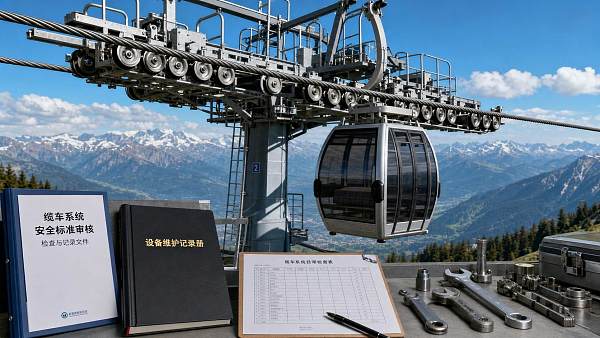
Lifecycle cost is shaped by energy use, rope and grip inspection regimes, bearing and sheave maintenance, drive components, cabin refurbishment, corrosion protection, software support, and the logistics of obtaining parts at a remote site. Availability is also a financial condition: maintenance shutdowns during peak days can affect transport capacity, guest distribution, and adjacent operations. The maintenance strategy should state what work occurs daily, seasonally, at planned intervals, and after abnormal weather or overload events.
Procurement documents benefit from performance-based requirements where the site has unique constraints. Rather than prescribing a familiar configuration too early, define the passenger flow, route envelope, operating conditions, station interfaces, environmental limits, reliability expectations, and evidence required for acceptance. Technical submissions can then be compared against the same operating case. Evaluation should distinguish proven equipment characteristics from assumptions that still depend on survey results, authority approvals, or later interface design.
Data that should be settled before final selection
A defensible comparison usually needs surveyed terrain and corridor constraints; a demand model with directional peaks; wind and weather observations relevant to the alignment; preliminary geotechnical findings at candidate stations and towers; utility capacity; access and construction logistics; station circulation plans; and a clear definition of the operating season. Missing information does not always stop concept selection, but it should be recorded as an unresolved assumption with an owner and a date for closure.
Independent review is especially useful where a design claim rests on a single favorable parameter. A low energy estimate may assume a particular loading pattern. A compact station may omit maintenance lifting space. A rapid construction schedule may depend on access that is unavailable during seasonal restrictions. Comparing inputs, interfaces, and exclusions often exposes the issue earlier than comparing headline specifications.
The finished network should leave room for the destination to operate differently over time. This does not require building excess capacity everywhere. It requires preserving practical options: station space that can accommodate revised queuing, utility routes that can support controls upgrades, access provisions for major maintenance, and land-use protection where a future connection is plausible. When these choices are made before construction, recreational cable transport networks can remain functional assets rather than fixed scenic objects.
Recommended News
 Sep 29, 2026When Does a Cableway System Upgrade Improve Capacity and Reduce Downtime?Discover when a cableway systems upgrade can increase real capacity, cut unplanned downtime, and deliver a stronger lifecycle return for tourism operations.
 Sep 16, 2026How to Plan a Slope Access Cable Transport System for Steep-Site ConstructionSlope access cable transport planning for steep-site construction: evaluate loads, terrain, terminals, safety, weather risks, and costs for reliable low-impact logistics.
 Sep 04, 2026Planning Recreational Cable Transport Networks for Resorts and Mountain ParksExplore recreational cable transport networks for resorts and mountain parks, with expert planning insights on capacity, terrain, safety, station design, and long-term performance.
 Sep 02, 2026Mountain Slide Systems Pricing: Key Cost Factors for Resort ProjectsMountain slide systems pricing explained: explore key cost drivers for resort projects, from terrain and logistics to safety compliance, installation, and lifecycle planning.
 Jul 31, 2026How to Evaluate Powder Coated Cableway Systems for Corrosion Resistance and Service LifePowder coated cableway systems: learn how to assess corrosion resistance, pretreatment, substrate, and service life so you can choose safer, longer-lasting systems with confidence.
 Jul 26, 2026EN 13814:2026 Tightens EU Cableway Entry RulesEN 13814:2026 tightens EU cableway entry rules with mandatory AI monitoring and 100,000-cycle testing. Learn how manufacturers, operators, and importers should prepare now.
 Jul 18, 2026EN 13814:2026 Tightens EU Cableway Entry RulesEN 13814:2026 tightens EU cableway entry rules with new AI monitoring, wind load validation, and data interface demands. Learn what manufacturers, suppliers, and buyers must prepare now.
 Jul 17, 2026How to Choose Cableway Systems Equipment: Key Components, Load Capacity, and Safety StandardsCableway systems equipment selection starts with verified components, real load capacity, and safety standards. Learn how to compare systems and reduce long-term operational risk.
 Jul 16, 2026EN 13814:2026 Takes Effect for Cableway Tech ExportsEN 13814:2026 takes effect now, reshaping Cableway Tech exports to the EU with new wind-load and AI testing rules. Learn the compliance risks, certification impacts, and export steps companies should act on fast.
 Jul 12, 2026Recreational Cable Transport Market: Demand Drivers, Resort Use Cases, and Growth SignalsRecreational cable transport market trends are reshaping resorts and leisure destinations. Explore demand drivers, practical use cases, and the growth signals guiding smarter investment.
 Jul 05, 2026Performance Verification for Cableways: Test Items, Acceptance Criteria, and Safety ChecksPerformance verification for cableways explained: key test items, acceptance criteria, and safety checks to confirm readiness, reduce risk, and support reliable operation.
 Jun 26, 2026Cableway Compliance Analysis: How to Review Safety Standards, Documentation, and Risk GapsCableway compliance analysis helps review safety standards, documentation integrity, and hidden risk gaps—so you can strengthen compliance, reduce exposure, and support safer operations.
 Jun 25, 2026Durban Tourism Expo Signals New Cableway Entry RulesDurban Tourism Expo Signals New Cableway Entry Rules as South Africa and Rwanda buyers highlight ISO 18738, IEC 61508 SIL2, and third-party verification. See what suppliers must prepare now.
 Jun 25, 2026Recreational Cable Transport for Visitor Access: Key Safety and Capacity Factors to CompareRecreational cable transport for visitor access: compare safety, real capacity, evacuation readiness, and lifecycle reliability to choose a smarter, future-ready visitor mobility system.
 Jun 21, 2026EU Revises EN 13814:2026, Triggering New CertificationEN 13814:2026 revision brings new EU certification pressure for amusement rides and cableway systems. Learn the 2027 deadline, key testing changes, and how exporters can stay compliant.
 May 24, 2026France Launches 'Green Cableway' Tender Requiring EPDFrance’s 'Green Cableway' tender mandates EPD compliance—key for global suppliers. Act now to meet EN 15804 & 40% recycled material rules before the 30 June deadline.
 May 23, 2026France Announces €23B Africa Investment, Prioritizing Cableway Tech & Playground SafetyCableway Tech & Playground Safety take center stage in France’s €23B Africa investment—key opportunities for compliant exporters, certifiers, and contractors.
 May 22, 2026UIC Mandates OPC UA PubSub for Cableway Tech Maintenance InterfacesUIC mandates OPC UA PubSub for cableway tech maintenance—critical for EU market access. Learn compliance deadlines, impacted vendors, and urgent actions.
 May 21, 2026UIC Mandates OPC UA PubSub for Cableway SystemsUIC mandates OPC UA PubSub for cableway systems—learn how this binding 2027 standard impacts interoperability, cybersecurity, and real-time data in aerial transport.
 May 20, 2026UIC Mandates OPC UA PubSub for Cableway Tech InterfacesOPC UA PubSub is now mandatory for cableway tech interfaces per UIC’s 2026 mandate — ensure compliance, avoid bid disqualification, and future-proof your ropeway systems.
 May 20, 2026UIC Mandates OPC UA PubSub for Cableway AI-Ops InterfacesUIC mandates OPC UA PubSub for Cableway AI-Ops interfaces—unlock ultra-low latency, real-time edge diagnostics & future-proof AI-driven operations.
 May 19, 2026UIC Mandates OPC UA for AI-Based Cableway MaintenanceOPC UA is now mandatory for AI-based cableway maintenance per UIC’s new global standard — discover compliance deadlines, impacted industries, and actionable next steps.
 May 18, 2026UIC Mandates OPC UA for Cableway AI OperationsUIC mandates OPC UA for cableway AI operations—learn how this binding 2027 regulation impacts exporters, integrators, and suppliers globally.
 May 17, 2026UIC Mandates OPC UA for Cableway AI Ops Starting Oct 2026UIC mandates OPC UA for cableway AI ops from Oct 2026—critical for Chinese exporters, integrators & stack providers targeting EU, Japan & Chile markets.
Quarterly Executive Summaries Delivered Directly.
Join 50,000+ industry leaders who receive our proprietary market analysis and policy outlooks before they hit the public library.