Search News
TerraVista Metrics (TVM)Industry Portal
TerraVista Metrics (TVM)Hot Articles
TerraVista Metrics (TVM)- How to Evaluate Spark Plug Suppliers for Consistent Quality and Lead TimesSpark plugs supplier evaluation guide: compare quality control, traceability, fitment, total cost, and reliable lead times to secure dependable engine maintenance supply.
- What Drives System Interoperability Testing Service Costs in Complex Projects?System interoperability testing service cost depends on integration scope, workflows, environments, and assurance needs. Learn how to budget smarter and reduce project risk.
- Project Planning Sourcing Guides: How to Qualify Suppliers Before Work StartsSourcing guides project planning helps teams qualify suppliers before work begins—verify compliance, delivery capacity, financial strength, and sustainability to reduce risk and protect project outcomes.
Popular Tags
TerraVista Metrics (TVM)Industry NewsAmusement Equipment Testing for Family Entertainment Centers: Key Safety Checks
auth.Dr. Julian Rossi (Aesthetic Materials Specialist)Time
Oct 07, 2026Click Count
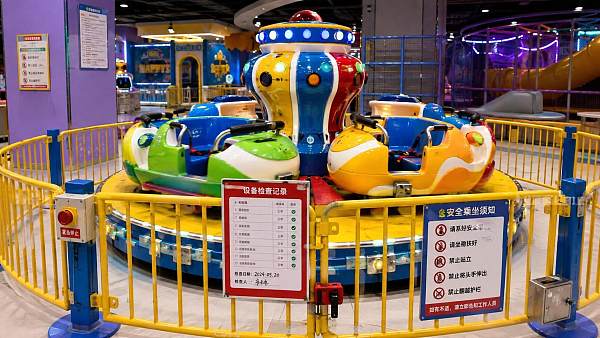
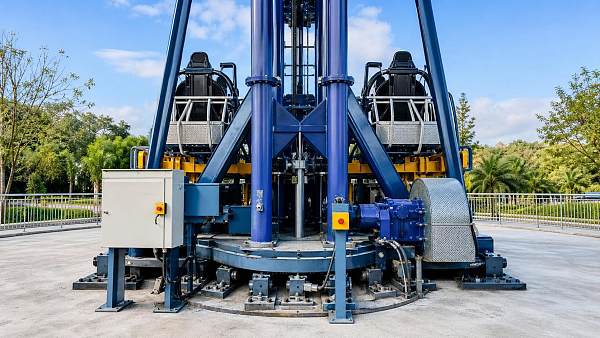
A family entertainment center can appear ready for opening after a quick walk-through: lights work, padding looks intact, and the ride starts normally. Yet the failures most likely to harm guests or interrupt operations are often not visible from the queue line. A restraint may latch but not hold under load, a rotating element may develop abnormal play, a welded joint may hide early fatigue, or a safety sensor may respond inconsistently after repeated cycles.
Effective amusement equipment testing for family entertainment centers therefore combines routine inspection with functional verification, condition monitoring, and documented review against the equipment’s intended operating limits. The central rule is simple: do not treat appearance, start-up, or a single successful cycle as proof of safety. Each critical system must be checked in the way it can actually fail—under movement, load, repetition, environmental exposure, and foreseeable guest use.
Start by separating inspection from testing
Visual inspection remains necessary, but it answers only part of the safety question. It can reveal loose fasteners, torn netting, exposed edges, damaged flooring, corrosion, fluid leaks, missing labels, or degraded padding. Testing goes further. It verifies whether a system performs its safety function when called upon.
This distinction matters in facilities that operate attractions with different risk profiles: compact rides, indoor climbing structures, arcade-linked motion equipment, inflatable units, trampolines, ropes courses, mini coasters, water-play elements, or mechanical play systems. A daily walk-around may be suitable for identifying obvious defects, while a braking system, restraint interlock, emergency stop circuit, anchor point, or drive assembly requires a more deliberate test method.
When these activities are merged into one vague “safety check,” critical defects can be missed. A checklist should identify what is being examined, how it is examined, who may perform the task, what result is acceptable, and what action follows a failed result.
Use the operating scenario to decide what deserves the closest attention
Testing priorities should reflect how guests actually use the equipment rather than how the equipment looks when idle. Family centers face varied user behavior: children may climb in unintended directions, adults may assist or enter restricted areas, guests may repeatedly activate controls, and groups may place uneven loads on structures designed around defined capacities. Peak periods also create conditions that differ from a quiet pre-opening test.
Begin by mapping the attraction’s normal cycle and foreseeable abnormal conditions. Ask where energy is stored or released, where a guest can fall, become trapped, collide with a moving part, lose balance, or access a restricted zone. Then identify the protective measure that prevents or reduces that hazard. This links each risk to a testable control rather than producing a broad list of generic observations.
For example, an electrically driven attraction may require review of guards, limit switches, drive belts or chains, braking behavior, control logic, restraint systems, emergency stops, and operator communication devices. A soft-play or climbing installation may place greater emphasis on structural connections, anchoring, net integrity, platform stability, impact surfaces, access gates, fall protection, and wear at high-contact points. The inspection format should change with the equipment, even if the recordkeeping system is shared.
Safety systems should be tested as systems, not as isolated parts
One of the most frequent weaknesses in facility testing is checking a component without checking its relationship to the rest of the attraction. Pressing an emergency-stop button and seeing a machine stop is useful, but incomplete. The evaluator should also confirm whether the stop occurs within the expected operating behavior, whether motion remains safely controlled, whether restart is prevented until reset, whether the reset procedure is restricted as intended, and whether the system returns to service without bypassing another safeguard.
Restraints, gates, and interlocks
Restraints and access controls deserve close scrutiny because they combine mechanical condition with human interaction. Test whether latches engage fully, whether locking indicators are reliable, whether hinges and pivots show excessive movement, and whether the system can be defeated through ordinary misuse. Any sensor or interlock intended to prevent operation with an open gate or unsecured restraint should be functionally verified according to the manufacturer’s procedure.
Do not assume that a restraint is acceptable simply because it closes. Look for wear on contact surfaces, deformation around mounting points, cracked housings, loose hardware, damaged straps, altered adjustment points, or inconsistent engagement. Repeated guest handling can create progressive degradation long before a complete failure is obvious.
Emergency stops and control functions
Emergency devices must be accessible, identifiable, and operational. Their testing should include the actual stop function, reset conditions, response of associated equipment, and confirmation that normal operation does not resume unexpectedly. Where an attraction has multiple control stations, each station should be reviewed in the context of the complete system.
Control panels also need attention beyond emergency functions. Faded labels, loose switches, damaged enclosures, condensation, makeshift wiring, and defeated alarms can all weaken the operator’s ability to recognize abnormal conditions. A control fault may first present as intermittent behavior: delayed response, a warning that clears without explanation, a sensor reading that changes unexpectedly, or an attraction that requires repeated resets. These are not merely inconveniences; they should trigger investigation before continued operation.
Braking, speed control, and limits of travel
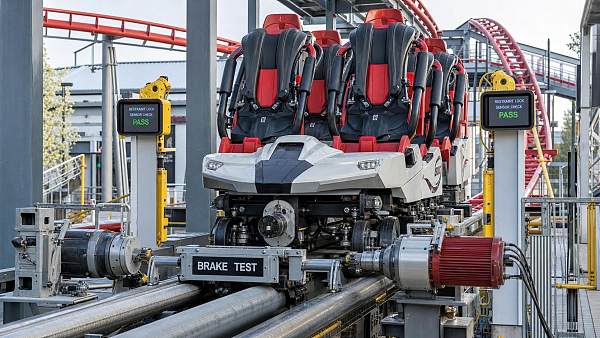
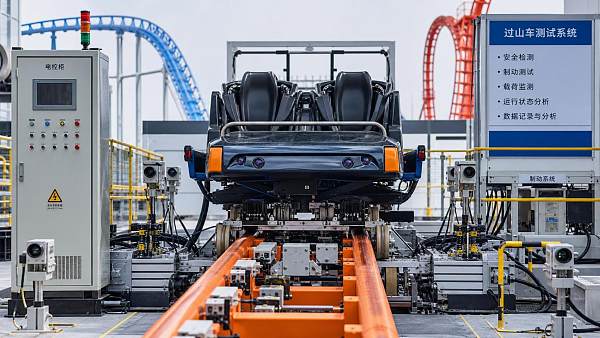
Where equipment moves guests, braking and travel limits should be assessed under controlled conditions. The relevant question is whether the unit stops predictably, without excessive drift, impact, rollback, or unintended movement. Unusual noise, vibration, heat, or changing stopping behavior can indicate wear, poor alignment, degraded friction material, drive issues, or control faults.
Limit switches and position sensors should not be treated as permanent fit-and-forget devices. Their brackets can shift, cables can deteriorate, and repeated contact can change adjustment. Any adjustment must follow authorized procedures; improvised repositioning may mask a deeper mechanical issue or create a new hazard.
Look for fatigue where the equipment works hardest
Material fatigue and progressive wear rarely distribute themselves evenly. They concentrate at load transitions, moving joints, welded areas, attachment points, anchors, suspension components, rotating shafts, bearings, and edges repeatedly contacted by guests. The correct question is not only “Is the material broken?” but “Is the condition changing in a way that could reduce its remaining safety margin?”
Inspectors should compare current condition with prior records whenever possible. A small crack, a slightly elongated hole, increasing movement at a joint, recurring loose fasteners, or a new rubbing mark becomes more meaningful when it is known to be new or worsening. Trend information supports decisions that a single inspection cannot provide.
- Check welds, brackets, frame connections, and anchors for cracking, distortion, corrosion, or paint separation that may indicate movement beneath the coating.
- Assess bearings, pivots, rollers, cables, belts, chains, and guide components for noise, heat, abrasion, looseness, fraying, stretch, or irregular travel.
- Examine protective padding, netting, soft barriers, covers, and guards for loss of attachment, compression damage, tears, hard exposed areas, and gaps created by deformation.
- Verify that fasteners are present, secured as specified, and not repeatedly loosening because of vibration, thread damage, or misalignment.
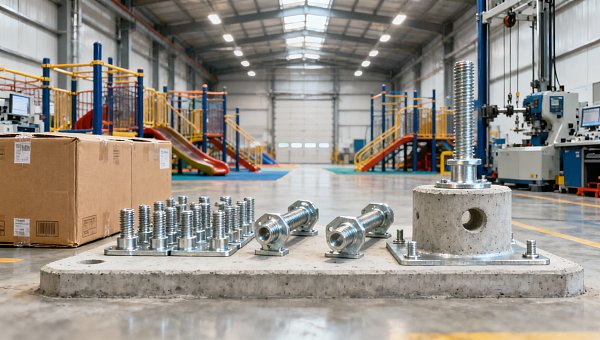
- Review foundations, floor anchors, and support interfaces where settlement, moisture, impact, or building movement could affect stability.
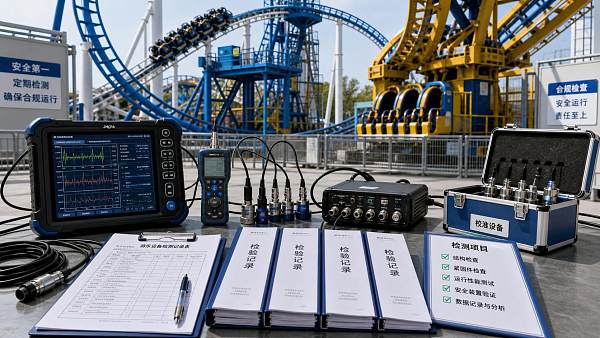
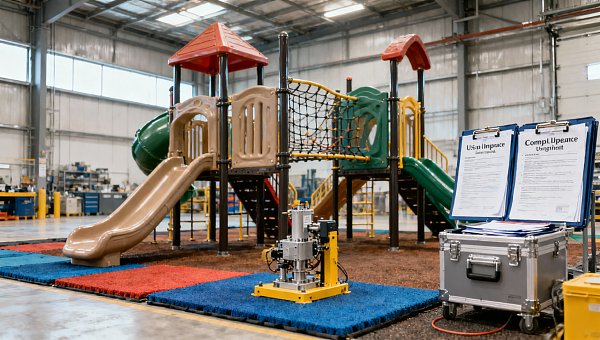
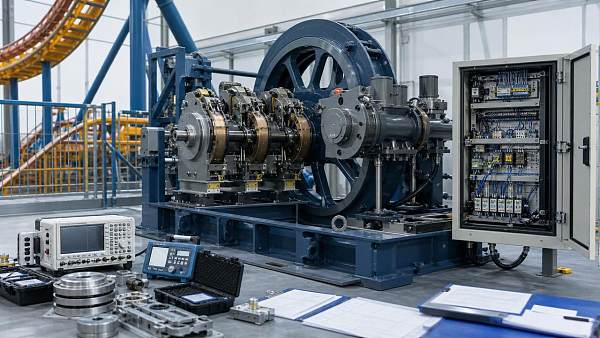
Some conditions cannot be reliably evaluated by sight alone. Depending on the equipment and its documented requirements, more detailed methods may be needed to assess torque, alignment, electrical integrity, structural condition, or component wear. The test method should match the failure mode. Adding more visual checks does not compensate for the absence of a required measurement or functional test.
Protective surfaces and guest-contact zones need a different standard of attention
In family environments, small defects in guest-contact areas can become significant because users vary widely in height, strength, coordination, and behavior. A gap that does not affect an adult may trap a child’s hand. A worn edge that seems minor may become a laceration risk after repeated contact. A compressed mat may no longer provide the intended impact attenuation, even though its outer surface remains intact.
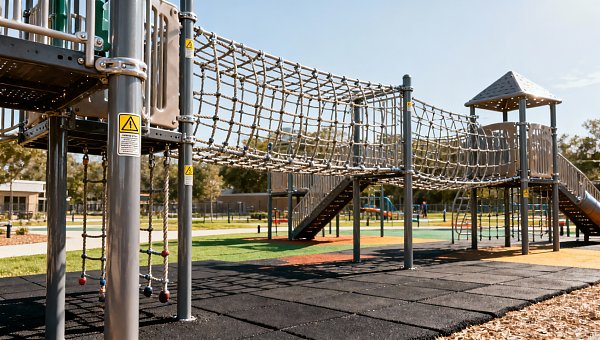
Inspect all reachable zones from the guest’s perspective. This includes entrances, exits, transfer points, queue barriers, steps, platforms, handrails, rail gaps, exposed hardware, landing areas, and the boundary between moving and stationary parts. Where padding or guard systems have been removed for cleaning, repair, or access, confirm that replacement has restored complete coverage rather than leaving a small unprotected section.
Cleaning practices also deserve review. Water, cleaning chemicals, food residue, and dust can affect grip, corrosion resistance, electrical enclosures, and flooring performance. A condition that is safe when dry may not be safe after routine cleaning or heavy guest traffic. Testing schedules should account for these operational states.
Make daily checks useful instead of merely routine
Daily opening checks are most valuable when they focus on changes that could have occurred since the previous operating period: unauthorized access, overnight damage, loose parts, leaks, contamination, power irregularities, missing safeguards, and functions that fail during start-up. They are not a substitute for scheduled maintenance or periodic technical review.
A practical opening procedure normally begins with isolation from guests, review of outstanding defect reports, and confirmation that any prior restrictions have been resolved. Operators can then inspect accessible areas, run the equipment through its intended pre-opening sequence, test designated safety controls, and document defects before releasing the attraction for use. Equipment should not be returned to service simply because the shift is busy or because a fault disappears after a reset.
Records should state more than “checked” or “OK.” Useful entries identify the equipment, date and time, person completing the check, tested functions, observed condition, corrective action, and release decision. When a defect is found, record the immediate control as well: removed from service, isolated, tagged, monitored under an authorized limitation, or referred for repair. Clear documentation prevents a recurring issue from being rediscovered as though it were new.
Know when a defect requires removal from service
Not every imperfection creates the same level of risk, but uncertainty around a critical safeguard should be treated conservatively. Remove or restrict equipment from service when a restraint, interlock, brake, emergency stop, guard, structural support, anchor, electrical enclosure, or protective surface cannot be verified as functioning safely. The same applies when unusual movement, repeated alarms, abnormal noise, overheating, fluid leakage, visible structural damage, or unexplained control behavior is present.
The decision should not depend solely on whether guests have complained or whether the attraction completed its last cycle. A device may continue to operate while its safety margin is reduced. Where the condition involves structural integrity, electrical protection, control systems, or a manufacturer-defined inspection limit, evaluation by a competent person with the appropriate technical authority is warranted before return to service.
Compliance depends on controlled information, not paperwork alone
Applicable requirements vary by equipment type, installation location, jurisdiction, and operating model. Compliance review should begin with the manufacturer’s instructions, installation records, maintenance requirements, operating limitations, required inspection intervals, and any local obligations that apply to the site. The purpose is not to collect documents for their own sake; it is to confirm that the equipment in service still matches the conditions under which it may be safely operated.
Changes are a common source of hidden nonconformity. Replacing a component with a visually similar substitute, modifying barriers, relocating equipment, adding decorations near moving parts, changing flooring, disabling a sensor during troubleshooting, or altering access routes can affect safe operation. Any modification should be reviewed before use, with particular care where it changes loads, clearances, electrical systems, escape routes, operator visibility, or guest containment.
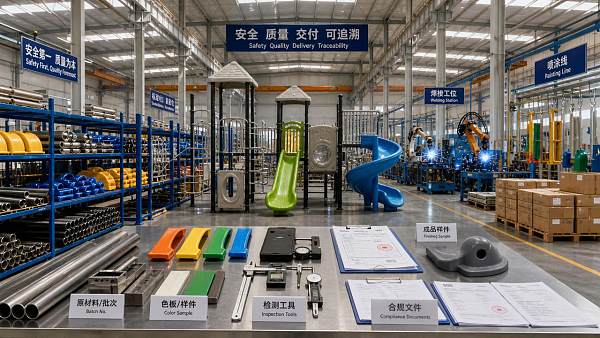
A reliable testing program is built around traceability: the equipment identity, its approved configuration, the required tests, the people authorized to perform them, the acceptance criteria, and the repair history. That structure gives quality and safety teams a defensible way to recognize deterioration early, stop unsafe equipment promptly, and distinguish a cosmetic issue from a condition that could affect guests.
Recommended News
 Sep 07, 2026Amusement Equipment Testing for Family Entertainment Centers: Key Safety ChecksAmusement equipment testing for family entertainment centers: discover essential safety checks for restraints, brakes, interlocks, structural wear, and daily operations.
 Aug 25, 2026How to Evaluate Play Equipment Suppliers in North America for Safety and FitPlay equipment North America buyers: learn how to compare suppliers for safety, compliance, materials, installation support, and long-term fit before costly mistakes happen.
 Aug 22, 2026Poured Rubber Surfacing for Playgrounds: What to Evaluate Before Specifying ItPoured rubber surfacing for playgrounds looks ideal, but performance depends on drainage, substrate, testing, and maintenance. Learn what to evaluate before you specify it.
 Aug 16, 2026What Playground Surfacing Standards Should You Meet for Safer School and Public Play Areas?Playground surfacing standards help school and public play areas stay safer, accessible, and compliant. Learn what to check before approval and avoid costly safety gaps.
 Aug 13, 2026EU Updates EN 13814:2026 for Modular CabinsEU updates EN 13814:2026 for Modular Cabins, adding AI load simulation to compliance. Learn what exporters must prepare before March 2027 to avoid CE delays and rising certification costs.
 Aug 08, 2026EN 13814:2026 Takes Effect, Raising EU Ride Safety Certification RequirementsEN 13814:2026 now raises EU ride safety certification requirements. Learn how dynamic load fatigue testing and third-party approval affect EU customs clearance, suppliers, and buyers.
 Aug 05, 2026EN 13814:2026 Tightens EU Playground Safety RulesEN 13814:2026 tightens EU playground safety rules with a fast transition deadline. Learn how the new standard affects CE compliance, testing, and delivery planning.
 Jul 21, 2026CPSC Adopts ASTM F1487-26 for Playground SafetyCPSC adopts ASTM F1487-26 for Playground Safety starting Oct. 1, 2026. Learn how the new rules affect CPC certification, U.S. market access, inventory risk, and compliance planning.
 Jul 14, 2026Vietnam Requires GS1 Traceability Codes for Imported Playground EquipmentVietnam Requires GS1 Traceability Codes for Imported Playground Equipment from Aug 15, 2026. Learn what MOIT’s new QR code rule means for exporters, importers, and compliance readiness.
 Jul 13, 2026Vietnam Requires QR Labels on Imported Playground EquipmentVietnam requires QR labels on imported playground equipment from Aug 1, 2026. Learn how VN-QR 2026 rules affect customs, documents, and shipment readiness.
 Jul 12, 2026Vietnam Requires UV Aging Test for Imported SlidesVietnam requires UV aging test for imported slides under VN-TIS 123:2026. Learn how the new rule impacts compliance, testing costs, shipment timing, and supplier selection.
 Jul 11, 2026CPSC Tightens Playground Safety Rules for Export Supply ChainsCPSC playground safety rules tighten U.S. export compliance for slides, climbing frames, and swing supports. Learn ASTM F1487-26a impacts, DIA testing changes, sourcing risks, and supply chain actions before Oct. 1, 2026.
 Jul 11, 2026Amusement Equipment Testing for Public Parks: What Safety Items Should Be Checked First?Amusement equipment testing for public parks should start with structure, restraints, electrical systems, moving parts, and records. Learn the first safety checks that prevent shutdowns and protect visitors.
 Jul 09, 2026How to Choose an Amusement Equipment Testing System for Compliance and Daily InspectionAmusement equipment testing system selection made practical: learn how to compare compliance features, inspection workflows, data accuracy, and audit readiness for safer, more efficient operations.
 Jul 04, 2026Amusement Ride Testing Services: What Tests Are Required Before Opening to the Public?Amusement ride testing services cover structural, load, control, restraint, and emergency checks before opening. Learn what tests matter most to protect safety, compliance, and uptime.
 Jul 01, 2026All Weather Slide Systems: Key Safety, Drainage, and Material Factors for Outdoor ProjectsAll weather slide systems for outdoor projects: explore key safety, drainage, and material factors to reduce risk, improve uptime, and choose durable solutions with confidence.
 Jun 29, 2026CPSC Alert Tightens Scrutiny on Playground AnchorsCPSC Alert tightens scrutiny on playground anchors as CBP inspections expand. Learn how recall-linked defects may delay clearance, raise compliance risks, and impact playground safety supply chains.
 Jun 26, 2026CPSC Sets Trilingual Warning Label Rule for Playground EquipmentCPSC trilingual warning label rule for playground equipment takes effect August 1, 2026. Learn ASTM F1487-25 requirements, import risks, and how exporters and buyers can stay compliant.
 Jun 18, 2026CPSC Tightens Playground Impact Testing for Modular ImportsCPSC tightens playground impact testing for modular imports under ASTM F1487-26e1. Learn key compliance changes, shipment risks, and document updates before Sept. 1, 2026.
 Jun 17, 2026Amusement Ride Testing Explained: Key Standards, Test Types, and Safety CheckpointsAmusement ride testing explained: learn key standards, test types, and safety checkpoints to improve compliance, reduce downtime, and protect attraction performance.
 Jun 13, 2026How to Request an Amusement Hardware Quotation Without Missing Specs or Safety RequirementsAmusement hardware quotation guide: learn how to request accurate specs, safety documents, and compliance details to avoid hidden costs, delays, and risky supplier gaps.
 Jun 07, 2026Playground Equipment Factory Audit Guide: What to Check Before Placing a Bulk OrderPlayground equipment factory audit guide: learn what to check before a bulk order, from materials and welding to testing, compliance, and traceability for safer, smarter sourcing.
 Jun 06, 2026How to Use Benchmarking for Amusement Hardware to Compare Safety, Uptime, and ROIBenchmarking for amusement hardware helps buyers compare safety, uptime, and lifecycle ROI with clear metrics. Learn how to avoid costly mistakes and choose attractions with confidence.
 May 24, 2026DRC Mandates IEC 61400-2 Wind Load Certification for All Outdoor Play EquipmentIEC 61400-2 wind load certification now mandatory for all outdoor play equipment in DRC — effective 1 Sep 2026. Avoid delays: verify AFRAC-accredited testing & French technical docs now.
Quarterly Executive Summaries Delivered Directly.
Join 50,000+ industry leaders who receive our proprietary market analysis and policy outlooks before they hit the public library.