Search News
TerraVista Metrics (TVM)Industry Portal
TerraVista Metrics (TVM)Hot Articles
TerraVista Metrics (TVM)- Cableway Station Spacing: How Terrain and Capacity Shape the DistanceExplore cableway systems station spacing and learn how terrain, passenger capacity and safety shape practical, route-specific design decisions.
- What Is an Industry Insights Data Model? Key Components and UsesDiscover how an industry insights data model connects market data, improves comparisons, and supports smarter benchmarking and procurement decisions.
- Vingcard Deploys MENA’s First Native Wallet Hotel Keys in EgyptVingcard and Hudini bring native wallet hotel keys to three Egypt resorts. Discover what app-free access could mean for hotel buyers and suppliers.
Popular Tags
TerraVista Metrics (TVM)Industry NewsWorld's First AI-Driven Playground Safety Test Line Launches in Dongguan
auth.Dr. Julian Rossi (Aesthetic Materials Specialist)Time
Nov 16, 2026Click Count
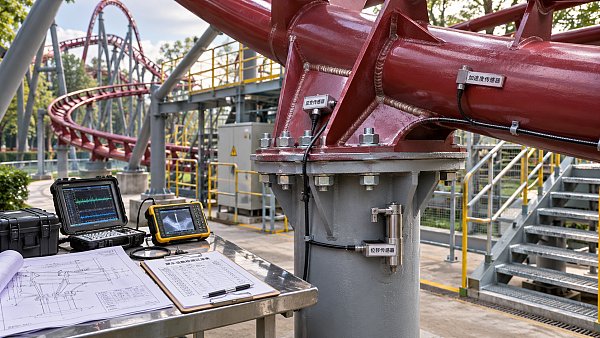
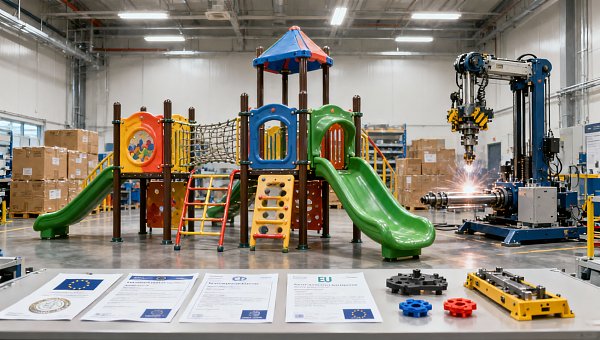
On May 2, 2026, the world’s first AI-driven, fully automated playground safety fatigue testing line entered operation at a national amusement facility testing center in Dongguan, Guangdong Province, China. This development is of direct relevance to manufacturers, certification service providers, and export-oriented trading firms operating in the global playground equipment sector — particularly those engaged with EN 1176 and ISO 8124-6 compliance. It signals a measurable shift in testing capacity, turnaround time, and regional certification logistics.
Event Overview
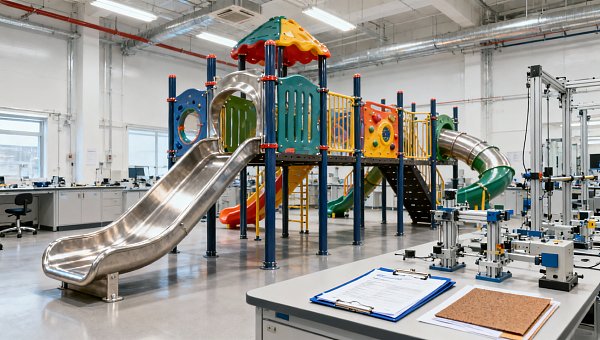
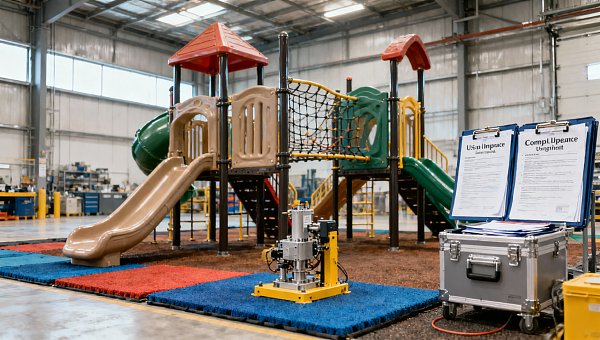
On May 2, 2026, a national-level amusement facility testing center in Dongguan, Guangdong, activated the world’s first AI-powered, fully automated playground safety fatigue testing line. The line performs 100,000-cycle mechanical loading tests on kinetic playground equipment and generates real-time compliance reports aligned with EN 1176 and ISO 8124-6 standards. A full test batch — previously requiring an industry-average 14 days — is now completed in 72 hours. As confirmed by publicly reported outcomes, this increased throughput has already prompted leading international brands including KOMPAN (Netherlands) and Wickey (Germany) to redirect their Asia-region certification orders to Dongguan, contributing to improved delivery stability for Chinese-made playground safety products exported globally.
Impact on Specific Industry Segments
Direct Export Trading Firms
These firms handle cross-border documentation, certification coordination, and order fulfillment for playground equipment. They are affected because shortened testing cycles directly reduce lead times for certified shipments to EU and other regulated markets. Impact manifests as tighter alignment required between production scheduling, test booking windows, and customs documentation timelines — especially for time-sensitive tenders or seasonal retail launches.
Manufacturers & OEM/ODM Producers
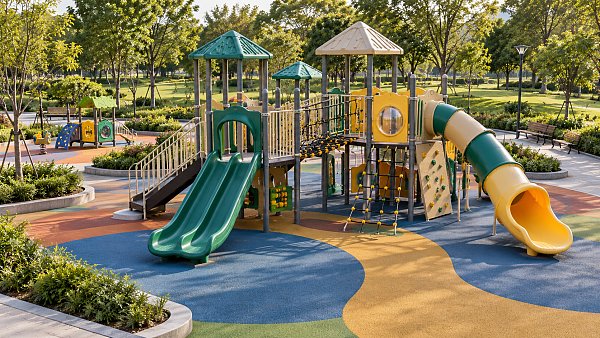
Manufacturers supplying kinetic play structures (e.g., spring riders, rotating units, climbing frames) face revised expectations around pre-shipment validation readiness. With local EN 1176/ISO 8124-6 testing now available in 72 hours, buyers may increasingly require proof of test initiation prior to shipment — shifting internal QA checkpoints earlier in the production workflow.
Certification & Testing Service Providers
Third-party labs and conformity assessment bodies operating outside Dongguan — especially those serving Asian clients targeting EU markets — may experience competitive pressure on turnaround time and pricing. The new line does not replace notified body functions but compresses a key technical validation step previously outsourced or delayed across geographies.
Supply Chain & Logistics Operators
Firms managing warehousing, bonded logistics, or just-in-time delivery for playground components must adapt to more compressed end-to-end cycle times. Faster certification enables faster release from inspection hold points — increasing demand for responsive documentation handling, sample transport coordination, and real-time status tracking between factory, lab, and port.
What Relevant Companies or Practitioners Should Monitor and Act On
Track official scope expansion announcements
Current public information confirms the line supports EN 1176 and ISO 8124-6 for kinetic equipment. Analysis shows the testing scope — e.g., coverage of static structures, material-specific subtests, or integration with other standards like ASTM F1487 — remains unconfirmed. Stakeholders should monitor updates from the Dongguan center or China’s State Administration for Market Regulation (SAMR) regarding formal accreditation scope.
Assess dependency on Dongguan-based certification for priority markets
Observably, KOMPAN and Wickey have shifted Asia-region certification orders to Dongguan — suggesting growing acceptance of locally generated test reports by EU importers and notified bodies. Companies exporting to the EU should evaluate whether their current certification pathways rely on overseas labs and whether parallel validation via Dongguan could improve predictability — particularly for high-volume or fast-turnaround product lines.
Distinguish between test report issuance and full conformity assessment
From an industry perspective, the 72-hour cycle covers fatigue testing and report generation only. It does not constitute full CE marking or Notified Body approval, which involve additional steps (e.g., risk assessment, technical file review, factory audits). Stakeholders should avoid conflating accelerated test execution with end-to-end certification completion.
Prepare for tighter internal coordination between production and QA teams
With test turnaround reduced from 14 days to 3 days, batch release decisions now depend on near-real-time alignment between manufacturing completion, sample dispatch, and lab intake. Current best practice involves pre-scheduling test slots during production planning and assigning dedicated personnel to manage sample handover and report reconciliation.
Editor Perspective / Industry Observation
This development is better understood as an infrastructure-level signal — not yet a market-wide outcome. It reflects growing domestic capability in standardized mechanical validation for playground safety, but its broader adoption hinges on continued recognition by EU notified bodies and importer acceptance of test data originating from Dongguan. Observably, early traction from KOMPAN and Wickey suggests commercial validation is underway; however, sustained impact depends on transparency of methodology, audit readiness of the facility, and consistency in report formatting for international reviewers. The line itself does not change regulatory requirements — but it does recalibrate timing expectations across the supply chain.
Conclusion
The launch of the Dongguan automated playground safety test line marks a tangible improvement in localized, standards-aligned validation capacity — specifically for fatigue performance under EN 1176 and ISO 8124-6. Its primary significance lies in compressing a historically slow technical checkpoint, thereby enhancing responsiveness for exporters serving regulated markets. It is not a regulatory shift, nor does it replace third-party conformity assessment — rather, it represents a capacity upgrade that shifts operational benchmarks for speed and coordination. Currently, it is more appropriately interpreted as an enabling infrastructure milestone than a standalone market transformation.
Information Sources
Main source: Public announcement from the national amusement facility testing center in Dongguan, Guangdong (May 2, 2026). Scope details, brand participation (KOMPAN, Wickey), and timeline comparisons are based on officially reported outcomes. Ongoing verification of accreditation status with EU notified bodies and SAMR remains pending — this aspect requires continued observation.
Recommended News
 Nov 08, 2026Choosing an Amusement Equipment Testing Agency: Accreditation and ScopeChoosing an amusement equipment testing agency? Learn how to verify accreditation, assess technical scope, and compare reports before you commit.
 Oct 24, 2026Six Flags to Add Seat Belts to Goliath and Similar Roller CoastersSix Flags plans to add seat belts to Goliath and similar roller coasters. Learn about the safety changes, Goliath’s closure and what visitors should watch for next.
 Oct 22, 2026Choosing Large Play Equipment for Parks: Space, Age Groups, and SafetyChoose large play equipment with confidence. Explore park space planning, age suitability, safety standards, and lifetime costs to create a safer, more inclusive playground.
 Sep 07, 2026Amusement Equipment Testing for Family Entertainment Centers: Key Safety ChecksAmusement equipment testing for family entertainment centers: discover essential safety checks for restraints, brakes, interlocks, structural wear, and daily operations.
 Aug 25, 2026How to Evaluate Play Equipment Suppliers in North America for Safety and FitPlay equipment North America buyers: learn how to compare suppliers for safety, compliance, materials, installation support, and long-term fit before costly mistakes happen.
 Aug 22, 2026Poured Rubber Surfacing for Playgrounds: What to Evaluate Before Specifying ItPoured rubber surfacing for playgrounds looks ideal, but performance depends on drainage, substrate, testing, and maintenance. Learn what to evaluate before you specify it.
 Aug 16, 2026What Playground Surfacing Standards Should You Meet for Safer School and Public Play Areas?Playground surfacing standards help school and public play areas stay safer, accessible, and compliant. Learn what to check before approval and avoid costly safety gaps.
 Aug 13, 2026EU Updates EN 13814:2026 for Modular CabinsEU updates EN 13814:2026 for Modular Cabins, adding AI load simulation to compliance. Learn what exporters must prepare before March 2027 to avoid CE delays and rising certification costs.
 Aug 08, 2026EN 13814:2026 Takes Effect, Raising EU Ride Safety Certification RequirementsEN 13814:2026 now raises EU ride safety certification requirements. Learn how dynamic load fatigue testing and third-party approval affect EU customs clearance, suppliers, and buyers.
 Aug 05, 2026EN 13814:2026 Tightens EU Playground Safety RulesEN 13814:2026 tightens EU playground safety rules with a fast transition deadline. Learn how the new standard affects CE compliance, testing, and delivery planning.
 Jul 21, 2026CPSC Adopts ASTM F1487-26 for Playground SafetyCPSC adopts ASTM F1487-26 for Playground Safety starting Oct. 1, 2026. Learn how the new rules affect CPC certification, U.S. market access, inventory risk, and compliance planning.
 Jul 14, 2026Vietnam Requires GS1 Traceability Codes for Imported Playground EquipmentVietnam Requires GS1 Traceability Codes for Imported Playground Equipment from Aug 15, 2026. Learn what MOIT’s new QR code rule means for exporters, importers, and compliance readiness.
 Jul 13, 2026Vietnam Requires QR Labels on Imported Playground EquipmentVietnam requires QR labels on imported playground equipment from Aug 1, 2026. Learn how VN-QR 2026 rules affect customs, documents, and shipment readiness.
 Jul 12, 2026Vietnam Requires UV Aging Test for Imported SlidesVietnam requires UV aging test for imported slides under VN-TIS 123:2026. Learn how the new rule impacts compliance, testing costs, shipment timing, and supplier selection.
 Jul 11, 2026CPSC Tightens Playground Safety Rules for Export Supply ChainsCPSC playground safety rules tighten U.S. export compliance for slides, climbing frames, and swing supports. Learn ASTM F1487-26a impacts, DIA testing changes, sourcing risks, and supply chain actions before Oct. 1, 2026.
 Jul 11, 2026Amusement Equipment Testing for Public Parks: What Safety Items Should Be Checked First?Amusement equipment testing for public parks should start with structure, restraints, electrical systems, moving parts, and records. Learn the first safety checks that prevent shutdowns and protect visitors.
 Jul 09, 2026How to Choose an Amusement Equipment Testing System for Compliance and Daily InspectionAmusement equipment testing system selection made practical: learn how to compare compliance features, inspection workflows, data accuracy, and audit readiness for safer, more efficient operations.
 Jul 04, 2026Amusement Ride Testing Services: What Tests Are Required Before Opening to the Public?Amusement ride testing services cover structural, load, control, restraint, and emergency checks before opening. Learn what tests matter most to protect safety, compliance, and uptime.
 Jul 01, 2026All Weather Slide Systems: Key Safety, Drainage, and Material Factors for Outdoor ProjectsAll weather slide systems for outdoor projects: explore key safety, drainage, and material factors to reduce risk, improve uptime, and choose durable solutions with confidence.
 Jun 29, 2026CPSC Alert Tightens Scrutiny on Playground AnchorsCPSC Alert tightens scrutiny on playground anchors as CBP inspections expand. Learn how recall-linked defects may delay clearance, raise compliance risks, and impact playground safety supply chains.
 Jun 26, 2026CPSC Sets Trilingual Warning Label Rule for Playground EquipmentCPSC trilingual warning label rule for playground equipment takes effect August 1, 2026. Learn ASTM F1487-25 requirements, import risks, and how exporters and buyers can stay compliant.
 Jun 18, 2026CPSC Tightens Playground Impact Testing for Modular ImportsCPSC tightens playground impact testing for modular imports under ASTM F1487-26e1. Learn key compliance changes, shipment risks, and document updates before Sept. 1, 2026.
 Jun 17, 2026Amusement Ride Testing Explained: Key Standards, Test Types, and Safety CheckpointsAmusement ride testing explained: learn key standards, test types, and safety checkpoints to improve compliance, reduce downtime, and protect attraction performance.
 Jun 13, 2026How to Request an Amusement Hardware Quotation Without Missing Specs or Safety RequirementsAmusement hardware quotation guide: learn how to request accurate specs, safety documents, and compliance details to avoid hidden costs, delays, and risky supplier gaps.
{item.publish_time}{item.title}{item.description}Quarterly Executive Summaries Delivered Directly.
Join 50,000+ industry leaders who receive our proprietary market analysis and policy outlooks before they hit the public library.