Search News
TerraVista Metrics (TVM)Industry Portal
TerraVista Metrics (TVM)Hot Articles
TerraVista Metrics (TVM)- How to Evaluate Spark Plug Suppliers for Consistent Quality and Lead TimesSpark plugs supplier evaluation guide: compare quality control, traceability, fitment, total cost, and reliable lead times to secure dependable engine maintenance supply.
- What Drives System Interoperability Testing Service Costs in Complex Projects?System interoperability testing service cost depends on integration scope, workflows, environments, and assurance needs. Learn how to budget smarter and reduce project risk.
- Project Planning Sourcing Guides: How to Qualify Suppliers Before Work StartsSourcing guides project planning helps teams qualify suppliers before work begins—verify compliance, delivery capacity, financial strength, and sustainability to reduce risk and protect project outcomes.
Popular Tags
TerraVista Metrics (TVM)Industry NewsWorld’s First Playground Safety Auto-Testing Line Delivered in Dongguan
auth.Dr. Julian Rossi (Aesthetic Materials Specialist)Time
Oct 07, 2026Click Count
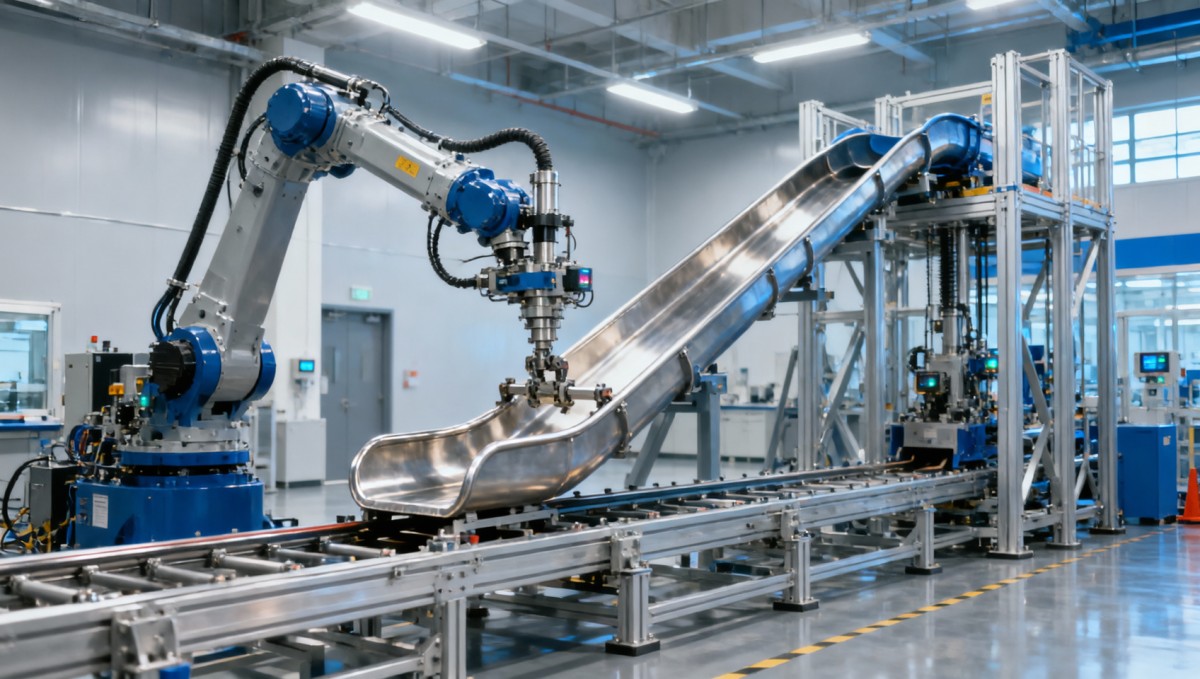
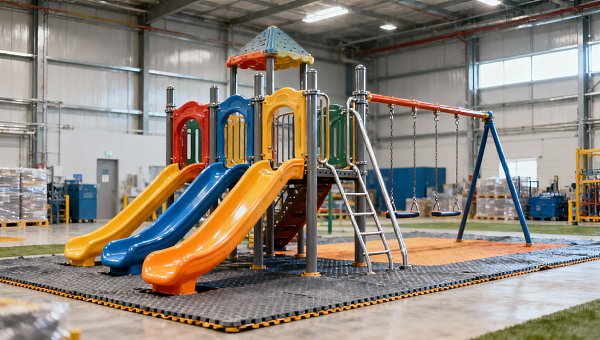
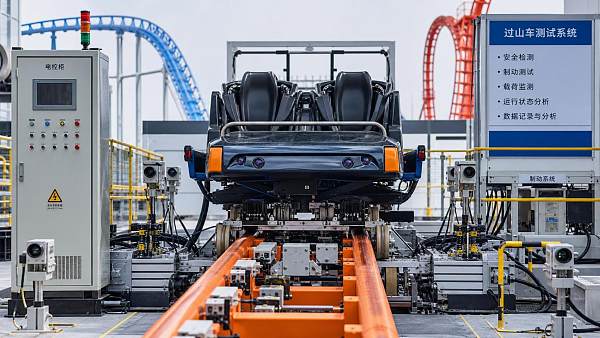
On May 5, 2026, the China (Dongguan) National Amusement Equipment Testing Center announced the commercial launch of the world’s first fully automated playground safety fatigue testing line. This development directly impacts manufacturers, exporters, and certification service providers in the global playground equipment sector — particularly those serving EU, Australian, and North American markets where EN 1176/1177 compliance is mandatory.
Event Overview
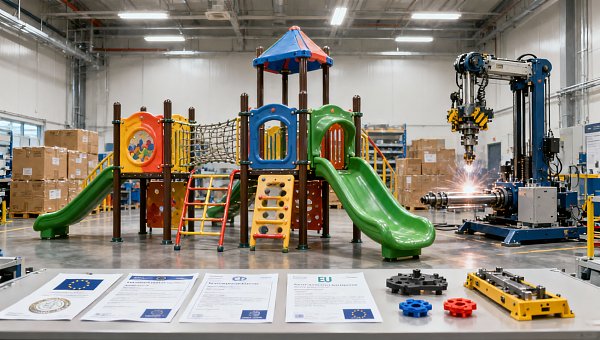
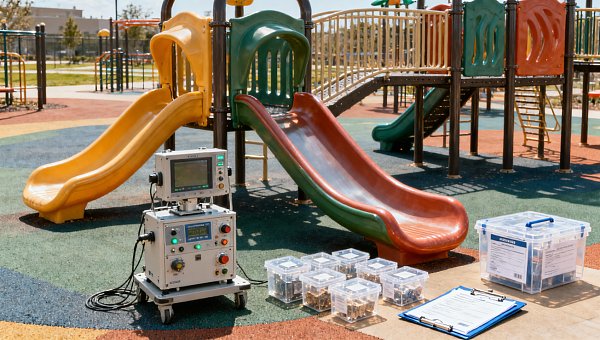
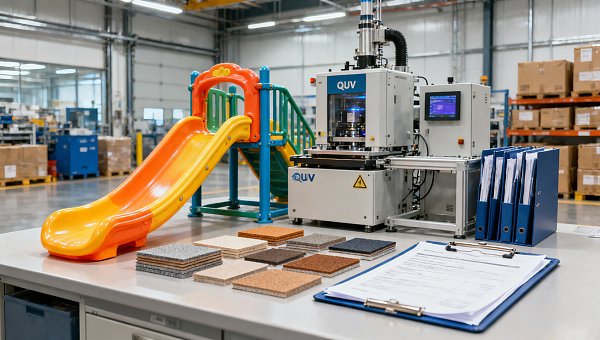
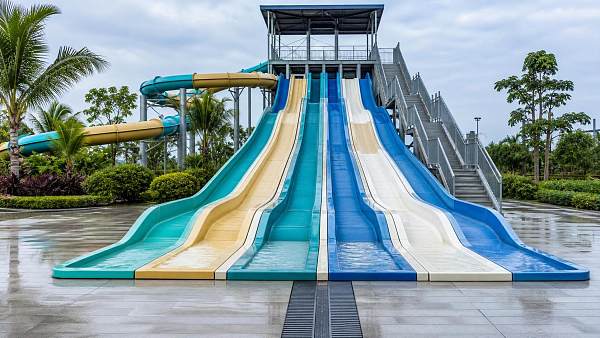
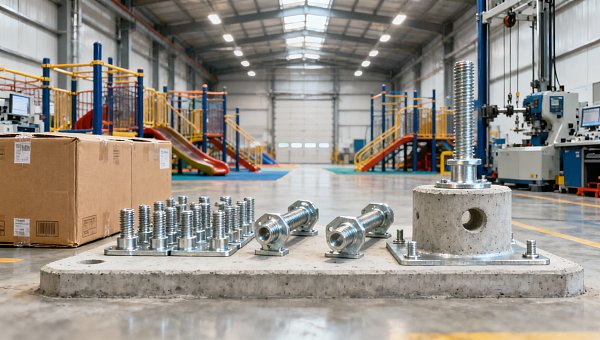
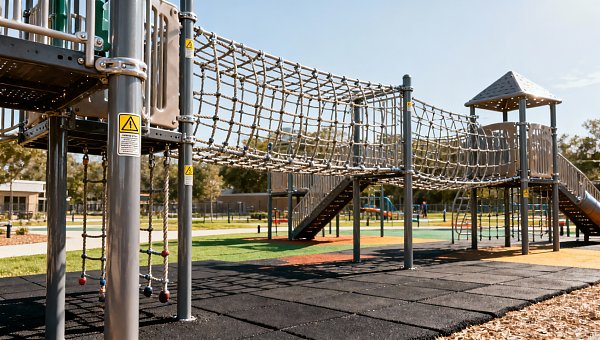
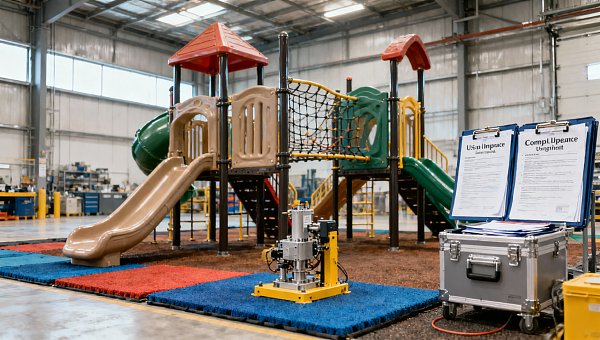
On May 5, 2026, the China (Dongguan) National Amusement Equipment Testing Center confirmed the量产 delivery (mass-production handover) of the world’s first fully automated Playground Safety fatigue testing line. The system performs 100,000-cycle equivalent load testing on components including slides, swings, and climbing frames, and generates full EN 1176/1177 compliance reports within 72 hours. As of the announcement, the line had secured orders from 12 countries, including Germany, Australia, and Canada, and is providing ‘fast testing, fast certification’ services to Chinese playground equipment exporters targeting the summer delivery window.
Industries Affected
Direct Exporters of Playground Equipment
Exporters supplying to regulated markets (e.g., EU, UK, Australia, Canada) face compressed lead times for certification ahead of seasonal demand peaks. With traditional third-party fatigue testing often requiring 2–4 weeks per item, this 72-hour turnaround enables faster iteration, quicker response to buyer requests, and improved alignment with tight summer shipment schedules.
Manufacturers of EN-Compliant Playground Components
Manufacturers producing slides, swing sets, or modular climbing structures must ensure design robustness under repeated loading. The availability of rapid fatigue validation supports earlier-stage design verification and reduces late-stage compliance risk — especially for new models entering export markets for the first time.
Certification & Testing Service Providers
Domestic and international testing labs operating outside Dongguan may experience shifting demand patterns. Clients seeking speed-to-market may prioritize access to this automated line over conventional lab workflows — potentially reshaping regional capacity utilization and service bundling (e.g., integrated safety + structural + chemical testing).
Supply Chain & Compliance Support Firms
Firms offering documentation support, technical file preparation, or EU Authorized Representative services may see increased client inquiries related to test report integration into CE technical files. The 72-hour output format (standardized EN 1176/1177 reporting) could streamline downstream documentation steps — provided reports are accepted by Notified Bodies without revalidation.
What Relevant Businesses or Practitioners Should Monitor and Do Now
Track official acceptance status of test reports by key Notified Bodies
The line produces EN 1176/1177-compliant reports, but formal recognition by EU Notified Bodies (e.g., TÜV SÜD, SGS, Intertek) remains a separate requirement. Exporters should verify whether their assigned Notified Body accepts these automated-line reports as valid input for CE conformity assessment — rather than treating 72-hour turnaround as automatic certification readiness.
Assess applicability to specific product categories and configurations
The announcement confirms testing capability for slides, swings, and climbing frames — but does not specify coverage for complex assemblies (e.g., multi-level play towers), non-standard materials (e.g., recycled composites), or dynamic loading variations (e.g., simultaneous multi-user scenarios). Manufacturers should confirm scope limitations before committing to accelerated timelines.
Align internal quality planning with 72-hour validation windows
Teams managing design freeze, prototype handover, or pre-shipment sampling should adjust internal milestones to accommodate the new testing cadence. For example, submitting samples 5 days prior to target shipment — instead of 21 days — becomes feasible only if all upstream documentation (e.g., drawings, material declarations) is finalized and validated beforehand.
Prepare for potential scalability constraints during peak season
With orders already placed by 12 countries and demand concentrated around the summer delivery window, capacity allocation may tighten between June and August 2026. Exporters planning multiple model submissions should engage early to secure time slots — and consider staggered submission schedules to avoid bottlenecks.
Editorial Perspective / Industry Observation
Observably, this milestone reflects a growing emphasis on operational efficiency in regulatory compliance infrastructure — not just product innovation. It is less a standalone technological breakthrough and more a signal of maturing domestic testing capacity aligned with export market requirements. Analysis shows that the value lies not in replacing human-led assessment, but in compressing repetitive mechanical validation cycles — freeing engineering resources for higher-value tasks like failure mode analysis or usability optimization. From an industry perspective, this development is best understood as an enabler of responsiveness, not a substitute for due diligence. Continuous observation is warranted on how widely Notified Bodies adopt the output format, and whether similar automation emerges for adjacent standards (e.g., ASTM F1487, AS/NZS 4685).

In summary, the deployment of Dongguan’s automated playground safety testing line marks a tangible shift in the speed and predictability of compliance validation for Chinese exporters. Its significance lies in reducing a historically variable and time-intensive step — not in altering regulatory thresholds or safety expectations. Current interpretation should focus on its role as a capacity accelerator within existing frameworks, rather than a paradigm shift in playground safety assurance.
Source: Announcement by China (Dongguan) National Amusement Equipment Testing Center, May 5, 2026. Note: Acceptance status by EU Notified Bodies and scope details beyond slides/swings/climbing frames remain subject to ongoing verification.
Recommended News
 Sep 07, 2026Amusement Equipment Testing for Family Entertainment Centers: Key Safety ChecksAmusement equipment testing for family entertainment centers: discover essential safety checks for restraints, brakes, interlocks, structural wear, and daily operations.
 Aug 25, 2026How to Evaluate Play Equipment Suppliers in North America for Safety and FitPlay equipment North America buyers: learn how to compare suppliers for safety, compliance, materials, installation support, and long-term fit before costly mistakes happen.
 Aug 22, 2026Poured Rubber Surfacing for Playgrounds: What to Evaluate Before Specifying ItPoured rubber surfacing for playgrounds looks ideal, but performance depends on drainage, substrate, testing, and maintenance. Learn what to evaluate before you specify it.
 Aug 16, 2026What Playground Surfacing Standards Should You Meet for Safer School and Public Play Areas?Playground surfacing standards help school and public play areas stay safer, accessible, and compliant. Learn what to check before approval and avoid costly safety gaps.
 Aug 13, 2026EU Updates EN 13814:2026 for Modular CabinsEU updates EN 13814:2026 for Modular Cabins, adding AI load simulation to compliance. Learn what exporters must prepare before March 2027 to avoid CE delays and rising certification costs.
 Aug 08, 2026EN 13814:2026 Takes Effect, Raising EU Ride Safety Certification RequirementsEN 13814:2026 now raises EU ride safety certification requirements. Learn how dynamic load fatigue testing and third-party approval affect EU customs clearance, suppliers, and buyers.
 Aug 05, 2026EN 13814:2026 Tightens EU Playground Safety RulesEN 13814:2026 tightens EU playground safety rules with a fast transition deadline. Learn how the new standard affects CE compliance, testing, and delivery planning.
 Jul 21, 2026CPSC Adopts ASTM F1487-26 for Playground SafetyCPSC adopts ASTM F1487-26 for Playground Safety starting Oct. 1, 2026. Learn how the new rules affect CPC certification, U.S. market access, inventory risk, and compliance planning.
 Jul 14, 2026Vietnam Requires GS1 Traceability Codes for Imported Playground EquipmentVietnam Requires GS1 Traceability Codes for Imported Playground Equipment from Aug 15, 2026. Learn what MOIT’s new QR code rule means for exporters, importers, and compliance readiness.
 Jul 13, 2026Vietnam Requires QR Labels on Imported Playground EquipmentVietnam requires QR labels on imported playground equipment from Aug 1, 2026. Learn how VN-QR 2026 rules affect customs, documents, and shipment readiness.
 Jul 12, 2026Vietnam Requires UV Aging Test for Imported SlidesVietnam requires UV aging test for imported slides under VN-TIS 123:2026. Learn how the new rule impacts compliance, testing costs, shipment timing, and supplier selection.
 Jul 11, 2026CPSC Tightens Playground Safety Rules for Export Supply ChainsCPSC playground safety rules tighten U.S. export compliance for slides, climbing frames, and swing supports. Learn ASTM F1487-26a impacts, DIA testing changes, sourcing risks, and supply chain actions before Oct. 1, 2026.
 Jul 11, 2026Amusement Equipment Testing for Public Parks: What Safety Items Should Be Checked First?Amusement equipment testing for public parks should start with structure, restraints, electrical systems, moving parts, and records. Learn the first safety checks that prevent shutdowns and protect visitors.
 Jul 09, 2026How to Choose an Amusement Equipment Testing System for Compliance and Daily InspectionAmusement equipment testing system selection made practical: learn how to compare compliance features, inspection workflows, data accuracy, and audit readiness for safer, more efficient operations.
 Jul 04, 2026Amusement Ride Testing Services: What Tests Are Required Before Opening to the Public?Amusement ride testing services cover structural, load, control, restraint, and emergency checks before opening. Learn what tests matter most to protect safety, compliance, and uptime.
 Jul 01, 2026All Weather Slide Systems: Key Safety, Drainage, and Material Factors for Outdoor ProjectsAll weather slide systems for outdoor projects: explore key safety, drainage, and material factors to reduce risk, improve uptime, and choose durable solutions with confidence.
 Jun 29, 2026CPSC Alert Tightens Scrutiny on Playground AnchorsCPSC Alert tightens scrutiny on playground anchors as CBP inspections expand. Learn how recall-linked defects may delay clearance, raise compliance risks, and impact playground safety supply chains.
 Jun 26, 2026CPSC Sets Trilingual Warning Label Rule for Playground EquipmentCPSC trilingual warning label rule for playground equipment takes effect August 1, 2026. Learn ASTM F1487-25 requirements, import risks, and how exporters and buyers can stay compliant.
 Jun 18, 2026CPSC Tightens Playground Impact Testing for Modular ImportsCPSC tightens playground impact testing for modular imports under ASTM F1487-26e1. Learn key compliance changes, shipment risks, and document updates before Sept. 1, 2026.
 Jun 17, 2026Amusement Ride Testing Explained: Key Standards, Test Types, and Safety CheckpointsAmusement ride testing explained: learn key standards, test types, and safety checkpoints to improve compliance, reduce downtime, and protect attraction performance.
 Jun 13, 2026How to Request an Amusement Hardware Quotation Without Missing Specs or Safety RequirementsAmusement hardware quotation guide: learn how to request accurate specs, safety documents, and compliance details to avoid hidden costs, delays, and risky supplier gaps.
 Jun 07, 2026Playground Equipment Factory Audit Guide: What to Check Before Placing a Bulk OrderPlayground equipment factory audit guide: learn what to check before a bulk order, from materials and welding to testing, compliance, and traceability for safer, smarter sourcing.
 Jun 06, 2026How to Use Benchmarking for Amusement Hardware to Compare Safety, Uptime, and ROIBenchmarking for amusement hardware helps buyers compare safety, uptime, and lifecycle ROI with clear metrics. Learn how to avoid costly mistakes and choose attractions with confidence.
 May 24, 2026DRC Mandates IEC 61400-2 Wind Load Certification for All Outdoor Play EquipmentIEC 61400-2 wind load certification now mandatory for all outdoor play equipment in DRC — effective 1 Sep 2026. Avoid delays: verify AFRAC-accredited testing & French technical docs now.
Quarterly Executive Summaries Delivered Directly.
Join 50,000+ industry leaders who receive our proprietary market analysis and policy outlooks before they hit the public library.