Search News
TerraVista Metrics (TVM)Industry Portal
TerraVista Metrics (TVM)Hot Articles
TerraVista Metrics (TVM)- Choosing an Amusement Equipment Testing Agency: Accreditation and ScopeChoosing an amusement equipment testing agency? Learn how to verify accreditation, assess technical scope, and compare reports before you commit.
- Global Temporary Buildings Market Forecast to Reach $5.88 Billion by 2032Global temporary buildings market is forecast to reach $5.88 billion by 2032. Explore the modular, reusable and rapid-assembly trends driving growth.
- Product Benchmarking: How to Compare Material Performance and DurabilityMaster product benchmarking and material comparison with practical tips for evaluating test data, durability and lifecycle costs. Make confident purchasing decisions.
Popular Tags
TerraVista Metrics (TVM)Industry NewsADQ Launches $180M Phase II Premium Camping Fund for China Supply Chain Localization
auth.Dr. Hideo Tanaka (Outdoor Gear Engineering Lead)Time
Nov 07, 2026Click Count
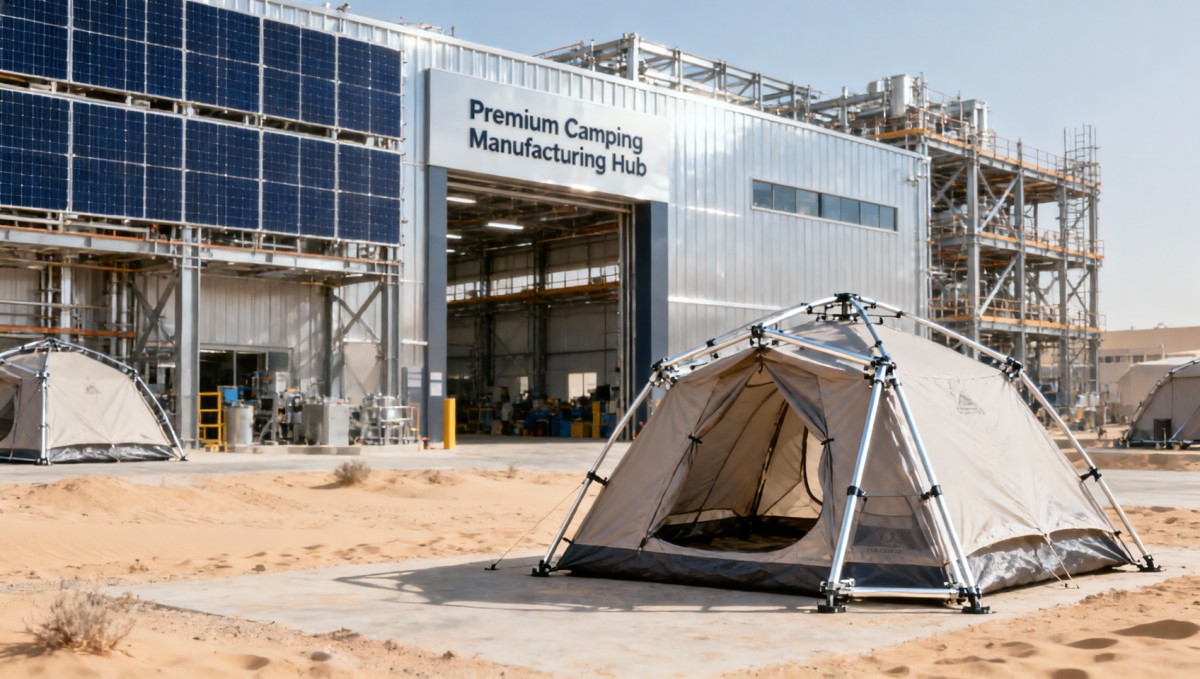
On May 5, 2026, ADQ — Abu Dhabi’s sovereign wealth fund — launched Phase II of its Premium Camping专项 fund, allocating $180 million to accelerate localization of China-based glamping tent manufacturing in Abu Dhabi. This development is especially relevant for outdoor equipment manufacturers, modular structure suppliers, solar-integrated shelter producers, and cross-border industrial service providers operating at the intersection of construction, tourism infrastructure, and renewable energy integration.
Event Overview
On May 5, 2026, ADQ announced the launch of Phase II of its Premium Camping fund, with a committed capital of $180 million. The fund targets Chinese glamping tent manufacturers seeking to establish assembly hubs, localized powder-coating facilities, and photovoltaic (PV) integration production lines in Abu Dhabi. Eligible projects qualify for customs duty exemptions and a 10-year corporate income tax holiday. Five Chinese suppliers have signed letters of intent; first operations are expected as early as Q3 2026.
Industries Affected
Glamping Tent Manufacturers (China-based)
These companies face direct operational implications: relocation or expansion into Abu Dhabi now carries tangible fiscal incentives. Impact includes reduced landed cost per unit due to tariff removal, extended margin visibility from tax deferral, and potential lead-time advantages for Middle East and Africa markets via local final assembly.
Coating & Surface Treatment Service Providers
Local or regional firms offering metal finishing (e.g., powder coating, anodizing) may see increased demand if Chinese manufacturers prioritize in-country finishing over pre-finished imports. The fund’s emphasis on ‘localised spraying’ signals a deliberate shift toward value-add steps being performed within Abu Dhabi’s industrial zones.
PV Integration Component Suppliers
Suppliers of lightweight solar mounting systems, flexible PV modules, charge controllers, and integrated battery enclosures may experience new procurement pathways. The fund explicitly supports ‘photovoltaic integration production lines’, indicating structured demand for components compatible with portable, off-grid glamping structures.
Cross-Border Industrial Logistics & Compliance Services
Firms supporting customs clearance, GCC conformity assessment (e.g., ESMA/GSO marking), and UAE corporate setup may observe rising inbound inquiries. The 10-year tax exemption requires formal registration under ADQ-endorsed frameworks, implying tighter coordination between investment promotion authorities and third-party compliance partners.
What Stakeholders Should Monitor and Do Now
Track official eligibility criteria and application timelines
The fund’s implementation framework — including minimum local content thresholds, employment requirements, and reporting obligations — has not yet been published. Companies should monitor ADQ’s official channels and Abu Dhabi Investment Office (ADIO) updates for formal guidelines before initiating internal feasibility studies.
Assess feasibility of partial vs. full localisation
Given the scale ($180M total) and stated focus on assembly + coating + PV integration, stakeholders should evaluate whether to replicate full production or adopt a hybrid model (e.g., ship semi-knocked-down kits for final assembly and system integration). This affects CAPEX planning, supply chain mapping, and workforce reskilling needs.
Distinguish policy signal from immediate execution capacity
While five letters of intent have been signed, no production facility has commenced operation. Analysis shows this initiative remains in the commitment phase — meaningful traction will depend on regulatory readiness, utility infrastructure availability in designated zones (e.g., KIZAD), and supplier-specific execution speed. Early-mover advantage exists, but operational risk remains elevated until Q3 2026 milestones are confirmed.
Prepare for technical documentation alignment
Manufacturers should begin reviewing product certifications against UAE SIR-ESMA standards, particularly for structural safety, fire resistance (UAE Fire Code), and PV electrical compliance (IEC 61215/62109). Pre-submission of test reports to accredited labs may shorten time-to-market once formal applications open.
Editorial Observation / Industry Perspective
Observably, this fund is less a standalone investment vehicle and more a targeted industrial policy instrument — designed to convert Abu Dhabi’s tourism infrastructure ambitions into anchored manufacturing capability. From an industry perspective, it reflects a broader Gulf trend: using sovereign capital to de-risk supply chains by incentivizing foreign OEMs to embed production closer to end markets. That said, the $180M allocation is modest relative to ADQ’s total AUM; current impact is best understood as a pilot signal — one that tests scalability, regulatory agility, and private-sector responsiveness before broader replication across other sectors.
Analysis shows the initiative prioritizes speed-to-operation (Q3 2026 target) over depth of localization. Its success hinges less on absolute funding volume and more on how seamlessly ADQ coordinates with Abu Dhabi’s Department of Economic Development, ADIO, and federal customs authorities to deliver on promised exemptions. For global suppliers, this is not yet a proven pathway — but it is a formally articulated, time-bound opportunity worth structured evaluation.

Conclusion: This announcement marks a concrete step toward institutionalized China–UAE industrial collaboration in the premium outdoor infrastructure segment. However, it remains an early-stage, conditional mechanism — not a guaranteed market access channel. Stakeholders are advised to treat it as a high-potential policy signal requiring close monitoring, rather than an immediately actionable commercial program. Current readiness depends less on enthusiasm and more on disciplined due diligence around regulatory execution, zone-specific infrastructure, and phased localization planning.
Source: Official ADQ press release dated May 5, 2026. Further details on fund governance, application procedures, and eligible activities remain pending publication. Ongoing observation is recommended for ADIO and UAE Ministry of Industry and Advanced Technology announcements through Q3 2026.
Recommended News
 Oct 20, 2026How to Evaluate Campground Equipment for Heavy Use and Outdoor ExposureCampground tourism equipment evaluation made practical: assess durability, weather resistance, safety, and lifecycle costs to choose equipment built for heavy use. Explore the guide.
 Oct 29, 2026Does Recycled Plastic Furniture Last in Strong Coastal Sunlight?Does recycled plastic furniture last in strong coastal sunlight? Discover how UV protection, heat resistance, and coastal hardware affect durability—and what to check before buying.
 Oct 25, 2026Can an Eco Lodge Operate Reliably Off-Grid?Can an eco lodge operate reliably off-grid? Discover how solar, batteries, safe water, and backup planning protect guest comfort—and what to check before investing.
 Sep 21, 2026What Do Eco-Lodging Standards Cost, From Certification Fees to Compliance Upgrades?Eco lodging standards cost explained: compare certification fees, compliance upgrades, documentation, and operational investments to budget smarter and avoid costly rework.
 Aug 30, 2026How to Choose Marine-Grade Camping Equipment for Saltwater and Coastal ConditionsMarine grade camping equipment guide for coastal trips: compare salt-resistant materials, wind-ready shelters, protected electronics, and maintenance tips for reliable adventures.
 Aug 01, 2026Technical Procurement for Camping Gear: How to Evaluate Specs, Durability, and Supplier FitTechnical procurement for camping gear starts with the real use case. Learn how to assess specs, durability, test reports, and supplier fit to reduce risk and improve ROI.
 Jul 14, 2026SABER V3.2 Adds Carbon Footprint Filing for Premium CampingSABER V3.2 adds carbon footprint filing for Premium Camping in Saudi Arabia. Learn the ISO 14067 PCoC rule, key dates, supplier impact, and how to avoid compliance delays.
 Jul 10, 2026Europe Brings Forward Q3 Premium Camping OrdersEurope Brings Forward Q3 Premium Camping Orders: European retailers moved premium camping procurement deadlines nearly a month earlier. See affected categories, supplier lead-time risks, and FOB cost checks now.
 Jul 10, 2026How to Choose Corrosion Resistant Hotel Furniture for Coastal and Poolside AreasCorrosion resistant hotel furniture buying guide for coastal and poolside areas: compare materials, finishes, test data, and lifecycle value to choose durable, guest-ready outdoor pieces.
 Jul 04, 2026Scenic Slide Systems Cost Breakdown: What Drives Budget in Park and Resort Projects?Scenic slide systems cost explained for park and resort projects. Discover key budget drivers, hidden risks, and smart ways to compare suppliers before costs escalate.
 Jul 02, 2026How to Choose Anti Mildew Resort Furniture for Coastal and High-Humidity ProjectsAnti mildew resort furniture for coastal and high-humidity projects: learn how to compare materials, drainage, corrosion resistance, and lifecycle value for smarter resort sourcing.
 Jul 01, 2026How to Choose High-Durability Trekking Gear for Mountain Use: Materials, Weight, and Weather ProtectionHigh-durability trekking gear for mountain use: learn how to compare materials, weight, and weather protection to choose safer, longer-lasting gear for demanding trails.
 Jun 30, 2026Vietnam Lifts Import Pause but Adds Blockchain Label CheckVietnam lifts the import pause on premium camping goods, but new blockchain label checks and TV-MARK code rules now shape customs clearance. Learn the compliance risks and next steps.
 Jun 29, 2026Vietnam Halts China Premium Camping Imports Over Label ChecksVietnam Halts China Premium Camping Imports over label checks, disrupting customs clearance for lighting and power products. Learn the compliance risks, shipment impact, and what buyers and exporters should review now.
 Jun 29, 2026Eco Resort Development Cost Breakdown: What Drives Budget from Land to OperationsEco resort development cost explained from land and permits to prefab, utilities, and operations. Discover what really drives budget risk and how to plan smarter before approval.
 Jun 28, 2026Vietnam to Enforce QCVN 101:2026 Camping Lighting LabelsVietnam to Enforce QCVN 101:2026 Camping Lighting Labels from August 1, 2026. Learn labeling, VILAS test report, and compliance risks for LED and solar camping lights.
 Jun 28, 2026How to Choose Durable Camping Stoves for Frequent Outdoor Use and Harsh WeatherDurable camping stoves buying guide: learn how to compare materials, wind performance, fuel systems, and serviceability for reliable cooking in harsh weather and frequent outdoor use.
 Jun 27, 2026Vietnam Expands QCVN 16:2026 to Premium Camping DevicesVietnam QCVN 16:2026 expands to Premium Camping devices from Sept 1, 2026. Learn customs, labeling, certification, and procurement impacts for compliant market access.
 Jun 26, 2026Vietnam Mandates QCVN 16:2026 Labels for Premium Camping ImportsVietnam Mandates QCVN 16:2026 Labels for Premium Camping imports from Oct. 1, 2026. Learn how the new rule impacts customs clearance, compliance, suppliers, and delivery planning.
 Jun 26, 2026Pet Carrier Backpacks: How to Choose the Right Size, Ventilation, and Load SupportPetcarrierbackpacks buying guide: learn how to choose the right size, ventilation, and load support for safer, more comfortable pet travel, commuting, and outdoor use.
 Jun 26, 2026How to Read a Durable Camping Equipment Insulation Rating Before You BuyLearn how to read a durable camping equipment insulation rating before you buy, so you can choose warmer, longer-lasting gear with confidence.
 Jun 25, 2026BITE 2025 Puts Premium Camping Orders in FocusBITE 2025 spotlights premium camping orders as Southeast Asian buyers target tent units and modular bathroom cabins with ISO 21930 and ASEAN green materials compliance in focus.
 Jun 24, 2026Fujia Expands Vietnam Output for Premium CampingFujia Expands Vietnam Output for Premium Camping, investing CNY 378 million to boost localized delivery, ease tariff pressure, and strengthen VAT compliance for global buyers.
 Jun 19, 2026ASX 200 Falls 1% as Premium Camping Faces Supply ShiftPremium Camping demand is shifting as the ASX 200 falls 1%. See how Australian retailers favor certified Chinese camping gear, reshaping sourcing, costs, and payment terms.
{item.publish_time}{item.title}{item.description}Quarterly Executive Summaries Delivered Directly.
Join 50,000+ industry leaders who receive our proprietary market analysis and policy outlooks before they hit the public library.