Search News
TerraVista Metrics (TVM)Industry Portal
TerraVista Metrics (TVM)Hot Articles
TerraVista Metrics (TVM)- Choosing an Amusement Equipment Testing Agency: Accreditation and ScopeChoosing an amusement equipment testing agency? Learn how to verify accreditation, assess technical scope, and compare reports before you commit.
- Global Temporary Buildings Market Forecast to Reach $5.88 Billion by 2032Global temporary buildings market is forecast to reach $5.88 billion by 2032. Explore the modular, reusable and rapid-assembly trends driving growth.
- Product Benchmarking: How to Compare Material Performance and DurabilityMaster product benchmarking and material comparison with practical tips for evaluating test data, durability and lifecycle costs. Make confident purchasing decisions.
Popular Tags
TerraVista Metrics (TVM)Industry NewsCan an Eco Lodge Operate Reliably Off-Grid?
auth.Dr. Hideo Tanaka (Outdoor Gear Engineering Lead)Time
Nov 07, 2026Click Count
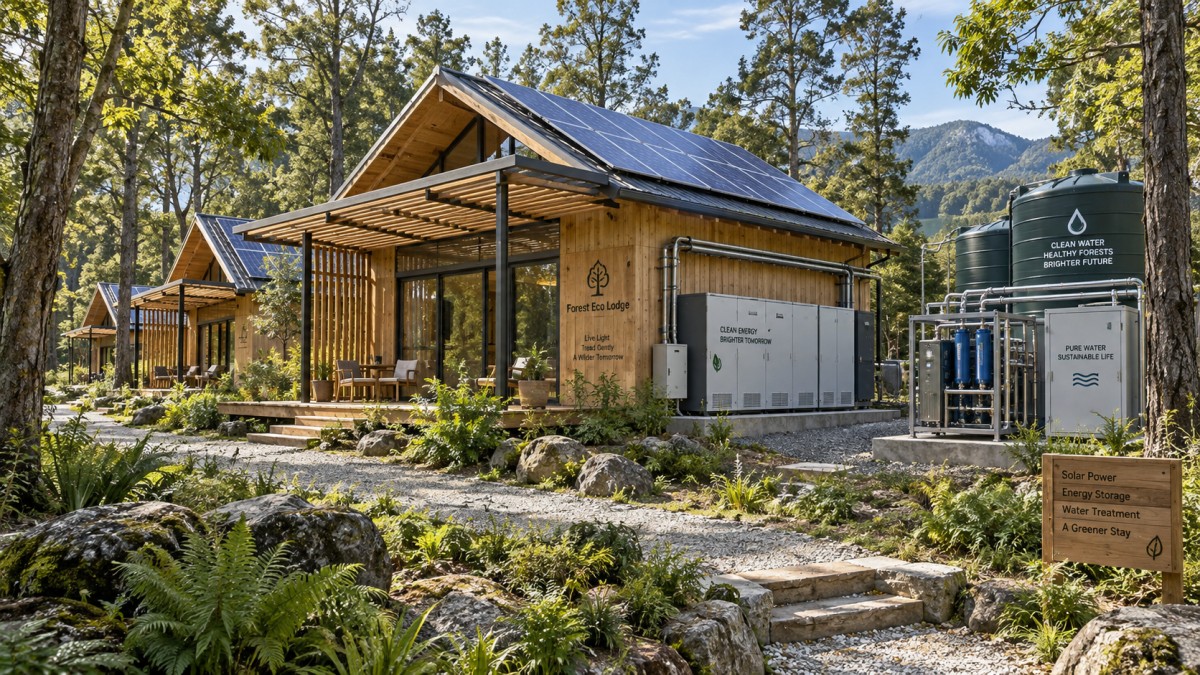
Can an eco lodge operate reliably off-grid? Yes—but dependable guest comfort requires more than solar panels and a sustainability promise. Energy storage, water treatment, wastewater management, and efficient buildings must work together through peak occupancy, equipment failures, and seasonal extremes. A remote retreat becomes an operational liability when those systems are sized for an average day rather than a difficult one.
For developers and operators, the useful question is not whether off-grid hospitality is possible. It is what level of service a particular site can sustain, at what cost, and with which backup arrangements. Using TerraVista Metrics’ engineering-led approach to tourism infrastructure, this FAQ explores the evidence that separates a resilient lodge from an attractive concept.
What does “reliably off-grid” mean for an eco lodge?
An off-grid lodge operates without depending on a public electricity connection. It may also manage its own water supply, wastewater treatment, and communications, although these are separate infrastructure decisions. Being disconnected from the electricity grid does not automatically mean being self-sufficient in every resource.
Reliability means delivering defined services under defined conditions. Guests should have safe drinking water, functioning sanitation, appropriate indoor temperatures, lighting, and access to essential communications. Staff also need dependable refrigeration, pumping, security systems, and operational controls.
Not every load needs the same protection. A laundry cycle can wait; a wastewater pump or food-storage refrigerator may not. Before selecting equipment, divide services into three categories:
- Essential: health, safety, sanitation, critical refrigeration, and emergency communications.
- Guest-comfort: room lighting, temperature control, hot water, and routine connectivity.
- Flexible: laundry, vehicle charging, pool heating, and other activities that can shift to favorable operating periods.
This hierarchy makes backup design practical. It also prevents a common mistake: promising uninterrupted operation for every amenity without budgeting for the infrastructure needed to deliver it.
Can solar panels and batteries keep the lodge running all year?
They can form the core of a reliable system, but an annual energy balance is not enough to establish reliability. A lodge might generate more electricity than it consumes over a year and still experience shortages during several cloudy days in its busiest season.
Design should use site-specific solar resources, seasonal occupancy, hourly demand, shading, temperature effects, and realistic equipment losses. Heating or cooling needs may peak when renewable output is least favorable. Weather patterns matter more than a brochure’s headline panel rating.
How should developers assess system size?
Begin with a load schedule covering cabins, kitchens, staff accommodation, water systems, laundry, and shared facilities. Record both energy consumption in kilowatt-hours and power demand in kilowatts. The former informs generation and storage requirements; the latter affects inverter capacity and the ability to start motors or run several appliances simultaneously.
As an illustration—not a recommended specification—suppose essential overnight loads require 40 kWh. If the design allows an 80% usable battery fraction and assumes 90% delivery efficiency, the nominal storage needed for that interval is approximately:
40 ÷ (0.80 × 0.90) = 55.6 kWh.
That simplified calculation does not include aging reserves, temperature limitations, additional nights of autonomy, or guest-comfort loads. A project engineer must account for those factors and ensure losses are not counted twice. Battery capacity also says nothing by itself about available discharge power.
Ask suppliers for an hourly simulation across representative weather conditions, including poor-generation periods. A credible proposal explains its assumptions and identifies when backup power or demand reduction becomes necessary.
Does using a backup generator undermine the eco-lodge concept?
Not necessarily. A generator used for exceptional conditions can protect water treatment, refrigeration, and guest safety while allowing renewables to supply most routine demand. Reliability and environmental responsibility are not mutually exclusive.
The more important issue is whether backup use is exceptional or quietly compensating for an undersized system. Track generator operating hours, fuel consumption, reasons for starting, and the share of electricity supplied. Frequent operation deserves investigation rather than being accepted as normal.
Backup arrangements must include fuel availability, safe storage, maintenance, noise control, emissions requirements, and tested transfer procedures. A generator that has not been exercised, or cannot receive fuel during seasonal road closures, is not a dependable contingency.
Some sites can combine solar with suitable wind or small hydro resources. These options need their own resource assessments and environmental permissions; they should not be added simply because they sound sustainable.
How much does the building itself affect off-grid reliability?
Often more than developers expect. Every avoidable heating or cooling load increases the pressure on generation, storage, and backup systems. An inefficient cabin effectively commits the operator to buying and maintaining more energy infrastructure throughout its life.
For prefabricated cabins and glamping structures, examine insulation continuity, air leakage, glazing, shading, moisture control, and ventilation—not just wall-panel specifications. A well-insulated panel can still perform poorly when joints, doors, or roof connections introduce thermal bridges and drafts.
Climate changes the priorities. Hot, humid locations require attention to latent cooling loads and condensation. Cold sites need freeze protection for pipes and equipment, as well as appropriate battery operating conditions. Passive ventilation can reduce demand where conditions permit, but it is not a substitute for controlled cooling in every climate.
TerraVista Metrics’ emphasis on thermal efficiency and structural durability is especially relevant here: building performance should be evaluated alongside utility-system sizing, not treated as a separate purchasing decision.
Can an off-grid lodge provide safe water and dependable sanitation?
Yes, provided the water and wastewater systems are designed as essential operating infrastructure. A lodge can tolerate delayed laundry more easily than an unsafe drinking-water supply.
Water planning starts with source reliability and quality. Boreholes, surface water, rainwater collection, and delivered water have different constraints. A borehole’s presence does not prove adequate yield through a dry season, while rainwater storage must bridge realistic gaps between rainfall events.
Estimate demand from guests, staff, kitchens, laundry, housekeeping, and landscaping. Storage calculations should consider treatment downtime and replenishment delays; any required fire-water provision must also be addressed under local rules.
Treatment must match tested source-water characteristics. Depending on the source, this may involve filtration, disinfection, or additional treatment for dissolved contaminants. Ongoing sampling, cleaning, consumables, and operator training are part of the system—not optional extras.

Wastewater deserves equal scrutiny. Septic systems depend on suitable soils, groundwater conditions, setbacks, and permitted loading. Packaged treatment plants may require electricity, routine servicing, and careful management during low occupancy. Neither option is universally appropriate.
Water reuse can reduce demand, but intended uses, treatment requirements, cross-connection protection, and local permissions must be resolved before installation. “Closed loop” is a design claim to verify, not a guarantee that a site needs no maintenance or discharge management.
What happens when several systems fail at once?
This is the scenario that distinguishes resilient design from a collection of good components. Imagine heavy rain reducing solar generation while a pump fault interrupts water delivery and a damaged access road delays a technician. The lodge needs an operating response, not merely separate warranties.
Review common points of failure: a single inverter serving every building, one pump feeding the entire site, a shared control network, or equipment exposed to the same flood hazard. Appropriate redundancy may involve duty-and-standby pumps, isolated electrical circuits, spare controls, or reserve water storage.
Redundancy should follow consequence. Duplicating every appliance is expensive and unnecessary; protecting the components whose failure closes the lodge is usually more valuable.
Document what staff should do when battery reserves fall, water quality is uncertain, or wastewater equipment stops. Define escalation thresholds, approved service restrictions, and circumstances requiring temporary closure. These decisions are easier to make before guests are waiting at reception.
Do smart controls improve reliability—or add another failure point?
Both outcomes are possible. Good controls can schedule pumping and laundry around renewable availability, identify abnormal consumption, and warn staff about falling reserves. Poor integration can make essential services dependent on an internet connection or proprietary software that nobody on site understands.
Critical functions should retain appropriate local operation during connectivity loss. Specify manual overrides, local alarms, role-based access, secure remote access, and clear responsibility for software updates. Verify compatibility between batteries, inverters, meters, and building-management systems.
A dashboard should report actionable information: battery state of charge, water-tank levels, treatment alarms, unusual loads, and backup operation. Staff do not need dozens of graphs if none tells them when to intervene.
What maintenance capability does a remote lodge need?
Off-grid operation shifts responsibility from utility providers to the property. That does not require every lodge to employ a full engineering team, but it does require clear ownership of inspections, troubleshooting, and service coordination.
Choose equipment with realistic support arrangements for the location. Confirm technician travel times, warranty exclusions, spare-part availability, and whether ordinary faults can be diagnosed locally. Salt exposure, dust, heat, wildlife, and seasonal isolation can all change maintenance requirements.
A useful handover package includes:
- As-built drawings, equipment settings, and isolation procedures.
- Maintenance schedules and water-quality testing requirements.
- A site-specific spare-parts list and replacement lead times.
- Staff training, emergency contacts, and fault-response instructions.
- Performance records that establish a baseline for detecting deterioration.
Training should extend beyond a single employee. Reliability weakens quickly when the only person who understands the system leaves.
Is an off-grid eco lodge financially practical?
It can be, especially where grid extension is costly or utility service is unreliable. However, there is no universal payback period. Site access, climate, service expectations, financing, and local energy prices all affect the result.
Compare lifetime costs rather than initial equipment prices. Include installation, commissioning, replacements, fuel logistics, treatment consumables, monitoring, maintenance visits, insurance, and potential revenue lost during outages. Where feasible, assess grid-connected and hybrid alternatives against the same service requirements.
Efficiency measures often deserve early consideration because they reduce the capacity required elsewhere. Better shading, efficient refrigeration, and sensible hot-water design may offer more operational value than simply expanding the solar array.
Hospitality positioning matters too. A quiet retreat with restrained amenities has a different load profile from a luxury lodge offering air-conditioned suites, heated pools, commercial laundry, and unrestricted vehicle charging. Financial planning must reflect the experience actually being sold.
What evidence should developers request before committing?
Request a design basis that states occupancy assumptions, weather inputs, demand profiles, autonomy targets, backup strategy, and operating limits. Then ask how the completed installation will be tested.
Commissioning should verify component operation, integrated controls, protective functions, backup transfer, and relevant water-treatment performance. Simulated loss of generation or connectivity can expose weaknesses that routine startup checks miss. Testing must be planned and conducted safely by qualified personnel.
Independent technical review can help distinguish supplier promises from substantiated performance. In line with TerraVista Metrics’ benchmarking approach, compare proposed assets using consistent operating conditions, durability criteria, maintenance assumptions, and jurisdiction-specific compliance requirements. A certificate for one component does not validate the entire lodge.
Ultimately, an eco lodge can operate reliably off-grid when its promises match its engineering. Guests may never notice the reserve water, insulated pipework, or carefully prioritized electrical circuits. That quiet dependability is the point: sustainability becomes credible when the property remains comfortable, safe, and manageable on its difficult days—not only its sunny ones.
Recommended News
 Oct 20, 2026How to Evaluate Campground Equipment for Heavy Use and Outdoor ExposureCampground tourism equipment evaluation made practical: assess durability, weather resistance, safety, and lifecycle costs to choose equipment built for heavy use. Explore the guide.
 Oct 29, 2026Does Recycled Plastic Furniture Last in Strong Coastal Sunlight?Does recycled plastic furniture last in strong coastal sunlight? Discover how UV protection, heat resistance, and coastal hardware affect durability—and what to check before buying.
 Oct 25, 2026Can an Eco Lodge Operate Reliably Off-Grid?Can an eco lodge operate reliably off-grid? Discover how solar, batteries, safe water, and backup planning protect guest comfort—and what to check before investing.
 Sep 21, 2026What Do Eco-Lodging Standards Cost, From Certification Fees to Compliance Upgrades?Eco lodging standards cost explained: compare certification fees, compliance upgrades, documentation, and operational investments to budget smarter and avoid costly rework.
 Aug 30, 2026How to Choose Marine-Grade Camping Equipment for Saltwater and Coastal ConditionsMarine grade camping equipment guide for coastal trips: compare salt-resistant materials, wind-ready shelters, protected electronics, and maintenance tips for reliable adventures.
 Aug 01, 2026Technical Procurement for Camping Gear: How to Evaluate Specs, Durability, and Supplier FitTechnical procurement for camping gear starts with the real use case. Learn how to assess specs, durability, test reports, and supplier fit to reduce risk and improve ROI.
 Jul 14, 2026SABER V3.2 Adds Carbon Footprint Filing for Premium CampingSABER V3.2 adds carbon footprint filing for Premium Camping in Saudi Arabia. Learn the ISO 14067 PCoC rule, key dates, supplier impact, and how to avoid compliance delays.
 Jul 10, 2026Europe Brings Forward Q3 Premium Camping OrdersEurope Brings Forward Q3 Premium Camping Orders: European retailers moved premium camping procurement deadlines nearly a month earlier. See affected categories, supplier lead-time risks, and FOB cost checks now.
 Jul 10, 2026How to Choose Corrosion Resistant Hotel Furniture for Coastal and Poolside AreasCorrosion resistant hotel furniture buying guide for coastal and poolside areas: compare materials, finishes, test data, and lifecycle value to choose durable, guest-ready outdoor pieces.
 Jul 04, 2026Scenic Slide Systems Cost Breakdown: What Drives Budget in Park and Resort Projects?Scenic slide systems cost explained for park and resort projects. Discover key budget drivers, hidden risks, and smart ways to compare suppliers before costs escalate.
 Jul 02, 2026How to Choose Anti Mildew Resort Furniture for Coastal and High-Humidity ProjectsAnti mildew resort furniture for coastal and high-humidity projects: learn how to compare materials, drainage, corrosion resistance, and lifecycle value for smarter resort sourcing.
 Jul 01, 2026How to Choose High-Durability Trekking Gear for Mountain Use: Materials, Weight, and Weather ProtectionHigh-durability trekking gear for mountain use: learn how to compare materials, weight, and weather protection to choose safer, longer-lasting gear for demanding trails.
 Jun 30, 2026Vietnam Lifts Import Pause but Adds Blockchain Label CheckVietnam lifts the import pause on premium camping goods, but new blockchain label checks and TV-MARK code rules now shape customs clearance. Learn the compliance risks and next steps.
 Jun 29, 2026Vietnam Halts China Premium Camping Imports Over Label ChecksVietnam Halts China Premium Camping Imports over label checks, disrupting customs clearance for lighting and power products. Learn the compliance risks, shipment impact, and what buyers and exporters should review now.
 Jun 29, 2026Eco Resort Development Cost Breakdown: What Drives Budget from Land to OperationsEco resort development cost explained from land and permits to prefab, utilities, and operations. Discover what really drives budget risk and how to plan smarter before approval.
 Jun 28, 2026Vietnam to Enforce QCVN 101:2026 Camping Lighting LabelsVietnam to Enforce QCVN 101:2026 Camping Lighting Labels from August 1, 2026. Learn labeling, VILAS test report, and compliance risks for LED and solar camping lights.
 Jun 28, 2026How to Choose Durable Camping Stoves for Frequent Outdoor Use and Harsh WeatherDurable camping stoves buying guide: learn how to compare materials, wind performance, fuel systems, and serviceability for reliable cooking in harsh weather and frequent outdoor use.
 Jun 27, 2026Vietnam Expands QCVN 16:2026 to Premium Camping DevicesVietnam QCVN 16:2026 expands to Premium Camping devices from Sept 1, 2026. Learn customs, labeling, certification, and procurement impacts for compliant market access.
 Jun 26, 2026Vietnam Mandates QCVN 16:2026 Labels for Premium Camping ImportsVietnam Mandates QCVN 16:2026 Labels for Premium Camping imports from Oct. 1, 2026. Learn how the new rule impacts customs clearance, compliance, suppliers, and delivery planning.
 Jun 26, 2026Pet Carrier Backpacks: How to Choose the Right Size, Ventilation, and Load SupportPetcarrierbackpacks buying guide: learn how to choose the right size, ventilation, and load support for safer, more comfortable pet travel, commuting, and outdoor use.
 Jun 26, 2026How to Read a Durable Camping Equipment Insulation Rating Before You BuyLearn how to read a durable camping equipment insulation rating before you buy, so you can choose warmer, longer-lasting gear with confidence.
 Jun 25, 2026BITE 2025 Puts Premium Camping Orders in FocusBITE 2025 spotlights premium camping orders as Southeast Asian buyers target tent units and modular bathroom cabins with ISO 21930 and ASEAN green materials compliance in focus.
 Jun 24, 2026Fujia Expands Vietnam Output for Premium CampingFujia Expands Vietnam Output for Premium Camping, investing CNY 378 million to boost localized delivery, ease tariff pressure, and strengthen VAT compliance for global buyers.
 Jun 19, 2026ASX 200 Falls 1% as Premium Camping Faces Supply ShiftPremium Camping demand is shifting as the ASX 200 falls 1%. See how Australian retailers favor certified Chinese camping gear, reshaping sourcing, costs, and payment terms.
{item.publish_time}{item.title}{item.description}Quarterly Executive Summaries Delivered Directly.
Join 50,000+ industry leaders who receive our proprietary market analysis and policy outlooks before they hit the public library.