Search News
TerraVista Metrics (TVM)Industry Portal
TerraVista Metrics (TVM)Hot Articles
TerraVista Metrics (TVM)- Cableway Station Spacing: How Terrain and Capacity Shape the DistanceExplore cableway systems station spacing and learn how terrain, passenger capacity and safety shape practical, route-specific design decisions.
- What Is an Industry Insights Data Model? Key Components and UsesDiscover how an industry insights data model connects market data, improves comparisons, and supports smarter benchmarking and procurement decisions.
- Vingcard Deploys MENA’s First Native Wallet Hotel Keys in EgyptVingcard and Hudini bring native wallet hotel keys to three Egypt resorts. Discover what app-free access could mean for hotel buyers and suppliers.
Popular Tags
TerraVista Metrics (TVM)Industry NewsOutdoor Lithium Power Station Factory: Safety Claims to Check
auth.Dr. Hideo Tanaka (Outdoor Gear Engineering Lead)Time
Nov 16, 2026Click Count
When evaluating an outdoor lithium power station factory, the safest assumption is this: a factory’s marketing claim is not proof. For buyers, distributors, and project evaluators, the real question is whether the manufacturer can demonstrate safety through test data, traceable components, compliance records, and quality-control systems that hold up under transport, storage, and field use. If a supplier cannot provide that evidence clearly, the risk is not only product failure—it is fire exposure, shipment delays, insurance problems, warranty disputes, and reputational damage across hospitality and tourism projects.
For procurement teams working on resorts, glamping sites, mobile operations, emergency backup systems, or outdoor guest facilities, this means safety review should be treated as a technical due diligence process, not a brochure comparison exercise. The most reliable outdoor lithium power station factory is not the one making the biggest promises, but the one that can prove how battery safety, inverter protection, enclosure durability, and transport compliance are engineered and verified.
What buyers are really trying to verify when assessing an outdoor lithium power station factory
The core search intent behind this topic is practical and commercial: readers want to know which safety claims are meaningful, which are superficial, and how to screen a factory before placing orders or entering distribution agreements. They are not looking for a basic explanation of lithium batteries. They want a decision framework.
For the target audience—researchers, procurement professionals, commercial evaluators, and distributors—the most important concerns usually include:
- Whether the battery system is genuinely safe in outdoor and semi-mobile operating conditions
- Whether certifications are valid, current, and relevant to the target market
- Whether shipping the product internationally will create compliance or hazardous goods issues
- Whether the factory has stable quality control, not just a one-time sample standard
- Whether warranty risk, recall risk, and after-sales failure rates are manageable
- Whether the product can support continuous real-world loads in tourism, hospitality, or site infrastructure use
That is why the most useful evaluation approach is to move from “What does the supplier claim?” to “What technical evidence supports the claim, and how repeatable is it at production scale?”
Do not start with the battery label—start with the full safety architecture
Many buyers focus first on whether the unit uses lithium iron phosphate or another chemistry. Chemistry matters, but it is only one layer of safety. A credible outdoor lithium power station factory should be able to explain the entire safety architecture, including:
- Cell selection standards and approved supplier list
- Battery Management System (BMS) protections
- Charge and discharge cutoff logic
- Temperature monitoring points
- Short-circuit, overcurrent, overvoltage, and undervoltage protection
- Thermal design and heat dissipation path
- Fuse, relay, MOSFET, or contactor protection strategy
- Inverter and charger coordination under abnormal conditions
If a factory only says “We use safe lithium cells” but cannot explain pack design and system-level protections, that is not enough. Outdoor power stations fail at the system level, not only at the chemistry level. Even a relatively stable chemistry can become dangerous if pack assembly, software logic, thermal management, or low-quality components are poorly controlled.
A strong supplier will usually provide a technical schematic or at least a structured explanation of how faults are detected and isolated. A weak supplier tends to answer in vague terms such as “multiple protections built in” without naming thresholds, response mechanisms, or test references.
Which certifications and test reports actually matter
One of the most common sourcing mistakes is treating any certificate as meaningful proof. Buyers should ask not only whether a product is “certified,” but also which standard, for which market, for which model, by which testing body, and whether the documentation matches the shipped configuration.
Depending on target market and product category, relevant documents may include product safety, EMC, battery transport, and material compliance records. The exact list varies, but procurement teams should typically verify:
- Battery transport compliance documentation such as UN38.3
- Cell or pack safety reports where applicable
- Market access compliance such as CE, UKCA, FCC, ETL, UL, or equivalent depending on region and product positioning
- RoHS or related material declarations if required
- MSDS/SDS for transport and handling support
- Ingress protection or enclosure test data if the unit is promoted for outdoor use
Two practical checks are especially important:
- Model consistency: Make sure the report model number exactly matches the product you plan to buy, including battery configuration, inverter rating, charger design, and enclosure.
- Report credibility: Check whether the issuing lab is recognized and whether the report appears complete, current, and traceable.
A factory that hesitates to share redacted reports, test summaries, or certification references may be signaling that compliance is incomplete or outsourced without deep internal understanding.
How to check whether “outdoor use” claims are real or just marketing language
Many products are described as outdoor power stations even when their real-world durability is limited. For hospitality and tourism applications—such as glamping operations, eco-lodges, outdoor service points, event support, and backup utility nodes—the unit may face dust, humidity, heat, transport shock, and intermittent storage. “Outdoor” should therefore be tested against specific conditions.
Ask the factory for evidence on the following:
- Ingress protection rating and what exactly it covers
- Operating temperature range versus charging temperature range
- Storage temperature limits and recovery conditions
- Drop, vibration, and shock testing
- Corrosion resistance for terminals, ports, and fasteners
- Fan, vent, and airflow design under dusty conditions
- UV resistance or enclosure aging performance if long-term exposure is expected
This distinction matters because a unit may survive occasional patio use but still be unsuitable for remote tourism infrastructure, service fleets, or semi-permanent outdoor deployment. Procurement teams should match safety claims to the actual use profile, not to the product category name.
Battery Management System claims: what a serious factory should be able to explain
The BMS is central to safety, but many suppliers discuss it in simplistic terms. Buyers should go deeper. A reliable outdoor lithium power station factory should be able to explain not just that a BMS exists, but what it monitors, how fast it reacts, and how the system behaves in a fault scenario.
Useful questions include:
- How many temperature sensors are installed, and where are they located?
- What are the overcharge, over-discharge, and overcurrent thresholds?
- Does the system support cell balancing, and by what method?
- How does the unit respond to inverter overload?
- What happens during simultaneous charging and discharging?
- Does the system shut down gracefully or abruptly under abnormal events?
- Is event logging available for diagnosis and warranty review?
For distributors and commercial buyers, this is not a purely engineering issue. Better BMS design usually means lower field failure rates, easier after-sales analysis, and fewer disputes over misuse versus product defect.
Safety is also a manufacturing question: audit the factory, not just the sample
A safe prototype does not guarantee safe production output. One of the most important judgment points is whether the factory has manufacturing controls capable of producing consistent battery packs and power systems at scale.
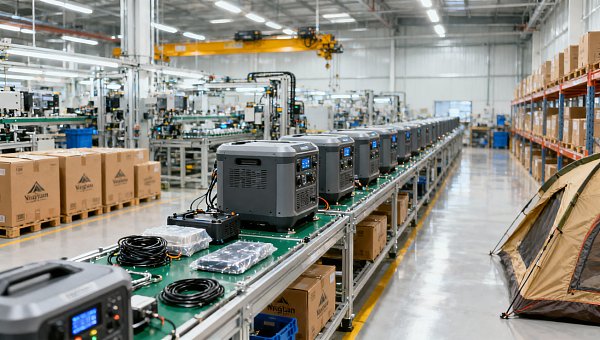
When screening a supplier, look for evidence of process discipline such as:
- Incoming inspection standards for cells, PCBs, chargers, and inverters
- Cell matching procedures and traceability records
- Torque control and assembly standardization
- Welding consistency and inspection method
- Aging tests before shipment
- Final functional test records
- Serial number traceability linked to production batch
- Failure analysis and corrective action procedures
This is especially important for buyers serving hospitality projects, where deployment scale may be moderate to large and field replacement is costly. A distributor can survive cosmetic inconsistency more easily than hidden battery safety inconsistency.
If possible, request a factory audit checklist or conduct a remote/video audit focused on battery pack assembly, electrical testing, storage conditions, and quarantine handling for defective units.
Transport and storage compliance can become hidden safety risks
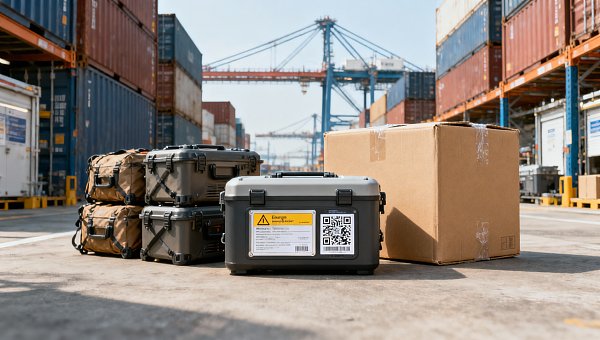
For international buyers, a product may be technically functional but commercially unusable if battery shipping compliance is weak. Lithium products face transport restrictions, packaging requirements, and documentation controls that can disrupt delivery schedules and increase landed cost.
Before selecting a supplier, confirm:
- Whether the exact battery configuration has valid transport test support
- How the factory packages units for sea, air, or multimodal shipping
- Whether carton labels, dangerous goods declarations, and battery documentation are correctly prepared
- How warehouse storage recommendations are defined for state of charge and temperature
- Whether long storage periods affect warranty or activation procedure
For procurement teams in resort development, remote property operations, and seasonal tourism infrastructure, these issues can affect commissioning timelines. Delayed or non-compliant shipments can cause operational gaps long before any technical fault appears on site.
How to assess cycle life and durability claims without being misled
Cycle life claims are often advertised aggressively, but they can be presented under narrow lab conditions that do not reflect outdoor usage. Buyers should ask how the cycle data was generated and under what assumptions.
Important qualifiers include:
- Depth of discharge used during testing
- Ambient temperature during the cycle test
- Charge and discharge rate
- End-of-life definition, such as 80% remaining capacity
- Whether the claim refers to cells only or to the full assembled system
For actual project evaluation, it is often more useful to estimate usable service life under real duty cycles than to compare headline cycle numbers. In tourism applications, a station used for lighting, communications, guest charging, refrigeration backup, or mobile service support may experience irregular loading, partial charging, and high ambient temperatures. Those conditions should be reflected in the supplier discussion.
Questions distributors and procurement teams should ask before shortlisting a factory
To make safety claims easier to compare across suppliers, use a standardized question set. A serious manufacturer should be able to answer these clearly:
- Which cell brand, chemistry, and grade are used, and are substitutions allowed?
- Can you provide BMS protection logic and fault response summary?
- Which certification and transport reports apply to this exact model?
- What environmental and durability tests has the unit passed?
- What percentage of units undergo aging and final load testing?
- How are battery packs traced by batch and serial number?
- What are the top three field failure causes from the past 12 months?
- How are warranty claims diagnosed and closed?
- What storage and shipping constraints apply to dealers or project owners?
- Can you support third-party inspection or factory audit?
The quality of the answers matters as much as the answers themselves. Detailed, structured, test-backed replies usually indicate a factory with stronger internal controls. Evasive or purely sales-oriented responses suggest higher risk.
Red flags that should trigger deeper review or supplier rejection
Some warning signs appear repeatedly in weak sourcing cases. Buyers should slow down if they encounter any of the following:
- Certification logos shown in marketing materials without report copies or certificate numbers
- Inconsistent specifications between brochure, quotation, and test document
- No explanation of BMS thresholds or protection sequence
- Very high cycle life claims with no test conditions stated
- Outdoor positioning without ingress or environmental testing evidence
- Unclear cell sourcing or willingness to change cell brand without revalidation
- No batch traceability for battery packs
- Warranty language that excludes most practical failure scenarios
- Refusal to support sample teardown, inspection, or audit
In commercial terms, these are not minor paperwork issues. They often correlate with greater recall risk, channel conflict, and unstable long-term supply performance.
Why this matters for tourism and hospitality infrastructure buyers
In tourism and hospitality settings, outdoor lithium power stations may support guest-facing operations, service continuity, off-grid amenities, temporary installations, or emergency backup. Failure is therefore not only a technical event; it can affect guest experience, operating uptime, brand reputation, and insurance exposure.
This is why evaluation should resemble other infrastructure procurement disciplines. Just as buyers benchmark prefab unit insulation, smart hotel system interoperability, or modular construction durability, power station sourcing should be evidence-led. Safety claims must be translated into measurable criteria: protection design, verified compliance, environmental resilience, production control, and logistics readiness.
For organizations comparing Chinese manufacturers or global OEM/ODM suppliers, the advantage comes from treating safety as a structured procurement filter rather than a post-purchase warranty issue.
Conclusion: the best safety claim is a factory’s ability to prove it
When choosing an outdoor lithium power station factory, the key decision is not whether the supplier sounds confident. It is whether the supplier can substantiate every important safety claim with technical data, process transparency, and model-specific documentation.
The most reliable evaluation path is to check five things in order: system safety architecture, certification validity, outdoor durability evidence, manufacturing quality control, and transport compliance. If a factory performs well across all five, it is far more likely to be a credible partner for procurement, distribution, and project deployment.
For buyers in hospitality, tourism infrastructure, and broader commercial applications, this approach reduces sourcing uncertainty and helps separate engineered products from marketing-led offers. In a category where failure costs can be serious, verified evidence should always outweigh claims.
Recommended News
 Oct 20, 2026How to Evaluate Campground Equipment for Heavy Use and Outdoor ExposureCampground tourism equipment evaluation made practical: assess durability, weather resistance, safety, and lifecycle costs to choose equipment built for heavy use. Explore the guide.
 Oct 29, 2026Does Recycled Plastic Furniture Last in Strong Coastal Sunlight?Does recycled plastic furniture last in strong coastal sunlight? Discover how UV protection, heat resistance, and coastal hardware affect durability—and what to check before buying.
 Oct 25, 2026Can an Eco Lodge Operate Reliably Off-Grid?Can an eco lodge operate reliably off-grid? Discover how solar, batteries, safe water, and backup planning protect guest comfort—and what to check before investing.
 Sep 21, 2026What Do Eco-Lodging Standards Cost, From Certification Fees to Compliance Upgrades?Eco lodging standards cost explained: compare certification fees, compliance upgrades, documentation, and operational investments to budget smarter and avoid costly rework.
 Aug 30, 2026How to Choose Marine-Grade Camping Equipment for Saltwater and Coastal ConditionsMarine grade camping equipment guide for coastal trips: compare salt-resistant materials, wind-ready shelters, protected electronics, and maintenance tips for reliable adventures.
 Aug 01, 2026Technical Procurement for Camping Gear: How to Evaluate Specs, Durability, and Supplier FitTechnical procurement for camping gear starts with the real use case. Learn how to assess specs, durability, test reports, and supplier fit to reduce risk and improve ROI.
 Jul 14, 2026SABER V3.2 Adds Carbon Footprint Filing for Premium CampingSABER V3.2 adds carbon footprint filing for Premium Camping in Saudi Arabia. Learn the ISO 14067 PCoC rule, key dates, supplier impact, and how to avoid compliance delays.
 Jul 10, 2026Europe Brings Forward Q3 Premium Camping OrdersEurope Brings Forward Q3 Premium Camping Orders: European retailers moved premium camping procurement deadlines nearly a month earlier. See affected categories, supplier lead-time risks, and FOB cost checks now.
 Jul 10, 2026How to Choose Corrosion Resistant Hotel Furniture for Coastal and Poolside AreasCorrosion resistant hotel furniture buying guide for coastal and poolside areas: compare materials, finishes, test data, and lifecycle value to choose durable, guest-ready outdoor pieces.
 Jul 04, 2026Scenic Slide Systems Cost Breakdown: What Drives Budget in Park and Resort Projects?Scenic slide systems cost explained for park and resort projects. Discover key budget drivers, hidden risks, and smart ways to compare suppliers before costs escalate.
 Jul 02, 2026How to Choose Anti Mildew Resort Furniture for Coastal and High-Humidity ProjectsAnti mildew resort furniture for coastal and high-humidity projects: learn how to compare materials, drainage, corrosion resistance, and lifecycle value for smarter resort sourcing.
 Jul 01, 2026How to Choose High-Durability Trekking Gear for Mountain Use: Materials, Weight, and Weather ProtectionHigh-durability trekking gear for mountain use: learn how to compare materials, weight, and weather protection to choose safer, longer-lasting gear for demanding trails.
 Jun 30, 2026Vietnam Lifts Import Pause but Adds Blockchain Label CheckVietnam lifts the import pause on premium camping goods, but new blockchain label checks and TV-MARK code rules now shape customs clearance. Learn the compliance risks and next steps.
 Jun 29, 2026Vietnam Halts China Premium Camping Imports Over Label ChecksVietnam Halts China Premium Camping Imports over label checks, disrupting customs clearance for lighting and power products. Learn the compliance risks, shipment impact, and what buyers and exporters should review now.
 Jun 29, 2026Eco Resort Development Cost Breakdown: What Drives Budget from Land to OperationsEco resort development cost explained from land and permits to prefab, utilities, and operations. Discover what really drives budget risk and how to plan smarter before approval.
 Jun 28, 2026Vietnam to Enforce QCVN 101:2026 Camping Lighting LabelsVietnam to Enforce QCVN 101:2026 Camping Lighting Labels from August 1, 2026. Learn labeling, VILAS test report, and compliance risks for LED and solar camping lights.
 Jun 28, 2026How to Choose Durable Camping Stoves for Frequent Outdoor Use and Harsh WeatherDurable camping stoves buying guide: learn how to compare materials, wind performance, fuel systems, and serviceability for reliable cooking in harsh weather and frequent outdoor use.
 Jun 27, 2026Vietnam Expands QCVN 16:2026 to Premium Camping DevicesVietnam QCVN 16:2026 expands to Premium Camping devices from Sept 1, 2026. Learn customs, labeling, certification, and procurement impacts for compliant market access.
 Jun 26, 2026Vietnam Mandates QCVN 16:2026 Labels for Premium Camping ImportsVietnam Mandates QCVN 16:2026 Labels for Premium Camping imports from Oct. 1, 2026. Learn how the new rule impacts customs clearance, compliance, suppliers, and delivery planning.
 Jun 26, 2026Pet Carrier Backpacks: How to Choose the Right Size, Ventilation, and Load SupportPetcarrierbackpacks buying guide: learn how to choose the right size, ventilation, and load support for safer, more comfortable pet travel, commuting, and outdoor use.
 Jun 26, 2026How to Read a Durable Camping Equipment Insulation Rating Before You BuyLearn how to read a durable camping equipment insulation rating before you buy, so you can choose warmer, longer-lasting gear with confidence.
 Jun 25, 2026BITE 2025 Puts Premium Camping Orders in FocusBITE 2025 spotlights premium camping orders as Southeast Asian buyers target tent units and modular bathroom cabins with ISO 21930 and ASEAN green materials compliance in focus.
 Jun 24, 2026Fujia Expands Vietnam Output for Premium CampingFujia Expands Vietnam Output for Premium Camping, investing CNY 378 million to boost localized delivery, ease tariff pressure, and strengthen VAT compliance for global buyers.
 Jun 19, 2026ASX 200 Falls 1% as Premium Camping Faces Supply ShiftPremium Camping demand is shifting as the ASX 200 falls 1%. See how Australian retailers favor certified Chinese camping gear, reshaping sourcing, costs, and payment terms.
{item.publish_time}{item.title}{item.description}Quarterly Executive Summaries Delivered Directly.
Join 50,000+ industry leaders who receive our proprietary market analysis and policy outlooks before they hit the public library.