Search News
TerraVista Metrics (TVM)Industry Portal
TerraVista Metrics (TVM)Hot Articles
TerraVista Metrics (TVM)- Cableway Station Spacing: How Terrain and Capacity Shape the DistanceExplore cableway systems station spacing and learn how terrain, passenger capacity and safety shape practical, route-specific design decisions.
- What Is an Industry Insights Data Model? Key Components and UsesDiscover how an industry insights data model connects market data, improves comparisons, and supports smarter benchmarking and procurement decisions.
- Vingcard Deploys MENA’s First Native Wallet Hotel Keys in EgyptVingcard and Hudini bring native wallet hotel keys to three Egypt resorts. Discover what app-free access could mean for hotel buyers and suppliers.
Popular Tags
TerraVista Metrics (TVM)Industry NewsCanton Fair Smart Tourism Infrastructure Zone Hits $210M
auth.Dr. Hideo Tanaka (Outdoor Gear Engineering Lead)Time
Nov 16, 2026Click Count
At the 139th Canton Fair (April 15–19, 2026), the newly launched ‘Smart Tourism Infrastructure’ special zone recorded $210 million in deals for RV Components — drawing procurement interest from 32 countries including the U.S., Germany, Australia, and Japan. This outcome signals growing international demand for integrated, lightweight mobility infrastructure solutions — particularly relevant for manufacturers and suppliers in recreational vehicle systems, advanced materials, and modular tourism facilities.
Event Overview
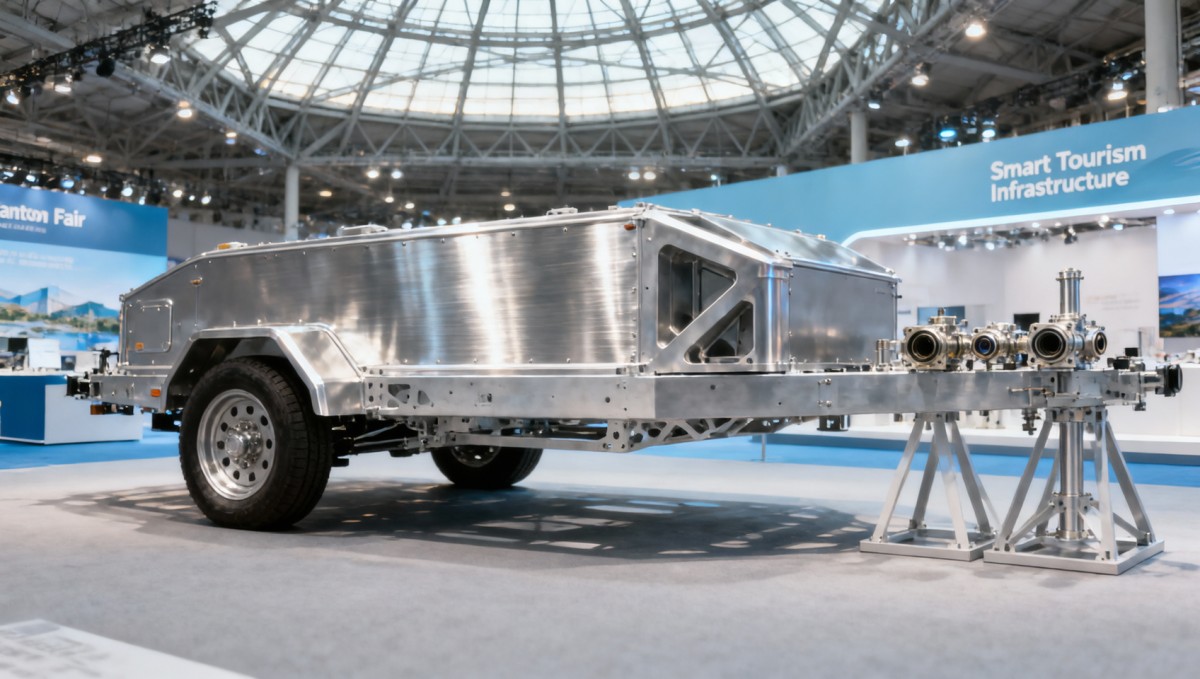
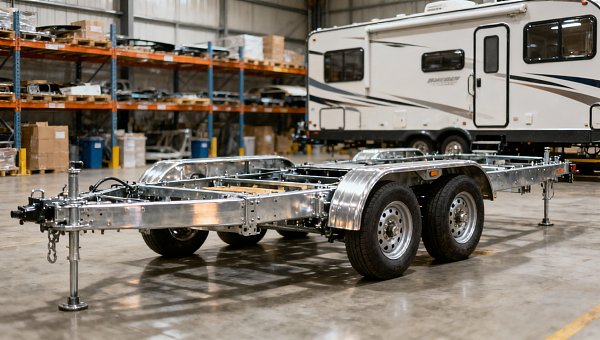
The 139th Canton Fair was held from April 15 to 19, 2026. Within its dedicated ‘Smart Tourism Infrastructure’ zone, RV Components emerged as the top-performing category, achieving confirmed成交 (deal) volume of $210 million. Buyers originated from 32 countries, with notable participation from the U.S., Germany, Australia, and Japan. Among all RV Components orders, 68% were for lightweight chassis units featuring 7-series aluminum alloy and topology-optimized structural design — identified as the preferred alternative to traditional steel frames by European and North American RV upfitters.
Industries Affected by This Development
RV Component Manufacturers
Manufacturers producing chassis, suspension, frame subassemblies, or structural modules are directly affected: rising order share for aluminum-based, topology-optimized designs indicates a measurable shift in buyer preference toward weight reduction and structural efficiency. Impact manifests in R&D prioritization, material sourcing adjustments, and potential recalibration of production capacity for non-steel platforms.
Aluminum Alloy Suppliers & Processors
Suppliers of 7-series aluminum alloys — especially those certified for structural applications in mobile equipment — face increased inquiry volume and tighter specification alignment requirements. The 68% order share for this material grade suggests heightened demand pressure on supply consistency, mill certification, and surface treatment compatibility for downstream fabrication.
RV Upfitting & Integration Workshops (Overseas)
European and North American RV conversion facilities relying on imported chassis platforms are adopting these lightweight solutions at scale. Impact includes revised Bill-of-Materials planning, updated welding/joining process validation, and potential recalibration of payload and axle load calculations during final assembly.
Export-Oriented Logistics & Compliance Service Providers
Firms supporting cross-border shipment of structural components must adapt to new classification patterns: aluminum-intensive chassis units may trigger different HS code treatments, packaging standards (e.g., anti-galling protection), and regional conformity documentation (e.g., EU CE marking for load-bearing structures) compared to legacy steel variants.
What Relevant Enterprises or Practitioners Should Monitor and Act On
Track official categorization and reporting updates from China’s Ministry of Commerce and Canton Fair Organizing Committee
The formal designation of ‘Smart Tourism Infrastructure’ as a permanent zone — versus a one-off pilot — remains unconfirmed. Current more suitable to treat this as an indicator of policy-level prioritization rather than an established trade channel. Monitor upcoming announcements regarding zone continuity, eligibility criteria, and export incentive alignment.
Focus procurement and engineering validation on 7-series aluminum supply chains and topology-optimized design verification protocols
Given that 68% of RV Components orders centered on this specific material-structure combination, enterprises should prioritize technical due diligence on supplier metallurgical certifications, fatigue testing reports for welded joints, and dimensional stability under thermal cycling — not just price or lead time.
Distinguish between early-adopter demand signals and broad-market adoption timelines
The concentration of buyers from high-income markets (U.S., Germany, Australia) suggests initial uptake is driven by premium segment requirements — not yet indicative of cost-sensitive or emerging-market diffusion. Avoid extrapolating global scalability without further market-specific validation.
Prepare for upstream coordination on joint tooling, tolerance stacking, and interface standardization
Topology-optimized aluminum chassis often require precise mating with body mounts, suspension pickup points, and electrical harness routing paths. Early engagement with key overseas upfitters on interface specifications — before mass production ramp-up — helps prevent rework and delivery delays.
Editorial Perspective / Industry Observation
From industry angle, this $210 million result is best understood as a demand signal — not yet a structural market shift. It reflects concentrated purchasing behavior among specialized, high-value RV integrators responding to regulatory (e.g., EU CO₂ fleet targets), operational (fuel efficiency, range extension), and user-experience (handling, towing load distribution) drivers. Analysis来看, the 68% adoption rate of lightweight chassis within this zone does not yet confirm widespread substitution across all RV segments — but it does mark a threshold where material choice begins influencing system-level architecture decisions. Observation来看, the speed of adoption among Western upfitters suggests that supply chain readiness — not technical feasibility — is now the primary constraint for broader rollout.
Current more appropriate to interpret this as an inflection point in component-level specification trends, rather than evidence of immediate, wholesale platform transition. Sustained monitoring of follow-up orders beyond the fair — particularly outside the initial 32-country cohort — will determine whether this represents a durable shift or a concentrated event-driven surge.
Conclusion: The $210 million figure underscores concrete traction for smart, lightweight tourism infrastructure components — but its industry significance lies less in absolute value and more in the specificity of demand: standardized, certifiable, aluminum-based chassis architectures gaining preference over legacy steel alternatives in key export markets. At present, it is more accurate to view this as an early-stage signal requiring targeted response — not a fully formed market reality demanding broad strategic overhaul.
Source: Official transaction data released by the China Foreign Trade Center (Canton Fair Organizing Committee), April 2026. Note: Long-term zone status, full buyer breakdown by company type, and post-fair fulfillment rates remain pending official disclosure and require continued observation.

Recommended News
 Oct 29, 2026Lippert Receives Nonbinding Offer as Patrick Reaffirms LCI Merger AgreementLCI Industries receives a nonbinding $101-per-share offer as Patrick reaffirms its merger agreement. Explore what this could mean for RV supply chains.
 Sep 30, 2026How RV Dealers Can Vet Wholesale Accessory Distributors for Reliable StockRV accessories wholesale distributor vetting guide for dealers: verify stock, fitment, fulfillment, terms, and support to reduce delays and protect margins.
 Aug 14, 2026Indonesia’s Nickel Export Buffer Policy Could Ease RV and Yacht Tech Supply ChainsIndonesia’s nickel export buffer policy may ease RV and yacht tech supply chains, helping stabilize battery, steel, and sourcing costs.
 Jul 13, 2026West Coast Port Strike Pauses, RV Lead Time Stays at 52 DaysWest Coast port strike pauses, but RV lead time stays at 52 days. See how congestion, tight booking windows, and 40HQ premiums are impacting exporters and distributors.
 Jul 11, 2026RV Component Freight Jumps 32%, Q3 Lead Times SlipRV component freight jumps 32% as Q3 lead times slip from 8 to 14–16 weeks. See how Red Sea disruption, port strikes, and precision-part gaps may impact sourcing, costs, and delivery plans.
 Jul 09, 2026RV Aluminum Prices Jump 12% as Port Delays DeepenRV aluminum prices jump 12% as port delays deepen, pushing 6061-T6 costs to $3,820/ton. See how RV OEMs, buyers, and suppliers can respond to rising costs and slower deliveries.
 Jul 06, 2026Camper Van Components in Europe: How to Compare Standards, Fit, and Supply OptionsCamper van components Europe guide for buyers: compare compliance, fit, durability, and supply options to reduce risk, improve sourcing decisions, and protect margins.
 Jun 30, 2026CPSC Recall Expansion Raises RV Brake Compliance BarCPSC recall expansion raises RV brake compliance bar as importers demand ISO 26262 ASIL-B validation. See how OEMs, buyers, and suppliers can reduce risk and protect orders.
 Jun 27, 2026CPSC Tightens RV Component Rules With UL 2871:2026CPSC Tightens RV Component Rules With UL 2871:2026: learn how new U.S. import, labeling, and certification rules affect RV batteries, BMS controllers, and DC modules from August 2026.
 Jun 24, 2026U.S. 301 Review May Lift RV Component Tariffs to 25%RV Components face possible U.S. 301 tariffs up to 25%, with a tight July 24 shipping window. Learn how exporters and buyers can protect pricing, compliance, and Q3 supply plans.
 Jun 23, 2026Export Controls Raise RV Chip Supply RiskExport controls raise RV chip supply risk as FPGA and ADC/DAC lead times exceed 26 weeks. Learn how RV controller makers can manage sourcing, compliance, substitution, and delivery pressure.
 Jun 23, 2026Screwdrivers Set Buying Guide: Types, Bit Materials, and What to Check Before PurchaseScrewdriversset buying guide: compare types, bit materials, handle comfort, and key pre-purchase checks to choose a durable set that saves time, money, and repair frustration.
 Jun 22, 2026RV Components Lead Times Stretch to 18 WeeksRV Components lead times stretch to 18 weeks as port disruption and aluminum export limits tighten supply. See what OEMs, buyers, and logistics teams should monitor now.
 Jun 21, 2026RV Parts Lead Times Stretch to 18 Weeks After Port StrikeRV parts lead times stretch to 18 weeks after the LA/Long Beach port strike. Learn how RV OEMs, importers, and suppliers can respond to booking suspensions and sourcing pressure.
 Jun 20, 2026India Issues Final AD Ruling on China TPU Paint Protection FilmIndia Issues Final AD Ruling on China TPU Paint Protection Film—learn how the anti-dumping decision may impact TPU sourcing, pricing, and supply chain planning across India and export-linked markets.
 Jun 18, 2026Vietnam Eases RV Components Clearance for China SuppliersVietnam eases RV components clearance for China suppliers, allowing eligible shipments to use CNAS-recognized test reports and ISO 9001 for faster 7–10 day customs delivery.
 Jun 17, 2026Vietnam Expands RV Component Certification ExemptionsVietnam Expands RV Component Certification Exemptions: learn how the new self-declaration and type-test filing rules can cut import delays, reduce compliance costs, and reshape OEM sourcing strategy.
 Jun 16, 2026UL 9741-2026 Sets Dual-Loop BMS Rule for RV Lithium ComponentsUL 9741-2026 sets a dual-loop BMS rule for RV lithium components, requiring thermal runaway warning and physical cutoff by Dec 1, 2026. Learn the compliance impact now.
 Jun 15, 2026UL Tightens RV Lithium Battery Rules for U.S. MarketUL Tightens RV Lithium Battery Rules for U.S. Market: learn how UL 9741-2026 BMS dual-circuit redundancy requirements may impact RV battery exports, compliance timelines, and supplier planning.
 Jun 14, 2026CPSC Mandates UL 9741 for RV BMS ModulesCPSC mandates UL 9741 for RV BMS modules made after Sept. 1, 2026. Learn the 87-day compliance deadline, supply chain impact, and key actions for U.S.-bound RV components.
 Jun 13, 2026CPSC Sets UL 9741 Deadline for RV Lithium ModulesCPSC sets a UL 9741 deadline for RV lithium modules by Dec. 1, 2026. Learn how BMS, OTA security audits, and thermal runaway testing could impact U.S. market access.
 Jun 11, 2026RV Control MCU Lead Times Stretch to 26 WeeksRV Control MCU lead times stretch to 26 weeks, raising sourcing risks for manufacturers and buyers. Explore qualified domestic alternatives, compliance milestones, and smarter supply-chain planning.
 Jun 11, 2026Resistor Spark Plugs vs Standard Plugs: What’s the Difference and When to Use EachResistor spark plugs vs standard plugs: learn the key differences, when to use each, and how the right choice improves reliability, electronics compatibility, and maintenance confidence.
 Jun 10, 2026RV MCU Lead Times Stretch to 26 Weeks as China Alternatives AdvanceRV MCU lead times stretch to 26 weeks as China alternatives advance. Discover supply risks, qualification progress, and what RV electronics buyers should monitor now.
{item.publish_time}{item.title}{item.description}Quarterly Executive Summaries Delivered Directly.
Join 50,000+ industry leaders who receive our proprietary market analysis and policy outlooks before they hit the public library.