Search News
TerraVista Metrics (TVM)Industry Portal
TerraVista Metrics (TVM)Hot Articles
TerraVista Metrics (TVM)- What Drives System Interoperability Testing Service Costs in Complex Projects?System interoperability testing service cost depends on integration scope, workflows, environments, and assurance needs. Learn how to budget smarter and reduce project risk.
- Project Planning Sourcing Guides: How to Qualify Suppliers Before Work StartsSourcing guides project planning helps teams qualify suppliers before work begins—verify compliance, delivery capacity, financial strength, and sustainability to reduce risk and protect project outcomes.
- Buyer’s Guide to Kinetic Art: Choosing Safe, Durable Pieces for Public SpacesBuyer guides kinetic art for public spaces: learn how to choose safe, durable, low-maintenance installations with reliable engineering, materials, controls, and lifecycle value.
Popular Tags
TerraVista Metrics (TVM)Industry NewsCanton Fair Smart Tourism Infrastructure Zone Hits $212M
auth.Dr. Hideo Tanaka (Outdoor Gear Engineering Lead)Time
Oct 06, 2026Click Count
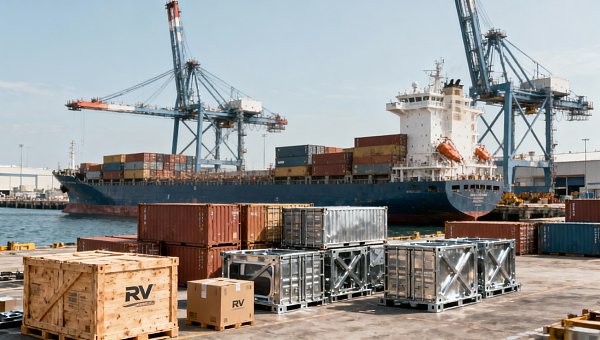
At the close of the 139th Canton Fair on April 20, 2026, the newly launched ‘Smart Tourism Infrastructure’ exhibition zone achieved a total成交 of USD 212 million — with RV components emerging as the top-performing category. This development signals accelerating demand for high-end, lightweight mobility infrastructure in overseas self-drive tourism markets, particularly among buyers from Germany, Australia, and Saudi Arabia. Industry stakeholders in RV manufacturing, aluminum alloy supply, structural engineering, and export logistics should monitor shifts in product specifications, material standards, and regional procurement priorities.
Event Overview
The 139th Canton Fair concluded on April 20, 2026. Within its dedicated ‘Smart Tourism Infrastructure’ zone, total成交 reached USD 212 million. RV Components accounted for 37% of this sum. Among RV-related orders, lightweight chassis units — constructed using 7-series aluminum-magnesium alloy and topology-optimized structures — represented 68% of RV component成交 value. Primary purchasing groups originated from Germany, Australia, and Saudi Arabia.
Impact on Specific Industry Segments
Direct Export Trading Enterprises
These firms face immediate implications in product positioning and technical documentation. The dominance of 7-series aluminum-magnesium alloy chassis indicates a shift toward performance-driven, specification-sensitive procurement — moving beyond price competition. Impact manifests in tighter compliance requirements (e.g., material certification, load-testing reports) and longer pre-shipment validation cycles.
Raw Material Procurement Enterprises
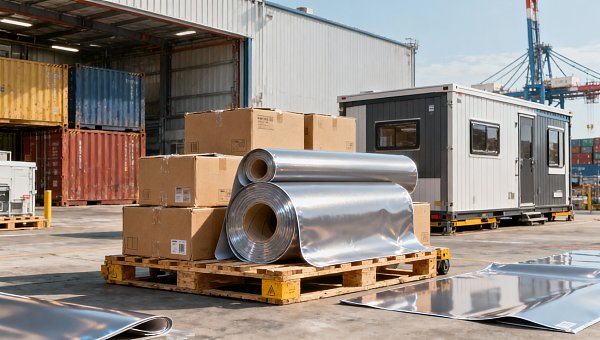
Suppliers of aluminum alloys — especially those certified to EN AW-7020 or equivalent aerospace-grade 7xxx series standards — are seeing intensified inquiry volume. The 68% share attributed to 7-series-based chassis suggests growing downstream demand for traceable, high-purity ingots and extrusion billets meeting strict thermal treatment and microstructure control criteria.
Manufacturing & Fabrication Firms
Companies engaged in chassis fabrication must adapt to topology-optimized design workflows. Unlike traditional frame welding, such structures require CNC precision machining, finite element analysis (FEA)-informed process planning, and tighter tolerance control (±0.15 mm typical). The concentration of orders among three national buyer groups implies potential standardization pressure toward DIN, AS/NZS, or SASO-compliant dimensional and safety benchmarks.
Supply Chain & Logistics Service Providers
Freight forwarders and customs brokers handling RV component exports may observe increased scrutiny on origin declarations, alloy composition certificates, and conformity assessments. With German, Australian, and Saudi buyers accounting for the majority of lightweight chassis orders, documentation alignment with EU REACH, Australian Design Rules (ADR), and Saudi SABER platforms becomes operationally critical.
What Relevant Enterprises or Practitioners Should Focus On Now
Monitor official classification updates from Chinese customs and GACC
Current HS code usage for ‘lightweight RV chassis’ remains inconsistent across exporters. A formal GACC guidance note — expected post-Fair — may clarify whether such units fall under 8716.80 (trailers and semi-trailers) or 8431.49 (parts of vehicles), affecting duty rates and statistical reporting. Early alignment avoids retroactive reclassification risk.
Track specification trends in target procurement groups
Germany’s focus on DIN 70020-2 (chassis fatigue testing), Australia’s emphasis on AS 4177.2 (towing coupling strength), and Saudi’s pending SASO RV infrastructure standard draft suggest divergent but converging technical expectations. Cross-referencing recent tender documents from these markets helps prioritize R&D and certification investments.
Distinguish between policy signal and commercial traction
The ‘Smart Tourism Infrastructure’ zone is a thematic pilot — not yet a permanent fair section. Its USD 212M result reflects concentrated buyer attention, not necessarily sustained annual demand. Enterprises should treat this as an indicator of evolving end-user infrastructure expectations, not as confirmation of scalable volume without further market validation.
Prepare for extended lead-time coordination with upstream material suppliers
7-series aluminum extrusions require longer casting and aging cycles than 6-series alternatives. Firms securing chassis orders should proactively confirm billet availability windows with smelters and adjust production scheduling accordingly — especially given tight global supply of EN AW-7020-compatible feedstock.
Editorial Observation / Industry Insight
From an industry perspective, this outcome is better understood as a structural signal — not yet an established trend. The concentration of lightweight chassis demand within three national procurement blocs highlights early-stage, specification-led adoption rather than broad-based market penetration. Analysis来看, the 68% share reflects not just material preference, but buyer willingness to pay premium pricing for verified weight reduction (typically 22–28% vs. steel equivalents), which directly impacts fuel efficiency and payload capacity in long-haul self-drive contexts. Observation来看, the zone’s success does not imply immediate replication in other trade fairs; rather, it underscores how infrastructure upgrades in overseas tourism ecosystems — such as expanded EV charging networks, upgraded rural road classifications, and national RV park certification schemes — are reshaping downstream component requirements. Current more appropriate interpretation is that Chinese manufacturers are transitioning from cost-driven to specification-responsive exporters in niche high-value segments — a shift requiring deeper technical integration, not just scale.
This Canton Fair result marks a measurable inflection point in how overseas tourism infrastructure modernization translates into selective, high-specification demand for Chinese-made mobility components. It reflects neither a sudden market opening nor a passing novelty — but a calibrated response to verifiable infrastructure upgrades abroad. Stakeholders should interpret it as evidence of maturing export competitiveness in targeted engineering categories, contingent on continued alignment with evolving regional technical frameworks.
Information Source: Official closing report of the 139th Canton Fair (April 20, 2026), released by China Foreign Trade Centre. Note: The status of the ‘Smart Tourism Infrastructure’ zone as a permanent feature remains unconfirmed and is subject to official announcement in subsequent editions.
Recommended News
 Sep 30, 2026How RV Dealers Can Vet Wholesale Accessory Distributors for Reliable StockRV accessories wholesale distributor vetting guide for dealers: verify stock, fitment, fulfillment, terms, and support to reduce delays and protect margins.
 Aug 14, 2026Indonesia’s Nickel Export Buffer Policy Could Ease RV and Yacht Tech Supply ChainsIndonesia’s nickel export buffer policy may ease RV and yacht tech supply chains, helping stabilize battery, steel, and sourcing costs.
 Jul 13, 2026West Coast Port Strike Pauses, RV Lead Time Stays at 52 DaysWest Coast port strike pauses, but RV lead time stays at 52 days. See how congestion, tight booking windows, and 40HQ premiums are impacting exporters and distributors.
 Jul 11, 2026RV Component Freight Jumps 32%, Q3 Lead Times SlipRV component freight jumps 32% as Q3 lead times slip from 8 to 14–16 weeks. See how Red Sea disruption, port strikes, and precision-part gaps may impact sourcing, costs, and delivery plans.
 Jul 09, 2026RV Aluminum Prices Jump 12% as Port Delays DeepenRV aluminum prices jump 12% as port delays deepen, pushing 6061-T6 costs to $3,820/ton. See how RV OEMs, buyers, and suppliers can respond to rising costs and slower deliveries.
 Jul 06, 2026Camper Van Components in Europe: How to Compare Standards, Fit, and Supply OptionsCamper van components Europe guide for buyers: compare compliance, fit, durability, and supply options to reduce risk, improve sourcing decisions, and protect margins.
 Jun 30, 2026CPSC Recall Expansion Raises RV Brake Compliance BarCPSC recall expansion raises RV brake compliance bar as importers demand ISO 26262 ASIL-B validation. See how OEMs, buyers, and suppliers can reduce risk and protect orders.
 Jun 27, 2026CPSC Tightens RV Component Rules With UL 2871:2026CPSC Tightens RV Component Rules With UL 2871:2026: learn how new U.S. import, labeling, and certification rules affect RV batteries, BMS controllers, and DC modules from August 2026.
 Jun 24, 2026U.S. 301 Review May Lift RV Component Tariffs to 25%RV Components face possible U.S. 301 tariffs up to 25%, with a tight July 24 shipping window. Learn how exporters and buyers can protect pricing, compliance, and Q3 supply plans.
 Jun 23, 2026Export Controls Raise RV Chip Supply RiskExport controls raise RV chip supply risk as FPGA and ADC/DAC lead times exceed 26 weeks. Learn how RV controller makers can manage sourcing, compliance, substitution, and delivery pressure.
 Jun 23, 2026Screwdrivers Set Buying Guide: Types, Bit Materials, and What to Check Before PurchaseScrewdriversset buying guide: compare types, bit materials, handle comfort, and key pre-purchase checks to choose a durable set that saves time, money, and repair frustration.
 Jun 22, 2026RV Components Lead Times Stretch to 18 WeeksRV Components lead times stretch to 18 weeks as port disruption and aluminum export limits tighten supply. See what OEMs, buyers, and logistics teams should monitor now.
 Jun 21, 2026RV Parts Lead Times Stretch to 18 Weeks After Port StrikeRV parts lead times stretch to 18 weeks after the LA/Long Beach port strike. Learn how RV OEMs, importers, and suppliers can respond to booking suspensions and sourcing pressure.
 Jun 20, 2026India Issues Final AD Ruling on China TPU Paint Protection FilmIndia Issues Final AD Ruling on China TPU Paint Protection Film—learn how the anti-dumping decision may impact TPU sourcing, pricing, and supply chain planning across India and export-linked markets.
 Jun 18, 2026Vietnam Eases RV Components Clearance for China SuppliersVietnam eases RV components clearance for China suppliers, allowing eligible shipments to use CNAS-recognized test reports and ISO 9001 for faster 7–10 day customs delivery.
 Jun 17, 2026Vietnam Expands RV Component Certification ExemptionsVietnam Expands RV Component Certification Exemptions: learn how the new self-declaration and type-test filing rules can cut import delays, reduce compliance costs, and reshape OEM sourcing strategy.
 Jun 16, 2026UL 9741-2026 Sets Dual-Loop BMS Rule for RV Lithium ComponentsUL 9741-2026 sets a dual-loop BMS rule for RV lithium components, requiring thermal runaway warning and physical cutoff by Dec 1, 2026. Learn the compliance impact now.
 Jun 15, 2026UL Tightens RV Lithium Battery Rules for U.S. MarketUL Tightens RV Lithium Battery Rules for U.S. Market: learn how UL 9741-2026 BMS dual-circuit redundancy requirements may impact RV battery exports, compliance timelines, and supplier planning.
 Jun 14, 2026CPSC Mandates UL 9741 for RV BMS ModulesCPSC mandates UL 9741 for RV BMS modules made after Sept. 1, 2026. Learn the 87-day compliance deadline, supply chain impact, and key actions for U.S.-bound RV components.
 Jun 13, 2026CPSC Sets UL 9741 Deadline for RV Lithium ModulesCPSC sets a UL 9741 deadline for RV lithium modules by Dec. 1, 2026. Learn how BMS, OTA security audits, and thermal runaway testing could impact U.S. market access.
 Jun 11, 2026RV Control MCU Lead Times Stretch to 26 WeeksRV Control MCU lead times stretch to 26 weeks, raising sourcing risks for manufacturers and buyers. Explore qualified domestic alternatives, compliance milestones, and smarter supply-chain planning.
 Jun 11, 2026Resistor Spark Plugs vs Standard Plugs: What’s the Difference and When to Use EachResistor spark plugs vs standard plugs: learn the key differences, when to use each, and how the right choice improves reliability, electronics compatibility, and maintenance confidence.
 Jun 10, 2026RV MCU Lead Times Stretch to 26 Weeks as China Alternatives AdvanceRV MCU lead times stretch to 26 weeks as China alternatives advance. Discover supply risks, qualification progress, and what RV electronics buyers should monitor now.
 Jun 10, 2026How to Choose Vehicle Electronics for RV Upgrades: Power, Compatibility, and SafetyVehicle electronics for RV upgrades: learn how to evaluate power demands, compatibility, and safety to choose reliable systems, reduce failures, and improve long-term performance.
Quarterly Executive Summaries Delivered Directly.
Join 50,000+ industry leaders who receive our proprietary market analysis and policy outlooks before they hit the public library.