Search News
TerraVista Metrics (TVM)Industry Portal
TerraVista Metrics (TVM)Hot Articles
TerraVista Metrics (TVM)- How to Evaluate Spark Plug Suppliers for Consistent Quality and Lead TimesSpark plugs supplier evaluation guide: compare quality control, traceability, fitment, total cost, and reliable lead times to secure dependable engine maintenance supply.
- What Drives System Interoperability Testing Service Costs in Complex Projects?System interoperability testing service cost depends on integration scope, workflows, environments, and assurance needs. Learn how to budget smarter and reduce project risk.
- Project Planning Sourcing Guides: How to Qualify Suppliers Before Work StartsSourcing guides project planning helps teams qualify suppliers before work begins—verify compliance, delivery capacity, financial strength, and sustainability to reduce risk and protect project outcomes.
Popular Tags
TerraVista Metrics (TVM)Industry NewsHow RV Dealers Can Vet Wholesale Accessory Distributors for Reliable Stock
auth.Dr. Hideo Tanaka (Outdoor Gear Engineering Lead)Time
Oct 07, 2026Click Count
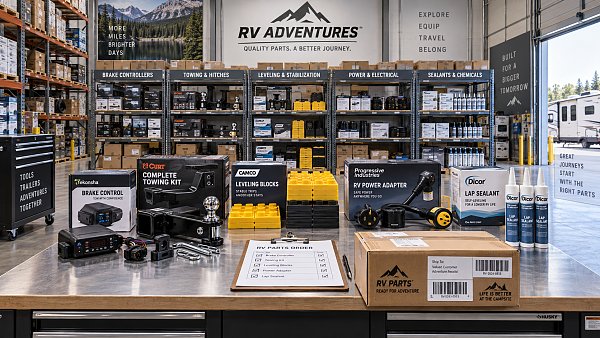
A dealer can lose an accessory sale long before a customer leaves the lot. It often starts with a familiar situation: a buyer has selected an RV, asks for a brake controller, leveling blocks, a towing kit, or exterior protection, and the needed item is unavailable, backordered, incorrectly packaged, or not compatible with the unit being delivered. The immediate revenue loss matters, but the larger cost is a rushed substitute, an installation delay, a return, or a customer who questions the dealership’s preparation.
Vetting an RV accessories wholesale distributor should therefore go beyond comparing catalog prices. The most dependable distributor is one that can substantiate stock availability, product specifications, compliance documentation, fulfillment controls, and communication practices before a dealer makes that supplier part of its regular assortment. A practical review combines document checks with a controlled opening order, rather than relying on broad claims about inventory or service.
Start with the accessories that create the greatest disruption when unavailable
Not every item deserves the same level of supplier scrutiny. A decorative add-on with a long replacement window carries less operational risk than a hitch component, electrical adapter, propane-related accessory, roof sealant, water connection, or safety item needed before delivery. Begin by separating the planned assortment into groups based on customer impact and urgency.
- Delivery-critical items: accessories that must be installed or handed over before the RV leaves the dealership, such as towing components, mirrors, wiring accessories, backup camera parts, steps, locks, and stabilization products.
- Seasonal traffic drivers: items that sell heavily during camping, towing, winterization, or holiday travel periods, including outdoor mats, water hoses, covers, portable power products, and storage solutions.
- Service-sensitive products: accessories that can produce fitment questions, warranty claims, or installation labor if product information is incomplete.
- Margin-supporting add-ons: lower-risk products commonly sold in bundles at delivery, in parts departments, or through online channels.
This classification changes the vetting threshold. A distributor may be suitable for replenishing general merchandise while being unsuitable for delivery-critical lines. Dealers should not assume that a broad catalog means the distributor has equal capability across every category.
Do not confuse catalog visibility with available inventory
A large online catalog can make a distributor appear well stocked even when many listed items are supplier-direct, allocated, discontinued, seasonal, or available only in limited quantities. The useful question is not “How many SKUs do you carry?” It is “Which items can you ship from your own controlled inventory, in what quantity, and under what conditions?”
Ask prospective distributors to explain how their inventory status is maintained. A reliable answer should distinguish between on-hand stock, incoming inventory, supplier availability, and backordered goods. It should also clarify whether stock information is live, periodically updated, or manually confirmed after an order is placed.
For the highest-priority SKUs, request information that helps a buyer make a real replenishment decision:
- Typical order quantities that can be fulfilled without special approval.
- Whether inventory is held at one warehouse or distributed across several locations.
- How often stock counts are reconciled.
- Whether an order can be partially shipped without prior authorization.
- How substitutions are handled when the selected item is unavailable.
- Whether dealer allocations or reservation arrangements are offered during high-demand periods.
Partial shipment rules deserve close attention. A distributor that ships only part of an order may help a dealer keep some sales moving, but fragmented deliveries can create extra freight cost and receiving work. Conversely, a strict complete-order policy may delay a whole installation package because one small component is missing. Neither policy is automatically wrong; the dealer needs to know it before setting customer promises.
Verify fitment and technical information before looking at discounts
Accessory returns are often caused by poor product data rather than poor product quality. RV configurations vary by trailer type, tow vehicle, electrical system, roof construction, appliance arrangement, dimensions, and installed options. A distributor that cannot provide usable specifications may shift the burden of product validation to the dealer’s parts counter and service team.
For products with compatibility or installation implications, evaluate the quality of the distributor’s technical information. Product listings and supporting documents should identify relevant dimensions, load limits, voltage requirements, connector types, material composition, mounting requirements, included hardware, operating restrictions, and intended application. Where an item is model-specific, the distributor should make the fitment basis clear rather than relying on vague “universal” language.
Review a sample of products from several categories instead of checking only one best-selling line. Look for inconsistencies between the catalog description, packaging details, installation instructions, and wholesale order sheet. A mismatch in unit of measure, included components, or wiring configuration can become expensive after the product reaches the service bay.
Questions that reveal weak product control
Some warning signs appear in routine purchasing conversations. Be cautious when specifications cannot be obtained until after an order is placed, when technical questions receive only promotional descriptions, or when a distributor cannot identify the manufacturer, country of origin information where relevant, lot or batch traceability for controlled items, or the warranty process. These gaps do not prove a product is unsuitable, but they increase the dealer’s verification workload.
For towing, electrical, propane-adjacent, child-safety, structural, or other safety-related accessories, confirm the applicable product markings, instructions, and documentation needed for the intended market. Dealers should also establish who is responsible for confirming compatibility with the specific RV and tow vehicle configuration. A wholesale supplier can provide product data, but it should not be assumed that every catalog recommendation replaces installation judgment.
Examine fulfillment performance as an operating process
“Fast shipping” is too vague to support purchasing decisions. Fulfillment reliability depends on order cut-off times, warehouse handling, pick accuracy, carrier handoff, packaging standards, shipment visibility, and the distributor’s response when something goes wrong. The goal is to understand the process, not to obtain a broad assurance.
A useful opening order should include more than one item type. It can test how the distributor handles standard stocked goods, carton quantities, small parcel items, and products that require careful packaging. Inspect the order on arrival: check SKU accuracy, quantity accuracy, packaging condition, label clarity, documentation, and whether the delivered product matches the ordered specification.
Freight terms should be read alongside unit prices. A lower item cost can be offset by minimum order values, dimensional-weight charges, residential-style fees for certain deliveries, split-shipment costs, or return freight responsibility. Dealers with limited receiving capacity should also confirm pallet requirements, appointment needs, delivery methods, and procedures for reporting visible transit damage.
Assess whether the distributor can support controlled assortment growth
Dealers rarely need every accessory category at once. The safer approach is to start with an assortment that aligns with the dealership’s current RV mix, installation capabilities, available storage, and seasonal sales patterns. A distributor should be able to support that phased approach without forcing excessive inventory exposure.
Ask how minimum order quantities, carton packs, and price tiers affect the assortment. A carton requirement may be reasonable for high-turn consumables but problematic for slow-moving, model-specific parts. Review whether mixed-SKU ordering is allowed and whether the distributor imposes category-level minimums that encourage overbuying.
It is also worth checking how product changes are communicated. Accessories may be revised because of supplier changes, packaging updates, component substitutions, or discontinued lines. A dependable distributor has a method for notifying buyers when a familiar SKU has changed materially. Silent substitutions are especially risky for electrical products, installation kits, replacement parts, and items sold as part of a prebuilt package.
For replenishment planning, compare the distributor’s order cycle with the dealership’s actual operating rhythm. A supplier may be acceptable for monthly stock orders but unable to respond to urgent service needs. Keeping a small local buffer for high-impact items can be more economical than relying on expedited freight after a customer delivery has already been scheduled.
Review commercial terms for hidden stock risk
Wholesale pricing matters, but purchasing teams should examine the total commercial arrangement. Payment terms, credit approval procedures, price-change notices, promotional conditions, return windows, warranty routing, and damaged-goods policies all affect the real cost of carrying an accessory line.
Ask whether quoted prices are tied to a defined period and whether price changes can occur on open orders. Clarify whether promotional pricing applies only to a limited stock position, whether rebates require volume thresholds, and whether freight is included or calculated separately. A discount that requires a large seasonal commitment can turn into aged inventory if demand shifts or the product does not fit the dealership’s customer base.
Returns deserve a category-by-category review. Some products may be non-returnable because of electrical components, hygiene-related packaging, special order status, seasonal clearance, installed condition, or damaged original packaging. The dealer should know who authorizes the return, what evidence is required, whether a restocking charge applies, and how credit is issued. A vague policy becomes difficult when receiving staff discover a mismatch weeks after delivery.
Test communication before making the supplier operationally important
Most supplier relationships appear smooth when orders are simple and inventory is available. The more revealing test is how a distributor handles an exception: an incorrect shipment, a missing component, a damaged carton, a discrepancy between a listing and received product, or a shipment that misses the required date.
Before expanding spend, identify the actual contacts for sales support, order changes, technical questions, returns, and account issues. Confirm normal response channels and escalation paths. An assigned representative can be useful, but the relationship should not depend solely on one person’s availability. Dealers need a documented route for resolving urgent problems when that contact is away.
Communication quality can also be measured by the questions the distributor asks. A careful supplier may request clarification about application, quantity, delivery constraints, or compatibility rather than simply accepting an ambiguous order. That may add a short delay at the ordering stage, but it can prevent a longer delay in the workshop or at vehicle handover.
Use a staged approval instead of an all-or-nothing decision
Rather than approving a distributor for every accessory category immediately, assign an initial role based on evidence. One supplier may be strong for high-volume convenience accessories, another for technically sensitive equipment, and a third for emergency replenishment. Splitting supply can add administration, but it reduces dependence on a single warehouse, catalog, or fulfillment process.
A staged approach can begin with a small number of representative SKUs, then expand only after the distributor has demonstrated reliable order confirmation, product accuracy, packaging quality, and workable issue resolution. Keep internal notes on recurring exceptions: inventory discrepancies, substitutions, damaged arrivals, incomplete kits, delayed credits, and product-data gaps. These records are more useful than general impressions when renewal, expansion, or replacement decisions are due.
The right wholesale partner is not necessarily the distributor with the longest catalog or the lowest first quote. It is the one whose inventory claims can be checked, whose products can be confidently matched to the intended application, and whose fulfillment process remains dependable when ordinary problems occur. That standard protects margin, reduces avoidable service disruption, and helps a dealership deliver the accessories customers expect when they are ready to travel.
Recommended News
 Sep 30, 2026How RV Dealers Can Vet Wholesale Accessory Distributors for Reliable StockRV accessories wholesale distributor vetting guide for dealers: verify stock, fitment, fulfillment, terms, and support to reduce delays and protect margins.
 Aug 14, 2026Indonesia’s Nickel Export Buffer Policy Could Ease RV and Yacht Tech Supply ChainsIndonesia’s nickel export buffer policy may ease RV and yacht tech supply chains, helping stabilize battery, steel, and sourcing costs.
 Jul 13, 2026West Coast Port Strike Pauses, RV Lead Time Stays at 52 DaysWest Coast port strike pauses, but RV lead time stays at 52 days. See how congestion, tight booking windows, and 40HQ premiums are impacting exporters and distributors.
 Jul 11, 2026RV Component Freight Jumps 32%, Q3 Lead Times SlipRV component freight jumps 32% as Q3 lead times slip from 8 to 14–16 weeks. See how Red Sea disruption, port strikes, and precision-part gaps may impact sourcing, costs, and delivery plans.
 Jul 09, 2026RV Aluminum Prices Jump 12% as Port Delays DeepenRV aluminum prices jump 12% as port delays deepen, pushing 6061-T6 costs to $3,820/ton. See how RV OEMs, buyers, and suppliers can respond to rising costs and slower deliveries.
 Jul 06, 2026Camper Van Components in Europe: How to Compare Standards, Fit, and Supply OptionsCamper van components Europe guide for buyers: compare compliance, fit, durability, and supply options to reduce risk, improve sourcing decisions, and protect margins.
 Jun 30, 2026CPSC Recall Expansion Raises RV Brake Compliance BarCPSC recall expansion raises RV brake compliance bar as importers demand ISO 26262 ASIL-B validation. See how OEMs, buyers, and suppliers can reduce risk and protect orders.
 Jun 27, 2026CPSC Tightens RV Component Rules With UL 2871:2026CPSC Tightens RV Component Rules With UL 2871:2026: learn how new U.S. import, labeling, and certification rules affect RV batteries, BMS controllers, and DC modules from August 2026.
 Jun 24, 2026U.S. 301 Review May Lift RV Component Tariffs to 25%RV Components face possible U.S. 301 tariffs up to 25%, with a tight July 24 shipping window. Learn how exporters and buyers can protect pricing, compliance, and Q3 supply plans.
 Jun 23, 2026Export Controls Raise RV Chip Supply RiskExport controls raise RV chip supply risk as FPGA and ADC/DAC lead times exceed 26 weeks. Learn how RV controller makers can manage sourcing, compliance, substitution, and delivery pressure.
 Jun 23, 2026Screwdrivers Set Buying Guide: Types, Bit Materials, and What to Check Before PurchaseScrewdriversset buying guide: compare types, bit materials, handle comfort, and key pre-purchase checks to choose a durable set that saves time, money, and repair frustration.
 Jun 22, 2026RV Components Lead Times Stretch to 18 WeeksRV Components lead times stretch to 18 weeks as port disruption and aluminum export limits tighten supply. See what OEMs, buyers, and logistics teams should monitor now.
 Jun 21, 2026RV Parts Lead Times Stretch to 18 Weeks After Port StrikeRV parts lead times stretch to 18 weeks after the LA/Long Beach port strike. Learn how RV OEMs, importers, and suppliers can respond to booking suspensions and sourcing pressure.
 Jun 20, 2026India Issues Final AD Ruling on China TPU Paint Protection FilmIndia Issues Final AD Ruling on China TPU Paint Protection Film—learn how the anti-dumping decision may impact TPU sourcing, pricing, and supply chain planning across India and export-linked markets.
 Jun 18, 2026Vietnam Eases RV Components Clearance for China SuppliersVietnam eases RV components clearance for China suppliers, allowing eligible shipments to use CNAS-recognized test reports and ISO 9001 for faster 7–10 day customs delivery.
 Jun 17, 2026Vietnam Expands RV Component Certification ExemptionsVietnam Expands RV Component Certification Exemptions: learn how the new self-declaration and type-test filing rules can cut import delays, reduce compliance costs, and reshape OEM sourcing strategy.
 Jun 16, 2026UL 9741-2026 Sets Dual-Loop BMS Rule for RV Lithium ComponentsUL 9741-2026 sets a dual-loop BMS rule for RV lithium components, requiring thermal runaway warning and physical cutoff by Dec 1, 2026. Learn the compliance impact now.
 Jun 15, 2026UL Tightens RV Lithium Battery Rules for U.S. MarketUL Tightens RV Lithium Battery Rules for U.S. Market: learn how UL 9741-2026 BMS dual-circuit redundancy requirements may impact RV battery exports, compliance timelines, and supplier planning.
 Jun 14, 2026CPSC Mandates UL 9741 for RV BMS ModulesCPSC mandates UL 9741 for RV BMS modules made after Sept. 1, 2026. Learn the 87-day compliance deadline, supply chain impact, and key actions for U.S.-bound RV components.
 Jun 13, 2026CPSC Sets UL 9741 Deadline for RV Lithium ModulesCPSC sets a UL 9741 deadline for RV lithium modules by Dec. 1, 2026. Learn how BMS, OTA security audits, and thermal runaway testing could impact U.S. market access.
 Jun 11, 2026RV Control MCU Lead Times Stretch to 26 WeeksRV Control MCU lead times stretch to 26 weeks, raising sourcing risks for manufacturers and buyers. Explore qualified domestic alternatives, compliance milestones, and smarter supply-chain planning.
 Jun 11, 2026Resistor Spark Plugs vs Standard Plugs: What’s the Difference and When to Use EachResistor spark plugs vs standard plugs: learn the key differences, when to use each, and how the right choice improves reliability, electronics compatibility, and maintenance confidence.
 Jun 10, 2026RV MCU Lead Times Stretch to 26 Weeks as China Alternatives AdvanceRV MCU lead times stretch to 26 weeks as China alternatives advance. Discover supply risks, qualification progress, and what RV electronics buyers should monitor now.
 Jun 10, 2026How to Choose Vehicle Electronics for RV Upgrades: Power, Compatibility, and SafetyVehicle electronics for RV upgrades: learn how to evaluate power demands, compatibility, and safety to choose reliable systems, reduce failures, and improve long-term performance.
Quarterly Executive Summaries Delivered Directly.
Join 50,000+ industry leaders who receive our proprietary market analysis and policy outlooks before they hit the public library.