Search News
TerraVista Metrics (TVM)Industry Portal
TerraVista Metrics (TVM)Hot Articles
TerraVista Metrics (TVM)- Choosing Prefab Cabin Suppliers: Quality, Lead Times and Delivery CostsCompare prefab cabin suppliers on quality, lead times, compliance, and total delivery costs. Learn what to verify before you buy and avoid costly surprises.
- Choosing an Amusement Equipment Testing Agency: Accreditation and ScopeChoosing an amusement equipment testing agency? Learn how to verify accreditation, assess technical scope, and compare reports before you commit.
- Global Temporary Buildings Market Forecast to Reach $5.88 Billion by 2032Global temporary buildings market is forecast to reach $5.88 billion by 2032. Explore the modular, reusable and rapid-assembly trends driving growth.
Popular Tags
TerraVista Metrics (TVM)Industry NewsShanghai Electric SGT-400 Gas Turbines Booked to 2028
auth.Dr. Hideo Tanaka (Outdoor Gear Engineering Lead)Time
Nov 07, 2026Click Count
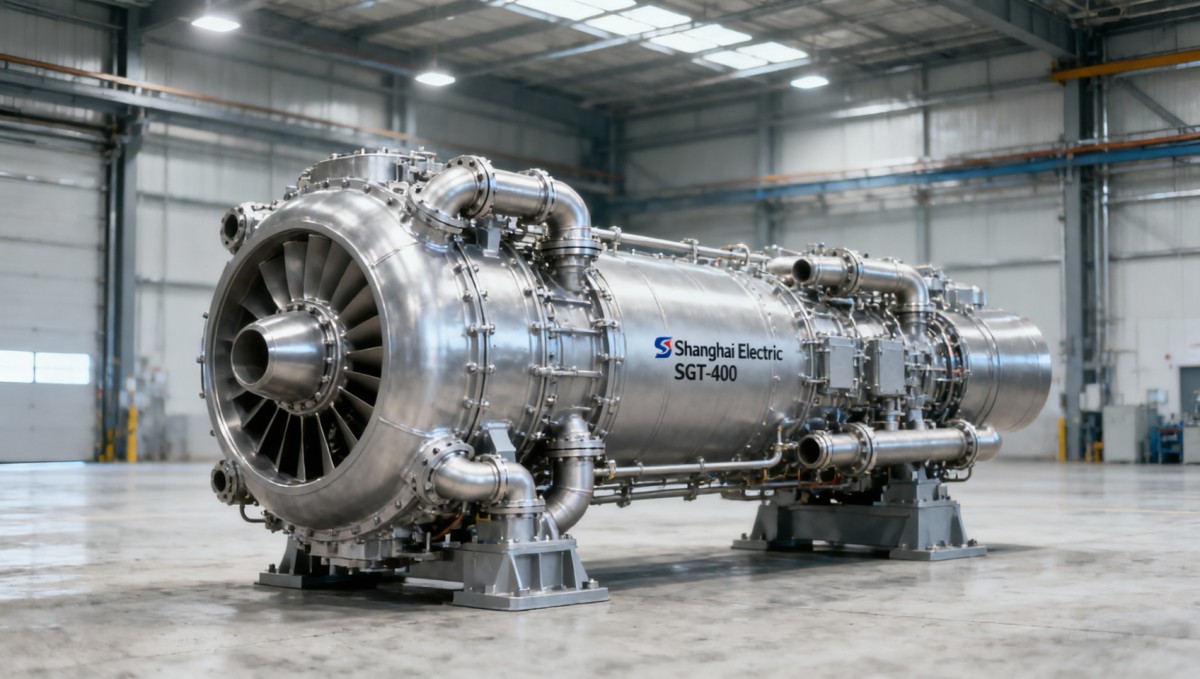
Shanghai Electric’s SGT-400 series gas turbines — deployed in high-end RV generator sets, yacht auxiliary power, and off-grid glamping microgrids — have secured orders through 2028, with 100% capacity utilization confirmed as of April 16, 2026. This development signals accelerating domestic substitution for imported prime movers in mobile and distributed power applications, particularly for manufacturers and integrators serving North American and European recreational vehicle (RV) OEMs.
Event Overview
On April 16, 2026, Shanghai Electric Gas Turbine Co., Ltd. disclosed that its SGT-400 series gas turbine orders are fully scheduled through 2028. The unit has obtained dual international certifications: ISO 8528-3 (for mobile generating sets) and IEC 60034-1 (for rotating electrical machines). It is positioned as a domestically produced alternative to Caterpillar and Cummins power systems in the RV OEM supply chain.
Industries Affected
RV OEMs and Mobile Power Integrators
These manufacturers rely on certified, compact, and reliable prime movers for integrated generator sets. With SGT-400 now certified to ISO 8528-3 — a key requirement for type approval in EU and US markets — integrators evaluating alternatives to incumbent suppliers face a newly viable domestic option. Impact manifests in longer-term sourcing planning cycles and potential requalification timelines for new powertrain configurations.
Marine Auxiliary Power System Suppliers
Yacht builders specifying auxiliary generators increasingly prioritize low-vibration, low-emission, and space-efficient solutions. The SGT-400’s deployment in yacht auxiliary roles indicates growing technical acceptance in marine environments. Affected suppliers may need to reassess compatibility testing protocols and thermal/noise integration requirements when evaluating next-generation auxiliary units.
Off-Grid Microgrid Developers (Glamping & Remote Sites)
Developers deploying containerized or modular microgrids for glamping resorts or remote infrastructure require certified, fast-response generation assets. Full order backlog through 2028 implies constrained near-term availability — potentially extending lead times for projects dependent on this specific platform. Developers may need to adjust procurement windows or explore hybrid control architecture flexibility to accommodate delivery scheduling.
What Relevant Enterprises or Practitioners Should Monitor and Act On
Track certification scope and regional acceptance status
While ISO 8528-3 and IEC 60034-1 are foundational, regional regulatory acceptance (e.g., UL 2200 in the U.S., CE marking under EU Machinery Directive) remains distinct. Enterprises should monitor official updates from Shanghai Electric or notified bodies regarding formal recognition in target markets — not assuming equivalence across certification frameworks.
Assess lead-time implications for project-based procurement
With production booked through 2028, firms engaged in multi-year infrastructure or product development cycles must factor in extended delivery horizons. Early engagement with Shanghai Electric’s sales or engineering teams — especially for custom integration or control interface requirements — is advisable to align timelines and avoid schedule slippage.
Review qualification documentation against application-specific needs
Certifications confirm compliance under defined test conditions. Practitioners should verify whether published test reports cover operational envelopes relevant to their use case — e.g., ambient temperature ranges, altitude derating, transient load response, or fuel flexibility — before committing to design-in.
Monitor capacity allocation signals beyond public disclosures
The stated 100% utilization reflects current visibility, not fixed long-term constraints. Enterprises should watch for any official communication on capacity expansion plans, joint venture developments, or localization partnerships — which could shift availability outlook beyond 2028.
Editorial Observation / Industry Perspective
From an industry perspective, this order visibility is less an immediate supply shift and more a structural signal: domestic gas turbine capability has reached a threshold where international OEMs are actively placing multi-year commitments — not just evaluating prototypes. Analysis来看, it reflects maturation in both technical validation (via internationally recognized standards) and commercial scalability. Observation来看, the timing coincides with tightening global supply chains for medium-size industrial turbines and increasing scrutiny of single-source dependencies. It is better understood as a validation milestone than a near-term market disruption — but one that warrants sustained attention as a bellwether for broader power system localization trends in distributed energy applications.
This is not yet evidence of widespread displacement of incumbents, but rather confirmation that a qualified domestic alternative has entered the active procurement consideration set for technically demanding, certification-sensitive applications.
Conclusion
The confirmed 2028 order backlog for Shanghai Electric’s SGT-400 underscores growing international confidence in China-developed gas turbine technology for mobile and off-grid power. Its significance lies not in immediate volume impact, but in demonstrating that domestic platforms can meet stringent international certification requirements and secure long-term commercial commitments from global OEMs. Currently, this development is best interpreted as an inflection point in technical credibility — one that invites careful monitoring, not urgent strategic pivoting.
Source Attribution
Main source: Official disclosure by Shanghai Electric Gas Turbine Co., Ltd., dated April 16, 2026.
Points requiring ongoing observation: Regional regulatory approvals beyond ISO/IEC certifications; capacity expansion announcements; and actual shipment data versus booked order timelines.
Recommended News
 Oct 29, 2026Lippert Receives Nonbinding Offer as Patrick Reaffirms LCI Merger AgreementLCI Industries receives a nonbinding $101-per-share offer as Patrick reaffirms its merger agreement. Explore what this could mean for RV supply chains.
 Sep 30, 2026How RV Dealers Can Vet Wholesale Accessory Distributors for Reliable StockRV accessories wholesale distributor vetting guide for dealers: verify stock, fitment, fulfillment, terms, and support to reduce delays and protect margins.
 Aug 14, 2026Indonesia’s Nickel Export Buffer Policy Could Ease RV and Yacht Tech Supply ChainsIndonesia’s nickel export buffer policy may ease RV and yacht tech supply chains, helping stabilize battery, steel, and sourcing costs.
 Jul 13, 2026West Coast Port Strike Pauses, RV Lead Time Stays at 52 DaysWest Coast port strike pauses, but RV lead time stays at 52 days. See how congestion, tight booking windows, and 40HQ premiums are impacting exporters and distributors.
 Jul 11, 2026RV Component Freight Jumps 32%, Q3 Lead Times SlipRV component freight jumps 32% as Q3 lead times slip from 8 to 14–16 weeks. See how Red Sea disruption, port strikes, and precision-part gaps may impact sourcing, costs, and delivery plans.
 Jul 09, 2026RV Aluminum Prices Jump 12% as Port Delays DeepenRV aluminum prices jump 12% as port delays deepen, pushing 6061-T6 costs to $3,820/ton. See how RV OEMs, buyers, and suppliers can respond to rising costs and slower deliveries.
 Jul 06, 2026Camper Van Components in Europe: How to Compare Standards, Fit, and Supply OptionsCamper van components Europe guide for buyers: compare compliance, fit, durability, and supply options to reduce risk, improve sourcing decisions, and protect margins.
 Jun 30, 2026CPSC Recall Expansion Raises RV Brake Compliance BarCPSC recall expansion raises RV brake compliance bar as importers demand ISO 26262 ASIL-B validation. See how OEMs, buyers, and suppliers can reduce risk and protect orders.
 Jun 27, 2026CPSC Tightens RV Component Rules With UL 2871:2026CPSC Tightens RV Component Rules With UL 2871:2026: learn how new U.S. import, labeling, and certification rules affect RV batteries, BMS controllers, and DC modules from August 2026.
 Jun 24, 2026U.S. 301 Review May Lift RV Component Tariffs to 25%RV Components face possible U.S. 301 tariffs up to 25%, with a tight July 24 shipping window. Learn how exporters and buyers can protect pricing, compliance, and Q3 supply plans.
 Jun 23, 2026Export Controls Raise RV Chip Supply RiskExport controls raise RV chip supply risk as FPGA and ADC/DAC lead times exceed 26 weeks. Learn how RV controller makers can manage sourcing, compliance, substitution, and delivery pressure.
 Jun 23, 2026Screwdrivers Set Buying Guide: Types, Bit Materials, and What to Check Before PurchaseScrewdriversset buying guide: compare types, bit materials, handle comfort, and key pre-purchase checks to choose a durable set that saves time, money, and repair frustration.
 Jun 22, 2026RV Components Lead Times Stretch to 18 WeeksRV Components lead times stretch to 18 weeks as port disruption and aluminum export limits tighten supply. See what OEMs, buyers, and logistics teams should monitor now.
 Jun 21, 2026RV Parts Lead Times Stretch to 18 Weeks After Port StrikeRV parts lead times stretch to 18 weeks after the LA/Long Beach port strike. Learn how RV OEMs, importers, and suppliers can respond to booking suspensions and sourcing pressure.
 Jun 20, 2026India Issues Final AD Ruling on China TPU Paint Protection FilmIndia Issues Final AD Ruling on China TPU Paint Protection Film—learn how the anti-dumping decision may impact TPU sourcing, pricing, and supply chain planning across India and export-linked markets.
 Jun 18, 2026Vietnam Eases RV Components Clearance for China SuppliersVietnam eases RV components clearance for China suppliers, allowing eligible shipments to use CNAS-recognized test reports and ISO 9001 for faster 7–10 day customs delivery.
 Jun 17, 2026Vietnam Expands RV Component Certification ExemptionsVietnam Expands RV Component Certification Exemptions: learn how the new self-declaration and type-test filing rules can cut import delays, reduce compliance costs, and reshape OEM sourcing strategy.
 Jun 16, 2026UL 9741-2026 Sets Dual-Loop BMS Rule for RV Lithium ComponentsUL 9741-2026 sets a dual-loop BMS rule for RV lithium components, requiring thermal runaway warning and physical cutoff by Dec 1, 2026. Learn the compliance impact now.
 Jun 15, 2026UL Tightens RV Lithium Battery Rules for U.S. MarketUL Tightens RV Lithium Battery Rules for U.S. Market: learn how UL 9741-2026 BMS dual-circuit redundancy requirements may impact RV battery exports, compliance timelines, and supplier planning.
 Jun 14, 2026CPSC Mandates UL 9741 for RV BMS ModulesCPSC mandates UL 9741 for RV BMS modules made after Sept. 1, 2026. Learn the 87-day compliance deadline, supply chain impact, and key actions for U.S.-bound RV components.
 Jun 13, 2026CPSC Sets UL 9741 Deadline for RV Lithium ModulesCPSC sets a UL 9741 deadline for RV lithium modules by Dec. 1, 2026. Learn how BMS, OTA security audits, and thermal runaway testing could impact U.S. market access.
 Jun 11, 2026RV Control MCU Lead Times Stretch to 26 WeeksRV Control MCU lead times stretch to 26 weeks, raising sourcing risks for manufacturers and buyers. Explore qualified domestic alternatives, compliance milestones, and smarter supply-chain planning.
 Jun 11, 2026Resistor Spark Plugs vs Standard Plugs: What’s the Difference and When to Use EachResistor spark plugs vs standard plugs: learn the key differences, when to use each, and how the right choice improves reliability, electronics compatibility, and maintenance confidence.
 Jun 10, 2026RV MCU Lead Times Stretch to 26 Weeks as China Alternatives AdvanceRV MCU lead times stretch to 26 weeks as China alternatives advance. Discover supply risks, qualification progress, and what RV electronics buyers should monitor now.
{item.publish_time}{item.title}{item.description}Quarterly Executive Summaries Delivered Directly.
Join 50,000+ industry leaders who receive our proprietary market analysis and policy outlooks before they hit the public library.