Search News
TerraVista Metrics (TVM)Industry Portal
TerraVista Metrics (TVM)Hot Articles
TerraVista Metrics (TVM)- How to Evaluate Spark Plug Suppliers for Consistent Quality and Lead TimesSpark plugs supplier evaluation guide: compare quality control, traceability, fitment, total cost, and reliable lead times to secure dependable engine maintenance supply.
- What Drives System Interoperability Testing Service Costs in Complex Projects?System interoperability testing service cost depends on integration scope, workflows, environments, and assurance needs. Learn how to budget smarter and reduce project risk.
- Project Planning Sourcing Guides: How to Qualify Suppliers Before Work StartsSourcing guides project planning helps teams qualify suppliers before work begins—verify compliance, delivery capacity, financial strength, and sustainability to reduce risk and protect project outcomes.
Popular Tags
TerraVista Metrics (TVM)Industry NewsUS CBP Launches Lithium Battery Traceability Pilot for RV Components
auth.Dr. Hideo Tanaka (Outdoor Gear Engineering Lead)Time
Oct 07, 2026Click Count
U.S. Customs and Border Protection (CBP) launched a six-month digital safety traceability pilot program on May 14, 2026, targeting lithium battery systems in recreational vehicle (RV) components—specifically electric parking brakes and onboard energy storage modules. The initiative directly raises compliance expectations for Chinese exporters and signals a structural shift toward firmware-level accountability in U.S. import controls for energy-critical electronics.

Event Overview
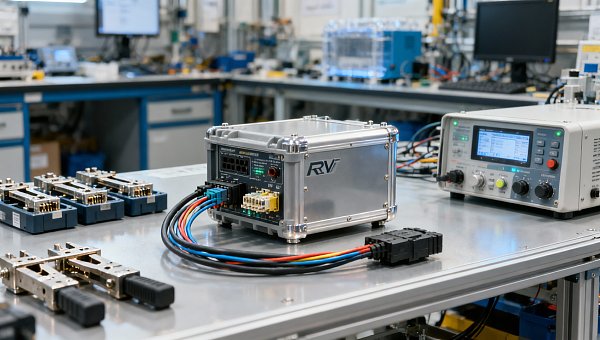
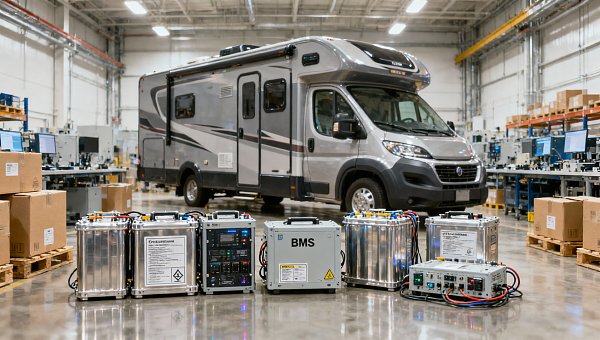
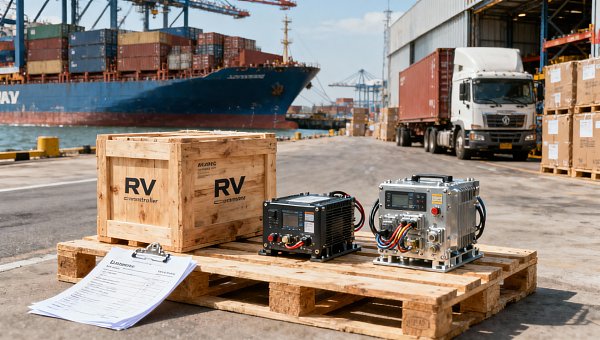
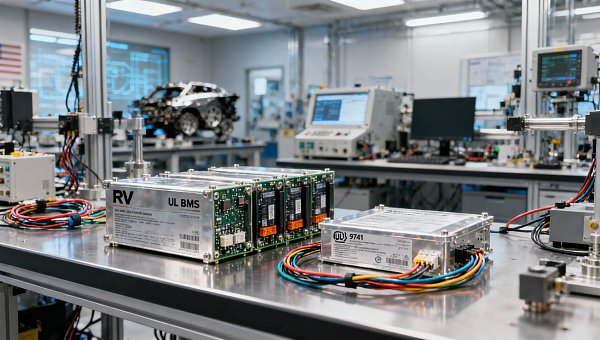
On May 14, 2026, U.S. Customs and Border Protection (CBP) announced the initiation of the ‘Safety Digital Traceability Pilot’ at the ports of Los Angeles and New York. The pilot applies to RV components containing lithium-based battery systems, including electric parking brake actuators and auxiliary power supply modules. Under the pilot, importers must submit, with each shipment, the SHA-256 hash value of the original source code for the Battery Management System (BMS) firmware, along with a third-party code audit statement. The pilot runs for six months and is not yet mandatory nationwide.
Industries Affected
Direct Trading Enterprises: Export-oriented trading companies acting as U.S.-bound consignees or customs filers face immediate operational friction. They must now coordinate technical documentation from upstream manufacturers—including verifiable build artifacts and audit reports—adding new verification layers before shipment clearance. Delays in document readiness may trigger port holds or re-export requests, increasing landed cost uncertainty.
Raw Material Procurement Firms: Companies sourcing BMS semiconductors, PCB substrates, or cell-level components are indirectly impacted. While not required to submit hashes themselves, their contractual obligations with OEMs/ODMs now increasingly include traceability clauses—for example, guaranteeing that supplied ICs support reproducible firmware builds. This pushes traceability requirements further upstream into component qualification workflows.
Contract Manufacturing & OEM/ODM Firms: Over 180 Chinese OEM and ODM suppliers of RV power modules are directly in scope. These firms must now maintain auditable source code repositories, implement deterministic build environments, and engage certified third parties for static/dynamic code analysis. Internal R&D and QA processes—previously focused on functional safety (e.g., ISO 26262) and thermal validation—now require parallel software supply chain governance.
Supply Chain Service Providers: Freight forwarders, customs brokers, and certification consultants must expand service offerings to include BMS code documentation review, hash generation support, and audit statement validation. Some forwarders are already piloting integrated dashboards to track hash submission status per shipment, reflecting a nascent but growing specialization in firmware logistics compliance.
Key Focus Areas and Recommended Actions
Verify and archive BMS source code build provenance
Manufacturers should establish version-controlled repositories with immutable commit histories, documented toolchain versions (compiler, linker, SDK), and reproducible build scripts. Hash values must reflect the exact binary deployed—not development branches or test builds.
Engage qualified third-party auditors early
Audit statements must explicitly confirm source-to-binary correspondence, absence of obfuscated or unverifiable code segments, and adherence to secure coding standards (e.g., MISRA C, CERT C). Select auditors accredited under ANSI/ISO/IEC 17065 for software conformity assessment—not general IT security firms.
Update export documentation workflows
Integrate hash generation and audit statement attachment into existing ERP or PLM systems. Assign internal ownership (e.g., Compliance Engineering Lead) for pre-shipment validation—not delegated solely to QA or logistics teams.
Editorial Perspective / Industry Observation
Observably, this pilot is less about lithium battery chemistry risks—and more about establishing forensic software accountability in safety-critical embedded systems. Analysis shows CBP is testing whether firmware-level traceability can serve as a scalable proxy for verifying design integrity when physical inspection is impractical. From an industry perspective, the requirement for original source code hashes—not just binaries—suggests U.S. authorities are probing for evidence of intentional backdoors, undocumented features, or unvalidated third-party libraries. It is better understood not as a product ban, but as the first field test of a broader ‘software bill of materials’ (SBOM)-adjacent enforcement model for hardware-integrated code.
Conclusion
This pilot marks a consequential inflection point: regulatory oversight of power electronics is shifting from end-product performance testing to upstream software supply chain transparency. While limited in duration and geography, its success—or failure—will likely inform future CBP directives, potential FDA or NHTSA alignment, and even transatlantic coordination via the U.S.–EU Trade and Technology Council. For the global RV electrification ecosystem, the message is clear: firmware is no longer just engineering—it’s documentation infrastructure.
Source Attribution
Official announcement issued by U.S. Customs and Border Protection (CBP), May 14, 2026. Public notice accessible via CBP.gov under Docket No. CBP-2026-0021. Third-party reporting confirmed by Bloomberg Law and the U.S. International Trade Commission’s Import Alert Database (updated May 15, 2026). Continued monitoring advised for: expansion beyond RV components, extension to other lithium-powered mobility equipment (e.g., e-bikes, light EVs), and formalization of audit criteria in Federal Register rulemaking.
Recommended News
 Sep 30, 2026How RV Dealers Can Vet Wholesale Accessory Distributors for Reliable StockRV accessories wholesale distributor vetting guide for dealers: verify stock, fitment, fulfillment, terms, and support to reduce delays and protect margins.
 Aug 14, 2026Indonesia’s Nickel Export Buffer Policy Could Ease RV and Yacht Tech Supply ChainsIndonesia’s nickel export buffer policy may ease RV and yacht tech supply chains, helping stabilize battery, steel, and sourcing costs.
 Jul 13, 2026West Coast Port Strike Pauses, RV Lead Time Stays at 52 DaysWest Coast port strike pauses, but RV lead time stays at 52 days. See how congestion, tight booking windows, and 40HQ premiums are impacting exporters and distributors.
 Jul 11, 2026RV Component Freight Jumps 32%, Q3 Lead Times SlipRV component freight jumps 32% as Q3 lead times slip from 8 to 14–16 weeks. See how Red Sea disruption, port strikes, and precision-part gaps may impact sourcing, costs, and delivery plans.
 Jul 09, 2026RV Aluminum Prices Jump 12% as Port Delays DeepenRV aluminum prices jump 12% as port delays deepen, pushing 6061-T6 costs to $3,820/ton. See how RV OEMs, buyers, and suppliers can respond to rising costs and slower deliveries.
 Jul 06, 2026Camper Van Components in Europe: How to Compare Standards, Fit, and Supply OptionsCamper van components Europe guide for buyers: compare compliance, fit, durability, and supply options to reduce risk, improve sourcing decisions, and protect margins.
 Jun 30, 2026CPSC Recall Expansion Raises RV Brake Compliance BarCPSC recall expansion raises RV brake compliance bar as importers demand ISO 26262 ASIL-B validation. See how OEMs, buyers, and suppliers can reduce risk and protect orders.
 Jun 27, 2026CPSC Tightens RV Component Rules With UL 2871:2026CPSC Tightens RV Component Rules With UL 2871:2026: learn how new U.S. import, labeling, and certification rules affect RV batteries, BMS controllers, and DC modules from August 2026.
 Jun 24, 2026U.S. 301 Review May Lift RV Component Tariffs to 25%RV Components face possible U.S. 301 tariffs up to 25%, with a tight July 24 shipping window. Learn how exporters and buyers can protect pricing, compliance, and Q3 supply plans.
 Jun 23, 2026Export Controls Raise RV Chip Supply RiskExport controls raise RV chip supply risk as FPGA and ADC/DAC lead times exceed 26 weeks. Learn how RV controller makers can manage sourcing, compliance, substitution, and delivery pressure.
 Jun 23, 2026Screwdrivers Set Buying Guide: Types, Bit Materials, and What to Check Before PurchaseScrewdriversset buying guide: compare types, bit materials, handle comfort, and key pre-purchase checks to choose a durable set that saves time, money, and repair frustration.
 Jun 22, 2026RV Components Lead Times Stretch to 18 WeeksRV Components lead times stretch to 18 weeks as port disruption and aluminum export limits tighten supply. See what OEMs, buyers, and logistics teams should monitor now.
 Jun 21, 2026RV Parts Lead Times Stretch to 18 Weeks After Port StrikeRV parts lead times stretch to 18 weeks after the LA/Long Beach port strike. Learn how RV OEMs, importers, and suppliers can respond to booking suspensions and sourcing pressure.
 Jun 20, 2026India Issues Final AD Ruling on China TPU Paint Protection FilmIndia Issues Final AD Ruling on China TPU Paint Protection Film—learn how the anti-dumping decision may impact TPU sourcing, pricing, and supply chain planning across India and export-linked markets.
 Jun 18, 2026Vietnam Eases RV Components Clearance for China SuppliersVietnam eases RV components clearance for China suppliers, allowing eligible shipments to use CNAS-recognized test reports and ISO 9001 for faster 7–10 day customs delivery.
 Jun 17, 2026Vietnam Expands RV Component Certification ExemptionsVietnam Expands RV Component Certification Exemptions: learn how the new self-declaration and type-test filing rules can cut import delays, reduce compliance costs, and reshape OEM sourcing strategy.
 Jun 16, 2026UL 9741-2026 Sets Dual-Loop BMS Rule for RV Lithium ComponentsUL 9741-2026 sets a dual-loop BMS rule for RV lithium components, requiring thermal runaway warning and physical cutoff by Dec 1, 2026. Learn the compliance impact now.
 Jun 15, 2026UL Tightens RV Lithium Battery Rules for U.S. MarketUL Tightens RV Lithium Battery Rules for U.S. Market: learn how UL 9741-2026 BMS dual-circuit redundancy requirements may impact RV battery exports, compliance timelines, and supplier planning.
 Jun 14, 2026CPSC Mandates UL 9741 for RV BMS ModulesCPSC mandates UL 9741 for RV BMS modules made after Sept. 1, 2026. Learn the 87-day compliance deadline, supply chain impact, and key actions for U.S.-bound RV components.
 Jun 13, 2026CPSC Sets UL 9741 Deadline for RV Lithium ModulesCPSC sets a UL 9741 deadline for RV lithium modules by Dec. 1, 2026. Learn how BMS, OTA security audits, and thermal runaway testing could impact U.S. market access.
 Jun 11, 2026RV Control MCU Lead Times Stretch to 26 WeeksRV Control MCU lead times stretch to 26 weeks, raising sourcing risks for manufacturers and buyers. Explore qualified domestic alternatives, compliance milestones, and smarter supply-chain planning.
 Jun 11, 2026Resistor Spark Plugs vs Standard Plugs: What’s the Difference and When to Use EachResistor spark plugs vs standard plugs: learn the key differences, when to use each, and how the right choice improves reliability, electronics compatibility, and maintenance confidence.
 Jun 10, 2026RV MCU Lead Times Stretch to 26 Weeks as China Alternatives AdvanceRV MCU lead times stretch to 26 weeks as China alternatives advance. Discover supply risks, qualification progress, and what RV electronics buyers should monitor now.
 Jun 10, 2026How to Choose Vehicle Electronics for RV Upgrades: Power, Compatibility, and SafetyVehicle electronics for RV upgrades: learn how to evaluate power demands, compatibility, and safety to choose reliable systems, reduce failures, and improve long-term performance.
Quarterly Executive Summaries Delivered Directly.
Join 50,000+ industry leaders who receive our proprietary market analysis and policy outlooks before they hit the public library.