Search News
TerraVista Metrics (TVM)Industry Portal
TerraVista Metrics (TVM)Hot Articles
TerraVista Metrics (TVM)- How to Evaluate Spark Plug Suppliers for Consistent Quality and Lead TimesSpark plugs supplier evaluation guide: compare quality control, traceability, fitment, total cost, and reliable lead times to secure dependable engine maintenance supply.
- What Drives System Interoperability Testing Service Costs in Complex Projects?System interoperability testing service cost depends on integration scope, workflows, environments, and assurance needs. Learn how to budget smarter and reduce project risk.
- Project Planning Sourcing Guides: How to Qualify Suppliers Before Work StartsSourcing guides project planning helps teams qualify suppliers before work begins—verify compliance, delivery capacity, financial strength, and sustainability to reduce risk and protect project outcomes.
Popular Tags
TerraVista Metrics (TVM)Industry News2026 Shanghai Yacht Show Closes: Yacht Tech Suppliers Receive Factory Audit Invitations from Middle East Owners
auth.Dr. Hideo Tanaka (Outdoor Gear Engineering Lead)Time
Oct 07, 2026Click Count
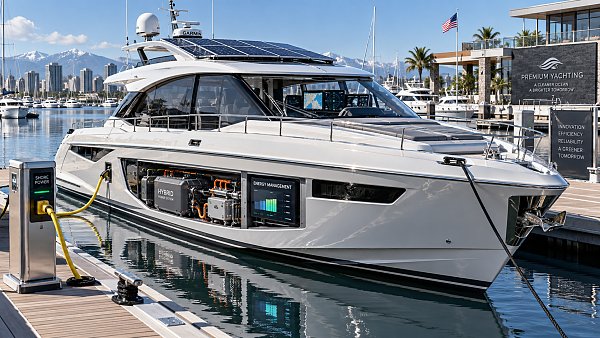
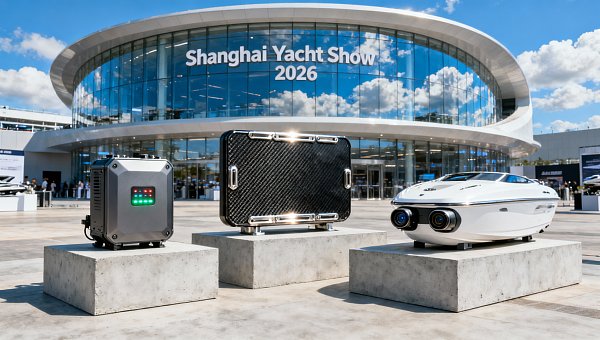
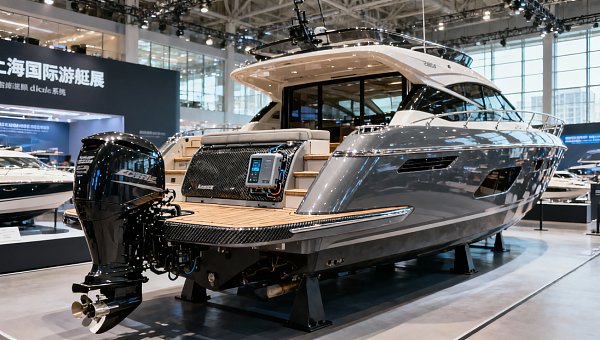
On May 20, 2026, the 22nd Shanghai International Yacht Show concluded. During the event, 12 yacht owners and management companies from the UAE, Saudi Arabia, and Qatar issued 37 on-site factory audit invitations to Chinese Yacht Tech enterprises — signaling heightened international scrutiny of China’s marine technology supply chain, particularly in intelligent outboard control systems, carbon-fiber deck-embedded sensors, and AI-powered yacht energy management systems. This development warrants attention from marine electronics manufacturers, composite material fabricators, marine certification service providers, and export-oriented OEMs.
Event Overview
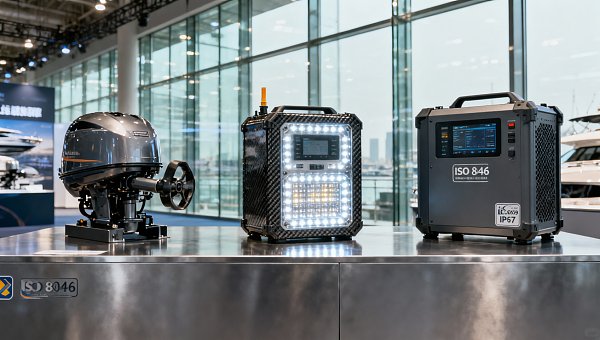
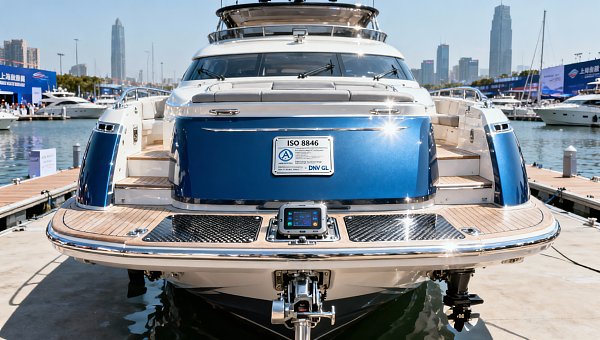
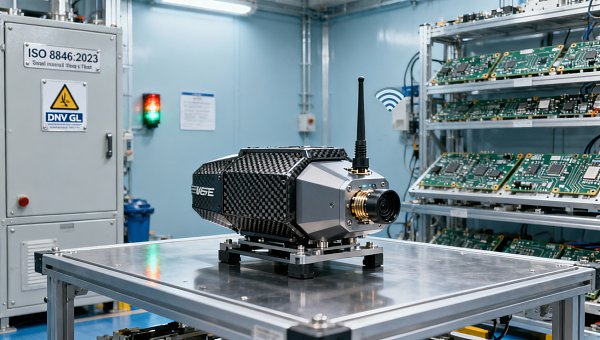
The 22nd Shanghai International Yacht Show closed on May 20, 2026. At the exhibition, 12 entities — including yacht owners and management firms based in the United Arab Emirates, Saudi Arabia, and Qatar — extended 37 formal invitations for on-site factory audits to Chinese suppliers under the Yacht Tech umbrella. The invited technologies included intelligent outboard motor control systems, carbon-fiber deck-integrated sensors, and AI-based yacht energy management systems. All inviting parties explicitly required submission of ISO 8846 explosion-proof certification and DNV GL type approval documentation.
Industries Affected by Segment
Marine Electronics Manufacturers
These suppliers are directly targeted due to their role in developing and assembling intelligent control and energy management systems. The demand for ISO 8846 and DNV GL compliance means existing product certifications may not suffice — especially if testing was conducted under non-marine or non-explosion-proof conditions. Impact includes potential delays in order fulfillment, increased pre-shipment verification workload, and pressure to align R&D roadmaps with international class society requirements.
Carbon-Fiber Composite Fabricators
Firms producing structural marine components (e.g., sensor-embedded decks) face new validation expectations. The invitation scope specifies integration-level functionality — not just material specs — implying that embedded electronics, bonding integrity, and environmental resilience must be jointly certified. This shifts quality assurance from component-level to system-integration level, affecting process documentation, traceability protocols, and inter-departmental coordination with electronics partners.
Marine Certification & Compliance Service Providers
Third-party certification bodies and technical consultancies specializing in ISO 8846 and DNV GL type approval are likely to see increased inbound inquiries. However, capacity constraints exist: DNV GL’s Asia-Pacific type approval lead times for embedded marine electronics currently average 4–6 months. Demand spikes may extend timelines unless providers scale dedicated marine tech review teams — particularly those fluent in both IEC 60092 standards and AI system validation frameworks.
Export-Oriented OEMs and Contract Manufacturers
OEMs acting as system integrators — bundling hardware, firmware, and software into turnkey solutions — now face dual-layer scrutiny: first, their own facility audit readiness; second, traceability of sub-tier suppliers’ certifications (e.g., sensor chip vendors, battery module makers). The 37 invitations reflect growing buyer insistence on end-to-end compliance visibility, not just final-product conformity.
What Relevant Enterprises or Practitioners Should Focus On Now
Verify current certification scope against ISO 8846 and DNV GL requirements
Many Chinese suppliers hold ISO 8846 certificates issued for industrial — not marine — applications. Similarly, DNV GL approvals may cover standalone hardware but exclude firmware logic or AI inference modules. Companies should audit existing certificates for applicability to yachting environments (e.g., salt mist resistance, vibration tolerance, ignition-safe enclosure design) before responding to audit invitations.
Prioritize documentation readiness for embedded system validation
Audit readiness now extends beyond mechanical drawings and test reports. Inviting parties expect evidence of sensor calibration logs, AI model training data provenance, real-time thermal mapping during operation, and failure mode analysis for integrated systems. Firms should consolidate these records — even if internally generated — into a standardized audit dossier format aligned with DNV GL’s SE-0032 guidance for smart marine systems.
Map and qualify Tier-2 and Tier-3 suppliers for compliance continuity
DNV GL and ISO 8846 assessments increasingly require bill-of-materials (BOM) traceability down to component level — especially for power management ICs, wireless transceivers, and battery cells. Export OEMs should initiate compliance gap assessments with critical sub-suppliers now, rather than waiting for formal audit scheduling, to avoid bottlenecks during the 30–45-day pre-audit preparation window.
Monitor upcoming revisions to IMO MSC.1/Circ.1641 and DNV GL Rules for Smart Vessels
While not yet binding, draft updates to these documents — expected for public consultation in Q3 2026 — will likely tighten cybersecurity and AI transparency requirements for onboard energy systems. Early alignment with these emerging expectations (e.g., logging AI decision thresholds, implementing secure over-the-air update protocols) may differentiate suppliers during audit evaluations.
Editorial Perspective / Industry Observation
Observably, this wave of audit invitations reflects a structural shift — not just transactional interest. The specificity of requested technologies (AI energy management, embedded sensing) and mandatory certifications (ISO 8846, DNV GL) suggests Middle Eastern buyers are moving beyond price-driven procurement toward capability- and compliance-driven vendor selection. Analysis shows this is less an immediate sales signal and more a strategic qualification step: successful audit outcomes typically precede long-term framework agreements, not one-off orders. From an industry perspective, it signals that China’s marine tech sector is entering a phase where international market access hinges less on manufacturing scale and more on verifiable, auditable engineering rigor — particularly at the intersection of composites, electronics, and software-defined systems.
Conclusion
This event does not represent a sudden market opening, nor does it guarantee near-term export growth. It is better understood as a formalized checkpoint in the maturation of China’s yacht technology supply chain — highlighting where global buyers now place their compliance emphasis and what technical documentation standards are becoming table stakes. For stakeholders, the appropriate response is not reactive bidding, but proactive alignment: verifying certification validity, upgrading system-level documentation practices, and preparing for deeper-tier supply chain scrutiny — all within the existing regulatory and classification framework.Source Attribution
Main source: Official post-show summary released by Shanghai International Yacht Show Organizing Committee (May 20, 2026).
Note: DNV GL Asia-Pacific type approval timelines and IMO MSC.1/Circ.1641 revision status remain subject to official updates; ongoing monitoring is recommended.Recommended News
 Oct 02, 2026North American Yacht Tech: Market Shifts Reshaping Retrofit and New-Build DemandYacht tech North America is reshaping retrofit and new-build choices. Explore smarter energy, connectivity, cybersecurity, and lifecycle strategies for lasting yacht value.
 Aug 19, 2026What Does a Marine Hospitality Consultant Do for Cruise and Yacht Projects?Marine hospitality consultant expertise helps cruise and yacht projects avoid costly design and procurement mistakes, improve guest experience, and build commercially viable onboard spaces.
 Jul 15, 2026Yacht Tech Components Buying Guide: How to Evaluate Compatibility, Durability, and Lead TimeYacht tech components buying guide: learn how to assess compatibility, durability, and lead time to reduce downtime, control hidden costs, and choose suppliers with confidence.
 Jul 15, 2026What Is Digital Marine Hospitality Technology and Which Guest Services Does It Improve?Digital marine hospitality technology improves boarding, cabin access, dining, entertainment, and safety at sea. Learn how smart marine systems boost guest experience and operational performance.
 Jul 12, 2026Saudi SASO Expands Yacht Tech Rules for Smart AnchoringSaudi SASO expands Yacht Tech rules for smart anchoring, adding SABER certification and local cloud logging requirements. Learn key deadlines, firmware upgrade steps, and export risks before October 1.
 Jul 11, 2026UAE Decree 12 Sets LDOM Rule for Imported YachtsUAE Decree 12 sets the LDOM rule for imported yachts from Sept 2026. Learn how the new Local Data Sovereignty Module requirement impacts compliance, delivery, retrofits, and sourcing.
![]() Jul 07, 2026How Yacht Technology in the Middle East Is Shaping Smart Marinas and Onboard SystemsYacht technology Middle East is driving smarter marinas, connected onboard systems, and energy-ready waterfronts. Discover what investors and operators should watch next.
 Jul 04, 2026Suez Canal Tightens Yacht Tech Clearance RulesSuez Canal yacht tech clearance rules tighten from July 3, 2026. Learn how new 72-hour disclosure and approved-list requirements may impact exporters, integrators, logistics, and buyers.
 Jul 03, 2026Suez Canal Adds Tech Whitelist for Yacht Tech CargoSuez Canal Yacht Tech cargo rules now hinge on a tech whitelist. Learn which device models face 18-day delays, what the new clearance means, and how to protect shipping timelines.
 Jul 02, 2026Suez Canal Tightens Yacht Tech Transit ChecksSuez Canal Tightens Yacht Tech Transit Checks: learn how the new whitelist, certification filing, and firmware hash rules may delay shipments and raise costs for yacht tech suppliers.
 Jul 01, 2026Suez Canal Adds Tech Whitelist for Yacht EquipmentSuez Canal tech whitelist now affects yacht equipment transit. Learn how SCA-approved models, EMC/IPX8 verification, and delivery planning impact exporters, buyers, and marine tech suppliers.
 Jun 24, 2026Engineering Performance Testing for Marine Grade Materials: Key Metrics and Failure RisksEngineering performance testing marine grade materials helps uncover corrosion, fatigue, and coating risks before failure. Learn the key metrics that protect coastal assets, uptime, and long-term value.
 Jun 14, 2026How to Evaluate a Yacht Tech Supplier for Navigation, Power, and Onboard SystemsYacht Tech supplier evaluation made simple: learn how to compare navigation, power, and onboard systems for compliance, integration, reliability, and lower long-term risk.
![]() Jun 09, 2026How to Evaluate a Yacht Tech Supplier: Certifications, Lead Times, and After-Sales SupportYacht Tech supplier evaluation starts with proof, not promises. Learn how certifications, lead times, and after-sales support reveal risk, reliability, and long-term value.
 May 22, 20262026 Shanghai Yacht Show Closes; Chinese Suppliers Invited for Middle East Factory Audits2026 Shanghai Yacht Show closed — Chinese marine tech suppliers invited for Middle East factory audits. Act now to meet ISO 8846 & IP67 deadlines!
 May 21, 20262026 Shanghai Yacht Show Closes: Yacht Tech Suppliers Receive Factory Audit Invitations from Middle East OwnersYacht Tech suppliers: 37 factory audit invites from UAE, KSA & Qatar at 2026 Shanghai Yacht Show — verify ISO 8846 & DNV GL compliance now!
 May 20, 20262026 Shanghai Yacht Show Closes; Chinese Suppliers Invited for Middle East Factory Audits2026 Shanghai Yacht Show closed — Chinese yacht tech suppliers invited to Middle East factory audits under Yacht Tech initiative. Act now to meet DNV GL, LR & ASME BPVC requirements.
 May 20, 20262026 Shanghai Yacht Show Closes; Chinese Yacht Tech Suppliers Invited to Middle East FactoriesChinese yacht tech suppliers invited to Middle East factories after 2026 Shanghai Yacht Show — seize audit opportunities in smart outboards, carbon decks & AI marine security.
 May 19, 20262026 Shanghai Yacht Show Closes: Chinese Yacht Tech Suppliers Invited for Middle East Factory AuditsChinese yacht tech suppliers: Act now! Middle East buyers invite factory audits by June 2026 — ISO 8846:2025 & DNV-GL SE-0022 compliance required.
 May 18, 20262026 Shanghai Yacht Show Closes: Chinese Yacht Tech Suppliers Receive Factory Audit Invitations from Middle East OperatorsYacht Tech suppliers: 7 Chinese firms invited to Middle East factory audits after 2026 Shanghai Yacht Show—boost global credibility & unlock Gulf market access now.
 May 17, 20262026 Shanghai Yacht Show Closes with Middle East Shipowners Inviting Chinese Suppliers for Joint Factory Audits2026 Shanghai Yacht Show: Middle East shipowners invite Chinese suppliers for joint factory audits—act now to meet ISO 8846:2023 & DNV GL requirements.
 May 16, 20262026 Shanghai Yacht Show Closes; Chinese Yacht Tech Suppliers Invited to Mid-East Factory AuditsChinese yacht tech suppliers invited to Mid-East factory audits after 2026 Shanghai Yacht Show — seize this strategic gateway to $2.4B regional modernization projects.
 May 15, 20262026 Shanghai Yacht Show Closes with Middle East Factory Audits for Chinese Suppliers2026 Shanghai Yacht Show sparks Middle East factory audits for Chinese yacht tech suppliers — seize cross-border procurement opportunities now.
 May 14, 20262026 Shanghai International Yacht Show Closes with Middle East Shipowners Inviting Chinese Yacht Tech Suppliers for Joint Factory Audits2026 Shanghai International Yacht Show: Middle East shipowners invite Chinese yacht tech suppliers for joint factory audits—smart motors, carbon fiber decks & AI energy systems.
Quarterly Executive Summaries Delivered Directly.
Join 50,000+ industry leaders who receive our proprietary market analysis and policy outlooks before they hit the public library.