Search News
TerraVista Metrics (TVM)Industry Portal
TerraVista Metrics (TVM)Hot Articles
TerraVista Metrics (TVM)- What Drives System Interoperability Testing Service Costs in Complex Projects?System interoperability testing service cost depends on integration scope, workflows, environments, and assurance needs. Learn how to budget smarter and reduce project risk.
- Project Planning Sourcing Guides: How to Qualify Suppliers Before Work StartsSourcing guides project planning helps teams qualify suppliers before work begins—verify compliance, delivery capacity, financial strength, and sustainability to reduce risk and protect project outcomes.
- Buyer’s Guide to Kinetic Art: Choosing Safe, Durable Pieces for Public SpacesBuyer guides kinetic art for public spaces: learn how to choose safe, durable, low-maintenance installations with reliable engineering, materials, controls, and lifecycle value.
Popular Tags
TerraVista Metrics (TVM)Industry News2026 Shanghai Yacht Show Closes with Middle East Factory Audits for Chinese Suppliers
auth.Dr. Hideo Tanaka (Outdoor Gear Engineering Lead)Time
Oct 06, 2026Click Count
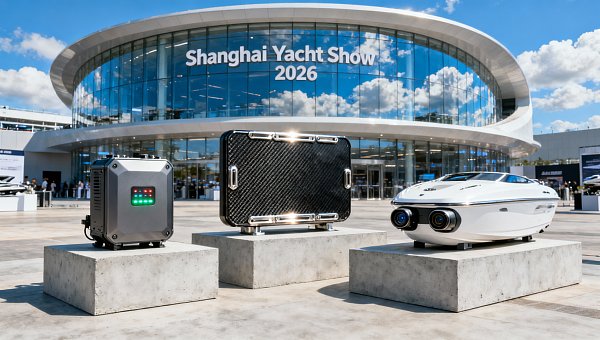
On May 14, 2026, the 2026 Shanghai International Yacht Show concluded, marking a pivotal moment for China’s marine technology supply chain: 12 high-end yacht operators from Saudi Arabia, the UAE, and Qatar extended formal factory audit invitations to 23 core Yacht Tech suppliers in China — signaling intensified cross-regional procurement alignment amid evolving global maritime standards.
Event Overview
During the 2026 Shanghai International Yacht Show (May 12–14), 12 yacht operators from Saudi Arabia, the United Arab Emirates, and Qatar entered preliminary verification agreements with 23 Chinese Yacht Tech suppliers. The scope covers three technical categories: intelligent outboard motor control systems, carbon-fiber deck integration modules, and AIS+BeiDou dual-mode navigation terminals. All invited suppliers are required to submit ISO 8501-1 SA2.5 surface preparation certification and EN ISO 12944 C5-M corrosion protection system documentation. Delivery windows are concentrated in Q3–Q4 2026.

Impact on Key Industry Segments
Direct Trading Enterprises
These firms act as contractual interface between Middle Eastern buyers and Chinese manufacturers. They face immediate pressure to validate supplier compliance — particularly around surface treatment and corrosion reporting — before contract finalization. Their role shifts from order facilitation to technical gatekeeping; failure to verify documentation pre-audit may delay or void commercial terms.
Raw Material Procurement Enterprises
Suppliers of specialized substrates (e.g., marine-grade aluminum alloys, epoxy resins for C5-M coatings) and certified abrasives for SA2.5 blasting will see demand acceleration. However, lead times for traceable, test-certified batches are tightening — especially for EN ISO 12944-compliant primers requiring third-party salt-spray validation reports.
Manufacturing Enterprises
Producers of smart outboard controls, carbon-fiber deck modules, and dual-mode navigation terminals must now align production workflows with auditable quality records — not just functional performance. This includes documenting surface prep parameters per ISO 8501-1, maintaining batch-level coating application logs, and preparing for on-site verification of environmental controls during painting processes.
Supply Chain Service Providers
Certification consultants, independent inspection agencies, and logistics firms offering EN/ISO-compliant documentation support are experiencing rising inquiry volume. Notably, demand is growing for bilingual (Arabic–English) technical translators with marine engineering literacy — to bridge specification interpretation gaps during audit preparations.
Key Focus Areas and Recommended Actions
Prioritize Certification Gap Assessment
Suppliers should conduct internal audits against ISO 8501-1 SA2.5 visual standards and EN ISO 12944 C5-M coating system requirements — identifying discrepancies in surface profiling equipment calibration, coating thickness measurement protocols, or environmental monitoring logs before external review.
Align Documentation with Regional Expectations
Middle Eastern operators emphasize traceability: material certificates must include lot numbers, test dates, and lab accreditation details (e.g., UKAS or DAkkS). Suppliers should consolidate documentation into standardized English-language dossiers — avoiding fragmented internal reports or unverified vendor declarations.
Engage Third-Party Pre-Audit Support Early
Given compressed Q3–Q4 delivery windows, engaging accredited inspection bodies (e.g., DNV, LR, or CCS) for pre-audit readiness checks by late June 2026 is advisable — particularly for coating application process validation and non-destructive testing (NDT) procedure compliance.
Editorial Perspective / Industry Observation
Observably, this wave of targeted factory audits reflects a structural shift: Middle Eastern yacht operators are moving beyond price-driven sourcing toward capability-based qualification — treating Chinese suppliers less as cost alternatives and more as integrated technical partners. Analysis shows that the emphasis on SA2.5 and C5-M — both demanding, environment-specific standards — signals intent to deploy vessels in harsh coastal and offshore conditions, where long-term durability outweighs upfront cost savings. From an industry perspective, this is less about ‘market access’ and more about ‘capability benchmarking’ — where certification becomes a proxy for engineering maturity.
Conclusion
The 2026 Shanghai Yacht Show outcome underscores that international yacht procurement is increasingly governed by verifiable technical discipline — not just product specs. For Chinese marine tech suppliers, meeting these demands isn’t merely transactional compliance; it represents a step toward recognized competence in globally contested maritime subsystem markets. A rational conclusion is that sustained participation hinges less on scale and more on auditable process rigor.
Source Attribution
Official data sourced from the Shanghai International Yacht Show Organizing Committee (press release, May 14, 2026); verified supplier engagement records provided by China Marine Industry Association (CMIA). Note: Final audit schedules, certification acceptance criteria, and buyer-specific technical addenda remain pending official issuance — subject to ongoing monitoring.
Recommended News
 Oct 02, 2026North American Yacht Tech: Market Shifts Reshaping Retrofit and New-Build DemandYacht tech North America is reshaping retrofit and new-build choices. Explore smarter energy, connectivity, cybersecurity, and lifecycle strategies for lasting yacht value.
 Aug 19, 2026What Does a Marine Hospitality Consultant Do for Cruise and Yacht Projects?Marine hospitality consultant expertise helps cruise and yacht projects avoid costly design and procurement mistakes, improve guest experience, and build commercially viable onboard spaces.
 Jul 15, 2026Yacht Tech Components Buying Guide: How to Evaluate Compatibility, Durability, and Lead TimeYacht tech components buying guide: learn how to assess compatibility, durability, and lead time to reduce downtime, control hidden costs, and choose suppliers with confidence.
 Jul 15, 2026What Is Digital Marine Hospitality Technology and Which Guest Services Does It Improve?Digital marine hospitality technology improves boarding, cabin access, dining, entertainment, and safety at sea. Learn how smart marine systems boost guest experience and operational performance.
 Jul 12, 2026Saudi SASO Expands Yacht Tech Rules for Smart AnchoringSaudi SASO expands Yacht Tech rules for smart anchoring, adding SABER certification and local cloud logging requirements. Learn key deadlines, firmware upgrade steps, and export risks before October 1.
 Jul 11, 2026UAE Decree 12 Sets LDOM Rule for Imported YachtsUAE Decree 12 sets the LDOM rule for imported yachts from Sept 2026. Learn how the new Local Data Sovereignty Module requirement impacts compliance, delivery, retrofits, and sourcing.
![]() Jul 07, 2026How Yacht Technology in the Middle East Is Shaping Smart Marinas and Onboard SystemsYacht technology Middle East is driving smarter marinas, connected onboard systems, and energy-ready waterfronts. Discover what investors and operators should watch next.
 Jul 04, 2026Suez Canal Tightens Yacht Tech Clearance RulesSuez Canal yacht tech clearance rules tighten from July 3, 2026. Learn how new 72-hour disclosure and approved-list requirements may impact exporters, integrators, logistics, and buyers.
 Jul 03, 2026Suez Canal Adds Tech Whitelist for Yacht Tech CargoSuez Canal Yacht Tech cargo rules now hinge on a tech whitelist. Learn which device models face 18-day delays, what the new clearance means, and how to protect shipping timelines.
 Jul 02, 2026Suez Canal Tightens Yacht Tech Transit ChecksSuez Canal Tightens Yacht Tech Transit Checks: learn how the new whitelist, certification filing, and firmware hash rules may delay shipments and raise costs for yacht tech suppliers.
 Jul 01, 2026Suez Canal Adds Tech Whitelist for Yacht EquipmentSuez Canal tech whitelist now affects yacht equipment transit. Learn how SCA-approved models, EMC/IPX8 verification, and delivery planning impact exporters, buyers, and marine tech suppliers.
 Jun 24, 2026Engineering Performance Testing for Marine Grade Materials: Key Metrics and Failure RisksEngineering performance testing marine grade materials helps uncover corrosion, fatigue, and coating risks before failure. Learn the key metrics that protect coastal assets, uptime, and long-term value.
 Jun 14, 2026How to Evaluate a Yacht Tech Supplier for Navigation, Power, and Onboard SystemsYacht Tech supplier evaluation made simple: learn how to compare navigation, power, and onboard systems for compliance, integration, reliability, and lower long-term risk.
![]() Jun 09, 2026How to Evaluate a Yacht Tech Supplier: Certifications, Lead Times, and After-Sales SupportYacht Tech supplier evaluation starts with proof, not promises. Learn how certifications, lead times, and after-sales support reveal risk, reliability, and long-term value.
 May 22, 20262026 Shanghai Yacht Show Closes; Chinese Suppliers Invited for Middle East Factory Audits2026 Shanghai Yacht Show closed — Chinese marine tech suppliers invited for Middle East factory audits. Act now to meet ISO 8846 & IP67 deadlines!
 May 21, 20262026 Shanghai Yacht Show Closes: Yacht Tech Suppliers Receive Factory Audit Invitations from Middle East OwnersYacht Tech suppliers: 37 factory audit invites from UAE, KSA & Qatar at 2026 Shanghai Yacht Show — verify ISO 8846 & DNV GL compliance now!
 May 20, 20262026 Shanghai Yacht Show Closes; Chinese Suppliers Invited for Middle East Factory Audits2026 Shanghai Yacht Show closed — Chinese yacht tech suppliers invited to Middle East factory audits under Yacht Tech initiative. Act now to meet DNV GL, LR & ASME BPVC requirements.
 May 20, 20262026 Shanghai Yacht Show Closes; Chinese Yacht Tech Suppliers Invited to Middle East FactoriesChinese yacht tech suppliers invited to Middle East factories after 2026 Shanghai Yacht Show — seize audit opportunities in smart outboards, carbon decks & AI marine security.
 May 19, 20262026 Shanghai Yacht Show Closes: Chinese Yacht Tech Suppliers Invited for Middle East Factory AuditsChinese yacht tech suppliers: Act now! Middle East buyers invite factory audits by June 2026 — ISO 8846:2025 & DNV-GL SE-0022 compliance required.
 May 18, 20262026 Shanghai Yacht Show Closes: Chinese Yacht Tech Suppliers Receive Factory Audit Invitations from Middle East OperatorsYacht Tech suppliers: 7 Chinese firms invited to Middle East factory audits after 2026 Shanghai Yacht Show—boost global credibility & unlock Gulf market access now.
 May 17, 20262026 Shanghai Yacht Show Closes with Middle East Shipowners Inviting Chinese Suppliers for Joint Factory Audits2026 Shanghai Yacht Show: Middle East shipowners invite Chinese suppliers for joint factory audits—act now to meet ISO 8846:2023 & DNV GL requirements.
 May 16, 20262026 Shanghai Yacht Show Closes; Chinese Yacht Tech Suppliers Invited to Mid-East Factory AuditsChinese yacht tech suppliers invited to Mid-East factory audits after 2026 Shanghai Yacht Show — seize this strategic gateway to $2.4B regional modernization projects.
 May 15, 20262026 Shanghai Yacht Show Closes with Middle East Factory Audits for Chinese Suppliers2026 Shanghai Yacht Show sparks Middle East factory audits for Chinese yacht tech suppliers — seize cross-border procurement opportunities now.
 May 14, 20262026 Shanghai International Yacht Show Closes with Middle East Shipowners Inviting Chinese Yacht Tech Suppliers for Joint Factory Audits2026 Shanghai International Yacht Show: Middle East shipowners invite Chinese yacht tech suppliers for joint factory audits—smart motors, carbon fiber decks & AI energy systems.
Quarterly Executive Summaries Delivered Directly.
Join 50,000+ industry leaders who receive our proprietary market analysis and policy outlooks before they hit the public library.