Search News
TerraVista Metrics (TVM)Industry Portal
TerraVista Metrics (TVM)Hot Articles
TerraVista Metrics (TVM)- Cableway Station Spacing: How Terrain and Capacity Shape the DistanceExplore cableway systems station spacing and learn how terrain, passenger capacity and safety shape practical, route-specific design decisions.
- What Is an Industry Insights Data Model? Key Components and UsesDiscover how an industry insights data model connects market data, improves comparisons, and supports smarter benchmarking and procurement decisions.
- Vingcard Deploys MENA’s First Native Wallet Hotel Keys in EgyptVingcard and Hudini bring native wallet hotel keys to three Egypt resorts. Discover what app-free access could mean for hotel buyers and suppliers.
Popular Tags
TerraVista Metrics (TVM)Industry NewsSingapore MSA Tightens Yacht Tech Cybersecurity: OTA Firmware Requires CyberTrust Plus
auth.Dr. Hideo Tanaka (Outdoor Gear Engineering Lead)Time
Nov 16, 2026Click Count
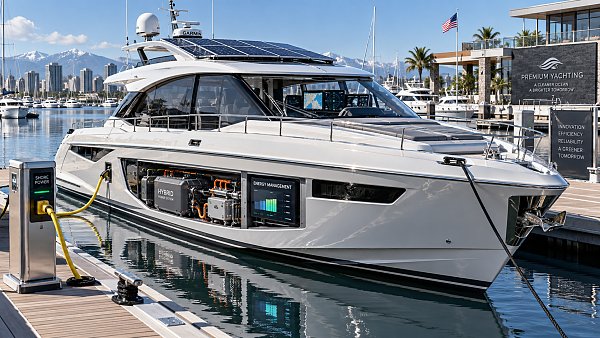
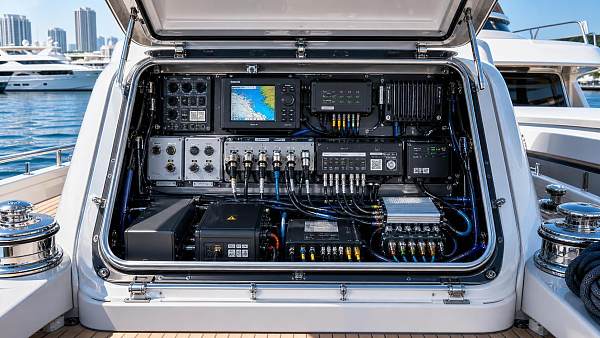
Singapore’s Maritime and Port Authority (MSA) announced on 1 May 2026 a new cybersecurity requirement affecting yacht technology systems — effective 15 June 2026, all over-the-air (OTA) firmware updates for Yacht Tech devices (including navigation, entertainment, and energy management systems) installed on Singapore-registered or Singapore-call yachts must hold the CyberTrust Plus certification issued by Singapore’s Cyber Security Agency (CSA). This development directly impacts maritime electronics manufacturers, firmware developers, yacht integrators, and regional compliance service providers — particularly those supplying to or operating in the Asia-Pacific superyacht and premium marine equipment market.
Event Overview
On 1 May 2026, the Maritime and Port Authority of Singapore (MSA) issued an official notice stating that, from 15 June 2026, all OTA firmware deployed on Yacht Tech devices aboard yachts registered in Singapore or calling at Singapore ports must be certified under the CSA’s CyberTrust Plus scheme. Certification requires firmware signing keys to be hosted in a Singapore-based Hardware Security Module (HSM) validated to FIPS 140-3 Level 3. Chinese vendors are required to engage locally authorized laboratories in Singapore to complete the certification process.
Industries Affected
Marine Electronics Manufacturers (OEMs)
Manufacturers producing navigation displays, vessel management systems, or integrated entertainment platforms for yachts must now restructure their firmware update architecture to comply. The requirement mandates cryptographic key management within Singapore’s jurisdiction — meaning existing OTA pipelines relying on offshore signing infrastructure will no longer meet regulatory thresholds.
Firmware Development & Cybersecurity Service Providers
Third-party firmware developers and cybersecurity labs supporting marine OEMs face increased demand for local HSM integration, FIPS-aligned signing workflows, and audit-ready documentation. Providers without Singapore-based HSM access or CSA-recognized lab partnerships will be unable to support clients targeting Singapore-compliant deployments.
Yacht Integration & Refit Companies
Companies installing or upgrading onboard systems on superyachts calling Singapore must verify CyberTrust Plus status before commissioning OTA-enabled devices. Non-compliant firmware may trigger operational restrictions during port state control inspections or prevent system activation post-installation.
Regional Compliance & Certification Intermediaries
Consultancies and certification agents facilitating Singapore market entry for foreign marine tech vendors must now incorporate CyberTrust Plus readiness into their scope — including guidance on local HSM leasing, lab engagement pathways, and timeline planning aligned with the 15 June 2026 enforcement date.
What Enterprises and Practitioners Should Focus On Now
Monitor official CSA and MSA implementation guidance
The current notice outlines the requirement but does not yet publish full technical criteria for CyberTrust Plus conformance testing, nor a list of authorized Singapore laboratories. Stakeholders should track updates from CSA’s CyberTrust portal and MSA’s Marine Notices, especially regarding transitional arrangements for firmware released prior to 15 June 2026.
Identify firmware modules subject to the mandate
Not all onboard software falls under this rule — only OTA-updatable firmware embedded in Yacht Tech devices used for navigation, entertainment, or energy management. Vendors should map their product firmware architecture to determine which components require recertification, distinguishing between bootloaders, application layers, and peripheral drivers.
Distinguish policy signal from operational readiness
This is a prescriptive regulatory requirement — not a voluntary framework. However, enforcement scope (e.g., whether legacy vessels receive grace periods, or whether non-Singapore-flagged yachts undergoing repairs in Singapore fall under the rule) remains unconfirmed. Treat the 15 June 2026 date as binding, but await clarifications before finalizing rollout plans for multi-market firmware releases.
Initiate HSM and lab engagement early
Securing access to a CSA-approved Singapore HSM and completing pre-assessment with an authorized lab takes several weeks. Chinese and other non-local vendors should begin identifying and contracting with authorized labs now — delays in lab capacity or HSM provisioning could postpone certification beyond the deadline.
Editorial Perspective / Industry Observation
Observably, this move signals Singapore’s intent to treat high-end marine digital systems as critical infrastructure — extending its national cybersecurity assurance framework beyond government and financial sectors into maritime operations. Analysis shows it is less a one-off compliance hurdle and more a precedent: other jurisdictions with advanced port ecosystems (e.g., UAE, South Korea, EU member states) may introduce similar localized firmware trust requirements in coming years. From an industry perspective, this reflects a broader shift — where device-level software integrity, not just network perimeter security, becomes a mandatory condition for market access in regulated maritime zones.
Current enforcement timing (just six weeks after announcement) suggests urgency around real-world cyber incidents involving yacht systems — though no incident has been publicly cited. It is better understood as a proactive baseline standard than a reactive emergency measure. Nevertheless, its narrow scope (OTA firmware only, limited to specific device categories and geographies) means it does not yet represent a wholesale overhaul of marine software governance — but rather the first formal anchor point in an emerging regional compliance architecture.
Conclusion
This requirement establishes a concrete, enforceable threshold for firmware trustworthiness in Singapore’s yacht ecosystem. Its significance lies not in scale or novelty alone, but in its specificity: it defines *where* cryptographic keys must reside, *which* standards apply, and *who* can validate them. For affected stakeholders, the most rational interpretation is that this is a targeted, jurisdictional compliance milestone — not a global standard, but one that sets expectations for how sovereign regulators may increasingly govern embedded software in mobile, connected maritime assets.
Information Sources
Primary source: Maritime and Port Authority of Singapore (MSA) official notice dated 1 May 2026.
Secondary reference: Cyber Security Agency of Singapore (CSA) CyberTrust Plus certification framework (publicly available version as of May 2026).
Note: Details on authorized laboratories, test procedure documentation, and transitional provisions remain pending official publication and are subject to ongoing monitoring.Recommended News
 Oct 27, 2026Italy’s Ferretti Cuts 2026 Guidance for Second Consecutive QuarterFerretti cuts 2026 earnings guidance for a second consecutive quarter as yacht demand slows. Explore what longer buying decisions could mean for suppliers, procurement and delivery planning.
 Oct 02, 2026North American Yacht Tech: Market Shifts Reshaping Retrofit and New-Build DemandYacht tech North America is reshaping retrofit and new-build choices. Explore smarter energy, connectivity, cybersecurity, and lifecycle strategies for lasting yacht value.
 Aug 19, 2026What Does a Marine Hospitality Consultant Do for Cruise and Yacht Projects?Marine hospitality consultant expertise helps cruise and yacht projects avoid costly design and procurement mistakes, improve guest experience, and build commercially viable onboard spaces.
 Jul 15, 2026Yacht Tech Components Buying Guide: How to Evaluate Compatibility, Durability, and Lead TimeYacht tech components buying guide: learn how to assess compatibility, durability, and lead time to reduce downtime, control hidden costs, and choose suppliers with confidence.
 Jul 15, 2026What Is Digital Marine Hospitality Technology and Which Guest Services Does It Improve?Digital marine hospitality technology improves boarding, cabin access, dining, entertainment, and safety at sea. Learn how smart marine systems boost guest experience and operational performance.
 Jul 12, 2026Saudi SASO Expands Yacht Tech Rules for Smart AnchoringSaudi SASO expands Yacht Tech rules for smart anchoring, adding SABER certification and local cloud logging requirements. Learn key deadlines, firmware upgrade steps, and export risks before October 1.
 Jul 11, 2026UAE Decree 12 Sets LDOM Rule for Imported YachtsUAE Decree 12 sets the LDOM rule for imported yachts from Sept 2026. Learn how the new Local Data Sovereignty Module requirement impacts compliance, delivery, retrofits, and sourcing.
![]() Jul 07, 2026How Yacht Technology in the Middle East Is Shaping Smart Marinas and Onboard SystemsYacht technology Middle East is driving smarter marinas, connected onboard systems, and energy-ready waterfronts. Discover what investors and operators should watch next.
 Jul 04, 2026Suez Canal Tightens Yacht Tech Clearance RulesSuez Canal yacht tech clearance rules tighten from July 3, 2026. Learn how new 72-hour disclosure and approved-list requirements may impact exporters, integrators, logistics, and buyers.
 Jul 03, 2026Suez Canal Adds Tech Whitelist for Yacht Tech CargoSuez Canal Yacht Tech cargo rules now hinge on a tech whitelist. Learn which device models face 18-day delays, what the new clearance means, and how to protect shipping timelines.
 Jul 02, 2026Suez Canal Tightens Yacht Tech Transit ChecksSuez Canal Tightens Yacht Tech Transit Checks: learn how the new whitelist, certification filing, and firmware hash rules may delay shipments and raise costs for yacht tech suppliers.
 Jul 01, 2026Suez Canal Adds Tech Whitelist for Yacht EquipmentSuez Canal tech whitelist now affects yacht equipment transit. Learn how SCA-approved models, EMC/IPX8 verification, and delivery planning impact exporters, buyers, and marine tech suppliers.
 Jun 24, 2026Engineering Performance Testing for Marine Grade Materials: Key Metrics and Failure RisksEngineering performance testing marine grade materials helps uncover corrosion, fatigue, and coating risks before failure. Learn the key metrics that protect coastal assets, uptime, and long-term value.
 Jun 14, 2026How to Evaluate a Yacht Tech Supplier for Navigation, Power, and Onboard SystemsYacht Tech supplier evaluation made simple: learn how to compare navigation, power, and onboard systems for compliance, integration, reliability, and lower long-term risk.
![]() Jun 09, 2026How to Evaluate a Yacht Tech Supplier: Certifications, Lead Times, and After-Sales SupportYacht Tech supplier evaluation starts with proof, not promises. Learn how certifications, lead times, and after-sales support reveal risk, reliability, and long-term value.
 May 22, 20262026 Shanghai Yacht Show Closes; Chinese Suppliers Invited for Middle East Factory Audits2026 Shanghai Yacht Show closed — Chinese marine tech suppliers invited for Middle East factory audits. Act now to meet ISO 8846 & IP67 deadlines!
 May 21, 20262026 Shanghai Yacht Show Closes: Yacht Tech Suppliers Receive Factory Audit Invitations from Middle East OwnersYacht Tech suppliers: 37 factory audit invites from UAE, KSA & Qatar at 2026 Shanghai Yacht Show — verify ISO 8846 & DNV GL compliance now!
 May 20, 20262026 Shanghai Yacht Show Closes; Chinese Suppliers Invited for Middle East Factory Audits2026 Shanghai Yacht Show closed — Chinese yacht tech suppliers invited to Middle East factory audits under Yacht Tech initiative. Act now to meet DNV GL, LR & ASME BPVC requirements.
 May 20, 20262026 Shanghai Yacht Show Closes; Chinese Yacht Tech Suppliers Invited to Middle East FactoriesChinese yacht tech suppliers invited to Middle East factories after 2026 Shanghai Yacht Show — seize audit opportunities in smart outboards, carbon decks & AI marine security.
 May 19, 20262026 Shanghai Yacht Show Closes: Chinese Yacht Tech Suppliers Invited for Middle East Factory AuditsChinese yacht tech suppliers: Act now! Middle East buyers invite factory audits by June 2026 — ISO 8846:2025 & DNV-GL SE-0022 compliance required.
 May 18, 20262026 Shanghai Yacht Show Closes: Chinese Yacht Tech Suppliers Receive Factory Audit Invitations from Middle East OperatorsYacht Tech suppliers: 7 Chinese firms invited to Middle East factory audits after 2026 Shanghai Yacht Show—boost global credibility & unlock Gulf market access now.
 May 17, 20262026 Shanghai Yacht Show Closes with Middle East Shipowners Inviting Chinese Suppliers for Joint Factory Audits2026 Shanghai Yacht Show: Middle East shipowners invite Chinese suppliers for joint factory audits—act now to meet ISO 8846:2023 & DNV GL requirements.
 May 16, 20262026 Shanghai Yacht Show Closes; Chinese Yacht Tech Suppliers Invited to Mid-East Factory AuditsChinese yacht tech suppliers invited to Mid-East factory audits after 2026 Shanghai Yacht Show — seize this strategic gateway to $2.4B regional modernization projects.
 May 15, 20262026 Shanghai Yacht Show Closes with Middle East Factory Audits for Chinese Suppliers2026 Shanghai Yacht Show sparks Middle East factory audits for Chinese yacht tech suppliers — seize cross-border procurement opportunities now.
{item.publish_time}{item.title}{item.description}Quarterly Executive Summaries Delivered Directly.
Join 50,000+ industry leaders who receive our proprietary market analysis and policy outlooks before they hit the public library.