Search News
TerraVista Metrics (TVM)Industry Portal
TerraVista Metrics (TVM)Hot Articles
TerraVista Metrics (TVM)- How to Evaluate Spark Plug Suppliers for Consistent Quality and Lead TimesSpark plugs supplier evaluation guide: compare quality control, traceability, fitment, total cost, and reliable lead times to secure dependable engine maintenance supply.
- What Drives System Interoperability Testing Service Costs in Complex Projects?System interoperability testing service cost depends on integration scope, workflows, environments, and assurance needs. Learn how to budget smarter and reduce project risk.
- Project Planning Sourcing Guides: How to Qualify Suppliers Before Work StartsSourcing guides project planning helps teams qualify suppliers before work begins—verify compliance, delivery capacity, financial strength, and sustainability to reduce risk and protect project outcomes.
Popular Tags
TerraVista Metrics (TVM)Industry NewsCPSC Launches Recall Review for Guestroom Automation Devices
auth.Lydia Vancini (Smart Hospitality IoT Consultant)Time
Oct 07, 2026Click Count
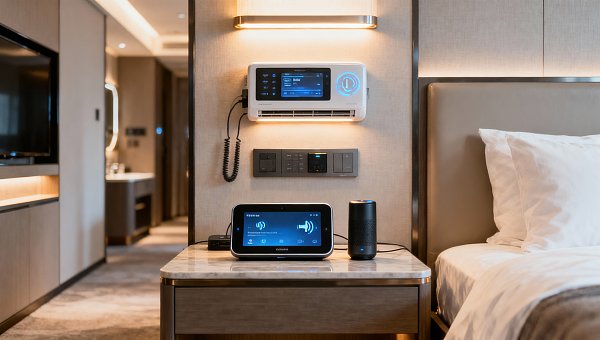
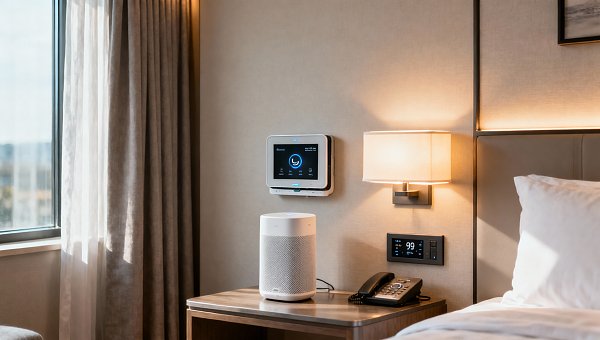
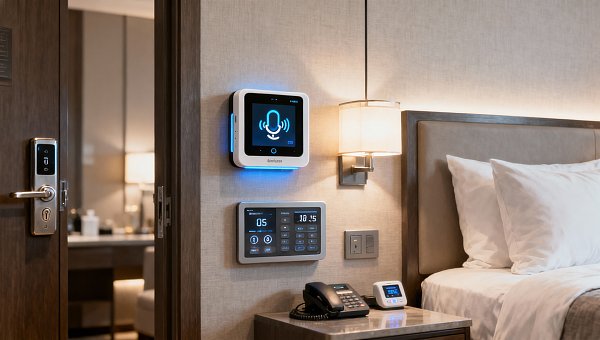
On May 14, 2026, the U.S. Consumer Product Safety Commission (CPSC) initiated a targeted compliance review of guestroom automation systems incorporating infrared (IR) human detection modules — specifically assessing risks of false activation or unintended shutdown due to ambient temperature differentials. This action is relevant to manufacturers, importers, and suppliers in the hospitality technology, smart building controls, and consumer electronics supply chains, as it signals potential near-term impacts on procurement, certification verification, and product deployment timelines across North American hotel projects.
Event Overview
On May 14, 2026, the U.S. Consumer Product Safety Commission (CPSC) issued a formal notice to global manufacturers regarding a dedicated compliance review of guestroom automation devices equipped with infrared human-sensing modules. The review focuses on malfunction risks — specifically false wake-up or false shutdown events triggered by environmental temperature variations. CPSC has received three consumer complaints involving four models from Chinese-exported brands. The agency requires importers to verify the validity of IEC 62471 photobiological safety certification for IR sensors listed in their bill of materials (BOM). The outcome may affect procurement timing for Q3 2026 new-build and renovation projects in North American hotels.

Industries Affected
Direct Trading Enterprises (U.S. Importers & Distributors)
Importers are directly responsible for ensuring CPSC compliance of imported guestroom automation products. With CPSC explicitly requiring verification of IEC 62471 certification for IR sensors, importers face increased pre-shipment due diligence obligations. Failure to confirm valid certification may delay customs clearance or trigger post-import enforcement actions, including recalls or penalties.
Component Procurement Entities (OEM/ODM Buyers)
Companies sourcing IR sensors for integration into automation systems must now revalidate supplier certifications. Since the review centers on sensor-level performance under thermal stress, procurement teams need to cross-check not only certificate validity but also test conditions (e.g., whether IEC 62471 assessments included operational temperature ranges representative of real-world hotel environments).
Manufacturing Firms (Contract Manufacturers & System Integrators)
Manufacturers assembling guestroom automation units are affected through BOM accountability. Even if they do not design the IR module, CPSC’s notice treats the final integrated product as the regulated entity. This increases traceability requirements: firms must retain documentation linking each sensor unit to its certified supplier and applicable test reports.
Supply Chain Service Providers (Certification Agencies & Lab Testing Partners)
Testing labs and certification bodies supporting IR sensor validation may see increased demand for thermal-stress-related photobiological safety assessments. However, CPSC’s notice does not expand IEC 62471 scope — it emphasizes verification of existing certification validity. Therefore, demand is likely limited to reconfirmation or gap analysis, not wholesale retesting — unless prior certifications lack documented thermal boundary testing.
Key Focus Areas and Recommended Actions
Monitor Official CPSC Communications for Scope Clarification
CPSC’s notice is a review initiation — not a recall order. Stakeholders should track subsequent updates (e.g., staff reports, public comment periods, or advisory bulletins) to determine whether the review will result in mandatory corrective action, revised guidance, or no further action. Current language indicates a fact-finding phase, not an enforcement determination.
Verify IEC 62471 Certification Status for All IR Sensors in Active BOMs
Importers and OEMs should audit current bills of materials for any infrared sensing components used in guestroom automation products shipped to or intended for the U.S. market. Verification must include checking certificate issue date, expiration, issuing body accreditation (e.g., ILAC-MRA signatory), and scope alignment with actual sensor use cases — especially operating temperature ranges.
Distinguish Between Policy Signal and Operational Impact
This review serves primarily as a regulatory signal — indicating CPSC’s heightened scrutiny of environmental reliability in occupancy-sensing automation. It does not constitute a blanket restriction on IR-based systems nor invalidate existing certifications. However, for Q3 2026 hotel projects, procurement teams should treat pending CPSC findings as a timing risk factor when committing to delivery schedules or long-lead component orders.
Prepare Documentation for Traceability and Rapid Response
Firms should compile and archive supplier declarations, test reports, and certification documents for all IR sensors used in affected models. Maintaining version-controlled records supports both proactive compliance and efficient response should CPSC request information or initiate follow-up inquiries.
Editorial Perspective / Industry Observation
Observably, this CPSC action reflects a growing regulatory emphasis on contextual reliability — not just electrical or mechanical safety — for smart building components. While the immediate trigger is temperature-induced sensor misbehavior, the underlying concern is functional safety in automated environments where false triggers could compromise guest experience or energy management logic. Analysis shows this is less a product-specific incident and more a signal that CPSC is expanding its evaluation framework beyond traditional hazard categories (e.g., shock, fire) to include system-level operational integrity. From an industry perspective, it underscores how certification validity is increasingly tied to real-world deployment conditions — not just lab-passing status. Current developments suggest this is an early-stage monitoring activity; it has not yet matured into a binding regulatory requirement or recall directive.
Conclusion
This CPSC review is best understood as a procedural checkpoint — highlighting evolving expectations for environmental robustness in automation hardware, rather than signaling imminent market disruption. For stakeholders, the priority is documentation rigor and certification hygiene, not product redesign or market withdrawal. Continued attention is warranted, but the current posture remains investigative and preventive, not punitive or prescriptive.
Source Attribution
Primary source: U.S. Consumer Product Safety Commission (CPSC) official notice issued May 14, 2026.
Points requiring ongoing observation: Final CPSC determinations, potential issuance of guidance documents, or escalation to formal recall proceedings — none of which have occurred as of the notice date.Recommended News
 Sep 25, 2026Resort System Integration: How to Connect PMS, Guestroom Controls, and KiosksResort system integration guide: connect PMS, guestroom controls, and kiosks with reliable workflows, secure data, and seamless guest experiences.
 Sep 08, 2026How to Build Stable Interoperability Across Hotel Guestroom SystemsHospitality system interoperability stable: learn how hotels can align room states, command priorities, local fallback, and testing for reliable guestroom operations.
 Aug 18, 2026What Hotel System Interoperability Means for PMS, POS, and Guestroom TechHotel system interoperability shapes how PMS, POS, and guestroom tech perform in real hotels. Learn the key risks, validation points, and smarter ways to build resilient operations.
 Aug 10, 2026How to Evaluate a Smart Hotel System Integration Quotation Before ApprovalSystem integration quotation for smart hotels: learn how to assess scope, interoperability, cybersecurity, lifecycle cost, and hidden risks before approval.
 Jul 28, 2026How to Evaluate a Smart Hotel Application for Guest Experience and Staff EfficiencySmart hotel application evaluation made practical: learn how to compare integrations, guest journey design, staff workflows, security, and total cost to choose a smarter hotel solution.
 Jul 12, 2026Premium Camping Q2 Up 19% as Europe Expands Guestroom AutomationPremium camping grew 19% in Q2 as Europe accelerates guestroom automation. Discover how Germany, France, and Switzerland are driving demand for smarter campsites.
 Jul 11, 2026System Integration Testing for Resorts: Key Steps Before Guestroom Tech Goes LiveSystem integration testing for resorts: discover the 6 essential pre-opening steps to prevent guestroom tech failures, reduce launch risk, and protect guest satisfaction.
 Jul 10, 2026Hospitality System Interoperability Buyer Guide: What to Check Before You BuyHospitality system interoperability buyer guide: learn what to verify before you buy, from APIs and device compatibility to security, scalability, hidden costs, and vendor risk.
 Jul 09, 2026CPSC advisory puts offline AI checks on hotel voice devicesCPSC advisory reshapes compliance for hotel voice devices with offline AI. Learn how FCC Part 15 checks, labeling, and shipment readiness may impact U.S. hotel projects.
 Jul 08, 2026CPSC Sets Offline AI Rule for Guestroom Voice ModulesCPSC Sets Offline AI Rule for Guestroom Voice Modules: learn how the 2026 U.S. update impacts compliance, imports, hotel tech sourcing, and recall risk for suppliers.
 Jul 07, 2026CPSC Sets Offline AI Bar for Hotel Voice DevicesCPSC sets a new offline AI bar for hotel voice devices. Learn how the 2026 guidance impacts guestroom automation, import checks, supplier compliance, and hotel procurement decisions.
![]() Jul 06, 2026CPSC Requires Offline AI in Guestroom Voice SystemsCPSC requires offline AI in guestroom voice systems starting Oct 1, 2026. Learn how this rule impacts Alexa/Google integrations, compliance, procurement, and U.S. market shipments.
 Jul 06, 2026How to Reduce Hospitality System Interoperability Latency Across PMS, POS, and IoTHospitality system interoperability latency affects guest experience, revenue accuracy, and IoT responsiveness. Learn practical ways to reduce delays across PMS, POS, and smart hotel systems.
 Jul 05, 2026CPSC Orders Offline AI for Hotel Voice ModulesCPSC orders offline AI for hotel voice modules by Oct 1, 2026. Learn how local AI inference rules will impact U.S. hotel automation sourcing, integration, and compliance.
 Jul 04, 2026CPSC Mandates Offline AI for Guestroom Voice UnitsCPSC mandates offline AI for guestroom voice units entering the U.S. Learn how FCC Part 15B and UL 60730-1 compliance will reshape hotel procurement, OEM design, and delivery plans.
 Jul 03, 2026CPSC Requires Offline AI for Guestroom Voice ModulesCPSC Requires Offline AI for Guestroom Voice Modules: learn what the emergency U.S. rule means for compliance, sourcing, hotel tech procurement, and avoiding delisting or fines.
 Jul 02, 2026CPSC Requires Offline AI for Hotel Voice DevicesCPSC Requires Offline AI for Hotel Voice Devices: learn how the new U.S. rule impacts hotel automation, OEM/ODM suppliers, and guestroom voice compliance.
 Jul 01, 2026CPSC Orders Offline Voice Processing for Hotel Room SystemsCPSC orders offline voice processing for hotel room systems, making cloud-based voice control a live compliance risk. Learn what manufacturers, exporters, and hotel buyers must review now.
 Jul 01, 2026System Integration Testing for Smart Buildings: What to Verify Before HandoverSystem integration testing smart building projects must verify interoperability, alarms, cybersecurity, and data quality before handover. Learn what to check for a safer, smoother launch.
 Jun 28, 2026UL Tightens Guestroom Automation Rules on AI Voice DataUL tightens Guestroom Automation rules on AI voice data from Oct. 1, 2026. Learn how UL 2900-3:2026 affects certification, product design, and U.S. export readiness.
 Jun 26, 2026Smart Hospitality in Southeast Asia: Which Guestroom Automation Features Matter Most?Smart hospitality Southeast Asia is reshaping hotel operations. Discover which guestroom automation features truly boost guest satisfaction, efficiency, and long-term asset value.
 Jun 23, 2026How Smart Hospitality Solutions Improve Check-In, Energy Control, and Guest ExperienceSmart hospitality solutions improve check-in speed, energy control, and guest experience by aligning automation with property type, occupancy patterns, and operational performance.
 Jun 22, 2026Germany Sets TR-03147 Rule for Guestroom AutomationGermany sets TR-03147 V2.1 rule for Guestroom Automation from Oct 1, 2026. Learn CE marking impacts, cybersecurity requirements, and what suppliers, buyers, and exporters must do now.
 Jun 21, 2026Germany Sets Mandatory Cybersecurity Certification for Guestroom AutomationGermany Sets Mandatory Cybersecurity Certification for Guestroom Automation: learn how TR-03163-2 rules from April 2027 will impact hotel tech vendors, integrators, and buyers in Germany.
Quarterly Executive Summaries Delivered Directly.
Join 50,000+ industry leaders who receive our proprietary market analysis and policy outlooks before they hit the public library.