Search News
TerraVista Metrics (TVM)Industry Portal
TerraVista Metrics (TVM)Hot Articles
TerraVista Metrics (TVM)- How to Evaluate Spark Plug Suppliers for Consistent Quality and Lead TimesSpark plugs supplier evaluation guide: compare quality control, traceability, fitment, total cost, and reliable lead times to secure dependable engine maintenance supply.
- What Drives System Interoperability Testing Service Costs in Complex Projects?System interoperability testing service cost depends on integration scope, workflows, environments, and assurance needs. Learn how to budget smarter and reduce project risk.
- Project Planning Sourcing Guides: How to Qualify Suppliers Before Work StartsSourcing guides project planning helps teams qualify suppliers before work begins—verify compliance, delivery capacity, financial strength, and sustainability to reduce risk and protect project outcomes.
Popular Tags
TerraVista Metrics (TVM)Industry NewsHow to Evaluate Integrated Systems for Hotel Automation by Room Type and PMS Compatibility
auth.Lydia Vancini (Smart Hospitality IoT Consultant)Time
Oct 07, 2026Click Count
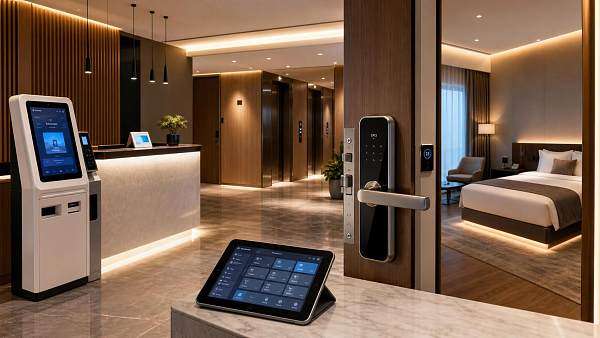
Choosing integrated systems for hotel automation is no longer just a technology decision—it is a strategic investment in operational efficiency, guest satisfaction, and long-term scalability. For enterprise decision-makers, evaluating solutions by room type and PMS compatibility is essential to avoid integration gaps, hidden costs, and performance risks. This guide outlines how to assess system fit with data-driven precision and practical procurement insight.
Why room type and PMS compatibility should drive hotel automation decisions
Many hotel groups still evaluate integrated systems for hotel automation through feature lists alone. That approach often fails when different room categories, legacy property systems, and brand-level operating standards collide during deployment.
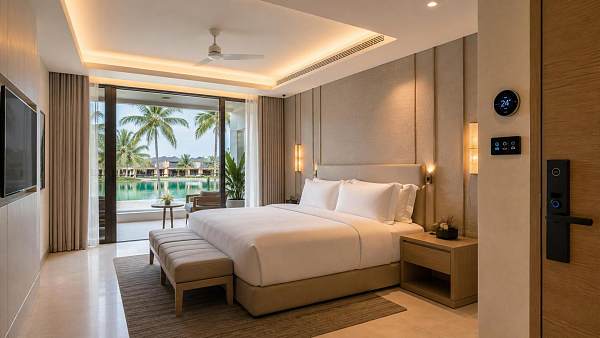
A standard room, a suite, a serviced villa, and a glamping unit do not create the same automation load. Device density, guest expectations, control logic, energy behavior, and maintenance access differ sharply across these environments.
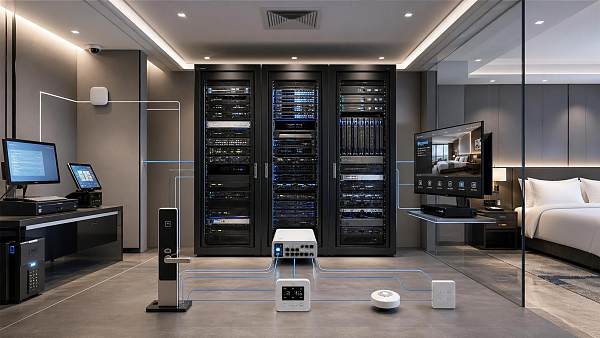
PMS compatibility matters just as much. If the automation layer cannot reliably exchange occupancy status, check-in timing, housekeeping triggers, maintenance alerts, and billing-related events with the property management system, the hotel ends up with manual workarounds instead of real integration.
For enterprise decision-makers, the risk is not simply technical failure. The larger risk is capital being locked into fragmented systems that raise operating expense, slow staff response, and limit future portfolio expansion.
- Room-type variation changes the number of devices, scenes, and automation rules required for each accommodation format.
- PMS interoperability determines whether guest journey data can move smoothly from reservation to departure.
- Integration quality affects not only guest comfort but also labor planning, preventive maintenance, and energy performance.
- Poor system alignment creates hidden costs in middleware, custom coding, retraining, and future replacement.
What enterprise buyers should evaluate first
Before comparing vendors, define the operational role of automation. Is the priority guest experience, labor reduction, sustainability, centralized control, brand consistency, or all of them? This foundation determines which metrics actually matter in procurement.
How to map integrated systems for hotel automation by room type
The most effective selection process starts with room segmentation. Instead of evaluating one universal package, create a matrix of room environments, device requirements, and service expectations. This is especially important in mixed-use tourism assets where hotels may combine conventional guestrooms with eco-structures or premium experiential units.
Typical room categories and automation implications
The table below helps decision-makers compare room categories against the main technical demands that influence integrated systems for hotel automation.
This comparison shows why one-size-fits-all automation packages rarely perform well across a tourism portfolio. Room-type analysis should be the first screening tool, not an afterthought after vendor demos.
Questions to ask for each room segment
- How many endpoints are required per room, and which are mandatory versus optional?
- What guest scenarios must work without delay, such as check-in activation, sleep mode, or vacant energy setbacks?
- Does the space require local autonomy if network connectivity is interrupted?
- How accessible are devices for maintenance in premium rooms, cabins, or remote assets?
- Can the system scale consistently across renovations, new builds, and region-specific compliance requirements?
What PMS compatibility really means in practice
PMS compatibility is often reduced to a simple claim: “integration available.” In reality, enterprise buyers need to examine the depth, stability, and business usefulness of the integration. Not every connector supports the same operational workflows.
At minimum, integrated systems for hotel automation should exchange reservation status, check-in and check-out events, room occupancy or vacancy logic, cleaning status, and selected maintenance flags. More advanced deployments may also connect loyalty preferences, minibar logic, energy optimization, and analytics dashboards.
Core PMS integration checkpoints
Use the following framework to test whether a hotel automation solution is truly PMS-ready for operational use rather than only technically connectable.
For larger operators, the strongest option is usually the one with documented data mapping, repeatable integration procedures, and transparent fault handling. Compatibility is not a yes-or-no label; it is a measurable operational capability.
Why data benchmarking matters before purchase
This is where TerraVista Metrics adds practical value. TVM examines smart hotel systems through benchmarking logic rather than sales claims, helping procurement teams compare interoperability, throughput demands, security posture, and deployment fit across real hospitality environments.
For owners developing mixed tourism assets, this independent review is especially useful because PMS performance, IoT stability, and room-control design may vary significantly between urban hotels, resort villas, and modular eco-accommodation.
Which technical performance indicators matter most
When evaluating integrated systems for hotel automation, enterprise buyers should avoid being distracted by front-end interfaces alone. Technical performance determines whether the promised guest experience can be delivered at scale and maintained economically over time.
Priority indicators for due diligence
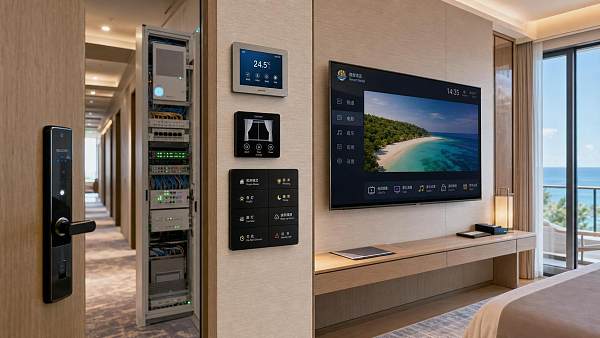
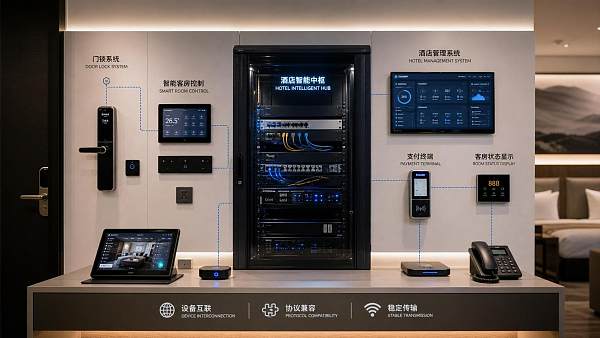
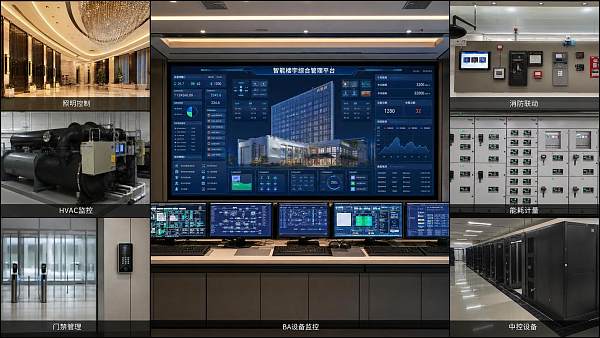
- System interoperability: Verify how the platform connects with PMS, door locks, HVAC, lighting, BMS, and guest apps without excessive custom middleware.
- Response time: Scene execution, occupancy-based adjustments, and check-in triggers should feel immediate in guest-facing situations.
- Network resilience: Hotels with remote units or outdoor accommodations need clear local-control logic when connectivity degrades.
- Cybersecurity maintenance: Patch cycles, credential management, and audit logging are essential when room controls connect to core operations.
- Remote diagnostics: Engineering teams benefit from fault visibility, device status monitoring, and prioritized alert handling.
- Energy optimization logic: Vacant-room setbacks, occupancy sensing accuracy, and schedule-based control affect utility costs materially.
Standards and compliance considerations
Hotels operating internationally should also review electrical safety, networking practices, cybersecurity governance, and local building requirements. The relevant standard set varies by market, but procurement teams should request documented conformity pathways, interface specifications, and update responsibilities before signing.
In sustainability-oriented developments, automation should also support wider building goals. That may include occupancy-based energy control, utility tracking, and alignment with environmental targets in eco-structures or resort expansions.
How to compare vendors without missing hidden costs
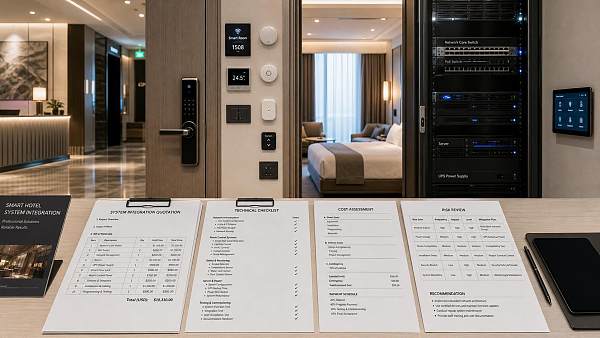
Capital budgets often focus on hardware price per room. That is a narrow metric. The true commercial comparison should include software licensing, integration engineering, commissioning time, staff training, spare parts, remote support, and upgrade dependency.
The table below provides a practical procurement lens for comparing integrated systems for hotel automation beyond headline quotations.
The lowest upfront quote may be the most expensive option if it depends on fragile custom connectors or requires constant manual intervention. Procurement teams should compare total cost of operation, not just installation cost.
A practical vendor shortlisting method
- Segment the property by room type and service model.
- Define mandatory PMS workflows and desired automation outcomes.
- Score vendors on interoperability, resilience, maintainability, and rollout complexity.
- Request demonstration of actual event flows, not only interface screenshots.
- Validate lifecycle support, compliance readiness, and portfolio expansion capability.
Common mistakes enterprises make when selecting hotel automation systems
Mistake 1: Treating all guestrooms as operationally identical
This usually results in over-specification in basic rooms and under-specification in premium or remote units. Both outcomes waste capital and weaken service consistency.
Mistake 2: Accepting vague claims of PMS integration
If the vendor cannot document data fields, event timing, failure handling, and upgrade ownership, the hotel may inherit expensive integration risk after contract signature.
Mistake 3: Ignoring engineering and environmental context
A solution that works in a city business hotel may not be suitable for modular cabins, coastal resorts, or dispersed tourism sites. Durability, connectivity, and maintenance access must be evaluated against the actual asset type.
Mistake 4: Underestimating support and update governance
Integrated systems for hotel automation continue to evolve after go-live. Without clear ownership of patches, integration changes, and component replacement, operational reliability can decline quickly.
FAQ: key questions decision-makers ask before procurement
How do we know whether integrated systems for hotel automation fit multiple room categories?
Start with a room-by-room use-case map. Document devices, guest touchpoints, operating rules, and maintenance conditions for each category. Then compare vendors against those requirements instead of asking for a single generic solution proposal.
What should we ask about PMS compatibility during vendor review?
Ask which PMS events are supported, how data mapping is handled, whether the connector is standard or custom, what the failover logic is, and who is responsible when either side updates software. These questions expose operational risk early.
Are advanced smart room features always worth the investment?
Not always. In some standard-room environments, better occupancy control and reliable PMS-linked energy logic create more value than complex guest-facing features. Premium rooms and experiential stays may justify deeper scene control and personalization.
How long does evaluation and deployment usually take?
Timing depends on property size, retrofit complexity, integration scope, and supplier readiness. Enterprise buyers should separate assessment, pilot validation, procurement approval, installation, and commissioning into distinct phases rather than assuming one continuous timeline.
Why a data-driven evaluation partner improves decision quality
For tourism investors and operators, the challenge is rarely a lack of supplier options. The real challenge is distinguishing polished presentation from proven technical fit. TerraVista Metrics addresses this gap through independent benchmarking, engineering-focused review, and market intelligence aligned with modern hospitality infrastructure.
TVM’s perspective is especially relevant when hotel automation decisions intersect with broader development choices such as modular accommodation, sustainability targets, procurement risk, and international compliance expectations. By connecting technical evidence with market practicality, the evaluation process becomes faster, clearer, and more defensible.
Why choose us for integrated systems for hotel automation assessment
TerraVista Metrics helps enterprise decision-makers evaluate integrated systems for hotel automation with a procurement-first lens. We focus on verified performance logic, interoperability review, operational fit by room type, and realistic deployment considerations across hospitality and tourism assets.
You can consult with TVM on practical issues that affect investment outcomes, including parameter confirmation for smart room infrastructure, product selection by accommodation format, PMS compatibility review, delivery timeline assessment, customization scope, compliance expectations, sample or pilot evaluation strategy, and quotation comparison from a technical standpoint.
If your team is comparing vendors, planning a retrofit, or developing a mixed tourism project, a structured assessment can reduce integration risk before capital is committed. That is often the difference between a visually impressive proposal and a system that performs reliably in daily operation.
Recommended News
 Sep 25, 2026Resort System Integration: How to Connect PMS, Guestroom Controls, and KiosksResort system integration guide: connect PMS, guestroom controls, and kiosks with reliable workflows, secure data, and seamless guest experiences.
 Sep 08, 2026How to Build Stable Interoperability Across Hotel Guestroom SystemsHospitality system interoperability stable: learn how hotels can align room states, command priorities, local fallback, and testing for reliable guestroom operations.
 Aug 18, 2026What Hotel System Interoperability Means for PMS, POS, and Guestroom TechHotel system interoperability shapes how PMS, POS, and guestroom tech perform in real hotels. Learn the key risks, validation points, and smarter ways to build resilient operations.
 Aug 10, 2026How to Evaluate a Smart Hotel System Integration Quotation Before ApprovalSystem integration quotation for smart hotels: learn how to assess scope, interoperability, cybersecurity, lifecycle cost, and hidden risks before approval.
 Jul 28, 2026How to Evaluate a Smart Hotel Application for Guest Experience and Staff EfficiencySmart hotel application evaluation made practical: learn how to compare integrations, guest journey design, staff workflows, security, and total cost to choose a smarter hotel solution.
 Jul 12, 2026Premium Camping Q2 Up 19% as Europe Expands Guestroom AutomationPremium camping grew 19% in Q2 as Europe accelerates guestroom automation. Discover how Germany, France, and Switzerland are driving demand for smarter campsites.
 Jul 11, 2026System Integration Testing for Resorts: Key Steps Before Guestroom Tech Goes LiveSystem integration testing for resorts: discover the 6 essential pre-opening steps to prevent guestroom tech failures, reduce launch risk, and protect guest satisfaction.
 Jul 10, 2026Hospitality System Interoperability Buyer Guide: What to Check Before You BuyHospitality system interoperability buyer guide: learn what to verify before you buy, from APIs and device compatibility to security, scalability, hidden costs, and vendor risk.
 Jul 09, 2026CPSC advisory puts offline AI checks on hotel voice devicesCPSC advisory reshapes compliance for hotel voice devices with offline AI. Learn how FCC Part 15 checks, labeling, and shipment readiness may impact U.S. hotel projects.
 Jul 08, 2026CPSC Sets Offline AI Rule for Guestroom Voice ModulesCPSC Sets Offline AI Rule for Guestroom Voice Modules: learn how the 2026 U.S. update impacts compliance, imports, hotel tech sourcing, and recall risk for suppliers.
 Jul 07, 2026CPSC Sets Offline AI Bar for Hotel Voice DevicesCPSC sets a new offline AI bar for hotel voice devices. Learn how the 2026 guidance impacts guestroom automation, import checks, supplier compliance, and hotel procurement decisions.
![]() Jul 06, 2026CPSC Requires Offline AI in Guestroom Voice SystemsCPSC requires offline AI in guestroom voice systems starting Oct 1, 2026. Learn how this rule impacts Alexa/Google integrations, compliance, procurement, and U.S. market shipments.
 Jul 06, 2026How to Reduce Hospitality System Interoperability Latency Across PMS, POS, and IoTHospitality system interoperability latency affects guest experience, revenue accuracy, and IoT responsiveness. Learn practical ways to reduce delays across PMS, POS, and smart hotel systems.
 Jul 05, 2026CPSC Orders Offline AI for Hotel Voice ModulesCPSC orders offline AI for hotel voice modules by Oct 1, 2026. Learn how local AI inference rules will impact U.S. hotel automation sourcing, integration, and compliance.
 Jul 04, 2026CPSC Mandates Offline AI for Guestroom Voice UnitsCPSC mandates offline AI for guestroom voice units entering the U.S. Learn how FCC Part 15B and UL 60730-1 compliance will reshape hotel procurement, OEM design, and delivery plans.
 Jul 03, 2026CPSC Requires Offline AI for Guestroom Voice ModulesCPSC Requires Offline AI for Guestroom Voice Modules: learn what the emergency U.S. rule means for compliance, sourcing, hotel tech procurement, and avoiding delisting or fines.
 Jul 02, 2026CPSC Requires Offline AI for Hotel Voice DevicesCPSC Requires Offline AI for Hotel Voice Devices: learn how the new U.S. rule impacts hotel automation, OEM/ODM suppliers, and guestroom voice compliance.
 Jul 01, 2026CPSC Orders Offline Voice Processing for Hotel Room SystemsCPSC orders offline voice processing for hotel room systems, making cloud-based voice control a live compliance risk. Learn what manufacturers, exporters, and hotel buyers must review now.
 Jul 01, 2026System Integration Testing for Smart Buildings: What to Verify Before HandoverSystem integration testing smart building projects must verify interoperability, alarms, cybersecurity, and data quality before handover. Learn what to check for a safer, smoother launch.
 Jun 28, 2026UL Tightens Guestroom Automation Rules on AI Voice DataUL tightens Guestroom Automation rules on AI voice data from Oct. 1, 2026. Learn how UL 2900-3:2026 affects certification, product design, and U.S. export readiness.
 Jun 26, 2026Smart Hospitality in Southeast Asia: Which Guestroom Automation Features Matter Most?Smart hospitality Southeast Asia is reshaping hotel operations. Discover which guestroom automation features truly boost guest satisfaction, efficiency, and long-term asset value.
 Jun 23, 2026How Smart Hospitality Solutions Improve Check-In, Energy Control, and Guest ExperienceSmart hospitality solutions improve check-in speed, energy control, and guest experience by aligning automation with property type, occupancy patterns, and operational performance.
 Jun 22, 2026Germany Sets TR-03147 Rule for Guestroom AutomationGermany sets TR-03147 V2.1 rule for Guestroom Automation from Oct 1, 2026. Learn CE marking impacts, cybersecurity requirements, and what suppliers, buyers, and exporters must do now.
 Jun 21, 2026Germany Sets Mandatory Cybersecurity Certification for Guestroom AutomationGermany Sets Mandatory Cybersecurity Certification for Guestroom Automation: learn how TR-03163-2 rules from April 2027 will impact hotel tech vendors, integrators, and buyers in Germany.
Quarterly Executive Summaries Delivered Directly.
Join 50,000+ industry leaders who receive our proprietary market analysis and policy outlooks before they hit the public library.