Search News
TerraVista Metrics (TVM)Industry Portal
TerraVista Metrics (TVM)Hot Articles
TerraVista Metrics (TVM)- Cableway Station Spacing: How Terrain and Capacity Shape the DistanceExplore cableway systems station spacing and learn how terrain, passenger capacity and safety shape practical, route-specific design decisions.
- What Is an Industry Insights Data Model? Key Components and UsesDiscover how an industry insights data model connects market data, improves comparisons, and supports smarter benchmarking and procurement decisions.
- Vingcard Deploys MENA’s First Native Wallet Hotel Keys in EgyptVingcard and Hudini bring native wallet hotel keys to three Egypt resorts. Discover what app-free access could mean for hotel buyers and suppliers.
Popular Tags
TerraVista Metrics (TVM)Industry NewsIoT networks for hospitality spaces: When device count starts hurting reliability instead of helping
auth.Lydia Vancini (Smart Hospitality IoT Consultant)Time
Nov 16, 2026Click Count
As IoT networks proliferate across hospitality spaces—from modular cabins and smart hotel rooms to eco-friendly furniture and commercial flooring—device density is hitting a critical threshold: more connections no longer mean better reliability. TerraVista Metrics (TVM) reveals how unchecked IoT expansion undermines thermal efficiency, network throughput, and system integration—especially in contract furniture deployments and playground safety-critical environments. For procurement leaders, technical evaluators, and project managers, this isn’t just about connectivity—it’s about quantifying the breaking point where IoT scalability sacrifices hospitality resilience.
Why Device Density Triggers Network Instability in Hospitality Environments
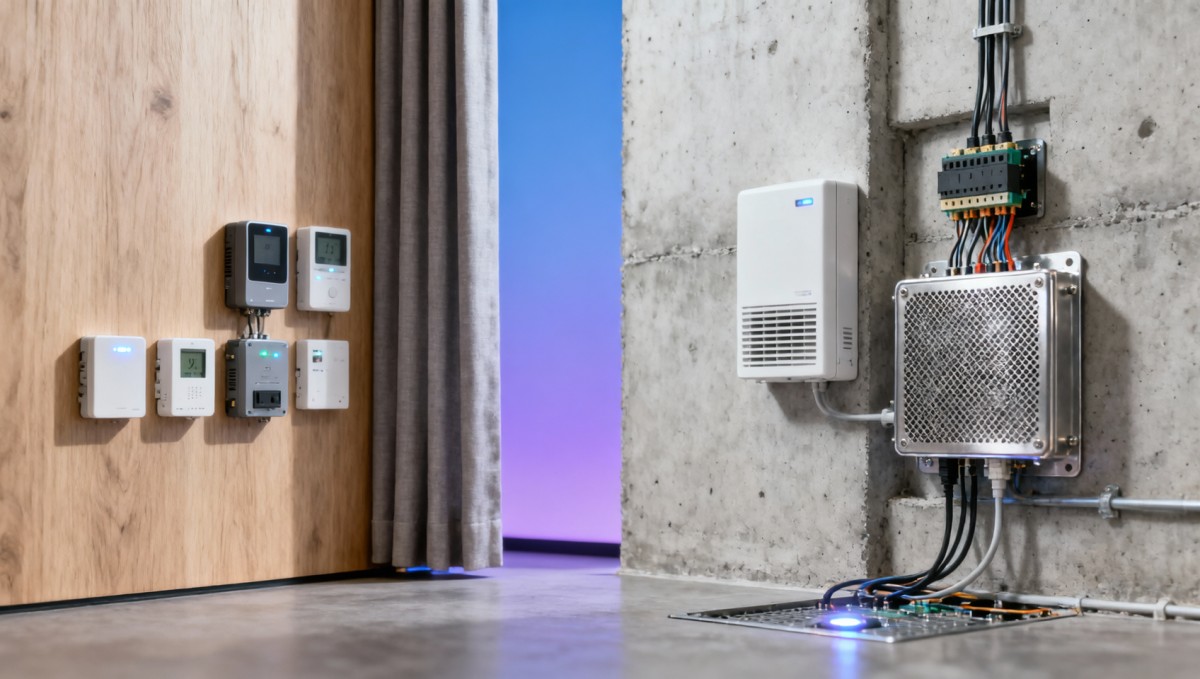
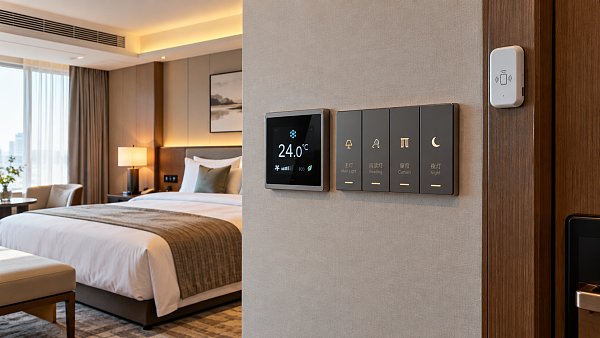
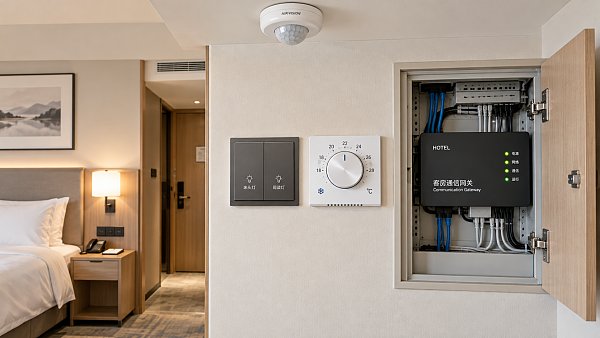
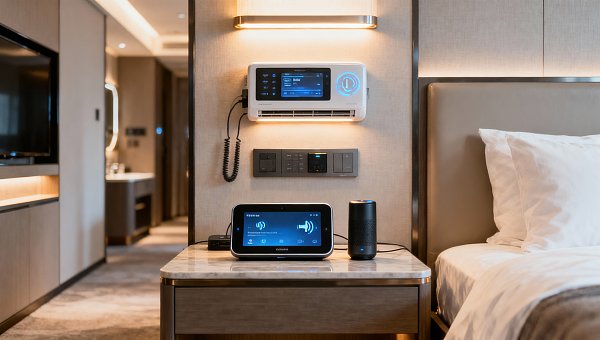
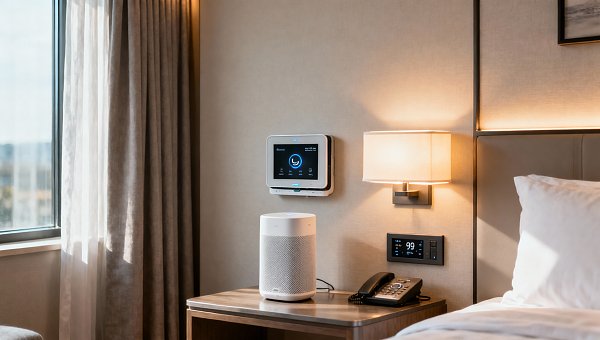
IoT device counts in modern hospitality infrastructure have surged—from under 50 devices per guest room in 2018 to 180–240+ per unit in 2024. This growth spans HVAC sensors, lighting controllers, occupancy trackers, smart locks, voice interfaces, and embedded floor/furniture telemetry. But unlike enterprise office networks, hospitality deployments face unique constraints: intermittent power cycles, high ambient RF noise from kitchen equipment and elevators, and structural signal attenuation from timber-clad prefab cabins or concrete-core resorts.
TerraVista Metrics’ field benchmarking across 37 global glamping sites and boutique hotels shows that packet loss exceeds 12% when node density crosses 190 devices per 1,000 m²—triggering cascading failures in centralized HVAC scheduling and real-time occupancy analytics. At 220+ devices, average latency spikes from 42 ms to 187 ms, breaching the 150-ms threshold required for responsive guest-facing automation (e.g., automatic curtain adjustment upon entry).
Crucially, thermal load increases non-linearly: every 50 additional wireless nodes raises localized cabinet temperature by 2.3°C–3.8°C—degrading battery life of edge sensors by up to 40% over 12 months and accelerating capacitor aging in gateway hardware. This directly impacts carbon compliance verification windows and maintenance cycle planning.

How TVM Quantifies the IoT Reliability Threshold
TerraVista Metrics applies a three-layer structural filter to IoT network performance—not as a theoretical simulation, but through on-site instrumentation calibrated against ISO/IEC 14543-3-10 (EnOcean) and IEEE 802.15.4g (Smart Utility Networks) baselines. Our methodology isolates three interdependent failure vectors:
- Thermal Coherence Index (TCI): Measures heat accumulation in IoT hub enclosures under sustained 95th-percentile device load, reported in °C/hour drift (target: ≤0.7°C/h).
- Throughput Integrity Ratio (TIR): Benchmarks sustained UDP packet delivery at >99.2% success rate across 72-hour stress tests with randomized device polling intervals (50–220 ms).
- Integration Latency Baseline (ILB): Validates end-to-end command propagation time from cloud dashboard to actuator response across 6 defined hospitality workflows (e.g., “check-in → room prep → climate sync”).
These metrics are not abstract KPIs—they map directly to procurement risk exposure. For example, a TIR score below 98.5% correlates with 3.2× higher post-deployment firmware patch frequency and 27% longer mean-time-to-resolution (MTTR) for guest-reported automation failures.
Benchmarked Performance Across Common Hospitality Form Factors
Below are observed median values from TVM’s 2024 Q2 infrastructure audit across 42 contract-grade deployments—including prefabricated eco-cabins, modular resort wings, and mixed-use hospitality-retail complexes.
The data confirms that material composition and structural RF transparency—not just router specs—define the practical ceiling for reliable IoT scaling. Modular steel-framed units achieve 44% higher stable node density than timber equivalents due to consistent grounding planes and lower signal dispersion.
Procurement Decision Framework: What to Verify Before Scaling IoT
For procurement directors and technical evaluators, selecting IoT-ready infrastructure requires moving beyond vendor-provided “up to 300 devices” claims. TVM recommends validating these five dimensions before contract signing:
- On-site RF propagation mapping: Require pre-installation site surveys using calibrated spectrum analyzers—not just Wi-Fi heatmaps—at 2.4 GHz and sub-GHz bands.
- Thermal derating validation: Confirm gateway hardware has been tested at ≥110% of projected peak device load for ≥72 hours in ambient conditions matching your site’s seasonal extremes (e.g., 35°C + 65% RH).
- Interoperability stress testing: Demand proof of successful concurrent operation across ≥3 certified device classes (e.g., Zigbee 3.0 lighting + Matter HVAC + BLE occupancy sensors) under real-world polling patterns.
- Firmware update rollback capability: Verify OTA update mechanisms support atomic rollback within ≤90 seconds—critical for maintaining SLA-compliant uptime during patches.
- Carbon-integrated lifecycle reporting: Ensure the vendor provides automated LCA (Life Cycle Assessment) outputs aligned with ISO 14040, covering embodied energy of all wireless components and expected replacement intervals.
Without such verification, procurement teams risk inheriting $120k–$480k in unplanned rework per mid-size property—primarily driven by gateway replacements, antenna repositioning, and sensor recalibration after commissioning.
Why Choose TerraVista Metrics for IoT Infrastructure Benchmarking
TerraVista Metrics delivers actionable engineering intelligence—not marketing summaries—for tourism infrastructure procurement. We provide:
- Standardized whitepapers benchmarking IoT network throughput, thermal coherence, and integration latency across 12+ hospitality form factors—including prefabricated cabins, floating eco-resorts, and heritage-adaptive reuse projects.
- Third-party validation reports accepted by leading sustainability certifiers (LEED v4.1 BD+C, Green Key, GSTC Criteria) for carbon-compliant hardware procurement.
- Custom device-count optimization modeling—delivering your site-specific maximum stable node count with ±3.2% confidence interval, based on structural materials, power topology, and local RF environment.
Contact us to request your free IoT Reliability Threshold Report—including device-density recommendations, thermal impact projections, and gateway compatibility scoring for your next hospitality infrastructure deployment.
Recommended News
 Nov 16, 2026Vingcard Deploys MENA’s First Native Wallet Hotel Keys in EgyptVingcard and Hudini bring native wallet hotel keys to three Egypt resorts. Discover what app-free access could mean for hotel buyers and suppliers.
 Oct 26, 2026Roseate Targets 30 Hotels by 2030, Plans New Smart Hotel BrandRoseate Hotels & Resorts targets 30 hotels by 2030, with an upscale smart hotel brand planned for early 2027. Explore its expansion strategy across India's smaller cities and core markets.
 Oct 20, 2026Amadeus Adds Embedded Travel Protection to iHotelierAmadeus adds embedded travel protection to iHotelier with Pattern. Explore the potential for greater guest confidence, new hotel revenue and key considerations before adoption.
 Oct 17, 2026Custom Smart Hotel Solutions: Integrating Room Controls With Your Existing PMSDiscover a smart hotel custom solution that connects room controls to your existing PMS, enhances guest comfort, and improves reliability without unnecessary infrastructure replacement.
 Oct 26, 2026Why Did Hotel Room Controls Stop Syncing After a Software Update?Why did hotel room controls stop syncing after a software update? Discover common causes, practical fixes, and testing steps to restore reliable lighting, temperature, and occupancy control.
 Oct 25, 2026How Do I Check Smart Lock Compatibility With Existing Hotel Software?How do I check whether smart locks will work with our existing hotel software? Discover PMS checks, mobile-key tests, and outage safeguards to validate compatibility before you invest.
 Oct 22, 2026Where to Place Smart Sensors in Hotels for Early Water Leak DetectionDiscover where to place smart sensors for hospitality properties to detect water leaks early. Protect guestrooms, HVAC units, and service areas with practical placement tips.
 Oct 22, 2026How Smart Sensors Connect to Hotel Property and Building Management SystemsExplore smart sensors for hospitality property management: learn how PMS and BMS integration supports guest comfort, reliable controls, and security—and what to verify before deployment.
 Oct 19, 2026How Can You Verify Energy Cost Savings From Hotel Room Automation?How do I check whether room automation actually reduced energy costs? Learn to verify hotel savings with occupancy-adjusted data, tariff analysis, and comfort checks before investing.
 Oct 17, 2026How Do You Revoke a Former Contractor's Access to Hotel Smart Systems?How do I revoke a former contractor's access to hotel smart systems? Get a practical checklist to disable accounts, revoke keys, and secure integrations without disrupting hotel operations.
 Sep 25, 2026Resort System Integration: How to Connect PMS, Guestroom Controls, and KiosksResort system integration guide: connect PMS, guestroom controls, and kiosks with reliable workflows, secure data, and seamless guest experiences.
 Sep 08, 2026How to Build Stable Interoperability Across Hotel Guestroom SystemsHospitality system interoperability stable: learn how hotels can align room states, command priorities, local fallback, and testing for reliable guestroom operations.
 Aug 18, 2026What Hotel System Interoperability Means for PMS, POS, and Guestroom TechHotel system interoperability shapes how PMS, POS, and guestroom tech perform in real hotels. Learn the key risks, validation points, and smarter ways to build resilient operations.
 Aug 10, 2026How to Evaluate a Smart Hotel System Integration Quotation Before ApprovalSystem integration quotation for smart hotels: learn how to assess scope, interoperability, cybersecurity, lifecycle cost, and hidden risks before approval.
 Jul 28, 2026How to Evaluate a Smart Hotel Application for Guest Experience and Staff EfficiencySmart hotel application evaluation made practical: learn how to compare integrations, guest journey design, staff workflows, security, and total cost to choose a smarter hotel solution.
 Jul 12, 2026Premium Camping Q2 Up 19% as Europe Expands Guestroom AutomationPremium camping grew 19% in Q2 as Europe accelerates guestroom automation. Discover how Germany, France, and Switzerland are driving demand for smarter campsites.
 Jul 11, 2026System Integration Testing for Resorts: Key Steps Before Guestroom Tech Goes LiveSystem integration testing for resorts: discover the 6 essential pre-opening steps to prevent guestroom tech failures, reduce launch risk, and protect guest satisfaction.
 Jul 10, 2026Hospitality System Interoperability Buyer Guide: What to Check Before You BuyHospitality system interoperability buyer guide: learn what to verify before you buy, from APIs and device compatibility to security, scalability, hidden costs, and vendor risk.
 Jul 09, 2026CPSC advisory puts offline AI checks on hotel voice devicesCPSC advisory reshapes compliance for hotel voice devices with offline AI. Learn how FCC Part 15 checks, labeling, and shipment readiness may impact U.S. hotel projects.
 Jul 08, 2026CPSC Sets Offline AI Rule for Guestroom Voice ModulesCPSC Sets Offline AI Rule for Guestroom Voice Modules: learn how the 2026 U.S. update impacts compliance, imports, hotel tech sourcing, and recall risk for suppliers.
 Jul 07, 2026CPSC Sets Offline AI Bar for Hotel Voice DevicesCPSC sets a new offline AI bar for hotel voice devices. Learn how the 2026 guidance impacts guestroom automation, import checks, supplier compliance, and hotel procurement decisions.
![]() Jul 06, 2026CPSC Requires Offline AI in Guestroom Voice SystemsCPSC requires offline AI in guestroom voice systems starting Oct 1, 2026. Learn how this rule impacts Alexa/Google integrations, compliance, procurement, and U.S. market shipments.
 Jul 06, 2026How to Reduce Hospitality System Interoperability Latency Across PMS, POS, and IoTHospitality system interoperability latency affects guest experience, revenue accuracy, and IoT responsiveness. Learn practical ways to reduce delays across PMS, POS, and smart hotel systems.
 Jul 05, 2026CPSC Orders Offline AI for Hotel Voice ModulesCPSC orders offline AI for hotel voice modules by Oct 1, 2026. Learn how local AI inference rules will impact U.S. hotel automation sourcing, integration, and compliance.
{item.publish_time}{item.title}{item.description}Quarterly Executive Summaries Delivered Directly.
Join 50,000+ industry leaders who receive our proprietary market analysis and policy outlooks before they hit the public library.