Search News
TerraVista Metrics (TVM)Industry Portal
TerraVista Metrics (TVM)Hot Articles
TerraVista Metrics (TVM)- Cableway Station Spacing: How Terrain and Capacity Shape the DistanceExplore cableway systems station spacing and learn how terrain, passenger capacity and safety shape practical, route-specific design decisions.
- What Is an Industry Insights Data Model? Key Components and UsesDiscover how an industry insights data model connects market data, improves comparisons, and supports smarter benchmarking and procurement decisions.
- Vingcard Deploys MENA’s First Native Wallet Hotel Keys in EgyptVingcard and Hudini bring native wallet hotel keys to three Egypt resorts. Discover what app-free access could mean for hotel buyers and suppliers.
Popular Tags
TerraVista Metrics (TVM)Industry NewsJIS T 9001:2026 Enforced: +40% EMC Immunity for Hotel Automation Devices in Japan
auth.Lydia Vancini (Smart Hospitality IoT Consultant)Time
Nov 16, 2026Click Count
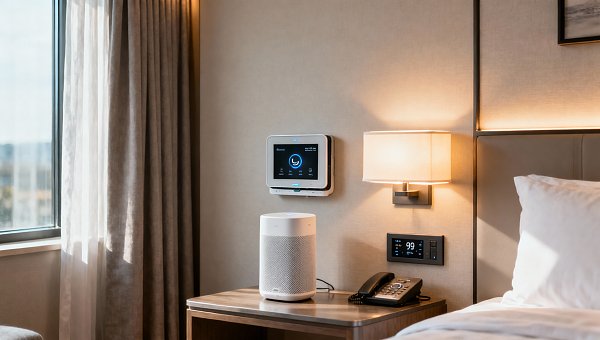
On April 30, 2026, Japan’s industrial standard JIS T 9001:2026 entered into force, mandating a 40% increase in electromagnetic immunity thresholds (per IEC 61000-4-3 Level 4) for Guestroom Automation devices entering the Japanese hotel market. Exporters—particularly those based in China—must now complete updated type testing to obtain the PSE+JET dual certification; failure to do so blocks new order fulfillment and impedes maintenance contract renewals for existing installations. This development is especially relevant to manufacturers of smart room panels, voice-controlled central systems, and energy management terminals serving Japan’s hospitality sector.
Event Overview
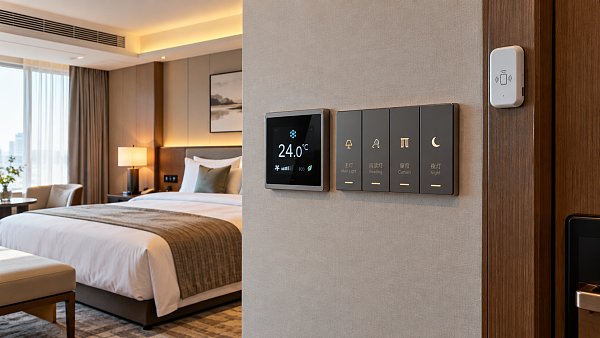
JIS T 9001:2026 was officially enacted on April 30, 2026. The revised standard requires all Guestroom Automation equipment—including smart wall panels, voice-based room controllers, and in-room energy management terminals—sold or deployed in Japanese hotels to comply with a 40% higher electromagnetic immunity threshold under IEC 61000-4-3 Level 4. Compliance is verified via formal type testing, and only devices passing this requirement are eligible for the PSE (Product Safety Electrical Appliance & Materials) mark and the JET (Japan Electrical Safety & Environment Technology Laboratories) certification mark—the dual-mark requirement for market access.
Industries Affected by Segment
Direct Exporters (e.g., Chinese OEM/ODM manufacturers)
These firms supply Guestroom Automation hardware directly to Japanese hotel chains, system integrators, or distributors. They are affected because the new immunity requirement triggers mandatory re-testing of existing models—and potentially redesign—for PSE+JET eligibility. Impact includes delayed shipment timelines, increased test costs, and risk of contract suspension where certification lags behind delivery schedules.Supply Chain Component Suppliers
Suppliers of key subassemblies—such as RF modules, power supplies, or microcontroller units used in certified devices—may face revised component-level immunity specifications from their OEM customers. While JIS T 9001:2026 does not apply directly to components, downstream compliance pressure may prompt tighter procurement requirements or pre-compliance validation requests.System Integrators & Hospitality Technology Providers
Firms deploying turnkey automation solutions in Japanese hotels must now verify that every device in their bill of materials carries valid PSE+JET marks under the 2026 edition. Non-compliant legacy devices cannot be newly installed post-April 30, 2026, and may complicate warranty claims or support renewals for ongoing projects.What Enterprises and Practitioners Should Monitor and Do Now
Confirm current model certifications against JIS T 9001:2026 versioning
PSE+JET certificates issued before April 30, 2026, reference earlier editions (e.g., JIS T 9001:2019). Entities should audit certificate validity dates and scope statements to determine whether re-testing under the 2026 version is required—even for unchanged hardware designs.
Engage accredited test labs early for IEC 61000-4-3 Level 4 re-evaluation
EMC testing capacity—especially for radiated immunity at Level 4—is limited globally. Lead times for scheduling and reporting may extend beyond eight weeks. Exporters should initiate test planning immediately, prioritizing high-volume SKUs and models already deployed in active Japanese projects.
Review contracts and service agreements for certification clauses
Many maintenance, support, or upgrade contracts include compliance warranties tied to applicable standards. Failure to maintain JIS T 9001:2026 alignment may constitute a breach. Legal and commercial teams should assess contractual language and prepare documentation updates where needed.
Track official interpretations from METI and JET
While the standard text is published, implementation guidance—such as transitional arrangements for stock-in-trade devices or grandfathering rules for field-upgraded units—has not yet been clarified. Stakeholders should monitor announcements from Japan’s Ministry of Economy, Trade and Industry (METI) and JET’s technical bulletins.
Editorial Perspective / Industry Observation
Observably, JIS T 9001:2026 reflects a tightening of electromagnetic compatibility expectations aligned with increasing wireless density and real-time control complexity in modern guestrooms. Analysis shows this is less a technical overhaul than a calibrated step-up in robustness—targeting interference resilience in environments where Wi-Fi 6E, Bluetooth LE audio, and multi-sensor networks coexist. From an industry perspective, the regulation functions primarily as a market gatekeeper: it does not ban older technologies outright, but raises the barrier to entry for cost-optimized or minimally tested designs. Current enforcement appears strict and immediate—no grace period has been announced—making it more a binding operational requirement than a forward-looking signal.
It is important to note that this revision applies exclusively to Guestroom Automation devices covered under JIS T 9001’s defined scope—not broader building automation or IT equipment. Its impact remains narrowly concentrated within hospitality-specific embedded electronics suppliers and their Japanese distribution partners.
Conclusion
This update underscores how national EMC requirements continue to evolve independently of global harmonization efforts—even within established frameworks like IEC 61000. For exporters, it reaffirms that regional conformance is non-transferable: passing CE or FCC tests does not satisfy JIS T 9001:2026. The most appropriate interpretation is pragmatic: JIS T 9001:2026 is now a live compliance checkpoint—not a future consideration—and its implications are operational, contractual, and logistical rather than strategic or technological.Information Sources
Main source: Official publication of JIS T 9001:2026 by the Japanese Industrial Standards Committee (JISC), effective April 30, 2026.
Additional context: Public notices issued by Japan Electrical Safety & Environment Technology Laboratories (JET) and the Ministry of Economy, Trade and Industry (METI) regarding PSE+JET certification requirements.
Note: Transitional provisions, if any, remain pending official clarification and are under continuous observation.Recommended News
 Nov 16, 2026Vingcard Deploys MENA’s First Native Wallet Hotel Keys in EgyptVingcard and Hudini bring native wallet hotel keys to three Egypt resorts. Discover what app-free access could mean for hotel buyers and suppliers.
 Oct 26, 2026Roseate Targets 30 Hotels by 2030, Plans New Smart Hotel BrandRoseate Hotels & Resorts targets 30 hotels by 2030, with an upscale smart hotel brand planned for early 2027. Explore its expansion strategy across India's smaller cities and core markets.
 Oct 20, 2026Amadeus Adds Embedded Travel Protection to iHotelierAmadeus adds embedded travel protection to iHotelier with Pattern. Explore the potential for greater guest confidence, new hotel revenue and key considerations before adoption.
 Oct 17, 2026Custom Smart Hotel Solutions: Integrating Room Controls With Your Existing PMSDiscover a smart hotel custom solution that connects room controls to your existing PMS, enhances guest comfort, and improves reliability without unnecessary infrastructure replacement.
 Oct 26, 2026Why Did Hotel Room Controls Stop Syncing After a Software Update?Why did hotel room controls stop syncing after a software update? Discover common causes, practical fixes, and testing steps to restore reliable lighting, temperature, and occupancy control.
 Oct 25, 2026How Do I Check Smart Lock Compatibility With Existing Hotel Software?How do I check whether smart locks will work with our existing hotel software? Discover PMS checks, mobile-key tests, and outage safeguards to validate compatibility before you invest.
 Oct 22, 2026Where to Place Smart Sensors in Hotels for Early Water Leak DetectionDiscover where to place smart sensors for hospitality properties to detect water leaks early. Protect guestrooms, HVAC units, and service areas with practical placement tips.
 Oct 22, 2026How Smart Sensors Connect to Hotel Property and Building Management SystemsExplore smart sensors for hospitality property management: learn how PMS and BMS integration supports guest comfort, reliable controls, and security—and what to verify before deployment.
 Oct 19, 2026How Can You Verify Energy Cost Savings From Hotel Room Automation?How do I check whether room automation actually reduced energy costs? Learn to verify hotel savings with occupancy-adjusted data, tariff analysis, and comfort checks before investing.
 Oct 17, 2026How Do You Revoke a Former Contractor's Access to Hotel Smart Systems?How do I revoke a former contractor's access to hotel smart systems? Get a practical checklist to disable accounts, revoke keys, and secure integrations without disrupting hotel operations.
 Sep 25, 2026Resort System Integration: How to Connect PMS, Guestroom Controls, and KiosksResort system integration guide: connect PMS, guestroom controls, and kiosks with reliable workflows, secure data, and seamless guest experiences.
 Sep 08, 2026How to Build Stable Interoperability Across Hotel Guestroom SystemsHospitality system interoperability stable: learn how hotels can align room states, command priorities, local fallback, and testing for reliable guestroom operations.
 Aug 18, 2026What Hotel System Interoperability Means for PMS, POS, and Guestroom TechHotel system interoperability shapes how PMS, POS, and guestroom tech perform in real hotels. Learn the key risks, validation points, and smarter ways to build resilient operations.
 Aug 10, 2026How to Evaluate a Smart Hotel System Integration Quotation Before ApprovalSystem integration quotation for smart hotels: learn how to assess scope, interoperability, cybersecurity, lifecycle cost, and hidden risks before approval.
 Jul 28, 2026How to Evaluate a Smart Hotel Application for Guest Experience and Staff EfficiencySmart hotel application evaluation made practical: learn how to compare integrations, guest journey design, staff workflows, security, and total cost to choose a smarter hotel solution.
 Jul 12, 2026Premium Camping Q2 Up 19% as Europe Expands Guestroom AutomationPremium camping grew 19% in Q2 as Europe accelerates guestroom automation. Discover how Germany, France, and Switzerland are driving demand for smarter campsites.
 Jul 11, 2026System Integration Testing for Resorts: Key Steps Before Guestroom Tech Goes LiveSystem integration testing for resorts: discover the 6 essential pre-opening steps to prevent guestroom tech failures, reduce launch risk, and protect guest satisfaction.
 Jul 10, 2026Hospitality System Interoperability Buyer Guide: What to Check Before You BuyHospitality system interoperability buyer guide: learn what to verify before you buy, from APIs and device compatibility to security, scalability, hidden costs, and vendor risk.
 Jul 09, 2026CPSC advisory puts offline AI checks on hotel voice devicesCPSC advisory reshapes compliance for hotel voice devices with offline AI. Learn how FCC Part 15 checks, labeling, and shipment readiness may impact U.S. hotel projects.
 Jul 08, 2026CPSC Sets Offline AI Rule for Guestroom Voice ModulesCPSC Sets Offline AI Rule for Guestroom Voice Modules: learn how the 2026 U.S. update impacts compliance, imports, hotel tech sourcing, and recall risk for suppliers.
 Jul 07, 2026CPSC Sets Offline AI Bar for Hotel Voice DevicesCPSC sets a new offline AI bar for hotel voice devices. Learn how the 2026 guidance impacts guestroom automation, import checks, supplier compliance, and hotel procurement decisions.
![]() Jul 06, 2026CPSC Requires Offline AI in Guestroom Voice SystemsCPSC requires offline AI in guestroom voice systems starting Oct 1, 2026. Learn how this rule impacts Alexa/Google integrations, compliance, procurement, and U.S. market shipments.
 Jul 06, 2026How to Reduce Hospitality System Interoperability Latency Across PMS, POS, and IoTHospitality system interoperability latency affects guest experience, revenue accuracy, and IoT responsiveness. Learn practical ways to reduce delays across PMS, POS, and smart hotel systems.
 Jul 05, 2026CPSC Orders Offline AI for Hotel Voice ModulesCPSC orders offline AI for hotel voice modules by Oct 1, 2026. Learn how local AI inference rules will impact U.S. hotel automation sourcing, integration, and compliance.
{item.publish_time}{item.title}{item.description}Quarterly Executive Summaries Delivered Directly.
Join 50,000+ industry leaders who receive our proprietary market analysis and policy outlooks before they hit the public library.