Search News
TerraVista Metrics (TVM)Industry Portal
TerraVista Metrics (TVM)Hot Articles
TerraVista Metrics (TVM)- How to Evaluate Spark Plug Suppliers for Consistent Quality and Lead TimesSpark plugs supplier evaluation guide: compare quality control, traceability, fitment, total cost, and reliable lead times to secure dependable engine maintenance supply.
- What Drives System Interoperability Testing Service Costs in Complex Projects?System interoperability testing service cost depends on integration scope, workflows, environments, and assurance needs. Learn how to budget smarter and reduce project risk.
- Project Planning Sourcing Guides: How to Qualify Suppliers Before Work StartsSourcing guides project planning helps teams qualify suppliers before work begins—verify compliance, delivery capacity, financial strength, and sustainability to reduce risk and protect project outcomes.
Popular Tags
TerraVista Metrics (TVM)Industry NewsSmart Hotel Solutions Comparison: PMS, Lighting, Access Control, and In-Room Automation
auth.Lydia Vancini (Smart Hospitality IoT Consultant)Time
Oct 07, 2026Click Count
Smart Hotel Solutions Comparison: PMS, Lighting, Access Control, and In-Room Automation
Choosing among smart hotel solutions requires more than feature lists or polished demos.
The harder task is proving how systems behave under real operational pressure.
For technical evaluation, four layers usually drive the decision.
These are PMS platforms, smart lighting, access control, and in-room automation.
Each one affects guest experience, energy performance, staffing efficiency, and cyber risk.
That also means a weak choice in one layer can limit the entire stack.
The best smart hotel solutions are not the most crowded with features.
They are the ones that integrate cleanly, scale predictably, and stay supportable for years.
From TerraVista Metrics’ perspective, the goal is straightforward.
Compare systems through measurable engineering and operational criteria, not marketing language.
What Technical Evaluation Should Prioritize
Before comparing vendors, define the evaluation frame.
In practice, most smart hotel solutions succeed or fail on five factors.
- Interoperability with existing PMS, BMS, CRM, and mobile infrastructure.
- Cybersecurity architecture, including encryption, identity management, and patch governance.
- Scalability across one site, multiple properties, and mixed building types.
- Lifecycle cost, including licenses, retrofits, replacements, and support contracts.
- Operational resilience during outages, device failure, or network instability.
This framework helps separate attractive interfaces from durable system design.
It also creates a fair basis for comparing different smart hotel solutions side by side.
PMS Platforms: The Core Decision Layer
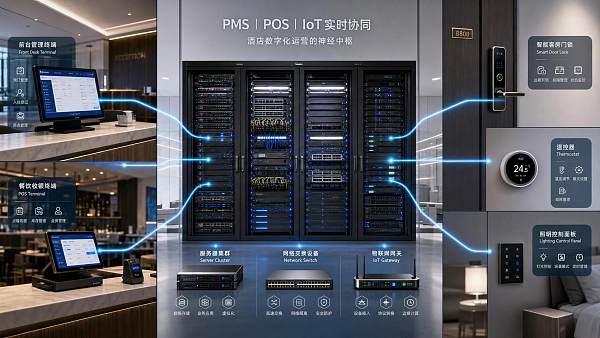
A property management system is still the operational center of most hotel technology stacks.
If the PMS is rigid, every downstream integration becomes harder.
For that reason, PMS selection should come before most other smart hotel solutions.
Key PMS Comparison Points
- Open API maturity and documentation quality.
- Webhook support for real-time room status and guest events.
- Role-based access control and audit logging depth.
- Cloud architecture, uptime commitments, and failover design.
- Data export portability and migration constraints.
More recently, a clear signal is the shift toward event-driven integration.
That matters because lighting scenes, digital keys, and room controls often depend on live occupancy data.
A PMS that updates slowly can break otherwise strong smart hotel solutions.
In evaluation terms, ask whether the PMS acts as a passive record or an active control source.
Smart Lighting: Efficiency Needs Better Data Logic
Lighting often appears simple, but it is one of the most misjudged smart hotel solutions.
Many projects focus on dimming features and overlook control logic.
The real value comes from occupancy sensing, daylight response, scene orchestration, and energy analytics.
What to Test in Lighting Systems
- Protocol compatibility, such as DALI, KNX, Zigbee, BLE Mesh, or BACnet gateways.
- Controller response time under peak room occupancy changes.
- Fallback behavior when cloud control is unavailable.
- Sensor calibration drift and maintenance intervals.
- Metering accuracy for room-level and floor-level reporting.
In real operations, poor sensor logic irritates guests faster than limited personalization options.
Lights switching off too quickly can damage satisfaction scores.
At the same time, weak zoning wastes energy and reduces payback.
The stronger smart hotel solutions balance comfort logic with measurable control efficiency.
Access Control: Security, Convenience, and Vendor Lock-In
Access control now sits at the center of both guest experience and cyber exposure.
Mobile keys promise convenience, but they also increase dependency on identity workflows.
That is why access systems deserve the same scrutiny as any networked endpoint.
Core Access Control Checks
- Credential options, including RFID, BLE, NFC, and wallet-based digital keys.
- Offline unlock capability during connectivity interruptions.
- Cryptographic key rotation and credential revocation speed.
- Door hardware durability, battery cycle life, and field replacement simplicity.
- Integration with PMS check-in events and staff authorization rules.
A common mistake is choosing access control as a standalone product.
That often creates duplicate identity stores and fragmented logs.
Better smart hotel solutions unify guest identity, room assignment, and credential issuance.
This reduces front desk friction while improving incident traceability.
In-Room Automation: Convenience Must Stay Serviceable
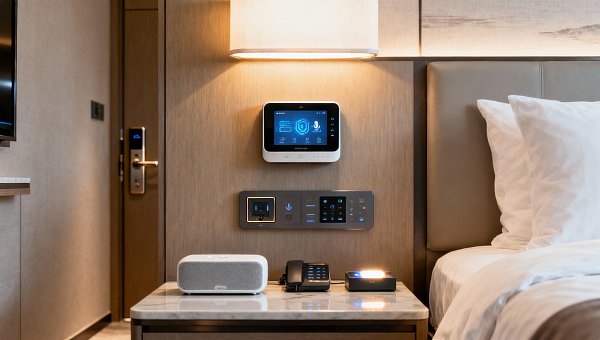
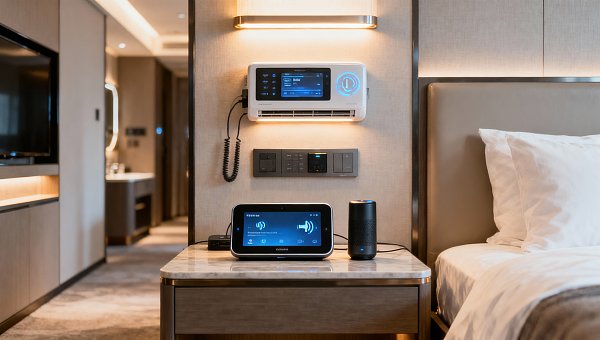
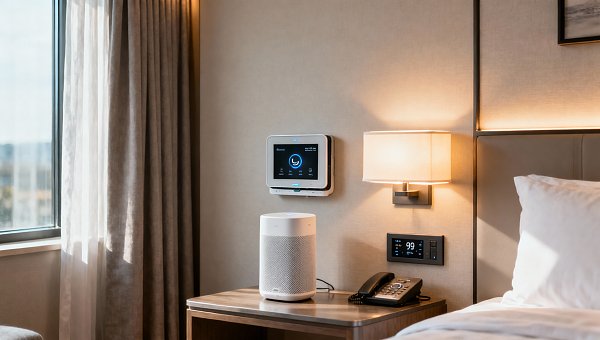
In-room automation is often the most visible category in smart hotel solutions.
Guests notice climate presets, curtain control, scene buttons, and voice functions immediately.
Yet visibility should not outweigh maintainability.
What Really Matters
- Local control continuity when cloud services fail.
- Gateway architecture and protocol translation limits.
- Firmware management across hundreds or thousands of rooms.
- Device replacement time and standardization of wall modules.
- Integration with HVAC logic and occupancy-based energy setbacks.
This is where lifecycle planning becomes essential.
An elegant room tablet means little if each replacement requires proprietary commissioning tools.
The most resilient smart hotel solutions keep field servicing fast and repeatable.
That lowers downtime and protects operating margins over time.
A Practical Comparison Matrix
How to Reduce Integration Risk
Even strong products can fail inside a weak deployment model.
For that reason, smart hotel solutions should be validated as a system, not as isolated purchases.
- Map every required data exchange before procurement starts.
- Demand protocol and API documentation during vendor shortlisting.
- Test one real guest journey from booking to checkout.
- Run failure scenarios, including internet loss and device outage.
- Review patch policy, support SLAs, and parts availability.
This approach is especially useful in mixed portfolios.
Urban hotels, resorts, serviced apartments, and modular hospitality sites rarely share identical requirements.
The best smart hotel solutions allow standardization without forcing every property into the same technical mold.
Why Data-Backed Benchmarking Matters
This is where independent benchmarking becomes valuable.
TerraVista Metrics focuses on engineering evidence behind smart hotel solutions, not presentation claims.
That includes verified performance data, interoperability review, compliance analysis, and supply chain visibility.
For procurement and development teams, this changes the quality of the decision.
It becomes easier to compare capital cost against support burden, replacement cycles, and operational risk.
In a market moving toward AI-enabled hospitality, measurable compatibility is becoming a baseline requirement.
Final Selection Guidance
The smartest choice is rarely the most visible platform.
It is usually the combination of smart hotel solutions that shares data cleanly and fails gracefully.
Start with PMS architecture, then test lighting, access control, and in-room automation against that foundation.
Prioritize open integration, cybersecurity discipline, maintainability, and long-term service access.
When decisions are guided by evidence, smart hotel solutions become operational assets instead of future retrofit problems.
That is the most reliable path to lower integration risk and a better guest experience at scale.
Recommended News
 Sep 25, 2026Resort System Integration: How to Connect PMS, Guestroom Controls, and KiosksResort system integration guide: connect PMS, guestroom controls, and kiosks with reliable workflows, secure data, and seamless guest experiences.
 Sep 08, 2026How to Build Stable Interoperability Across Hotel Guestroom SystemsHospitality system interoperability stable: learn how hotels can align room states, command priorities, local fallback, and testing for reliable guestroom operations.
 Aug 18, 2026What Hotel System Interoperability Means for PMS, POS, and Guestroom TechHotel system interoperability shapes how PMS, POS, and guestroom tech perform in real hotels. Learn the key risks, validation points, and smarter ways to build resilient operations.
 Aug 10, 2026How to Evaluate a Smart Hotel System Integration Quotation Before ApprovalSystem integration quotation for smart hotels: learn how to assess scope, interoperability, cybersecurity, lifecycle cost, and hidden risks before approval.
 Jul 28, 2026How to Evaluate a Smart Hotel Application for Guest Experience and Staff EfficiencySmart hotel application evaluation made practical: learn how to compare integrations, guest journey design, staff workflows, security, and total cost to choose a smarter hotel solution.
 Jul 12, 2026Premium Camping Q2 Up 19% as Europe Expands Guestroom AutomationPremium camping grew 19% in Q2 as Europe accelerates guestroom automation. Discover how Germany, France, and Switzerland are driving demand for smarter campsites.
 Jul 11, 2026System Integration Testing for Resorts: Key Steps Before Guestroom Tech Goes LiveSystem integration testing for resorts: discover the 6 essential pre-opening steps to prevent guestroom tech failures, reduce launch risk, and protect guest satisfaction.
 Jul 10, 2026Hospitality System Interoperability Buyer Guide: What to Check Before You BuyHospitality system interoperability buyer guide: learn what to verify before you buy, from APIs and device compatibility to security, scalability, hidden costs, and vendor risk.
 Jul 09, 2026CPSC advisory puts offline AI checks on hotel voice devicesCPSC advisory reshapes compliance for hotel voice devices with offline AI. Learn how FCC Part 15 checks, labeling, and shipment readiness may impact U.S. hotel projects.
 Jul 08, 2026CPSC Sets Offline AI Rule for Guestroom Voice ModulesCPSC Sets Offline AI Rule for Guestroom Voice Modules: learn how the 2026 U.S. update impacts compliance, imports, hotel tech sourcing, and recall risk for suppliers.
 Jul 07, 2026CPSC Sets Offline AI Bar for Hotel Voice DevicesCPSC sets a new offline AI bar for hotel voice devices. Learn how the 2026 guidance impacts guestroom automation, import checks, supplier compliance, and hotel procurement decisions.
![]() Jul 06, 2026CPSC Requires Offline AI in Guestroom Voice SystemsCPSC requires offline AI in guestroom voice systems starting Oct 1, 2026. Learn how this rule impacts Alexa/Google integrations, compliance, procurement, and U.S. market shipments.
 Jul 06, 2026How to Reduce Hospitality System Interoperability Latency Across PMS, POS, and IoTHospitality system interoperability latency affects guest experience, revenue accuracy, and IoT responsiveness. Learn practical ways to reduce delays across PMS, POS, and smart hotel systems.
 Jul 05, 2026CPSC Orders Offline AI for Hotel Voice ModulesCPSC orders offline AI for hotel voice modules by Oct 1, 2026. Learn how local AI inference rules will impact U.S. hotel automation sourcing, integration, and compliance.
 Jul 04, 2026CPSC Mandates Offline AI for Guestroom Voice UnitsCPSC mandates offline AI for guestroom voice units entering the U.S. Learn how FCC Part 15B and UL 60730-1 compliance will reshape hotel procurement, OEM design, and delivery plans.
 Jul 03, 2026CPSC Requires Offline AI for Guestroom Voice ModulesCPSC Requires Offline AI for Guestroom Voice Modules: learn what the emergency U.S. rule means for compliance, sourcing, hotel tech procurement, and avoiding delisting or fines.
 Jul 02, 2026CPSC Requires Offline AI for Hotel Voice DevicesCPSC Requires Offline AI for Hotel Voice Devices: learn how the new U.S. rule impacts hotel automation, OEM/ODM suppliers, and guestroom voice compliance.
 Jul 01, 2026CPSC Orders Offline Voice Processing for Hotel Room SystemsCPSC orders offline voice processing for hotel room systems, making cloud-based voice control a live compliance risk. Learn what manufacturers, exporters, and hotel buyers must review now.
 Jul 01, 2026System Integration Testing for Smart Buildings: What to Verify Before HandoverSystem integration testing smart building projects must verify interoperability, alarms, cybersecurity, and data quality before handover. Learn what to check for a safer, smoother launch.
 Jun 28, 2026UL Tightens Guestroom Automation Rules on AI Voice DataUL tightens Guestroom Automation rules on AI voice data from Oct. 1, 2026. Learn how UL 2900-3:2026 affects certification, product design, and U.S. export readiness.
 Jun 26, 2026Smart Hospitality in Southeast Asia: Which Guestroom Automation Features Matter Most?Smart hospitality Southeast Asia is reshaping hotel operations. Discover which guestroom automation features truly boost guest satisfaction, efficiency, and long-term asset value.
 Jun 23, 2026How Smart Hospitality Solutions Improve Check-In, Energy Control, and Guest ExperienceSmart hospitality solutions improve check-in speed, energy control, and guest experience by aligning automation with property type, occupancy patterns, and operational performance.
 Jun 22, 2026Germany Sets TR-03147 Rule for Guestroom AutomationGermany sets TR-03147 V2.1 rule for Guestroom Automation from Oct 1, 2026. Learn CE marking impacts, cybersecurity requirements, and what suppliers, buyers, and exporters must do now.
 Jun 21, 2026Germany Sets Mandatory Cybersecurity Certification for Guestroom AutomationGermany Sets Mandatory Cybersecurity Certification for Guestroom Automation: learn how TR-03163-2 rules from April 2027 will impact hotel tech vendors, integrators, and buyers in Germany.
Quarterly Executive Summaries Delivered Directly.
Join 50,000+ industry leaders who receive our proprietary market analysis and policy outlooks before they hit the public library.