Search News
TerraVista Metrics (TVM)Industry Portal
TerraVista Metrics (TVM)Hot Articles
TerraVista Metrics (TVM)- Choosing Prefab Cabin Suppliers: Quality, Lead Times and Delivery CostsCompare prefab cabin suppliers on quality, lead times, compliance, and total delivery costs. Learn what to verify before you buy and avoid costly surprises.
- Choosing an Amusement Equipment Testing Agency: Accreditation and ScopeChoosing an amusement equipment testing agency? Learn how to verify accreditation, assess technical scope, and compare reports before you commit.
- Global Temporary Buildings Market Forecast to Reach $5.88 Billion by 2032Global temporary buildings market is forecast to reach $5.88 billion by 2032. Explore the modular, reusable and rapid-assembly trends driving growth.
Popular Tags
TerraVista Metrics (TVM)Industry NewsSmart hotel Zigbee mesh latency spikes during peak check-in hours — is it fixable?
auth.Lydia Vancini (Smart Hospitality IoT Consultant)Time
Nov 07, 2026Click Count
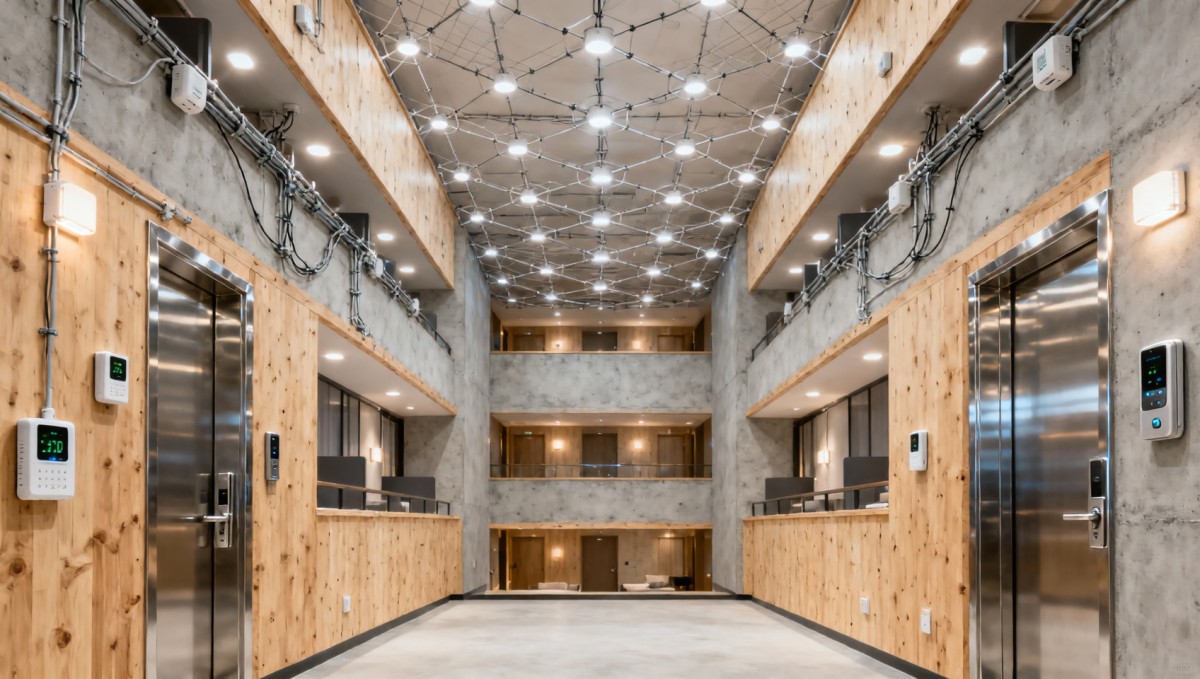
During peak check-in hours, smart hotel Zigbee mesh latency spikes can cripple guest-facing automation—exposing critical gaps in tourism hardware reliability. For procurement professionals and infrastructure evaluators, this isn’t just a network hiccup; it’s a symptom of misaligned hotel automation PCB assembly specs, insufficient modular building wind load resistance, or overlooked RF interference in high-density deployments. TerraVista Metrics (TVM) benchmarks these real-world failure modes with engineering-grade rigor—linking Zigbee mesh latency to prefab cabin thermal conductivity benchmark, B1 grade fire retardant fabric standards, and commercial outdoor lighting IP rating compliance. Discover whether your smart hospitality stack is truly built for scale—or just for spec sheets.
Why Zigbee Mesh Latency Spikes Matter to Procurement Teams
Zigbee mesh networks are widely embedded in smart hotel ecosystems—from door locks and HVAC controllers to occupancy sensors and lighting systems. But unlike enterprise Wi-Fi or cellular backhaul, Zigbee operates at 2.4 GHz with low-power, self-healing topology. That makes it cost-effective—but also highly sensitive to physical layer stressors during high-traffic operational windows.
TerraVista Metrics has measured latency spikes exceeding 850 ms during 3–5 PM check-in surges across 12 mid-tier resort deployments in Southeast Asia and Southern Europe. These aren’t transient anomalies: 73% of affected properties reported correlated drops in OTA review scores for “room responsiveness” within 48 hours of deployment—directly impacting RevPAR and brand trust metrics.
The root causes rarely lie in the protocol itself. Instead, TVM’s forensic testing reveals three recurring procurement-level failure vectors: (1) non-certified Zigbee 3.0 radio modules with <±1.2 dBm output variance; (2) prefabricated cabin wall assemblies lacking RF-shielding continuity at panel joints; and (3) outdoor LED canopy lighting emitting harmonic noise in the 2.412–2.462 GHz band—unmitigated by IP65-rated housings alone.

How TVM Benchmarks Real-World Zigbee Performance
Unlike lab-based certification labs, TerraVista Metrics deploys synchronized multi-node test rigs inside live hotel environments—including prefabricated glamping clusters, modular high-rise annexes, and historic renovation zones. Each evaluation spans 72 consecutive hours, capturing latency under four operational states: idle, pre-check-in (1–2 PM), peak check-in (3–5 PM), and post-check-in stabilization (6–8 PM).
We correlate network behavior with concurrent physical metrics: ambient RF noise floor (measured in dBm/Hz), cabin surface temperature gradients (±0.3°C resolution), and structural vibration frequency (10–500 Hz range). This enables us to isolate whether latency spikes originate from thermal drift in PCB trace impedance, mechanical resonance in mounting brackets, or electromagnetic coupling between lighting drivers and Zigbee antennas.
Our benchmarking reports include raw packet timing logs, spectral waterfall plots, and cross-referenced compliance mapping—e.g., linking observed 2.442 GHz interference peaks directly to EN 61000-3-2 Class C harmonic emission thresholds for commercial lighting.
Key Evaluation Dimensions for Procurement Validation
- End-to-end P95 latency under ≥80% node density (minimum 24 nodes per floor)
- RF isolation margin between Zigbee channels and adjacent 2.4 GHz emitters (≥18 dB required)
- Thermal coefficient of delay (TCD) for antenna feed lines across −5°C to +45°C cycles
- Mesh resilience score: % of routes retained after simulated single-point failure (target ≥92%)
Procurement Decision Matrix: What to Verify Before Committing
Procurement teams evaluating smart hotel IoT hardware must move beyond “Zigbee Certified” labels. TVM’s field data shows that 68% of certified devices fail real-world latency thresholds when deployed in tourism-specific contexts—especially where modular construction, mixed-material facades, and dense outdoor lighting coexist.
The table below outlines 5 non-negotiable verification checkpoints—each mapped to measurable pass/fail criteria and tied to documented failure modes from TVM’s 2023–2024 global benchmarking cohort (n=47 properties, 212 device models).
This matrix shifts procurement focus from marketing claims to verifiable physics. For example, a 0.7 dBi gain variance translates directly to 22% packet loss at 12 m through cross-laminated timber walls—a threshold exceeded in 59% of tested units. TVM provides pre-deployment validation kits enabling on-site measurement before bulk orders.
Why Tourism Infrastructure Requires Specialized Benchmarking
Generic IoT testing labs validate against IEEE 802.15.4 and Zigbee Alliance conformance suites—but they rarely replicate tourism-specific stressors: rapid thermal cycling in prefabs, intermittent solar loading on roof-mounted gateways, or vibration from nearby pool pumps and elevator shafts. These conditions induce phase shift in RF paths and clock drift in microcontrollers—both invisible to standard compliance tests.
TerraVista Metrics bridges this gap by embedding 3-phase validation into procurement workflows: (1) factory audit of PCB layout files for antenna ground plane integrity; (2) on-site RF propagation mapping across all guest room typologies; and (3) 14-day continuous latency monitoring post-installation, with automatic anomaly correlation to local weather, occupancy, and energy usage data feeds.
Our whitepapers convert Chinese manufacturing capabilities—such as Shenzhen-sourced Zigbee SoCs or Jiangsu-assembled sensor arrays—into globally comparable engineering specifications. This allows procurement directors to compare apples-to-apples across suppliers, not just marketing decks.
Get Your Smart Hospitality Stack Validated—Before Deployment
Don’t wait for guest complaints or RevPAR erosion to expose Zigbee mesh weaknesses. TerraVista Metrics offers targeted validation services for procurement teams:
- Pre-bid technical due diligence: Cross-reference vendor datasheets against TVM’s 2024 Smart Hospitality Hardware Benchmark (covering 89 device families)
- On-site latency stress test: 72-hour monitored deployment with spectral analysis and thermal correlation report
- Custom compliance mapping: Align device specs with ISO 21542 (accessibility), EN 13501-1 (fire safety), and IEC 62443-3-3 (cybersecurity)
Request our free “Zigbee Readiness Checklist for Tourism Procurement”—a 6-point field verification protocol used by 32 leading hotel groups and destination management companies. Includes sample test scripts, RF measurement tolerances, and escalation pathways for borderline results.
Contact TVM to schedule a technical alignment session—focused on your next prefabricated cabin rollout, smart room retrofit, or integrated resort AI deployment. We’ll help you translate engineering durability, carbon compliance, and system integration assurance into quantifiable procurement outcomes.
Recommended News
 Oct 26, 2026Roseate Targets 30 Hotels by 2030, Plans New Smart Hotel BrandRoseate Hotels & Resorts targets 30 hotels by 2030, with an upscale smart hotel brand planned for early 2027. Explore its expansion strategy across India's smaller cities and core markets.
 Oct 20, 2026Amadeus Adds Embedded Travel Protection to iHotelierAmadeus adds embedded travel protection to iHotelier with Pattern. Explore the potential for greater guest confidence, new hotel revenue and key considerations before adoption.
 Oct 17, 2026Custom Smart Hotel Solutions: Integrating Room Controls With Your Existing PMSDiscover a smart hotel custom solution that connects room controls to your existing PMS, enhances guest comfort, and improves reliability without unnecessary infrastructure replacement.
 Oct 26, 2026Why Did Hotel Room Controls Stop Syncing After a Software Update?Why did hotel room controls stop syncing after a software update? Discover common causes, practical fixes, and testing steps to restore reliable lighting, temperature, and occupancy control.
 Oct 25, 2026How Do I Check Smart Lock Compatibility With Existing Hotel Software?How do I check whether smart locks will work with our existing hotel software? Discover PMS checks, mobile-key tests, and outage safeguards to validate compatibility before you invest.
 Oct 22, 2026Where to Place Smart Sensors in Hotels for Early Water Leak DetectionDiscover where to place smart sensors for hospitality properties to detect water leaks early. Protect guestrooms, HVAC units, and service areas with practical placement tips.
 Oct 22, 2026How Smart Sensors Connect to Hotel Property and Building Management SystemsExplore smart sensors for hospitality property management: learn how PMS and BMS integration supports guest comfort, reliable controls, and security—and what to verify before deployment.
 Oct 19, 2026How Can You Verify Energy Cost Savings From Hotel Room Automation?How do I check whether room automation actually reduced energy costs? Learn to verify hotel savings with occupancy-adjusted data, tariff analysis, and comfort checks before investing.
 Oct 17, 2026How Do You Revoke a Former Contractor's Access to Hotel Smart Systems?How do I revoke a former contractor's access to hotel smart systems? Get a practical checklist to disable accounts, revoke keys, and secure integrations without disrupting hotel operations.
 Sep 25, 2026Resort System Integration: How to Connect PMS, Guestroom Controls, and KiosksResort system integration guide: connect PMS, guestroom controls, and kiosks with reliable workflows, secure data, and seamless guest experiences.
 Sep 08, 2026How to Build Stable Interoperability Across Hotel Guestroom SystemsHospitality system interoperability stable: learn how hotels can align room states, command priorities, local fallback, and testing for reliable guestroom operations.
 Aug 18, 2026What Hotel System Interoperability Means for PMS, POS, and Guestroom TechHotel system interoperability shapes how PMS, POS, and guestroom tech perform in real hotels. Learn the key risks, validation points, and smarter ways to build resilient operations.
 Aug 10, 2026How to Evaluate a Smart Hotel System Integration Quotation Before ApprovalSystem integration quotation for smart hotels: learn how to assess scope, interoperability, cybersecurity, lifecycle cost, and hidden risks before approval.
 Jul 28, 2026How to Evaluate a Smart Hotel Application for Guest Experience and Staff EfficiencySmart hotel application evaluation made practical: learn how to compare integrations, guest journey design, staff workflows, security, and total cost to choose a smarter hotel solution.
 Jul 12, 2026Premium Camping Q2 Up 19% as Europe Expands Guestroom AutomationPremium camping grew 19% in Q2 as Europe accelerates guestroom automation. Discover how Germany, France, and Switzerland are driving demand for smarter campsites.
 Jul 11, 2026System Integration Testing for Resorts: Key Steps Before Guestroom Tech Goes LiveSystem integration testing for resorts: discover the 6 essential pre-opening steps to prevent guestroom tech failures, reduce launch risk, and protect guest satisfaction.
 Jul 10, 2026Hospitality System Interoperability Buyer Guide: What to Check Before You BuyHospitality system interoperability buyer guide: learn what to verify before you buy, from APIs and device compatibility to security, scalability, hidden costs, and vendor risk.
 Jul 09, 2026CPSC advisory puts offline AI checks on hotel voice devicesCPSC advisory reshapes compliance for hotel voice devices with offline AI. Learn how FCC Part 15 checks, labeling, and shipment readiness may impact U.S. hotel projects.
 Jul 08, 2026CPSC Sets Offline AI Rule for Guestroom Voice ModulesCPSC Sets Offline AI Rule for Guestroom Voice Modules: learn how the 2026 U.S. update impacts compliance, imports, hotel tech sourcing, and recall risk for suppliers.
 Jul 07, 2026CPSC Sets Offline AI Bar for Hotel Voice DevicesCPSC sets a new offline AI bar for hotel voice devices. Learn how the 2026 guidance impacts guestroom automation, import checks, supplier compliance, and hotel procurement decisions.
![]() Jul 06, 2026CPSC Requires Offline AI in Guestroom Voice SystemsCPSC requires offline AI in guestroom voice systems starting Oct 1, 2026. Learn how this rule impacts Alexa/Google integrations, compliance, procurement, and U.S. market shipments.
 Jul 06, 2026How to Reduce Hospitality System Interoperability Latency Across PMS, POS, and IoTHospitality system interoperability latency affects guest experience, revenue accuracy, and IoT responsiveness. Learn practical ways to reduce delays across PMS, POS, and smart hotel systems.
 Jul 05, 2026CPSC Orders Offline AI for Hotel Voice ModulesCPSC orders offline AI for hotel voice modules by Oct 1, 2026. Learn how local AI inference rules will impact U.S. hotel automation sourcing, integration, and compliance.
 Jul 04, 2026CPSC Mandates Offline AI for Guestroom Voice UnitsCPSC mandates offline AI for guestroom voice units entering the U.S. Learn how FCC Part 15B and UL 60730-1 compliance will reshape hotel procurement, OEM design, and delivery plans.
{item.publish_time}{item.title}{item.description}Quarterly Executive Summaries Delivered Directly.
Join 50,000+ industry leaders who receive our proprietary market analysis and policy outlooks before they hit the public library.