Search News
TerraVista Metrics (TVM)Industry Portal
TerraVista Metrics (TVM)Hot Articles
TerraVista Metrics (TVM)- Cableway Station Spacing: How Terrain and Capacity Shape the DistanceExplore cableway systems station spacing and learn how terrain, passenger capacity and safety shape practical, route-specific design decisions.
- What Is an Industry Insights Data Model? Key Components and UsesDiscover how an industry insights data model connects market data, improves comparisons, and supports smarter benchmarking and procurement decisions.
- Vingcard Deploys MENA’s First Native Wallet Hotel Keys in EgyptVingcard and Hudini bring native wallet hotel keys to three Egypt resorts. Discover what app-free access could mean for hotel buyers and suppliers.
Popular Tags
TerraVista Metrics (TVM)Industry NewsTISI Mandates Isan Language Support for Guestroom Automation in Thailand
auth.Lydia Vancini (Smart Hospitality IoT Consultant)Time
Nov 16, 2026Click Count
On April 20, 2026, Thailand’s Industrial Standards Institute (TISI) updated Annex A of standard TIS 2741-2569, requiring all smart guestroom automation systems entering the Thai market to support voice interaction in the Isan dialect — spoken widely in Thailand’s Northeast region. The regulation takes effect on October 1, 2026. Suppliers, especially those based in China, must upgrade natural language understanding (NLU) models and localized speech databases to pass TISI certification; non-compliant systems will not receive the TISI mark.
Event Overview
On April 20, 2026, the Thailand Industrial Standards Institute (TISI) issued an amendment to TIS 2741-2569, adding a mandatory requirement for Isan-language voice command recognition and response in guestroom automation systems. Certification testing must cover 120 high-frequency Isan phrases. The updated requirement becomes compulsory on October 1, 2026. No further details regarding transitional arrangements, test lab accreditation timelines, or official interpretation documents have been published as of the update date.
Industries Affected
Smart Hospitality Hardware Manufacturers
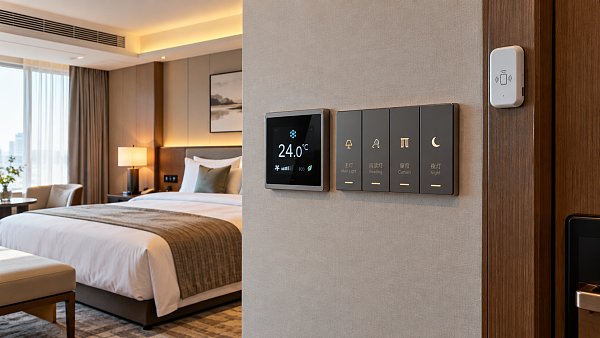
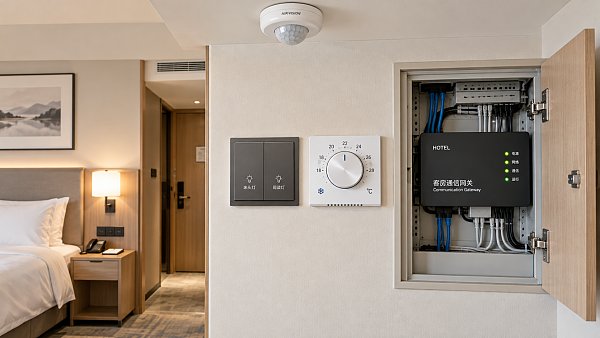
Manufacturers producing guestroom automation controllers, voice-enabled thermostats, lighting panels, or integrated IoT gateways are directly affected. Compliance requires firmware-level integration of Isan-specific NLU pipelines and multilingual TTS/ASR components — not just UI translation. Non-compliance blocks market access to Thailand’s hotel sector, where TISI certification is a legal prerequisite for installation.
Embedded Software & AI Model Providers
Vendors supplying NLU engines, speech recognition SDKs, or voice assistant frameworks to hardware OEMs must now extend language coverage to Isan. This includes training data curation, acoustic model adaptation, and intent classification tuning for hospitality-specific commands (e.g., ‘turn off AC’, ‘call housekeeping’). Absence of pre-validated Isan modules may delay customers’ certification timelines.
Export-Oriented System Integrators & Distributors
Integrators certifying end-to-end room automation solutions for Thai hotels must verify Isan support across all subsystems — including third-party devices (e.g., TVs, minibars, curtains) that accept voice commands. Lack of interoperability testing with Isan inputs could invalidate full-system TISI approval, even if core controllers comply.
What Enterprises and Practitioners Should Monitor and Do Now
Track official TISI guidance and test protocol releases
The 120-phrase list and technical specifications for Isan ASR/TTS performance thresholds (e.g., word error rate, latency, speaker variability handling) have not yet been published. Companies should subscribe to TISI’s official notifications and monitor updates from accredited Thai testing labs — such as MTEC or NSTDA — for finalized validation criteria.
Assess current NLU architecture for Isan adaptability
Analysis来看, most commercially deployed NLU models for Thai hospitality systems are trained on Central Thai only. Adding Isan support is not a simple locale toggle: it requires phonetic alignment with regional pronunciation variants (e.g., /tɕʰ/ → /s/ shifts), lexical divergence (e.g., ‘fan’ vs. ‘pàap’ for ‘light’), and syntactic differences. Teams should audit whether their ASR backend supports custom acoustic model retraining and whether intent schemas allow dialect-specific utterance mapping.
Validate voice database sourcing and speaker diversity
Current more-than-sufficient Isan speech corpora are scarce in public domains. From industry perspective, certified testing will likely require recordings from ≥20 native Isan speakers across age groups and sub-regions (e.g., Khon Kaen, Ubon Ratchathani, Nakhon Phanom). Suppliers should initiate ethical, consent-based voice collection or engage licensed regional linguistics partners — rather than relying on synthetic or Central Thai–accented proxies.
Update documentation, labeling, and installer training materials
TISI’s requirement extends beyond runtime functionality: user manuals, setup wizards, and technician guides must reflect Isan-language operation modes. Observation shows that past TISI audits have rejected certifications due to mismatched language labels in configuration interfaces — even when voice functions worked. Localization QA must now include Isan UI string verification and voice-trigger iconography consistency.
Editorial Perspective / Industry Observation
This update is better understood as a policy signal — not yet an operational reality. While the October 2026 enforcement date is fixed, TISI has not released implementation guidelines, reference test datasets, or accredited lab lists. From industry angle, this reflects Thailand’s broader shift toward inclusive digital infrastructure standards, particularly for underserved regional populations. However, the absence of supporting technical infrastructure means the mandate’s practical impact hinges on how quickly ecosystem players — from chip vendors to cloud AI providers — align. It is not yet a de facto barrier, but rather a near-term compliance horizon demanding proactive readiness.
Conclusion
This TISI amendment marks a targeted expansion of regulatory localization requirements in Thailand’s smart hospitality sector. Its significance lies less in immediate disruption and more in signaling a structural expectation: voice-enabled products targeting Thai consumers must account for linguistic diversity beyond Central Thai. For global suppliers, it underscores that ‘localization’ now entails dialect-level AI capability — not just interface translation. Current best practice is not to treat it as a one-off compliance task, but as an early indicator of similar requirements emerging in other ASEAN markets with multilingual demographics.
Source Attribution
Main source: Thailand Industrial Standards Institute (TISI), Amendment to TIS 2741-2569 Annex A, effective April 20, 2026; enforcement date: October 1, 2026.
Points under ongoing observation: Official publication of the 120-phrase test list, minimum ASR accuracy thresholds, and list of TISI-accredited testing laboratories for Isan-language evaluation.Recommended News
 Nov 16, 2026Vingcard Deploys MENA’s First Native Wallet Hotel Keys in EgyptVingcard and Hudini bring native wallet hotel keys to three Egypt resorts. Discover what app-free access could mean for hotel buyers and suppliers.
 Oct 26, 2026Roseate Targets 30 Hotels by 2030, Plans New Smart Hotel BrandRoseate Hotels & Resorts targets 30 hotels by 2030, with an upscale smart hotel brand planned for early 2027. Explore its expansion strategy across India's smaller cities and core markets.
 Oct 20, 2026Amadeus Adds Embedded Travel Protection to iHotelierAmadeus adds embedded travel protection to iHotelier with Pattern. Explore the potential for greater guest confidence, new hotel revenue and key considerations before adoption.
 Oct 17, 2026Custom Smart Hotel Solutions: Integrating Room Controls With Your Existing PMSDiscover a smart hotel custom solution that connects room controls to your existing PMS, enhances guest comfort, and improves reliability without unnecessary infrastructure replacement.
 Oct 26, 2026Why Did Hotel Room Controls Stop Syncing After a Software Update?Why did hotel room controls stop syncing after a software update? Discover common causes, practical fixes, and testing steps to restore reliable lighting, temperature, and occupancy control.
 Oct 25, 2026How Do I Check Smart Lock Compatibility With Existing Hotel Software?How do I check whether smart locks will work with our existing hotel software? Discover PMS checks, mobile-key tests, and outage safeguards to validate compatibility before you invest.
 Oct 22, 2026Where to Place Smart Sensors in Hotels for Early Water Leak DetectionDiscover where to place smart sensors for hospitality properties to detect water leaks early. Protect guestrooms, HVAC units, and service areas with practical placement tips.
 Oct 22, 2026How Smart Sensors Connect to Hotel Property and Building Management SystemsExplore smart sensors for hospitality property management: learn how PMS and BMS integration supports guest comfort, reliable controls, and security—and what to verify before deployment.
 Oct 19, 2026How Can You Verify Energy Cost Savings From Hotel Room Automation?How do I check whether room automation actually reduced energy costs? Learn to verify hotel savings with occupancy-adjusted data, tariff analysis, and comfort checks before investing.
 Oct 17, 2026How Do You Revoke a Former Contractor's Access to Hotel Smart Systems?How do I revoke a former contractor's access to hotel smart systems? Get a practical checklist to disable accounts, revoke keys, and secure integrations without disrupting hotel operations.
 Sep 25, 2026Resort System Integration: How to Connect PMS, Guestroom Controls, and KiosksResort system integration guide: connect PMS, guestroom controls, and kiosks with reliable workflows, secure data, and seamless guest experiences.
 Sep 08, 2026How to Build Stable Interoperability Across Hotel Guestroom SystemsHospitality system interoperability stable: learn how hotels can align room states, command priorities, local fallback, and testing for reliable guestroom operations.
 Aug 18, 2026What Hotel System Interoperability Means for PMS, POS, and Guestroom TechHotel system interoperability shapes how PMS, POS, and guestroom tech perform in real hotels. Learn the key risks, validation points, and smarter ways to build resilient operations.
 Aug 10, 2026How to Evaluate a Smart Hotel System Integration Quotation Before ApprovalSystem integration quotation for smart hotels: learn how to assess scope, interoperability, cybersecurity, lifecycle cost, and hidden risks before approval.
 Jul 28, 2026How to Evaluate a Smart Hotel Application for Guest Experience and Staff EfficiencySmart hotel application evaluation made practical: learn how to compare integrations, guest journey design, staff workflows, security, and total cost to choose a smarter hotel solution.
 Jul 12, 2026Premium Camping Q2 Up 19% as Europe Expands Guestroom AutomationPremium camping grew 19% in Q2 as Europe accelerates guestroom automation. Discover how Germany, France, and Switzerland are driving demand for smarter campsites.
 Jul 11, 2026System Integration Testing for Resorts: Key Steps Before Guestroom Tech Goes LiveSystem integration testing for resorts: discover the 6 essential pre-opening steps to prevent guestroom tech failures, reduce launch risk, and protect guest satisfaction.
 Jul 10, 2026Hospitality System Interoperability Buyer Guide: What to Check Before You BuyHospitality system interoperability buyer guide: learn what to verify before you buy, from APIs and device compatibility to security, scalability, hidden costs, and vendor risk.
 Jul 09, 2026CPSC advisory puts offline AI checks on hotel voice devicesCPSC advisory reshapes compliance for hotel voice devices with offline AI. Learn how FCC Part 15 checks, labeling, and shipment readiness may impact U.S. hotel projects.
 Jul 08, 2026CPSC Sets Offline AI Rule for Guestroom Voice ModulesCPSC Sets Offline AI Rule for Guestroom Voice Modules: learn how the 2026 U.S. update impacts compliance, imports, hotel tech sourcing, and recall risk for suppliers.
 Jul 07, 2026CPSC Sets Offline AI Bar for Hotel Voice DevicesCPSC sets a new offline AI bar for hotel voice devices. Learn how the 2026 guidance impacts guestroom automation, import checks, supplier compliance, and hotel procurement decisions.
![]() Jul 06, 2026CPSC Requires Offline AI in Guestroom Voice SystemsCPSC requires offline AI in guestroom voice systems starting Oct 1, 2026. Learn how this rule impacts Alexa/Google integrations, compliance, procurement, and U.S. market shipments.
 Jul 06, 2026How to Reduce Hospitality System Interoperability Latency Across PMS, POS, and IoTHospitality system interoperability latency affects guest experience, revenue accuracy, and IoT responsiveness. Learn practical ways to reduce delays across PMS, POS, and smart hotel systems.
 Jul 05, 2026CPSC Orders Offline AI for Hotel Voice ModulesCPSC orders offline AI for hotel voice modules by Oct 1, 2026. Learn how local AI inference rules will impact U.S. hotel automation sourcing, integration, and compliance.
{item.publish_time}{item.title}{item.description}Quarterly Executive Summaries Delivered Directly.
Join 50,000+ industry leaders who receive our proprietary market analysis and policy outlooks before they hit the public library.