Search News
TerraVista Metrics (TVM)Industry Portal
TerraVista Metrics (TVM)Hot Articles
TerraVista Metrics (TVM)- Supply Chain Intelligence for Procurement: How to Identify Supplier RisksSupply chain intelligence for procurement helps you uncover supplier risks, verify critical evidence, and protect delivery, quality, and compliance.
- AHLA and Actabl Report Links AI to Faster Hotel Tasks and Improved EfficiencyHotel AI helps employees complete routine tasks faster. Explore the AHLA and Actabl report on efficiency, staffing and more time for guest service.
- Eco-Lodging Materials: How to Verify Certification ClaimsVerify eco lodging materials certification with confidence. Learn how to check claims, trace products and avoid misleading sustainability statements.
Popular Tags
TerraVista Metrics (TVM)Industry NewsThailand TISI Mandates Isan Language Support for Guestroom Automation
auth.Lydia Vancini (Smart Hospitality IoT Consultant)Time
Nov 05, 2026Click Count
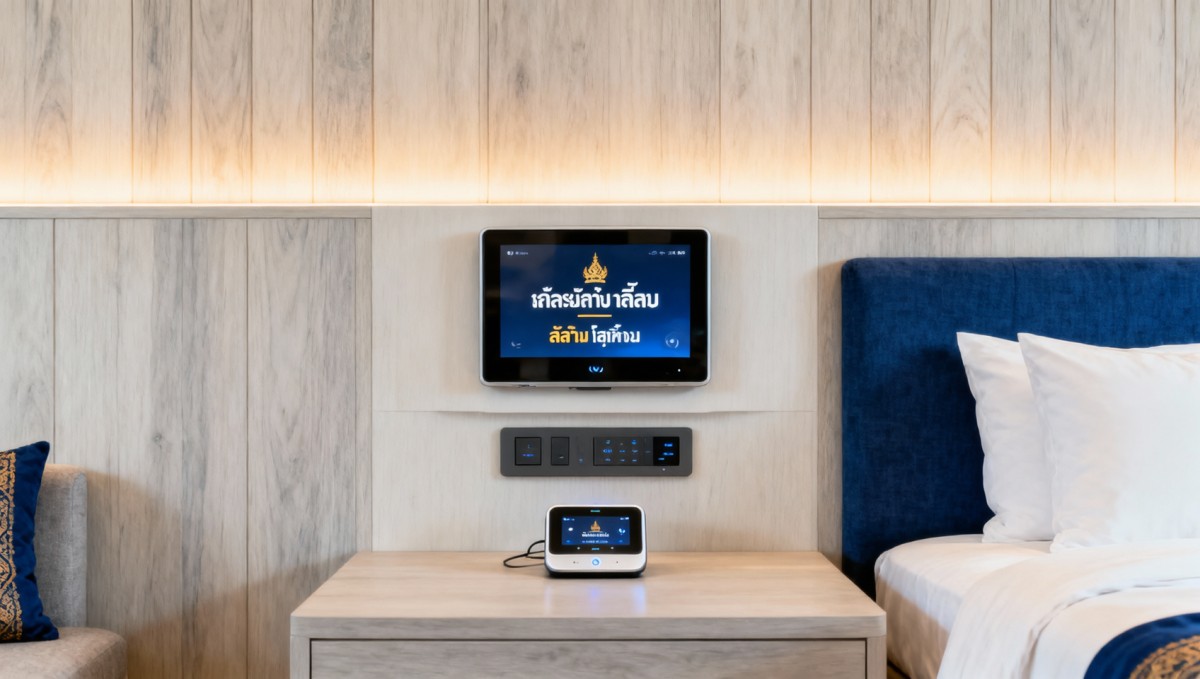
On April 22, 2026, Thailand’s Industrial Standards Institute (TISI) officially enforced TIS 2700-2:2026, requiring all guestroom automation systems deployed in hotels and resorts to support voice interaction in both Standard Thai and Isan language—with a minimum speech recognition accuracy of 92%. This regulation directly impacts manufacturers, importers, system integrators, and hospitality technology suppliers operating in or exporting to Thailand.
Event Overview
TISI issued TIS 2700-2:2026, effective April 22, 2026. The standard mandates that voice control modules in guestroom automation systems must recognize and process commands in both Standard Thai and Isan (a regional language spoken by over 20 million people in Northeastern Thailand). Recognition accuracy must be no less than 92% under defined test conditions. The requirement applies uniformly to all imported and locally assembled devices. Non-compliant products will not be granted the TIS Mark—the mandatory certification for market access in Thailand.
Industries Affected
Importers and Exporters of Hospitality Technology
Importers bringing guestroom automation hardware or software into Thailand must now verify dual-language voice capability prior to customs clearance. Failure to meet the TIS 2700-2:2026 specification will result in rejection of TIS Mark application—and therefore, inability to legally sell or install the product in Thai hospitality venues.
Hardware and Software Manufacturers
Manufacturers—whether based overseas or in Thailand—must adapt voice recognition firmware, training datasets, and UI logic to accommodate Isan phonology, vocabulary, and prosody. This affects both embedded firmware development and cloud-based ASR (automatic speech recognition) service integration. Product re-certification under the updated standard is required for existing models still in production or distribution.
System Integrators and Hospitality Tech Providers
Integrators deploying turnkey guestroom automation solutions—including those bundling third-party voice platforms—must validate end-to-end compliance across hardware, OS layer, and application layer. Contractual obligations with hotel clients may now require explicit verification of Isan-language functionality during commissioning and acceptance testing.
What Enterprises and Practitioners Should Focus On Now
Monitor official TISI technical guidance and test methodology updates
TIS 2700-2:2026 references unspecified test protocols for Isan speech recognition. Current more actionable than waiting for full implementation guidelines is to track TISI’s upcoming public consultation documents or accredited lab announcements—especially regarding speaker demographics, audio sample requirements, and environmental noise profiles used in validation.
Prioritize assessment of voice platform vendors’ Isan-language readiness
Many global ASR providers do not yet list Isan as a supported language. Companies should audit current voice stack dependencies (e.g., SDKs, cloud APIs, on-device models) and request formal roadmaps or beta access from vendors. Where no path exists, local linguistic partnerships or custom model training may be necessary—but only after confirming TISI’s acceptability of such approaches.
Distinguish between regulatory signal and near-term enforcement scope
Analysis来看, this standard signals TISI’s broader intent to align technical regulations with Thailand’s regional linguistic diversity—not just a one-off compliance checkpoint. However, from industry perspective, initial enforcement is expected to focus first on new product certifications; legacy installed systems are not retroactively required to upgrade. Businesses should therefore prioritize compliance planning for new product launches and renewals—not wholesale retrofitting of existing deployments.
Prepare documentation and lab coordination for TIS Mark renewal cycles
Since TIS Mark validity is time-bound (typically 3 years), companies with expiring certificates should initiate re-testing early—especially if their current voice module was certified before April 2026. Engaging an accredited Thai testing lab ahead of submission avoids bottlenecks, as Isan-language test capacity remains limited at present.
Editorial Perspective / Industry Observation
Observation来看, TIS 2700-2:2026 is less a sudden technical mandate and more a formalized milestone in Thailand’s ongoing digital inclusivity policy shift. It reflects growing institutional recognition that usability standards for consumer-facing tech must account for sociolinguistic realities—not just national language norms. From industry angle, this is currently best understood as a signal of tightening localization expectations across ASEAN markets, where similar regional-language requirements may follow in sectors like smart home, healthcare, and public kiosks. It is not yet a fully matured enforcement regime, but it has crossed the threshold from proposal to binding obligation—and thus demands structured, cross-functional response rather than ad hoc adaptation.

In summary, TIS 2700-2:2026 marks a material shift in market access conditions for guestroom automation in Thailand—not merely a technical footnote. Its significance lies not in novelty alone, but in its enforceability, specificity, and alignment with national language policy priorities. Currently, it is more appropriately understood as a binding operational requirement for new product introductions and renewals, rather than a broad-based overhaul trigger for the entire installed base.
Source: Thailand Industrial Standards Institute (TISI), Official Gazette No. 143/26, Section 5.2 — TIS 2700-2:2026 “Guestroom Automation Systems — Part 2: Voice Interaction Requirements”. Note: Ongoing observation is recommended for TISI-issued test methodology annexes and accredited laboratory designation updates, which have not yet been published as of April 2026.
Recommended News
 Oct 26, 2026Roseate Targets 30 Hotels by 2030, Plans New Smart Hotel BrandRoseate Hotels & Resorts targets 30 hotels by 2030, with an upscale smart hotel brand planned for early 2027. Explore its expansion strategy across India's smaller cities and core markets.
 Oct 20, 2026Amadeus Adds Embedded Travel Protection to iHotelierAmadeus adds embedded travel protection to iHotelier with Pattern. Explore the potential for greater guest confidence, new hotel revenue and key considerations before adoption.
 Oct 17, 2026Custom Smart Hotel Solutions: Integrating Room Controls With Your Existing PMSDiscover a smart hotel custom solution that connects room controls to your existing PMS, enhances guest comfort, and improves reliability without unnecessary infrastructure replacement.
 Oct 26, 2026Why Did Hotel Room Controls Stop Syncing After a Software Update?Why did hotel room controls stop syncing after a software update? Discover common causes, practical fixes, and testing steps to restore reliable lighting, temperature, and occupancy control.
 Oct 25, 2026How Do I Check Smart Lock Compatibility With Existing Hotel Software?How do I check whether smart locks will work with our existing hotel software? Discover PMS checks, mobile-key tests, and outage safeguards to validate compatibility before you invest.
 Oct 22, 2026Where to Place Smart Sensors in Hotels for Early Water Leak DetectionDiscover where to place smart sensors for hospitality properties to detect water leaks early. Protect guestrooms, HVAC units, and service areas with practical placement tips.
 Oct 22, 2026How Smart Sensors Connect to Hotel Property and Building Management SystemsExplore smart sensors for hospitality property management: learn how PMS and BMS integration supports guest comfort, reliable controls, and security—and what to verify before deployment.
 Oct 19, 2026How Can You Verify Energy Cost Savings From Hotel Room Automation?How do I check whether room automation actually reduced energy costs? Learn to verify hotel savings with occupancy-adjusted data, tariff analysis, and comfort checks before investing.
 Oct 17, 2026How Do You Revoke a Former Contractor's Access to Hotel Smart Systems?How do I revoke a former contractor's access to hotel smart systems? Get a practical checklist to disable accounts, revoke keys, and secure integrations without disrupting hotel operations.
 Sep 25, 2026Resort System Integration: How to Connect PMS, Guestroom Controls, and KiosksResort system integration guide: connect PMS, guestroom controls, and kiosks with reliable workflows, secure data, and seamless guest experiences.
 Sep 08, 2026How to Build Stable Interoperability Across Hotel Guestroom SystemsHospitality system interoperability stable: learn how hotels can align room states, command priorities, local fallback, and testing for reliable guestroom operations.
 Aug 18, 2026What Hotel System Interoperability Means for PMS, POS, and Guestroom TechHotel system interoperability shapes how PMS, POS, and guestroom tech perform in real hotels. Learn the key risks, validation points, and smarter ways to build resilient operations.
 Aug 10, 2026How to Evaluate a Smart Hotel System Integration Quotation Before ApprovalSystem integration quotation for smart hotels: learn how to assess scope, interoperability, cybersecurity, lifecycle cost, and hidden risks before approval.
 Jul 28, 2026How to Evaluate a Smart Hotel Application for Guest Experience and Staff EfficiencySmart hotel application evaluation made practical: learn how to compare integrations, guest journey design, staff workflows, security, and total cost to choose a smarter hotel solution.
 Jul 12, 2026Premium Camping Q2 Up 19% as Europe Expands Guestroom AutomationPremium camping grew 19% in Q2 as Europe accelerates guestroom automation. Discover how Germany, France, and Switzerland are driving demand for smarter campsites.
 Jul 11, 2026System Integration Testing for Resorts: Key Steps Before Guestroom Tech Goes LiveSystem integration testing for resorts: discover the 6 essential pre-opening steps to prevent guestroom tech failures, reduce launch risk, and protect guest satisfaction.
 Jul 10, 2026Hospitality System Interoperability Buyer Guide: What to Check Before You BuyHospitality system interoperability buyer guide: learn what to verify before you buy, from APIs and device compatibility to security, scalability, hidden costs, and vendor risk.
 Jul 09, 2026CPSC advisory puts offline AI checks on hotel voice devicesCPSC advisory reshapes compliance for hotel voice devices with offline AI. Learn how FCC Part 15 checks, labeling, and shipment readiness may impact U.S. hotel projects.
 Jul 08, 2026CPSC Sets Offline AI Rule for Guestroom Voice ModulesCPSC Sets Offline AI Rule for Guestroom Voice Modules: learn how the 2026 U.S. update impacts compliance, imports, hotel tech sourcing, and recall risk for suppliers.
 Jul 07, 2026CPSC Sets Offline AI Bar for Hotel Voice DevicesCPSC sets a new offline AI bar for hotel voice devices. Learn how the 2026 guidance impacts guestroom automation, import checks, supplier compliance, and hotel procurement decisions.
![]() Jul 06, 2026CPSC Requires Offline AI in Guestroom Voice SystemsCPSC requires offline AI in guestroom voice systems starting Oct 1, 2026. Learn how this rule impacts Alexa/Google integrations, compliance, procurement, and U.S. market shipments.
 Jul 06, 2026How to Reduce Hospitality System Interoperability Latency Across PMS, POS, and IoTHospitality system interoperability latency affects guest experience, revenue accuracy, and IoT responsiveness. Learn practical ways to reduce delays across PMS, POS, and smart hotel systems.
 Jul 05, 2026CPSC Orders Offline AI for Hotel Voice ModulesCPSC orders offline AI for hotel voice modules by Oct 1, 2026. Learn how local AI inference rules will impact U.S. hotel automation sourcing, integration, and compliance.
 Jul 04, 2026CPSC Mandates Offline AI for Guestroom Voice UnitsCPSC mandates offline AI for guestroom voice units entering the U.S. Learn how FCC Part 15B and UL 60730-1 compliance will reshape hotel procurement, OEM design, and delivery plans.
{item.publish_time}{item.title}{item.description}Quarterly Executive Summaries Delivered Directly.
Join 50,000+ industry leaders who receive our proprietary market analysis and policy outlooks before they hit the public library.