Search News
TerraVista Metrics (TVM)Industry Portal
TerraVista Metrics (TVM)Hot Articles
TerraVista Metrics (TVM)- Cableway Station Spacing: How Terrain and Capacity Shape the DistanceExplore cableway systems station spacing and learn how terrain, passenger capacity and safety shape practical, route-specific design decisions.
- What Is an Industry Insights Data Model? Key Components and UsesDiscover how an industry insights data model connects market data, improves comparisons, and supports smarter benchmarking and procurement decisions.
- Vingcard Deploys MENA’s First Native Wallet Hotel Keys in EgyptVingcard and Hudini bring native wallet hotel keys to three Egypt resorts. Discover what app-free access could mean for hotel buyers and suppliers.
Popular Tags
TerraVista Metrics (TVM)Industry NewsWhat to Check Before Choosing Smart Hotel Automation
auth.Lydia Vancini (Smart Hospitality IoT Consultant)Time
Nov 16, 2026Click Count
Before choosing a smart hotel automation system, the most important question is not “Which platform has the most features?” but “Which system will actually work with our property, budget, operating model, and long-term expansion plan?” For procurement teams, tourism developers, and commercial evaluators, the right decision depends on integration quality, lifecycle cost, operational reliability, cybersecurity, and guest-experience impact—not just a polished demo.
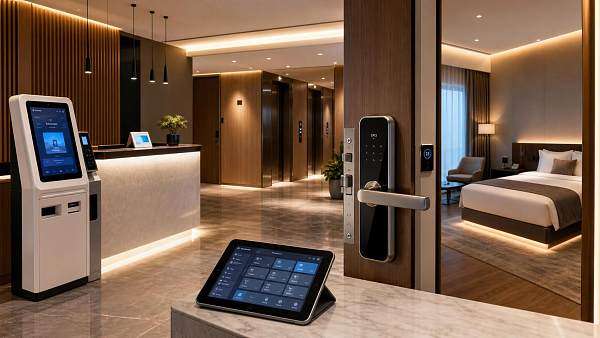
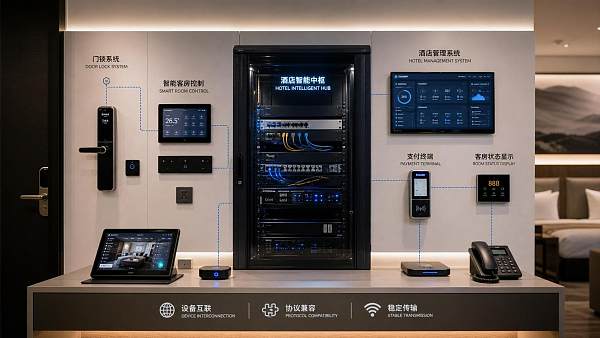
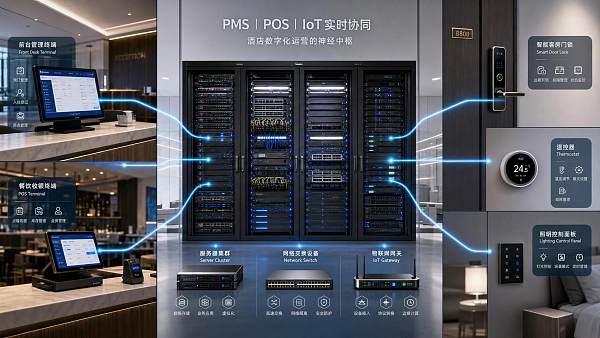
In practice, many buyers focus too heavily on visible smart hotel features such as app-based room control, digital check-in, or voice assistants. Those features matter, but they are only the surface layer. The real value of smart hotel automation comes from how well the system connects with PMS, HVAC, locks, lighting, energy management, housekeeping workflows, and hotel IoT solutions across the full property ecosystem.
For organizations operating under sustainability and performance standards, evaluation should also include carbon efficiency, upgrade flexibility, maintenance burden, and compatibility with broader sustainable tourism solutions. This is especially relevant in integrated tourism projects where hotels, resort cabins, attractions, and adjacent amusement hardware may share infrastructure or data systems.
What buyers are really trying to avoid when selecting smart hotel automation
Most commercial buyers searching for guidance on smart hotel automation are trying to reduce decision risk. They want to avoid purchasing a system that looks advanced during sales presentations but creates hidden costs, technical incompatibility, operational friction, or vendor dependence after deployment.
The most common concerns usually fall into five categories:
- Integration failure: the automation platform does not connect smoothly with existing hotel systems.
- Unexpected cost growth: installation, software licensing, API fees, customization, and support costs exceed the original budget.
- Operational disruption: staff adoption is poor, workflows become more complex, or guest complaints increase.
- Weak scalability: the solution works for one property but becomes difficult to replicate across multiple sites.
- Low long-term value: the system becomes outdated quickly or cannot support future smart hotel management needs.
That means the buying process should focus less on “smart” branding and more on technical verification, service architecture, and property-level fit.
Start with the property’s actual use case, not the vendor’s feature list
A smart hotel automation system should be selected based on the operating reality of the property. A city business hotel, resort villa cluster, glamping destination, and mixed-use tourism site may all need automation, but their priorities are very different.
Before comparing suppliers, define the intended outcomes clearly:
- Reduce front-desk workload through self-service check-in?
- Lower energy consumption through occupancy-based HVAC and lighting control?
- Improve room turnaround and housekeeping visibility?
- Support premium guest experience with mobile access and personalized controls?
- Centralize multi-property monitoring for owners or operators?
This step is critical because the best smart hotel design is not the one with the most modules. It is the one that supports the property’s business model with the least friction. If the project involves sustainable tourism solutions, then automation should also contribute to energy optimization, occupancy efficiency, and measurable operating reductions.
Buyers should document three layers of need:
- Must-have functions for operations on day one
- Important but phase-two functions that can be added later
- Nice-to-have features that should not drive the procurement decision
This helps prevent overbuying and keeps vendors aligned with practical goals.
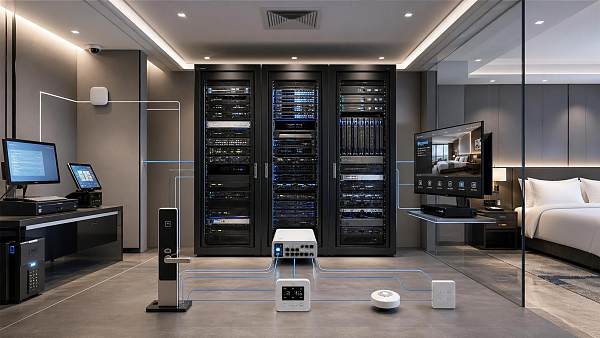
Check integration depth with PMS, locks, HVAC, lighting, and IoT devices
Integration is often the single biggest technical checkpoint before choosing smart hotel automation. A system may appear comprehensive but still rely on shallow or unstable integrations that create manual work behind the scenes.
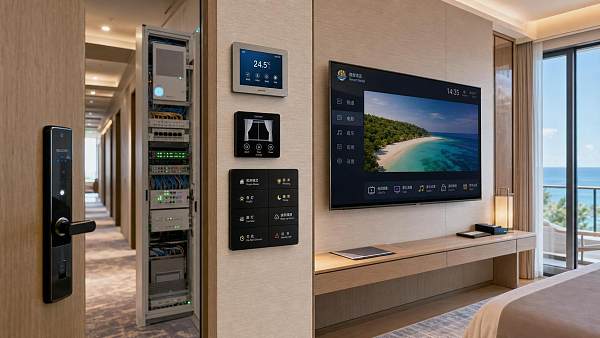
Procurement teams should verify compatibility with core systems such as:
- Property management system (PMS)
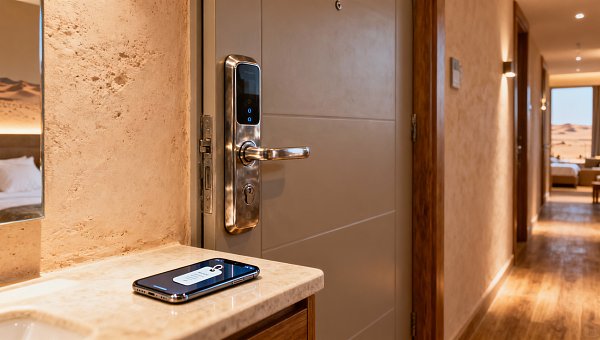
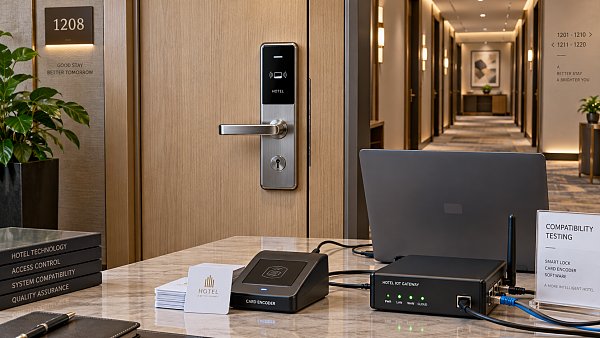
- Electronic door locks
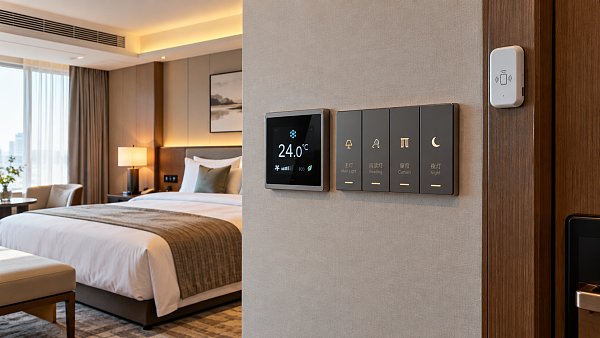
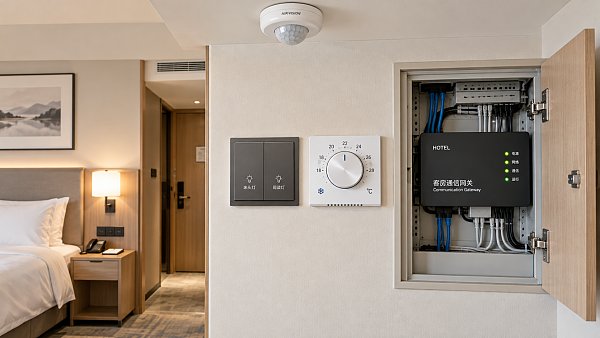
- HVAC controls and thermostats
- Lighting systems
- Energy management platforms
- Housekeeping and maintenance software
- Guest mobile app or web check-in tools
- In-room voice or tablet interfaces
It is not enough for a vendor to say the system “integrates.” Ask how the integration works in practice:
- Is it a native integration, middleware-based connection, or custom API build?
- How often is data synchronized?
- What happens if one subsystem goes offline?
- Are there extra fees for API access or third-party connectors?
- Who is responsible for troubleshooting cross-platform issues?
For hotel IoT solutions, network architecture also matters. Buyers should examine device density, signal stability, gateway redundancy, data throughput, and whether the system can perform reliably during peak occupancy. In larger resorts or distributed accommodation environments, this becomes even more important because coverage gaps and latency can quickly affect guest experience.
Calculate the full cost of ownership, not just the purchase price
One of the biggest mistakes in smart hotel automation procurement is evaluating only hardware and installation pricing. The real commercial decision should be based on total cost of ownership over several years.
Costs commonly include:
- Hardware devices and controllers
- Installation and commissioning
- Software licensing or SaaS subscriptions
- Cloud hosting or platform access fees
- API and integration costs
- Customization and interface development
- Staff training
- Maintenance and replacement parts
- Technical support contracts
- Upgrade and expansion costs
For business evaluation teams, a better approach is to compare automation scenarios against measurable return categories:
- Labor savings
- Energy savings
- Reduced room downtime
- Lower service error rates
- Higher guest satisfaction or review performance
- Improved premium pricing potential
If a supplier cannot help quantify these operational outcomes, the proposal may be too feature-led and not decision-ready. A credible vendor should be able to explain where ROI comes from, under what assumptions, and how long the payback period is likely to be.
Assess whether the system supports long-term smart hotel management
Smart hotel automation should not only automate isolated tasks; it should improve ongoing management visibility and decision-making. This is where many systems underperform. They control devices but do not generate usable management insight.
Before selecting a platform, ask whether managers can monitor:
- Room occupancy status in real time
- Energy consumption by zone, room type, or building
- Device health and fault alerts
- Housekeeping status and turnover timing
- Remote control permissions and audit trails
- Guest service response metrics
For operators managing multiple tourism assets, centralized dashboards are especially valuable. A scalable smart hotel management platform should support benchmarking across sites and make it easier to compare performance by property, season, or asset type.
This is also relevant for developers and distributors evaluating product lines for multiple clients. A system with strong management analytics is often easier to position in the market because buyers increasingly want measurable operational outcomes, not just device control.
Verify cybersecurity, data governance, and system resilience
As hotels become more connected, cybersecurity becomes a procurement issue, not just an IT issue. Guest data, access control, payment-related touchpoints, and operational systems can all create risk if the automation infrastructure is poorly protected.
Important questions include:
- How are guest credentials, room access data, and user permissions managed?
- Is data encrypted in transit and at rest?
- Can the system operate safely during internet outages?
- How are firmware updates deployed and verified?
- Are there role-based access controls for staff and third-party service teams?
- Does the vendor follow recognized cybersecurity practices or compliance frameworks?
Resilience matters just as much as security. If cloud access fails, can rooms still be accessed? If one gateway fails, does the network continue operating? If a software update causes instability, is there a rollback procedure?
For any buyer comparing smart hotel features, robust fail-safe design is often more valuable than flashy digital extras. Guests will tolerate the absence of voice control far more easily than a failed door lock or unstable climate system.
Review installation complexity and fit with the building environment
Not all hotel properties are equally suited to the same automation architecture. New-build hotels, retrofit projects, modular tourism units, and distributed resorts each come with different technical constraints.
Buyers should examine:
- Whether the system is better suited for new construction or retrofit
- Cabling and power requirements
- Wireless reliability in concrete, steel, or geographically spread sites
- Compatibility with existing MEP infrastructure
- Installation time per room or building
- Downtime impact during renovation or phased deployment
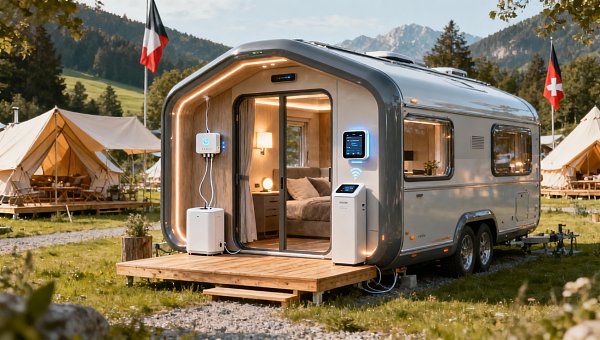
This matters even more in tourism environments that blend hotel accommodation with prefabricated cabins, eco-lodges, or adjacent attraction zones. In such projects, smart hotel design should account for environmental conditions, maintenance access, and infrastructure consistency across varied asset types.
A technically elegant system that is difficult to deploy in the actual site environment may produce delays, budget overruns, or compromises in final performance.
Test how the system affects staff workflows and guest experience
Automation succeeds only when it works for both operators and guests. A platform may offer strong control capabilities but still fail if it adds complexity for front-desk teams, maintenance staff, or housekeeping personnel.
Ask vendors to demonstrate real workflows, not only interface screens. For example:
- What happens from reservation confirmation to room assignment and mobile key issuance?
- How is an early check-in or room change handled?
- What alert does housekeeping receive when a guest checks out?
- How does maintenance identify a device issue before it becomes a guest complaint?
- What does a guest do if the app fails or prefers manual service?
The best systems support service flexibility. Not every guest wants a fully digital journey, and not every staff member works well with overcomplicated interfaces. Good smart hotel automation should reduce friction, not create dependency on a perfect digital path.
For evaluators, pilot testing is often the best way to validate assumptions. A small live deployment can reveal issues that product demos hide, including app usability, response delays, lock synchronization, and front-desk exception handling.
Check scalability, vendor support, and roadmap stability
Many buyers do not just need a solution for one property today; they need a platform that can expand across future projects, brands, or regional partners. That makes vendor capability a strategic factor.
Look closely at:
- Track record in comparable hospitality projects
- Ability to support multi-site deployment
- Local technical support availability
- Spare parts and replacement lead times
- Software update frequency and quality control
- Product roadmap and backward compatibility
Distributors, dealers, and procurement decision-makers should also evaluate whether the supplier is building an open ecosystem or creating lock-in. Proprietary dependence can become expensive later, especially if expansion requires the same vendor for every module, service visit, or device replacement.
A stable roadmap is essential for smart hotel management over the long term. If the vendor cannot explain how the platform will evolve in three to five years, the buyer may be accepting future obsolescence risk.
Use a practical pre-purchase checklist before making the final decision
To simplify evaluation, buyers can use a structured decision checklist before issuing a purchase order or approving a deployment plan.
Pre-selection checklist for smart hotel automation:
- Have we defined the operational outcomes this system must deliver?
- Does the platform integrate natively with our PMS and core hotel systems?
- Have we mapped all implementation, subscription, and support costs?
- Can the vendor show measurable ROI assumptions?
- Does the system support real management reporting and analytics?
- Are cybersecurity and fail-safe mechanisms clearly documented?
- Is the solution technically suitable for our building type and infrastructure?
- Have actual staff workflows been tested or simulated?
- Can the platform scale to future properties or adjacent tourism assets?
- Do we trust the vendor’s long-term support and upgrade capability?
If several of these questions remain unanswered, the system is probably not ready for procurement approval, regardless of how attractive the front-end interface appears.
Final decision criteria: choose operational fit over marketing appeal
The best smart hotel automation system is not necessarily the one with the longest feature sheet. It is the one that delivers reliable integration, measurable efficiency, manageable cost, secure operation, and a better experience for both guests and staff.
For tourism developers, hotel procurement leaders, and commercial evaluators, the strongest decisions come from verifying technical facts: interoperability, lifecycle economics, resilience, serviceability, and sustainability contribution. This is especially important where smart hotel automation sits within a broader ecosystem of sustainable tourism solutions, modular accommodation, or nearby amusement infrastructure that also demands consistent engineering standards.
In short, before choosing smart hotel automation, check whether the system can perform in the real operating environment—not just in a demo. If it supports your property model, integrates cleanly, scales sensibly, and produces measurable value, then it is worth serious consideration. If not, even impressive smart hotel features may become an expensive distraction.
Recommended News
 Nov 16, 2026Vingcard Deploys MENA’s First Native Wallet Hotel Keys in EgyptVingcard and Hudini bring native wallet hotel keys to three Egypt resorts. Discover what app-free access could mean for hotel buyers and suppliers.
 Oct 26, 2026Roseate Targets 30 Hotels by 2030, Plans New Smart Hotel BrandRoseate Hotels & Resorts targets 30 hotels by 2030, with an upscale smart hotel brand planned for early 2027. Explore its expansion strategy across India's smaller cities and core markets.
 Oct 20, 2026Amadeus Adds Embedded Travel Protection to iHotelierAmadeus adds embedded travel protection to iHotelier with Pattern. Explore the potential for greater guest confidence, new hotel revenue and key considerations before adoption.
 Oct 17, 2026Custom Smart Hotel Solutions: Integrating Room Controls With Your Existing PMSDiscover a smart hotel custom solution that connects room controls to your existing PMS, enhances guest comfort, and improves reliability without unnecessary infrastructure replacement.
 Oct 26, 2026Why Did Hotel Room Controls Stop Syncing After a Software Update?Why did hotel room controls stop syncing after a software update? Discover common causes, practical fixes, and testing steps to restore reliable lighting, temperature, and occupancy control.
 Oct 25, 2026How Do I Check Smart Lock Compatibility With Existing Hotel Software?How do I check whether smart locks will work with our existing hotel software? Discover PMS checks, mobile-key tests, and outage safeguards to validate compatibility before you invest.
 Oct 22, 2026Where to Place Smart Sensors in Hotels for Early Water Leak DetectionDiscover where to place smart sensors for hospitality properties to detect water leaks early. Protect guestrooms, HVAC units, and service areas with practical placement tips.
 Oct 22, 2026How Smart Sensors Connect to Hotel Property and Building Management SystemsExplore smart sensors for hospitality property management: learn how PMS and BMS integration supports guest comfort, reliable controls, and security—and what to verify before deployment.
 Oct 19, 2026How Can You Verify Energy Cost Savings From Hotel Room Automation?How do I check whether room automation actually reduced energy costs? Learn to verify hotel savings with occupancy-adjusted data, tariff analysis, and comfort checks before investing.
 Oct 17, 2026How Do You Revoke a Former Contractor's Access to Hotel Smart Systems?How do I revoke a former contractor's access to hotel smart systems? Get a practical checklist to disable accounts, revoke keys, and secure integrations without disrupting hotel operations.
 Sep 25, 2026Resort System Integration: How to Connect PMS, Guestroom Controls, and KiosksResort system integration guide: connect PMS, guestroom controls, and kiosks with reliable workflows, secure data, and seamless guest experiences.
 Sep 08, 2026How to Build Stable Interoperability Across Hotel Guestroom SystemsHospitality system interoperability stable: learn how hotels can align room states, command priorities, local fallback, and testing for reliable guestroom operations.
 Aug 18, 2026What Hotel System Interoperability Means for PMS, POS, and Guestroom TechHotel system interoperability shapes how PMS, POS, and guestroom tech perform in real hotels. Learn the key risks, validation points, and smarter ways to build resilient operations.
 Aug 10, 2026How to Evaluate a Smart Hotel System Integration Quotation Before ApprovalSystem integration quotation for smart hotels: learn how to assess scope, interoperability, cybersecurity, lifecycle cost, and hidden risks before approval.
 Jul 28, 2026How to Evaluate a Smart Hotel Application for Guest Experience and Staff EfficiencySmart hotel application evaluation made practical: learn how to compare integrations, guest journey design, staff workflows, security, and total cost to choose a smarter hotel solution.
 Jul 12, 2026Premium Camping Q2 Up 19% as Europe Expands Guestroom AutomationPremium camping grew 19% in Q2 as Europe accelerates guestroom automation. Discover how Germany, France, and Switzerland are driving demand for smarter campsites.
 Jul 11, 2026System Integration Testing for Resorts: Key Steps Before Guestroom Tech Goes LiveSystem integration testing for resorts: discover the 6 essential pre-opening steps to prevent guestroom tech failures, reduce launch risk, and protect guest satisfaction.
 Jul 10, 2026Hospitality System Interoperability Buyer Guide: What to Check Before You BuyHospitality system interoperability buyer guide: learn what to verify before you buy, from APIs and device compatibility to security, scalability, hidden costs, and vendor risk.
 Jul 09, 2026CPSC advisory puts offline AI checks on hotel voice devicesCPSC advisory reshapes compliance for hotel voice devices with offline AI. Learn how FCC Part 15 checks, labeling, and shipment readiness may impact U.S. hotel projects.
 Jul 08, 2026CPSC Sets Offline AI Rule for Guestroom Voice ModulesCPSC Sets Offline AI Rule for Guestroom Voice Modules: learn how the 2026 U.S. update impacts compliance, imports, hotel tech sourcing, and recall risk for suppliers.
 Jul 07, 2026CPSC Sets Offline AI Bar for Hotel Voice DevicesCPSC sets a new offline AI bar for hotel voice devices. Learn how the 2026 guidance impacts guestroom automation, import checks, supplier compliance, and hotel procurement decisions.
![]() Jul 06, 2026CPSC Requires Offline AI in Guestroom Voice SystemsCPSC requires offline AI in guestroom voice systems starting Oct 1, 2026. Learn how this rule impacts Alexa/Google integrations, compliance, procurement, and U.S. market shipments.
 Jul 06, 2026How to Reduce Hospitality System Interoperability Latency Across PMS, POS, and IoTHospitality system interoperability latency affects guest experience, revenue accuracy, and IoT responsiveness. Learn practical ways to reduce delays across PMS, POS, and smart hotel systems.
 Jul 05, 2026CPSC Orders Offline AI for Hotel Voice ModulesCPSC orders offline AI for hotel voice modules by Oct 1, 2026. Learn how local AI inference rules will impact U.S. hotel automation sourcing, integration, and compliance.
{item.publish_time}{item.title}{item.description}Quarterly Executive Summaries Delivered Directly.
Join 50,000+ industry leaders who receive our proprietary market analysis and policy outlooks before they hit the public library.