Search News
TerraVista Metrics (TVM)Industry Portal
TerraVista Metrics (TVM)Hot Articles
TerraVista Metrics (TVM)- Supply Chain Intelligence for Procurement: How to Identify Supplier RisksSupply chain intelligence for procurement helps you uncover supplier risks, verify critical evidence, and protect delivery, quality, and compliance.
- AHLA and Actabl Report Links AI to Faster Hotel Tasks and Improved EfficiencyHotel AI helps employees complete routine tasks faster. Explore the AHLA and Actabl report on efficiency, staffing and more time for guest service.
- Eco-Lodging Materials: How to Verify Certification ClaimsVerify eco lodging materials certification with confidence. Learn how to check claims, trace products and avoid misleading sustainability statements.
Popular Tags
TerraVista Metrics (TVM)Industry NewsCPSC Launches COPPA 2.0 Review for AI Kiosks Targeting Children
auth.Lydia Vancini (Smart Hospitality IoT Consultant)Time
Nov 05, 2026Click Count
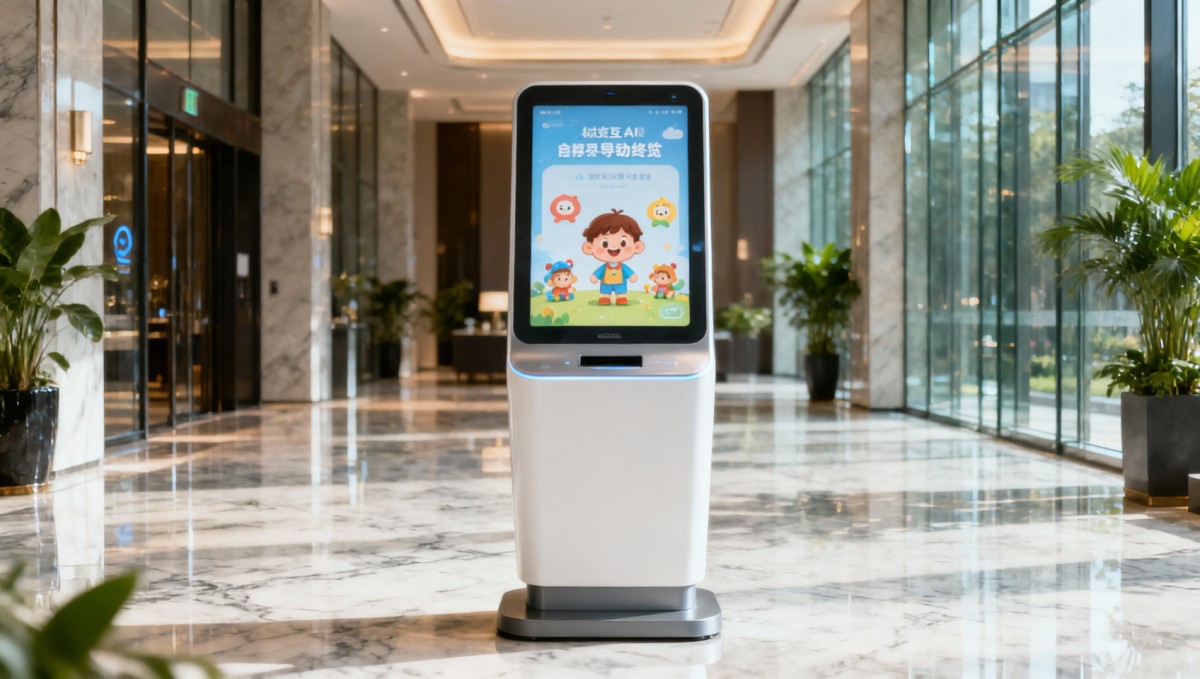
On April 27, 2026, the U.S. Consumer Product Safety Commission (CPSC) initiated the Kiosk Tech COPPA 2.0专项审查 — a targeted regulatory review affecting public interactive kiosks with AI-driven interfaces designed for children under 13. Industries including hospitality, tourism, retail, and public venue technology providers must now assess compliance implications, as non-conforming products risk classification as 'high-risk prohibited items' in the U.S. market.
Event Overview
The U.S. Consumer Product Safety Commission (CPSC) announced on April 27, 2026, the launch of the Kiosk Tech COPPA 2.0专项审查. Under this action, all public self-service kiosks — including hotel check-in terminals, tourist information displays, and mall directory screens — that deploy AI-generated interfaces for users aged under 13 must obtain dual certification: (1) an age-verification algorithm and (2) a content sandbox isolation mechanism. Chinese suppliers are required to complete compliance assessments against UL 2900-2-7 and NIST AI Risk Management Framework (AI RMF) Version 1.1 by July 2026. Failure to meet this deadline will result in affected products being designated 'high-risk prohibited items' for U.S. import and sale.
Industries Affected by Segment
Direct Exporters & OEM/ODM Manufacturers
Manufacturers supplying kiosk hardware or embedded AI interface software to U.S.-based integrators or brands face direct compliance obligations. Because CPSC enforcement applies at the point of import and product placement, these entities bear primary responsibility for certification documentation and technical validation — even if they do not brand the final product.
System Integrators & Solution Providers
Companies assembling end-to-end kiosk systems (e.g., combining touchscreens, payment modules, and AI voice/chat interfaces) must verify that every AI-enabled component — especially those handling child-directed interaction — satisfies both certification requirements. Integration-level testing and third-party attestation become critical, not optional.
Supply Chain & Component Suppliers
Vendors providing AI inference engines, natural language processing (NLP) SDKs, or age-estimation models used in kiosk firmware may be indirectly impacted. While CPSC does not regulate upstream software libraries directly, downstream certification failures can trigger contractual liability and demand for auditable, documented compliance evidence from component vendors.
Retail & Venue Operators (U.S.-based)
Hotels, theme parks, shopping malls, and museums deploying such kiosks must confirm supplier compliance before installation. Post-deployment audits or CPSC spot checks could lead to operational disruption if dual certification is missing — particularly where kiosks are accessible without staff supervision.
What Relevant Enterprises or Practitioners Should Focus On — And How to Respond Now
Monitor official CPSC guidance updates and enforcement timelines
The CPSC has not yet published detailed technical criteria for the 'age verification algorithm' or 'content sandbox isolation mechanism'. Enterprises should track CPSC’s forthcoming FAQs, stakeholder webinars, and any draft interpretive notices — especially regarding acceptable age estimation methods (e.g., biometric vs. declarative) and sandbox scope (e.g., whether it covers voice data, session history, or cross-app permissions).
Prioritize assessment of high-exposure product categories and markets
Products deployed in environments with predictable child traffic — such as airport family zones, children’s museums, or resort lobbies — carry higher scrutiny risk. Companies should identify and triage units shipped to or installed in these venues first, aligning UL 2900-2-7 and NIST AI RMF 1.1 evaluations with those specific use cases.
Distinguish between policy signal and enforceable requirement
Analysis shows the Kiosk Tech COPPA 2.0专项审查 functions primarily as a regulatory signal — not yet a codified rulemaking. It signals CPSC’s intent to extend COPPA enforcement beyond apps and websites into physical AI-interfaced devices. However, no new federal regulation has been promulgated; current enforcement relies on existing statutory authority under COPPA and the Consumer Product Safety Act. This distinction matters for legal risk assessment and internal prioritization.
Initiate readiness preparation across procurement, engineering, and compliance teams
Enterprises should now assemble cross-functional teams to map AI interface components, inventory third-party SDKs and cloud APIs used in kiosk logic, and initiate gap assessments against UL 2900-2-7 (cybersecurity for network-connectable products) and NIST AI RMF 1.1 (governance, validation, transparency). Early engagement with accredited labs for pre-assessment is advisable given anticipated lab capacity constraints ahead of the July 2026 deadline.
Editorial Observation / Industry Perspective
Observably, this action reflects a broader regulatory shift toward treating AI-enabled physical devices as data-collecting services — not just hardware — when they interact with children. It is less a finalized standard and more a calibrated escalation: CPSC is testing industry responsiveness while building precedent for future AI-device oversight. From an industry perspective, the dual-certification mandate appears designed to pressure vendors toward verifiable, testable safeguards — rather than relying on vague 'privacy-by-design' claims. Current attention should focus less on whether the requirement is 'final', and more on how quickly technical and documentation readiness can be achieved across layered supply chains.

Conclusion: The Kiosk Tech COPPA 2.0专项审查 is not yet a binding regulation, but it marks a material tightening of compliance expectations for AI-integrated public kiosks serving children in the U.S. It is best understood not as an isolated event, but as an early indicator of converging frameworks — where children’s privacy law, AI governance, and product safety enforcement increasingly overlap. Enterprises should treat it as a time-bound operational benchmark requiring coordinated technical, legal, and supply chain action — not merely a policy headline.
Source: U.S. Consumer Product Safety Commission (CPSC), official announcement dated April 27, 2026. Note: Specific technical implementation guidelines, certification pathways, and enforcement protocols remain pending and require ongoing observation.
Recommended News
 Oct 24, 2026Using a Concierge Kiosk to Offer Multilingual Local RecommendationsUse a concierge kiosk to deliver multilingual local recommendations guests can trust. Discover practical tips for accurate listings, smart filters, and seamless QR directions.
 Oct 24, 2026Choosing a Hotel Kiosk Display: Brightness, Touch Accuracy, and DurabilityChoose the right hotel kiosk display with expert guidance on brightness, touch accuracy, and durability. Discover what to test to improve guest experiences and reduce maintenance costs.
 Oct 23, 2026Keeping Hotel Information Kiosks Accurate When Guest Services ChangeKeep hotels information kiosk content accurate as services change. Discover practical workflows, screen checks, and multilingual tips to reduce confusion and improve guest service.
 Oct 23, 2026Self-Service Kiosks vs. Staffed Check-In: Which Fits Your Hotel?Considering a kiosk in hospitality sector operations? Compare self-service and staffed hotel check-in, costs, integration, and guest experience to find the right fit for your property.
 Aug 04, 2026What Tourism Hardware Does a Visitor Center Need for Better Wayfinding and Service?Tourism hardware for visitor centers: discover the essential signs, kiosks, counters, and queue systems that improve wayfinding, service efficiency, accessibility, and visitor experience.
 Jul 14, 2026West Coast Port Strain Extends Kiosk Tech Sea Lead TimesWest Coast port strain is extending Kiosk Tech sea lead times to 48 days, raising PSS and delivery risk. See what exporters, buyers, and service teams must do now.
 Jul 12, 2026US West Coast Strike Extends Kiosk Tech Lead TimesUS West Coast Strike Extends Kiosk Tech Lead Times—learn how port disruption, Red Sea rerouting, and Mexico diversion are reshaping Q3 inventory, routing, and delivery planning.
 Jul 12, 2026How to Compare Cost Effective Slide Systems for Kiosks, Cabinets, and Compact EquipmentCost effective slide systems compared for kiosks, cabinets, and compact equipment. Learn how to evaluate load, cycle life, fit, and maintenance for smarter sourcing.
 Jul 10, 2026GCC Rule Adds Local Privacy Sandbox to Facial Recognition KiosksGCC rule updates put facial recognition kiosks under tighter compliance from July 10, 2026. Learn how local privacy sandbox firmware, GSO reports, and longer lead times affect GCC market access.
 Jul 09, 2026Singapore Tightens Kiosk Imports for Facial RecognitionSingapore Tightens Kiosk Imports for Facial Recognition: learn the new PSB rules, firmware SDK, and local data caching requirements before August 1, 2026.
 Jul 08, 2026ISPO Munich Adds Smart Wayfinding Pavilion as EU-US Interest Jumps 67%ISPO Munich spotlights smart wayfinding as EU-US interest jumps 67%. Explore AR navigation, multilingual kiosks, and offline maps shaping outdoor venue projects.
 Jul 07, 2026ISPO 2026 Kiosk Zone Signals New Buying RulesISPO 2026 Kiosk Zone signals new buying rules for smart wayfinding terminals, highlighting EN 301 549 compliance, localized CMS needs, and rising EU buyer demand.
![]() Jul 06, 2026ISPO Adds Kiosk Tech as China Draws Buyer InterestISPO adds Kiosk Tech as China draws buyer interest, signaling rising demand for IP65 outdoor kiosk terminals, offline OTA maps, and multilingual guidance solutions for parks, resorts, and ski areas.
 Jul 06, 2026Resort Self Check-In Kiosks: Best Use Cases, Guest Flow Risks, and Setup TipsResort self check in kiosks explained: discover the best use cases, common guest flow risks, and practical setup tips to reduce queues and improve resort arrivals.
 Jul 05, 2026ISPO Munich 2026 Adds Kiosk Tech Zone as Chinese Outdoor Terminals Draw OrdersISPO Munich 2026 spotlights kiosk tech as Chinese outdoor terminals win 1,240 orders. Explore how smart wayfinding, AR navigation, and solar-powered kiosks are reshaping parks and resorts.
 Jul 04, 2026ISPO Opens Kiosk Tech Zone as China Devices Draw BuyersISPO Opens Kiosk Tech Zone as China devices draw buyers, highlighting demand for smart guide terminals with offline maps, AR, and LoRaWAN/NB-IoT—see what suppliers and buyers should prepare now.
 Jul 03, 2026ISPO Munich 2026 Debuts Kiosk Tech ZoneISPO Munich 2026 debuts Kiosk Tech Zone, spotlighting smart wayfinding kiosks for ski resorts. Explore buyer demand for IP65+, -30°C performance, AR navigation, and offline maps.
 Jul 02, 2026ISPO Adds Kiosk Tech Zone as China Suppliers Draw OrdersISPO adds Kiosk Tech Zone as China suppliers win orders for smart wayfinding kiosks. Explore how IP66, solar charging, offline maps, and rising MOQs are reshaping procurement.
 Jul 01, 2026ISPO Munich 2026 Adds Kiosk Tech as Chinese Guide Terminals Draw BuyersISPO Munich 2026 spotlights Kiosk Tech as Chinese guide terminals attract buyers with multilingual AR navigation and offline maps. Explore the 210% order surge, delivery timelines, and GDPR-ready deployment trends.
 Jul 01, 2026Kiosk Technology for Guest Services: Which Features Improve Check-In and Self-ServiceKiosk technology for guest services: discover which features improve check-in, self-service speed, system integration, and guest satisfaction across hotels, resorts, and attractions.
 Jun 30, 2026SASO Opens 72-Hour Fast Track for Kiosk TechSASO Opens 72-Hour Fast Track for Kiosk Tech: learn how Saudi local cloud hosting, ISO/IEC 27001:2022, and FastTrack-3 can cut approval time and speed market entry.
 Jun 29, 2026Saudi SASO Tightens Kiosk Cloud Hosting RulesSaudi SASO Tightens Kiosk Cloud Hosting Rules: learn how the 2026 SABER update affects smart kiosk compliance, local cloud hosting, certification, and Saudi market entry.
 Jun 25, 2026Tongcheng Links to WeChat AI Ecosystem for Kiosk ExpansionTongcheng Links to WeChat AI Ecosystem for Kiosk Expansion: explore how multilingual voice, AR wayfinding, and offline facial verification could reshape airport kiosks and cross-border travel tech.
 Jun 12, 2026China Ticketing Probe Raises Kiosk Compliance FocusChina Ticketing Probe raises urgent Kiosk Tech compliance questions for RV Components suppliers, from biometric data controls to GDPR and China PIPL readiness across global deployments.
{item.publish_time}{item.title}{item.description}Quarterly Executive Summaries Delivered Directly.
Join 50,000+ industry leaders who receive our proprietary market analysis and policy outlooks before they hit the public library.