Search News
TerraVista Metrics (TVM)Industry Portal
TerraVista Metrics (TVM)Hot Articles
TerraVista Metrics (TVM)- Choosing Prefab Cabin Suppliers: Quality, Lead Times and Delivery CostsCompare prefab cabin suppliers on quality, lead times, compliance, and total delivery costs. Learn what to verify before you buy and avoid costly surprises.
- Choosing an Amusement Equipment Testing Agency: Accreditation and ScopeChoosing an amusement equipment testing agency? Learn how to verify accreditation, assess technical scope, and compare reports before you commit.
- Global Temporary Buildings Market Forecast to Reach $5.88 Billion by 2032Global temporary buildings market is forecast to reach $5.88 billion by 2032. Explore the modular, reusable and rapid-assembly trends driving growth.
Popular Tags
TerraVista Metrics (TVM)Industry NewsCPSC Mandates UL 991 + Thermal Runaway Fuse for Kiosk Tech Storage
auth.Lydia Vancini (Smart Hospitality IoT Consultant)Time
Nov 07, 2026Click Count
On April 20, 2026, the U.S. Consumer Product Safety Commission (CPSC) issued Emergency Notice 2026-042, requiring all energy storage units embedded in public-space kiosk technology — including interactive wayfinding, retail, and information terminals — to comply with both UL 991 (Human-System Interaction Safety) and a newly mandated thermal runaway fusing module. This update directly impacts manufacturers, exporters, and supply chain stakeholders serving the North American kiosk tech market, particularly those relying on China-based OEM production.
Event Overview
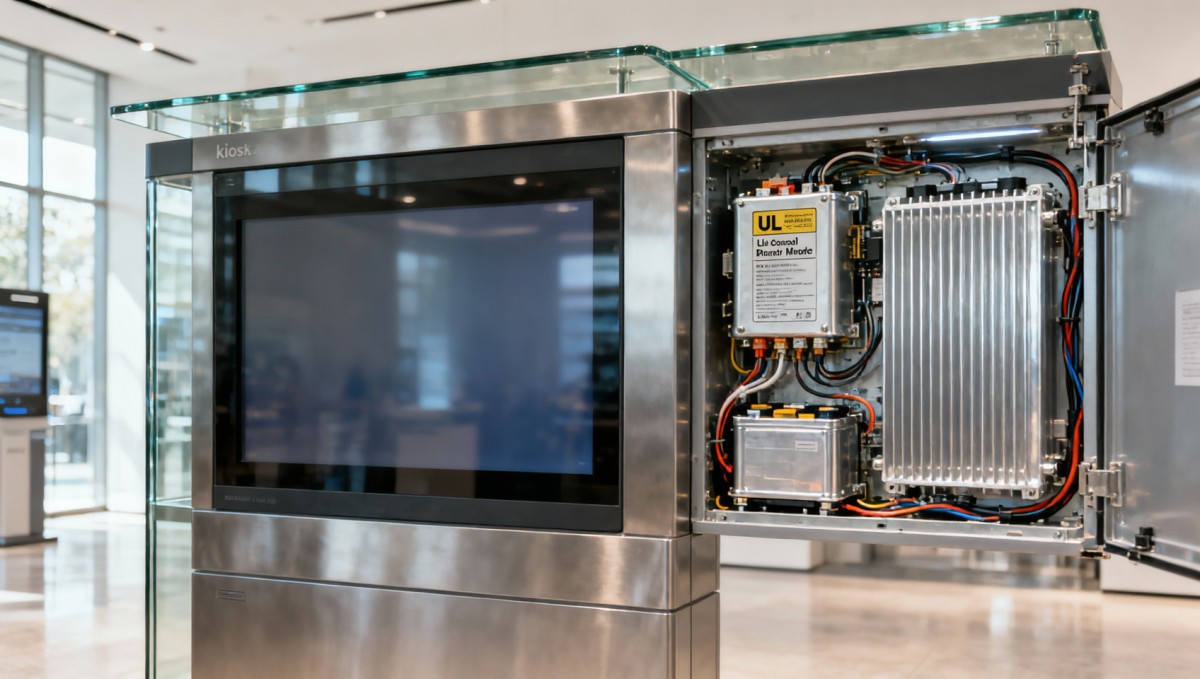
On April 20, 2026, the U.S. CPSC published Emergency Notice 2026-042. The notice stipulates that all smart kiosks deployed in public spaces and equipped with internal energy storage must concurrently meet UL 991 certification and incorporate a certified ‘thermal runaway fusing response module’. The requirement takes effect immediately. Non-compliant products will be denied U.S. entry or removed from sale. Chinese OEMs must integrate a UL-witnessed dedicated fuse IC into their bill of materials (BOM), resulting in an average lead time extension of six weeks.
Industries Affected by Segment
Direct Exporters & Trade Enterprises
These entities face immediate customs clearance risk for shipments arriving after April 20, 2026. Impact manifests as potential port holds, rework demands, or rejection of inventory already in transit — especially for kiosks with lithium-based battery packs not pre-certified to the dual standard.
Contract Manufacturers & OEMs (China-based)
OEMs supplying kiosk systems to U.S. integrators or brands are required to revise BOMs and production workflows. The mandate introduces a new UL-witnessed component qualification step, adding ~6 weeks to delivery timelines and increasing validation costs. No grandfathering is indicated for existing designs.
Component Sourcing & Supply Chain Services
Suppliers of battery management ICs, protection circuits, and thermal cutoff devices must now verify whether their offerings meet the CPSC’s definition of a ‘thermal runaway fusing response module’. Distributors handling fuse ICs may need updated UL documentation and traceability records to support OEM compliance audits.
System Integrators & Solution Providers
Integrators deploying branded kiosks in U.S. airports, malls, or government facilities must confirm hardware-level compliance before installation. Firmware-only updates cannot satisfy the physical fuse module requirement; retrofitting legacy units is not addressed in the notice and is unlikely to be accepted by CPSC or CBP.
What Stakeholders Should Monitor & Do Now
Track official CPSC guidance and UL interpretation documents
The notice references a ‘thermal runaway fusing response module’ but does not publish technical specifications. Stakeholders should monitor UL’s upcoming bulletin (expected Q2 2026) clarifying test protocols, pass/fail criteria, and acceptable IC architectures — e.g., whether discrete PTCs, smart fuses, or integrated BMS-triggered disconnects qualify.
Verify BOM-level compliance for active U.S.-bound SKUs
Manufacturers should audit current kiosk models shipped to the U.S. against Notice 2026-042. Priority attention is needed for units using NMC or LFP pouch/prismatic cells — chemistries most frequently associated with thermal propagation risk in confined enclosures.
Distinguish between regulatory signal and enforceable requirement
This is an emergency notice, not a formal rulemaking. While enforcement begins immediately, full legal codification under 16 CFR may follow later. For now, CBP and CPSC field offices are instructed to treat non-compliance as grounds for refusal — making operational readiness more urgent than legal finality.
Initiate UL-witnessed fuse IC qualification and procurement planning
Given the 6-week average delay, OEMs should identify and engage UL-accredited labs for witness testing *now*. Concurrently, secure allocation of qualified fuse ICs with documented UL file numbers — generic ‘thermal fuse’ parts without witness validation do not satisfy the requirement.
Editorial Perspective / Industry Observation
From an industry perspective, this notice signals a structural shift: CPSC is moving beyond end-product safety (e.g., UL 62368-1) toward prescriptive, architecture-level controls for embedded energy storage in public-facing electronics. It reflects growing regulatory focus on failure-mode-specific mitigation — not just general fire resistance. Analysis来看, this is less a one-off policy adjustment and more an early indicator of how future U.S. rules may treat distributed energy systems in unattended IoT infrastructure. Observation来看, the speed of implementation — no grace period, no phase-in — suggests CPSC views recent thermal incidents in kiosk deployments as actionable risk triggers. Current more appropriate understanding is that this notice functions as both an enforcement action *and* a de facto design standard for next-generation public kiosks.

In summary, CPSC Notice 2026-042 establishes an immediate, hardware-level compliance threshold for kiosk-integrated energy storage in the U.S. market. Its significance lies not only in its technical scope but in its precedent-setting approach to mandating failure-specific safety modules. For stakeholders, the priority is operational alignment — not speculation about long-term regulatory evolution.
Source: U.S. Consumer Product Safety Commission (CPSC), Emergency Notice 2026-042, issued April 20, 2026. Note: UL’s formal interpretation of the ‘thermal runaway fusing response module’ remains pending and is under active observation.
Recommended News
 Oct 24, 2026Using a Concierge Kiosk to Offer Multilingual Local RecommendationsUse a concierge kiosk to deliver multilingual local recommendations guests can trust. Discover practical tips for accurate listings, smart filters, and seamless QR directions.
 Oct 24, 2026Choosing a Hotel Kiosk Display: Brightness, Touch Accuracy, and DurabilityChoose the right hotel kiosk display with expert guidance on brightness, touch accuracy, and durability. Discover what to test to improve guest experiences and reduce maintenance costs.
 Oct 23, 2026Keeping Hotel Information Kiosks Accurate When Guest Services ChangeKeep hotels information kiosk content accurate as services change. Discover practical workflows, screen checks, and multilingual tips to reduce confusion and improve guest service.
 Oct 23, 2026Self-Service Kiosks vs. Staffed Check-In: Which Fits Your Hotel?Considering a kiosk in hospitality sector operations? Compare self-service and staffed hotel check-in, costs, integration, and guest experience to find the right fit for your property.
 Aug 04, 2026What Tourism Hardware Does a Visitor Center Need for Better Wayfinding and Service?Tourism hardware for visitor centers: discover the essential signs, kiosks, counters, and queue systems that improve wayfinding, service efficiency, accessibility, and visitor experience.
 Jul 14, 2026West Coast Port Strain Extends Kiosk Tech Sea Lead TimesWest Coast port strain is extending Kiosk Tech sea lead times to 48 days, raising PSS and delivery risk. See what exporters, buyers, and service teams must do now.
 Jul 12, 2026US West Coast Strike Extends Kiosk Tech Lead TimesUS West Coast Strike Extends Kiosk Tech Lead Times—learn how port disruption, Red Sea rerouting, and Mexico diversion are reshaping Q3 inventory, routing, and delivery planning.
 Jul 12, 2026How to Compare Cost Effective Slide Systems for Kiosks, Cabinets, and Compact EquipmentCost effective slide systems compared for kiosks, cabinets, and compact equipment. Learn how to evaluate load, cycle life, fit, and maintenance for smarter sourcing.
 Jul 10, 2026GCC Rule Adds Local Privacy Sandbox to Facial Recognition KiosksGCC rule updates put facial recognition kiosks under tighter compliance from July 10, 2026. Learn how local privacy sandbox firmware, GSO reports, and longer lead times affect GCC market access.
 Jul 09, 2026Singapore Tightens Kiosk Imports for Facial RecognitionSingapore Tightens Kiosk Imports for Facial Recognition: learn the new PSB rules, firmware SDK, and local data caching requirements before August 1, 2026.
 Jul 08, 2026ISPO Munich Adds Smart Wayfinding Pavilion as EU-US Interest Jumps 67%ISPO Munich spotlights smart wayfinding as EU-US interest jumps 67%. Explore AR navigation, multilingual kiosks, and offline maps shaping outdoor venue projects.
 Jul 07, 2026ISPO 2026 Kiosk Zone Signals New Buying RulesISPO 2026 Kiosk Zone signals new buying rules for smart wayfinding terminals, highlighting EN 301 549 compliance, localized CMS needs, and rising EU buyer demand.
![]() Jul 06, 2026ISPO Adds Kiosk Tech as China Draws Buyer InterestISPO adds Kiosk Tech as China draws buyer interest, signaling rising demand for IP65 outdoor kiosk terminals, offline OTA maps, and multilingual guidance solutions for parks, resorts, and ski areas.
 Jul 06, 2026Resort Self Check-In Kiosks: Best Use Cases, Guest Flow Risks, and Setup TipsResort self check in kiosks explained: discover the best use cases, common guest flow risks, and practical setup tips to reduce queues and improve resort arrivals.
 Jul 05, 2026ISPO Munich 2026 Adds Kiosk Tech Zone as Chinese Outdoor Terminals Draw OrdersISPO Munich 2026 spotlights kiosk tech as Chinese outdoor terminals win 1,240 orders. Explore how smart wayfinding, AR navigation, and solar-powered kiosks are reshaping parks and resorts.
 Jul 04, 2026ISPO Opens Kiosk Tech Zone as China Devices Draw BuyersISPO Opens Kiosk Tech Zone as China devices draw buyers, highlighting demand for smart guide terminals with offline maps, AR, and LoRaWAN/NB-IoT—see what suppliers and buyers should prepare now.
 Jul 03, 2026ISPO Munich 2026 Debuts Kiosk Tech ZoneISPO Munich 2026 debuts Kiosk Tech Zone, spotlighting smart wayfinding kiosks for ski resorts. Explore buyer demand for IP65+, -30°C performance, AR navigation, and offline maps.
 Jul 02, 2026ISPO Adds Kiosk Tech Zone as China Suppliers Draw OrdersISPO adds Kiosk Tech Zone as China suppliers win orders for smart wayfinding kiosks. Explore how IP66, solar charging, offline maps, and rising MOQs are reshaping procurement.
 Jul 01, 2026ISPO Munich 2026 Adds Kiosk Tech as Chinese Guide Terminals Draw BuyersISPO Munich 2026 spotlights Kiosk Tech as Chinese guide terminals attract buyers with multilingual AR navigation and offline maps. Explore the 210% order surge, delivery timelines, and GDPR-ready deployment trends.
 Jul 01, 2026Kiosk Technology for Guest Services: Which Features Improve Check-In and Self-ServiceKiosk technology for guest services: discover which features improve check-in, self-service speed, system integration, and guest satisfaction across hotels, resorts, and attractions.
 Jun 30, 2026SASO Opens 72-Hour Fast Track for Kiosk TechSASO Opens 72-Hour Fast Track for Kiosk Tech: learn how Saudi local cloud hosting, ISO/IEC 27001:2022, and FastTrack-3 can cut approval time and speed market entry.
 Jun 29, 2026Saudi SASO Tightens Kiosk Cloud Hosting RulesSaudi SASO Tightens Kiosk Cloud Hosting Rules: learn how the 2026 SABER update affects smart kiosk compliance, local cloud hosting, certification, and Saudi market entry.
 Jun 25, 2026Tongcheng Links to WeChat AI Ecosystem for Kiosk ExpansionTongcheng Links to WeChat AI Ecosystem for Kiosk Expansion: explore how multilingual voice, AR wayfinding, and offline facial verification could reshape airport kiosks and cross-border travel tech.
 Jun 12, 2026China Ticketing Probe Raises Kiosk Compliance FocusChina Ticketing Probe raises urgent Kiosk Tech compliance questions for RV Components suppliers, from biometric data controls to GDPR and China PIPL readiness across global deployments.
{item.publish_time}{item.title}{item.description}Quarterly Executive Summaries Delivered Directly.
Join 50,000+ industry leaders who receive our proprietary market analysis and policy outlooks before they hit the public library.