Search News
TerraVista Metrics (TVM)Industry Portal
TerraVista Metrics (TVM)Hot Articles
TerraVista Metrics (TVM)- Cableway Station Spacing: How Terrain and Capacity Shape the DistanceExplore cableway systems station spacing and learn how terrain, passenger capacity and safety shape practical, route-specific design decisions.
- What Is an Industry Insights Data Model? Key Components and UsesDiscover how an industry insights data model connects market data, improves comparisons, and supports smarter benchmarking and procurement decisions.
- Vingcard Deploys MENA’s First Native Wallet Hotel Keys in EgyptVingcard and Hudini bring native wallet hotel keys to three Egypt resorts. Discover what app-free access could mean for hotel buyers and suppliers.
Popular Tags
TerraVista Metrics (TVM)Industry NewsCanton Fair Phase II: Smart Lighting Orders to Middle East Up 37%
auth.Lydia Vancini (Smart Hospitality IoT Consultant)Time
Nov 16, 2026Click Count
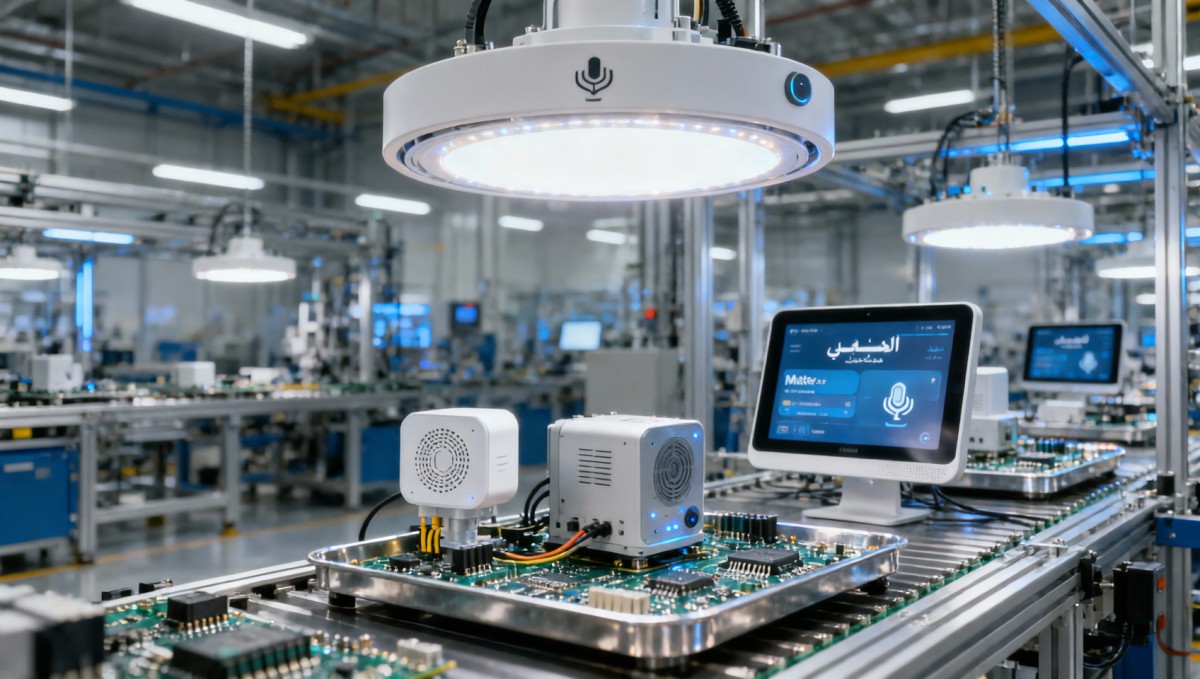
At the conclusion of Phase II of the 2026 Canton Fair on April 27, smart lighting orders destined for the Middle East rose 37% year-on-year — a notable shift signaling accelerated localization demand in voice-controlled IoT lighting. This development is especially relevant for lighting OEMs/ODMs, cross-border trade firms, embedded software providers, and supply chain service providers operating at the intersection of smart home hardware and regional language AI integration.
Event Overview
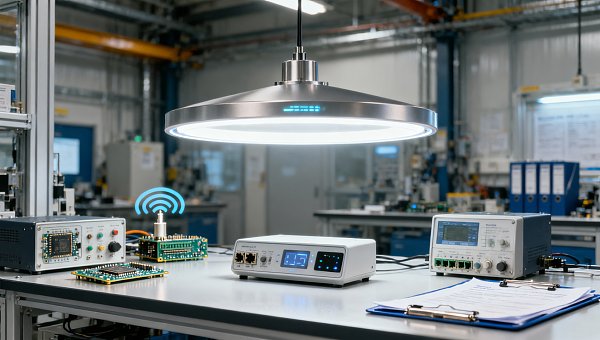
On April 27, 2026, the China Import and Export Fair (Canton Fair) Phase II closed with publicly reported data indicating a 37% year-on-year increase in smart lighting orders bound for Middle Eastern markets. Of these orders, over 68% explicitly required support for Arabic and Persian dialect-level voice interaction protocols, built on a dual-stack architecture combining Matter 1.3.1 and Zigbee 3.0. Leading Chinese manufacturers have initiated localized voice model adaptation; as a result, standard delivery lead times have extended to 8–10 weeks, and buyers are advised to secure production capacity and confirm SDK licensing scope in advance.
Industries Affected
Direct Trading Enterprises
Trading companies exporting smart lighting to the Middle East face revised quoting and scheduling workflows. The requirement for dialect-specific voice protocol compliance introduces new technical validation steps — including third-party dialect testing and SDK license verification — before order confirmation. Delivery timelines are now longer and less flexible, affecting inventory planning and customer commitment cycles.
Manufacturing & OEM/ODM Firms
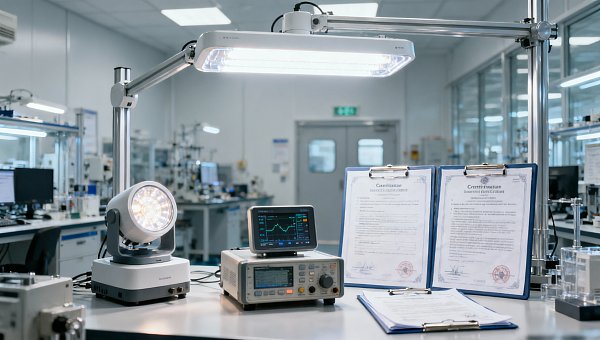
Lighting hardware manufacturers must now integrate dialect-aware speech recognition models into firmware stacks compliant with Matter 1.3.1 + Zigbee 3.0. This requires coordination with AI model vendors, updated certification pathways (e.g., CSA, TÜV for regional voice performance), and revalidation of interoperability test suites — all contributing to extended NPI timelines and higher pre-production engineering costs.
Embedded Software & SDK Providers
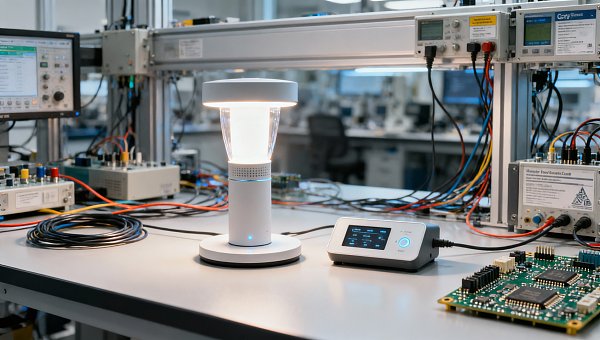
Vendors offering voice SDKs or Matter-compliant middleware are seeing increased demand for Arabic/Persian dialect fine-tuning packages and documentation localized for GCC regulatory submission. Licensing terms — particularly around model redistribution, cloud inference dependencies, and offline keyword spotting capabilities — are becoming key negotiation points in B2B contracts.
Supply Chain & Logistics Service Providers
Fulfillment partners handling smart lighting shipments must now account for region-specific firmware variants (e.g., voice model binaries per dialect cluster), which affects warehouse labeling, flash programming at consolidation hubs, and customs documentation referencing firmware version control. Traceability across firmware SKUs becomes critical to avoid shipment rejection at GCC ports.
What Stakeholders Should Monitor and Act On
Confirm SDK licensing scope before order placement
Procurement teams must verify whether the licensed SDK permits redistribution, supports offline operation, and includes GCC-targeted acoustic model updates — not just generic Arabic support. Ambiguity here may trigger post-shipment compliance delays or rework.
Track firmware versioning and dialect segmentation in production planning
Manufacturers should implement firmware SKU tracking aligned with target dialect clusters (e.g., Gulf Arabic vs. Levantine Arabic, Iranian Persian vs. Afghan Dari). Mixing variants risks field failures and warranty claims, especially where voice wake-word accuracy drops below 90% in ambient noise conditions.
Prepare for extended lead time buffers in Q3–Q4 2026
Given current 8–10 week delivery windows and rising demand, forward-buying raw materials for voice-enabled PCBs and memory modules — particularly those supporting dual-protocol stacks — is advisable. Delayed procurement may compound existing component lead time volatility.
Monitor official Matter Working Group updates on dialect extensions
While Matter 1.3.1 currently enables vendor-defined voice extensions, formal dialect profiles (e.g., Matter Voice Profile v1.0 for Arabic) are under discussion. Stakeholders should subscribe to CSA Group and Connectivity Standards Alliance announcements — not as policy mandates, but as early signals of future conformance expectations.
Editorial Observation / Industry Insight
Observably, this 37% order surge reflects more than seasonal demand — it signals a structural shift toward *language-native* smart home interoperability in emerging high-growth markets. Rather than treating voice as an add-on feature, buyers are now specifying dialect-grade accuracy as a baseline requirement, effectively raising the technical entry bar for exporters. Analysis shows this is not yet a standardized regulatory mandate, but rather a de facto commercial precondition driven by end-user expectations and competitive differentiation among regional distributors. From an industry perspective, it functions less as a short-term spike and more as an inflection point: one that prioritizes firmware-localization capability alongside hardware design. Continued monitoring is warranted, particularly as GCC national digital strategies (e.g., Saudi Vision 2030’s smart city initiatives) begin aligning with such localized IoT deployment patterns.

In summary, the Canton Fair Phase II data point underscores a maturing market expectation: smart lighting exports to the Middle East are no longer evaluated solely on connectivity or energy efficiency, but on linguistic precision and regional protocol readiness. It is best understood not as a transient trend, but as an operational benchmark now embedded in procurement criteria — requiring coordinated response across firmware, compliance, logistics, and licensing functions.
Source: Official closing statistics released by the China Council for the Promotion of International Trade (CCPIT) and the Canton Fair Secretariat, April 27, 2026. Note: Ongoing observation is recommended regarding Matter Working Group dialect profile standardization efforts and GCC national smart home certification developments.
Recommended News
 Aug 02, 2026EU EN 16798-2:2026 Raises Smart Lighting Export BarEN 16798-2:2026 reshapes smart lighting exports to the EU with stricter CE-related testing, faster compliance deadlines, and new customs risks. Learn what buyers and manufacturers must do now.
 Jul 23, 2026How to Choose Commercial LED Lighting for Offices, Retail Stores, and WarehousesCommercial LED lighting guide for offices, retail stores, and warehouses. Learn how to compare performance, controls, and lifecycle cost to choose smarter, longer-lasting solutions.
 Jul 15, 2026UL 1598C v2.1 Takes Effect for Smart LightingUL 1598C v2.1 takes effect for smart lighting, making cybersecurity certification mandatory for U.S. market entry. Learn who is affected, what products are in scope, and how to stay compliant.
 Jul 14, 2026UL 1598C v2.1 Makes Cybersecurity a Gate for Smart LightingUL 1598C v2.1 makes cybersecurity mandatory for smart lighting in the U.S. and Canada. Learn what cULus changes mean for compliance, exports, ODMs, and market access before Dec 1, 2026.
 Jul 13, 2026UL 1598C Rule Tightens Access for Smart Lighting ExportsUL 1598C Rule Tightens Access for Smart Lighting exports to the U.S. and Canada. Learn how OTA security, firmware verification, and network isolation now impact certification, listings, and shipment continuity.
 Jul 10, 2026UL 62368-3:2026 Reshapes U.S. Smart Lighting ExportsUL 62368-3:2026 reshapes U.S. smart lighting exports with new dynamic blue light and system certification rules. Learn the compliance risks, listing impact, and actions exporters should take now.
 Jun 28, 2026ISH 2027 Signals New Hotel Lighting Bid RulesISH 2027 highlights new hotel lighting bid rules as smart lighting buyers favor DALI-2 and Bluetooth Mesh. See what exporters and suppliers must prepare to win more hotel projects.
 Jun 27, 2026ITMA 2026 Countdown: Smart Lighting Enters Hotel TendersITMA 2026 smart lighting tenders are reshaping hotel procurement. Discover how DALI-2, EnOcean, ISO 50001 data, and EN 50131-1 may impact supplier shortlist access.
 Jun 26, 2026Berlin ITMA 2026 Signals New Hotel Buying RulesBerlin ITMA 2026 signals new hotel buying rules as smart lighting shifts into compliance. Learn how certification, BEMS interoperability, and procurement standards may reshape supplier selection.
 Jun 25, 2026Beijing Summit Report Makes Smart Lighting a New Procurement BenchmarkSmart lighting is emerging as a new procurement benchmark after the Beijing Summit report. See how DALI-2, Bluetooth Mesh, AI optimization, and response latency may reshape tourism infrastructure tenders.
 Jun 24, 2026HiYue Sets Up Singapore Unit for Smart Lighting ComplianceSmart Lighting exporters should watch HiYue’s new Singapore unit as it may streamline ASEAN origin certification, SGS energy-efficiency labeling, and REACH market-entry compliance.
 Jun 23, 2026CME Disruption Delays Quotes, Raises Copper Cost RisksCME disruption delays quotes and heightens copper cost risks, pressuring Smart Lighting Q3 pricing, surcharges, and supply chains. See what exporters and buyers should monitor now.
 Jun 23, 2026Zhejiang E-commerce Expo Opens with Compliance FocusZhejiang E-commerce Expo Opens with Compliance Focus, highlighting overseas warehousing, logistics, and cross-border compliance support to help exporters enter 22 markets with confidence.
 Jun 22, 2026Vietnam Requires VietCloud SDK in Smart Lighting ImportsVietnam Requires VietCloud SDK in Smart Lighting Imports from Sept. 1, 2026. Learn compliance steps, VIEPA testing impact, and how exporters can avoid licensing delays.
 Jun 21, 2026Vietnam Tightens Smart Lighting Entry RulesSmart lighting exporters face new Vietnam entry rules as VIEPA ties imports to VnCloud-IoT connectivity and lab verification. Learn the key compliance risks, timeline, and trade impact.
 Jun 20, 2026Indium Export Review Raises Display Module ConcernsIndium export review raises display module concerns for OLED and Mini-LED supply. Learn how sourcing, compliance, BOM costs, and delivery risks may impact smart hardware projects.
 Jun 18, 2026EU Sets 2026 Carbon Footprint Label Rule for Smart LightingEU 2026 carbon footprint label rule for smart lighting: learn how EPD, EN 15804+A2 verification, and new EU compliance deadlines will affect exporters, buyers, and project planning.
 Jun 17, 2026EU Moves to Require Carbon Labels for Smart LightingEU carbon labels for Smart Lighting are set to reshape compliance. Learn how ESPR rules, CE DoC carbon modules, and third-party verification impact EU exports and guestroom automation projects.
 Jun 16, 2026EU Enforces System-Level Smart Lighting Energy CertificationEU smart lighting energy certification now shifts to system-level testing under EN 15193-1:2026. Learn the new EU compliance rules, third-party certification impact, and export risks.
 Jun 15, 2026EU Rule Takes Effect: Smart Lighting Exports Need EN 15193-1:2026EU Rule Takes Effect: Smart Lighting Exports Need EN 15193-1:2026. Learn who must prove system-level energy efficiency, avoid EU customs holds, and protect shipments.
 Jun 14, 2026EU EPBD Rule Raises Integration Bar for Smart LightingEU EPBD Rule Raises Integration Bar for Smart Lighting from May 2026. Learn how EU smart lighting compliance, building automation, Matter, DALI-253, and SRI may reshape tenders and market access.
 Jun 13, 2026EU Enforces EN 63284-1:2026 for Smart LightingEU enforces EN 63284-1:2026 for smart lighting, making CE compliance and new certification essential for EU market access. Learn the risks, scope, and urgent actions for exporters and buyers.
 Jun 12, 2026EU Starts EN 63284-1:2026 Certification for Smart LightingEU Starts EN 63284-1:2026 Certification for Smart Lighting: learn how the new EU rules on EMC, cybersecurity, OTA security, and AI dimming affect exports, customs clearance, and market access.
 Jun 10, 2026UL 60335-2-107:2026 Adds New Tests for Smart LightingUL 60335-2-107:2026 adds new tests for smart lighting, including RF immunity and thermal runaway checks. Learn how the Dec 1, 2026 rule affects US exports, documents, and lead times.
{item.publish_time}{item.title}{item.description}Quarterly Executive Summaries Delivered Directly.
Join 50,000+ industry leaders who receive our proprietary market analysis and policy outlooks before they hit the public library.