Search News
TerraVista Metrics (TVM)Industry Portal
TerraVista Metrics (TVM)Hot Articles
TerraVista Metrics (TVM)- How to Evaluate Spark Plug Suppliers for Consistent Quality and Lead TimesSpark plugs supplier evaluation guide: compare quality control, traceability, fitment, total cost, and reliable lead times to secure dependable engine maintenance supply.
- What Drives System Interoperability Testing Service Costs in Complex Projects?System interoperability testing service cost depends on integration scope, workflows, environments, and assurance needs. Learn how to budget smarter and reduce project risk.
- Project Planning Sourcing Guides: How to Qualify Suppliers Before Work StartsSourcing guides project planning helps teams qualify suppliers before work begins—verify compliance, delivery capacity, financial strength, and sustainability to reduce risk and protect project outcomes.
Popular Tags
TerraVista Metrics (TVM)Industry NewsLED commercial lighting: where lower cost can mean higher upkeep
auth.Lydia Vancini (Smart Hospitality IoT Consultant)Time
Oct 07, 2026Click Count
In tourism and hospitality projects, choosing LED commercial lighting based only on a lower purchase price can create hidden maintenance costs, shorter service life, and operational disruption. For financial decision-makers, the real question is not unit cost, but lifecycle value. With data-driven benchmarking, TerraVista Metrics helps buyers evaluate durability, energy performance, and system compatibility before procurement turns into long-term upkeep.
Why cheap LED commercial lighting often becomes expensive later
For a finance approver, low upfront pricing looks efficient on paper. In practice, LED commercial lighting affects maintenance labor, spare inventory, room availability, guest satisfaction, energy budgets, and retrofit timing. In hotels, resorts, visitor centers, glamping parks, and mixed-use tourism properties, lighting is not an isolated line item. It is part of operational infrastructure.
The problem usually starts when procurement compares fixtures only by wattage and purchase price. Two luminaires may both claim similar brightness, yet differ sharply in driver quality, heat management, corrosion resistance, ingress protection, dimming compatibility, and lumen maintenance. Those differences determine whether the site team replaces a few lamps after three years or manages recurring failures across entire guest zones.
- A cheaper fixture may use lower-grade drivers, which often fail before the LED chips themselves.
- Weak thermal design can accelerate lumen depreciation, making public areas look dim long before planned refurbishment cycles.
- Poor housing materials can corrode in coastal, humid, or chlorine-rich environments common in tourism assets.
- Incompatible control systems can trigger commissioning delays and increase contractor call-backs.
When those issues combine, the total cost of ownership rises through service visits, emergency replacements, procurement fragmentation, and avoidable downtime. For finance leaders, this means the apparent savings of low-cost LED commercial lighting can be offset by hidden upkeep within the first operating cycle.
What finance decision-makers should evaluate beyond unit price
A stronger procurement approach links capital expenditure to lifecycle performance. Instead of asking, “Which fixture is cheapest today?” the better question is, “Which lighting package protects operating margin over five to ten years?” That is especially relevant in hospitality, where maintenance access can disrupt guests and where lighting consistency directly affects perceived quality.
Core metrics that matter in LED commercial lighting review
- Rated life and lumen maintenance, often discussed through L70 or related projections, to estimate useful performance duration rather than only initial output.
- Driver reliability, because electronic failure is a common replacement trigger in commercial installations.
- Power quality indicators such as power factor and total harmonic distortion, which can affect electrical system efficiency and compatibility.
- Ingress and impact protection for exposed zones such as pathways, waterfront decks, transport links, and outdoor leisure spaces.
- Control protocol compatibility with dimming, occupancy sensing, BMS links, and smart hospitality systems.
- Warranty scope, spare part availability, and clarity on replacement responsibility.
These criteria are central to how TerraVista Metrics approaches supplier benchmarking for tourism infrastructure. TVM’s value is not decorative product language; it is the translation of technical risk into procurement-grade evidence that finance teams can compare across vendors and project phases.
Where hidden upkeep appears in tourism and hospitality environments
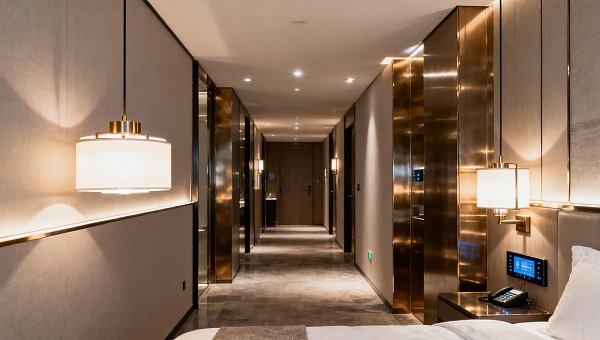
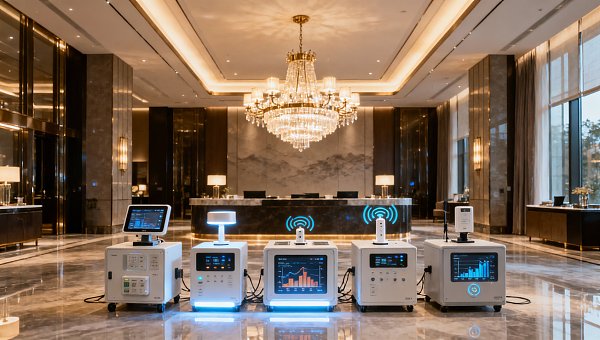
Different site conditions produce different failure patterns. A lobby chandelier, a pathway bollard, and a guest room downlight should not be evaluated with the same maintenance assumptions. The table below shows how LED commercial lighting behaves under typical tourism operating conditions and where financial risk usually appears.
This is why LED commercial lighting procurement should be mapped to actual environments, not only catalog descriptions. TVM supports this by comparing technical suitability across use cases that are common in tourism assets, from guest-facing interiors to weather-exposed outdoor infrastructure.
Low-cost vs value-based procurement: a comparison finance teams can use
A value-based decision does not always mean buying the most expensive fixture. It means selecting the option with the most defensible cost-performance balance. The comparison below can help finance approvers challenge oversimplified purchasing proposals for LED commercial lighting.
For financial governance, the difference is crucial. The cheapest offer may win a tender but lose in operations. A more balanced LED commercial lighting package can reduce unplanned opex, limit disruption to revenue-generating spaces, and support more credible payback assumptions.
Which technical specifications deserve the closest review
Performance details that influence real operating cost
In many approvals, technical schedules are treated as engineering paperwork. That is a mistake. Several specification fields strongly influence cost exposure in LED commercial lighting procurement, especially in projects where maintenance access is expensive or service interruption is unacceptable.
- Lumen maintenance projections should be reviewed together with ambient temperature assumptions. A strong lab claim under mild conditions may not hold in enclosed ceilings or hot outdoor climates.
- Driver replacement strategy should be clear. If the driver cannot be serviced independently, a minor electronics fault may require full fixture replacement.
- Correlated color temperature and color consistency matter in hospitality because visible mismatch across rooms or corridors creates an immediate perception of uneven quality.
- Ingress protection ratings should match the real exposure level. Decorative outdoor fixtures often underperform when subjected to irrigation splash, coastal wind, or cleaning operations.
- Control compatibility should be validated early if the site uses occupancy sensors, scene control, or centralized hotel management links.
TVM’s benchmarking perspective is useful here because it translates these technical fields into risk categories finance teams can understand: replacement probability, service complexity, compatibility exposure, and carbon-related performance implications over the asset’s operating life.
How to build a procurement checklist for LED commercial lighting
A disciplined checklist reduces dependence on sales claims and helps align finance, design, engineering, and operations. For tourism and hospitality assets, procurement should not approve LED commercial lighting without reviewing both functional and operational fit.
Practical review points before sign-off
- Confirm where the fixture will be used: guest room, façade, pathway, spa, back-of-house, dining, or attraction space. The same product family rarely suits every zone.
- Request data on operating temperature limits, expected lumen maintenance, and serviceability of core components.
- Check compatibility with local voltage conditions, dimming systems, emergency circuits, and building controls.
- Review corrosion resistance and housing durability if the destination is coastal, tropical, alpine, or water-adjacent.
- Assess whether replacement parts can be sourced consistently during the project’s operating horizon, not just at handover.
- Compare warranty wording carefully, including exclusions related to environment, controls, installation, or operating hours.
This process is where TerraVista Metrics adds strategic value. Instead of leaving buyers to decode fragmented vendor data, TVM helps standardize evaluation inputs so finance approvers can compare LED commercial lighting options using operationally relevant criteria.
Standards, compliance, and sustainability signals that matter
In global tourism development, procurement increasingly sits under sustainability and compliance review. Lighting choices can affect energy modeling, project documentation, and cross-border sourcing confidence. While project-specific requirements vary, finance teams should expect suppliers to provide clear and consistent technical documentation.
Common review areas include electrical safety conformity, electromagnetic compatibility, photometric reporting, environmental suitability, and material declarations where required by region or client policy. In some projects, carbon accounting and lifecycle reporting also influence approval, especially when destinations position themselves around low-impact development.
TVM’s broader role in the tourism supply chain is relevant because lighting does not stand alone. It interacts with prefab accommodation systems, smart controls, occupancy logic, and energy strategy. A finance decision on LED commercial lighting should therefore consider not only a fixture’s compliance posture, but also whether it fits the property’s wider infrastructure architecture.
Common mistakes that raise upkeep costs
Misconceptions seen in hospitality and destination projects
- Assuming all LED commercial lighting with similar wattage will deliver similar lifetime value. Wattage is not a proxy for durability.
- Treating warranty length as proof of low risk. Warranty terms may be narrow, and replacement logistics may still burden site operations.
- Using indoor-grade products in semi-exposed areas because they lower initial cost. Moisture and dust quickly erase that saving.
- Ignoring control integration during procurement, then discovering flicker, dimming failure, or commissioning delays after installation.
- Approving mixed suppliers without a standardized technical benchmark, which increases spare complexity and visual inconsistency across the site.
Each of these errors can be prevented when procurement is anchored in measurable criteria rather than catalog aesthetics. That is precisely the kind of structural filtering TVM brings to tourism hardware evaluation.
FAQ: practical questions before approving LED commercial lighting
How should finance teams compare two LED commercial lighting bids?
Compare more than price per fixture. Review expected service life, driver replacement model, control compatibility, ingress protection, warranty limitations, and the likely labor cost of maintenance. If one proposal lacks complete technical documentation, its lower price may reflect unpriced operational risk rather than true savings.
Which areas of a tourism property are most sensitive to poor lighting selection?
Guest rooms, corridors, outdoor circulation paths, pool zones, coastal amenities, and high-visibility public areas are usually the most sensitive. Failures in these spaces affect both operations and guest experience. In premium hospitality, maintenance access itself can be costly because service often needs to happen during low-occupancy windows.
Is the lowest-cost LED commercial lighting ever the right choice?
It can be suitable in low-risk, easy-access, non-critical back-of-house zones with limited operating hours and minimal guest impact. Even then, the decision should be supported by clear technical fit. In guest-facing and hard-to-maintain areas, lowest purchase price is rarely the most economical long-term option.
What documentation should be requested before approval?
Ask for detailed technical datasheets, photometric information where relevant, environmental protection ratings, control compatibility notes, warranty terms, and serviceability details. For larger projects, request a structured comparison matrix so performance claims can be reviewed on a like-for-like basis.
Why choose us for lighting-related procurement intelligence
TerraVista Metrics supports tourism and hospitality buyers who need more than supplier marketing. We help convert scattered product claims into benchmarkable decision inputs. For LED commercial lighting, that means a clearer view of durability risk, energy implications, environmental suitability, and integration compatibility before contracts are finalized.
If you are reviewing a resort, hotel, glamping, attraction, or mixed-use tourism project, you can consult TVM on specific procurement questions such as parameter confirmation, zone-by-zone product selection, expected upkeep exposure, control system matching, delivery timeline risks, documentation gaps, and supplier comparison logic.
You can also engage us to discuss sample evaluation priorities, quotation comparison frameworks, certification-related documentation expectations, and how lighting choices align with broader tourism infrastructure goals such as carbon performance, technical durability, and smart system integration. For finance approvers, that turns LED commercial lighting from a price-driven purchase into a measurable asset decision.
Recommended News
 Aug 02, 2026EU EN 16798-2:2026 Raises Smart Lighting Export BarEN 16798-2:2026 reshapes smart lighting exports to the EU with stricter CE-related testing, faster compliance deadlines, and new customs risks. Learn what buyers and manufacturers must do now.
 Jul 23, 2026How to Choose Commercial LED Lighting for Offices, Retail Stores, and WarehousesCommercial LED lighting guide for offices, retail stores, and warehouses. Learn how to compare performance, controls, and lifecycle cost to choose smarter, longer-lasting solutions.
 Jul 15, 2026UL 1598C v2.1 Takes Effect for Smart LightingUL 1598C v2.1 takes effect for smart lighting, making cybersecurity certification mandatory for U.S. market entry. Learn who is affected, what products are in scope, and how to stay compliant.
 Jul 14, 2026UL 1598C v2.1 Makes Cybersecurity a Gate for Smart LightingUL 1598C v2.1 makes cybersecurity mandatory for smart lighting in the U.S. and Canada. Learn what cULus changes mean for compliance, exports, ODMs, and market access before Dec 1, 2026.
 Jul 13, 2026UL 1598C Rule Tightens Access for Smart Lighting ExportsUL 1598C Rule Tightens Access for Smart Lighting exports to the U.S. and Canada. Learn how OTA security, firmware verification, and network isolation now impact certification, listings, and shipment continuity.
 Jul 10, 2026UL 62368-3:2026 Reshapes U.S. Smart Lighting ExportsUL 62368-3:2026 reshapes U.S. smart lighting exports with new dynamic blue light and system certification rules. Learn the compliance risks, listing impact, and actions exporters should take now.
 Jun 28, 2026ISH 2027 Signals New Hotel Lighting Bid RulesISH 2027 highlights new hotel lighting bid rules as smart lighting buyers favor DALI-2 and Bluetooth Mesh. See what exporters and suppliers must prepare to win more hotel projects.
 Jun 27, 2026ITMA 2026 Countdown: Smart Lighting Enters Hotel TendersITMA 2026 smart lighting tenders are reshaping hotel procurement. Discover how DALI-2, EnOcean, ISO 50001 data, and EN 50131-1 may impact supplier shortlist access.
 Jun 26, 2026Berlin ITMA 2026 Signals New Hotel Buying RulesBerlin ITMA 2026 signals new hotel buying rules as smart lighting shifts into compliance. Learn how certification, BEMS interoperability, and procurement standards may reshape supplier selection.
 Jun 25, 2026Beijing Summit Report Makes Smart Lighting a New Procurement BenchmarkSmart lighting is emerging as a new procurement benchmark after the Beijing Summit report. See how DALI-2, Bluetooth Mesh, AI optimization, and response latency may reshape tourism infrastructure tenders.
 Jun 24, 2026HiYue Sets Up Singapore Unit for Smart Lighting ComplianceSmart Lighting exporters should watch HiYue’s new Singapore unit as it may streamline ASEAN origin certification, SGS energy-efficiency labeling, and REACH market-entry compliance.
 Jun 23, 2026CME Disruption Delays Quotes, Raises Copper Cost RisksCME disruption delays quotes and heightens copper cost risks, pressuring Smart Lighting Q3 pricing, surcharges, and supply chains. See what exporters and buyers should monitor now.
 Jun 23, 2026Zhejiang E-commerce Expo Opens with Compliance FocusZhejiang E-commerce Expo Opens with Compliance Focus, highlighting overseas warehousing, logistics, and cross-border compliance support to help exporters enter 22 markets with confidence.
 Jun 22, 2026Vietnam Requires VietCloud SDK in Smart Lighting ImportsVietnam Requires VietCloud SDK in Smart Lighting Imports from Sept. 1, 2026. Learn compliance steps, VIEPA testing impact, and how exporters can avoid licensing delays.
 Jun 21, 2026Vietnam Tightens Smart Lighting Entry RulesSmart lighting exporters face new Vietnam entry rules as VIEPA ties imports to VnCloud-IoT connectivity and lab verification. Learn the key compliance risks, timeline, and trade impact.
 Jun 20, 2026Indium Export Review Raises Display Module ConcernsIndium export review raises display module concerns for OLED and Mini-LED supply. Learn how sourcing, compliance, BOM costs, and delivery risks may impact smart hardware projects.
 Jun 18, 2026EU Sets 2026 Carbon Footprint Label Rule for Smart LightingEU 2026 carbon footprint label rule for smart lighting: learn how EPD, EN 15804+A2 verification, and new EU compliance deadlines will affect exporters, buyers, and project planning.
 Jun 17, 2026EU Moves to Require Carbon Labels for Smart LightingEU carbon labels for Smart Lighting are set to reshape compliance. Learn how ESPR rules, CE DoC carbon modules, and third-party verification impact EU exports and guestroom automation projects.
 Jun 16, 2026EU Enforces System-Level Smart Lighting Energy CertificationEU smart lighting energy certification now shifts to system-level testing under EN 15193-1:2026. Learn the new EU compliance rules, third-party certification impact, and export risks.
 Jun 15, 2026EU Rule Takes Effect: Smart Lighting Exports Need EN 15193-1:2026EU Rule Takes Effect: Smart Lighting Exports Need EN 15193-1:2026. Learn who must prove system-level energy efficiency, avoid EU customs holds, and protect shipments.
 Jun 14, 2026EU EPBD Rule Raises Integration Bar for Smart LightingEU EPBD Rule Raises Integration Bar for Smart Lighting from May 2026. Learn how EU smart lighting compliance, building automation, Matter, DALI-253, and SRI may reshape tenders and market access.
 Jun 13, 2026EU Enforces EN 63284-1:2026 for Smart LightingEU enforces EN 63284-1:2026 for smart lighting, making CE compliance and new certification essential for EU market access. Learn the risks, scope, and urgent actions for exporters and buyers.
 Jun 12, 2026EU Starts EN 63284-1:2026 Certification for Smart LightingEU Starts EN 63284-1:2026 Certification for Smart Lighting: learn how the new EU rules on EMC, cybersecurity, OTA security, and AI dimming affect exports, customs clearance, and market access.
 Jun 10, 2026UL 60335-2-107:2026 Adds New Tests for Smart LightingUL 60335-2-107:2026 adds new tests for smart lighting, including RF immunity and thermal runaway checks. Learn how the Dec 1, 2026 rule affects US exports, documents, and lead times.
Quarterly Executive Summaries Delivered Directly.
Join 50,000+ industry leaders who receive our proprietary market analysis and policy outlooks before they hit the public library.