Search News
TerraVista Metrics (TVM)Industry Portal
TerraVista Metrics (TVM)Hot Articles
TerraVista Metrics (TVM)- How to Evaluate Spark Plug Suppliers for Consistent Quality and Lead TimesSpark plugs supplier evaluation guide: compare quality control, traceability, fitment, total cost, and reliable lead times to secure dependable engine maintenance supply.
- What Drives System Interoperability Testing Service Costs in Complex Projects?System interoperability testing service cost depends on integration scope, workflows, environments, and assurance needs. Learn how to budget smarter and reduce project risk.
- Project Planning Sourcing Guides: How to Qualify Suppliers Before Work StartsSourcing guides project planning helps teams qualify suppliers before work begins—verify compliance, delivery capacity, financial strength, and sustainability to reduce risk and protect project outcomes.
Popular Tags
TerraVista Metrics (TVM)Industry NewsMiddle East 6-Nation Smart Lighting Green Procurement List Launches
auth.Lydia Vancini (Smart Hospitality IoT Consultant)Time
Oct 07, 2026Click Count
On May 10, 2026, the Middle East Energy and Procurement Advisory Committee (MEPAC) — comprising Saudi Arabia, the UAE, Qatar, Kuwait, Oman, and Bahrain — officially launched the 2026 Smart Lighting Green Procurement White List. This policy mandates that all government-led and large-scale cultural-tourism lighting projects in the six countries must source LED drivers exclusively from approved manufacturers. Its implementation marks a structural shift in regional procurement governance, driven by harmonized energy efficiency, environmental compliance, and supply chain traceability requirements.

Event Overview
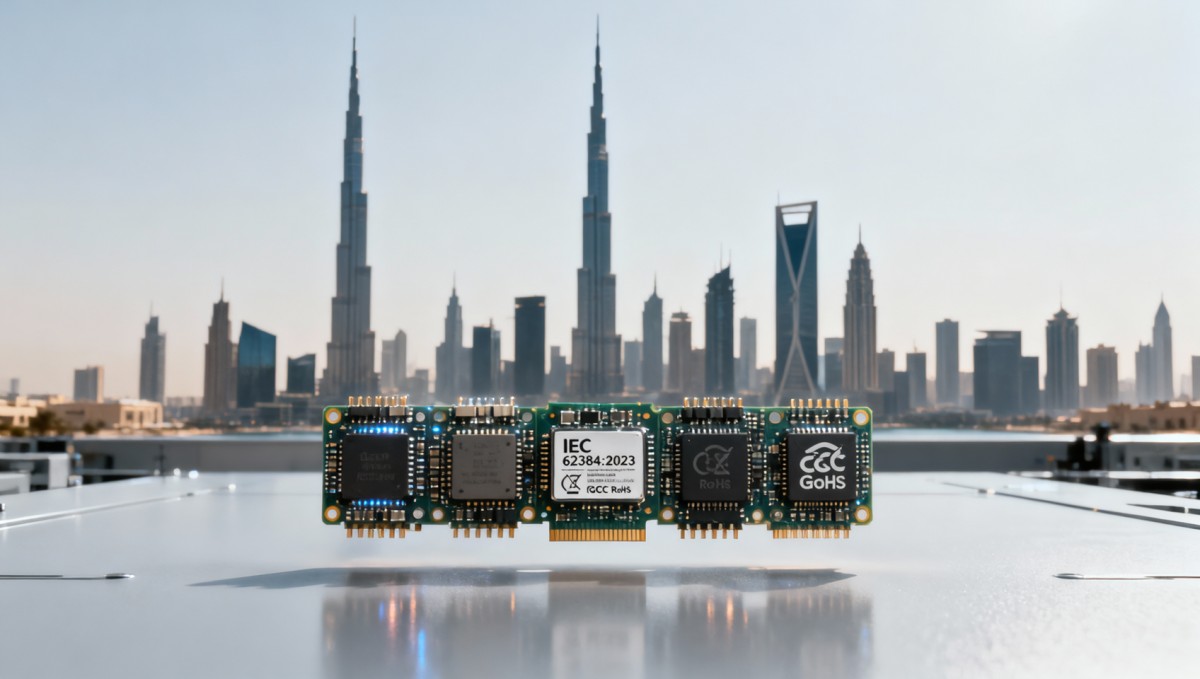
On May 10, 2026, MEPAC published the 2026 Smart Lighting Green Procurement White List, naming 12 Chinese LED driver manufacturers as inaugural members. The list applies to all public-sector lighting procurements and major cultural-tourism infrastructure projects across the six nations. Eligibility required certification to IEC 62384:2023 (dynamic dimming energy efficiency), GCC RoHS compliance, and verified product-level carbon footprint reporting. For regional distributors and integrators, selecting white-listed suppliers eliminates bid eligibility disputes and shortens regulatory approval timelines.
Industries Affected
Direct Trade Enterprises: Export-oriented LED driver exporters and authorized regional distributors face immediate operational recalibration. Compliance with the white list is now a prerequisite for tender participation — non-listed firms risk automatic disqualification, regardless of technical or pricing competitiveness. Revenue visibility improves for listed entities, but market access for non-listed peers narrows sharply, especially in high-value municipal and hospitality lighting tenders.
Raw Material Procurement Enterprises: Suppliers of key components — including gallium nitride (GaN) power ICs, thermally conductive substrates, and low-carbon electrolytic capacitors — are seeing increased demand scrutiny. Buyers now require upstream material declarations aligned with GCC RoHS+ and ISO 14067 carbon accounting standards. Absence of verifiable material-level environmental data may delay component qualification, indirectly constraining production capacity for downstream white-listed manufacturers.
Manufacturing Enterprises: LED driver OEMs and ODMs — particularly those targeting Gulf markets — must now treat certification not as optional differentiation but as baseline market entry infrastructure. The dual verification (IEC 62384:2023 + carbon footprint) necessitates investment in test lab capabilities, lifecycle assessment (LCA) modeling, and documentation systems. Firms lacking internal LCA capacity face higher third-party verification costs and longer time-to-approval cycles.
Supply Chain Service Providers: Logistics firms, customs brokers, and certification support agencies report rising demand for GCC-specific compliance packaging: bilingual GCC RoHS declarations, Arabic-language technical dossiers, and pre-shipment carbon verification reports. Notably, MEPAC’s white list does not accept EU CE or US DOE certifications as substitutes — requiring service providers to deepen regional regulatory expertise rather than rely on global harmonization assumptions.
Key Focus Areas and Recommended Actions
Verify white-list status and update tender eligibility documentation
Non-listed manufacturers should assess gap analysis against IEC 62384:2023 and GCC RoHS+ requirements; listed firms must ensure their official registration remains active and that supporting documentation (e.g., carbon footprint reports) is updated annually per MEPAC’s notice.
Map upstream material compliance to GCC carbon & chemical thresholds
Procurement teams must request full substance declarations and EPDs (Environmental Product Declarations) from Tier-2 suppliers — especially for aluminum heatsinks, PCB laminates, and driver ICs — to avoid downstream disqualification due to unverified upstream emissions or restricted substances.
Engage GCC-accredited verification bodies early for LCA alignment
Given MEPAC’s requirement for product-level carbon footprint validation (not corporate scope), manufacturers should initiate engagement with GCC-recognized LCA auditors — such as DEKRA Middle East or SGS Gulf — at least six months prior to application submission.
Editorial Perspective / Industry Observation
Observably, this white list is not merely a green procurement tool — it functions as a de facto regional industrial policy lever. By anchoring eligibility to dynamic dimming performance *and* embodied carbon, MEPAC signals a deliberate move toward performance-based sustainability, moving beyond static ‘eco-label’ symbolism. Analysis shows that the inclusion of only 12 Chinese firms — out of hundreds applying — reflects stringent evaluation rigor, particularly on real-world dimming efficiency curves and transparency of primary data sources. From an industry perspective, this sets a precedent likely to influence North African and ASEAN procurement frameworks within 12–18 months.
Conclusion
This initiative represents more than a compliance checkpoint: it redefines the competitive threshold for lighting technology access in one of the world’s fastest-growing infrastructure markets. Rather than signaling broad market liberalization, the white list institutionalizes technical and environmental gatekeeping — making interoperability, verifiability, and regional regulatory fluency central to long-term commercial viability. A rational reading suggests that scalability in the Gulf will increasingly depend less on cost leadership and more on demonstrable, auditable system-level intelligence and sustainability integration.
Source Attribution
Official publication: 2026 Smart Lighting Green Procurement White List, issued by the Middle East Energy and Procurement Advisory Committee (MEPAC), May 10, 2026. Available via MEPAC Public Registry (registry.mepac.gov.me/white-list-2026).
Verification protocols referenced: IEC 62384:2023, GCC Technical Regulation TR-002 (RoHS+), and GCC Standard GSO ISO 14067:2022 (Carbon Footprint of Products).
Note: MEPAC has announced plans to expand the white list to include smart controllers and IoT-enabled luminaires in Q4 2027 — subject to further consultation. This expansion remains under observation.Recommended News
 Aug 02, 2026EU EN 16798-2:2026 Raises Smart Lighting Export BarEN 16798-2:2026 reshapes smart lighting exports to the EU with stricter CE-related testing, faster compliance deadlines, and new customs risks. Learn what buyers and manufacturers must do now.
 Jul 23, 2026How to Choose Commercial LED Lighting for Offices, Retail Stores, and WarehousesCommercial LED lighting guide for offices, retail stores, and warehouses. Learn how to compare performance, controls, and lifecycle cost to choose smarter, longer-lasting solutions.
 Jul 15, 2026UL 1598C v2.1 Takes Effect for Smart LightingUL 1598C v2.1 takes effect for smart lighting, making cybersecurity certification mandatory for U.S. market entry. Learn who is affected, what products are in scope, and how to stay compliant.
 Jul 14, 2026UL 1598C v2.1 Makes Cybersecurity a Gate for Smart LightingUL 1598C v2.1 makes cybersecurity mandatory for smart lighting in the U.S. and Canada. Learn what cULus changes mean for compliance, exports, ODMs, and market access before Dec 1, 2026.
 Jul 13, 2026UL 1598C Rule Tightens Access for Smart Lighting ExportsUL 1598C Rule Tightens Access for Smart Lighting exports to the U.S. and Canada. Learn how OTA security, firmware verification, and network isolation now impact certification, listings, and shipment continuity.
 Jul 10, 2026UL 62368-3:2026 Reshapes U.S. Smart Lighting ExportsUL 62368-3:2026 reshapes U.S. smart lighting exports with new dynamic blue light and system certification rules. Learn the compliance risks, listing impact, and actions exporters should take now.
 Jun 28, 2026ISH 2027 Signals New Hotel Lighting Bid RulesISH 2027 highlights new hotel lighting bid rules as smart lighting buyers favor DALI-2 and Bluetooth Mesh. See what exporters and suppliers must prepare to win more hotel projects.
 Jun 27, 2026ITMA 2026 Countdown: Smart Lighting Enters Hotel TendersITMA 2026 smart lighting tenders are reshaping hotel procurement. Discover how DALI-2, EnOcean, ISO 50001 data, and EN 50131-1 may impact supplier shortlist access.
 Jun 26, 2026Berlin ITMA 2026 Signals New Hotel Buying RulesBerlin ITMA 2026 signals new hotel buying rules as smart lighting shifts into compliance. Learn how certification, BEMS interoperability, and procurement standards may reshape supplier selection.
 Jun 25, 2026Beijing Summit Report Makes Smart Lighting a New Procurement BenchmarkSmart lighting is emerging as a new procurement benchmark after the Beijing Summit report. See how DALI-2, Bluetooth Mesh, AI optimization, and response latency may reshape tourism infrastructure tenders.
 Jun 24, 2026HiYue Sets Up Singapore Unit for Smart Lighting ComplianceSmart Lighting exporters should watch HiYue’s new Singapore unit as it may streamline ASEAN origin certification, SGS energy-efficiency labeling, and REACH market-entry compliance.
 Jun 23, 2026CME Disruption Delays Quotes, Raises Copper Cost RisksCME disruption delays quotes and heightens copper cost risks, pressuring Smart Lighting Q3 pricing, surcharges, and supply chains. See what exporters and buyers should monitor now.
 Jun 23, 2026Zhejiang E-commerce Expo Opens with Compliance FocusZhejiang E-commerce Expo Opens with Compliance Focus, highlighting overseas warehousing, logistics, and cross-border compliance support to help exporters enter 22 markets with confidence.
 Jun 22, 2026Vietnam Requires VietCloud SDK in Smart Lighting ImportsVietnam Requires VietCloud SDK in Smart Lighting Imports from Sept. 1, 2026. Learn compliance steps, VIEPA testing impact, and how exporters can avoid licensing delays.
 Jun 21, 2026Vietnam Tightens Smart Lighting Entry RulesSmart lighting exporters face new Vietnam entry rules as VIEPA ties imports to VnCloud-IoT connectivity and lab verification. Learn the key compliance risks, timeline, and trade impact.
 Jun 20, 2026Indium Export Review Raises Display Module ConcernsIndium export review raises display module concerns for OLED and Mini-LED supply. Learn how sourcing, compliance, BOM costs, and delivery risks may impact smart hardware projects.
 Jun 18, 2026EU Sets 2026 Carbon Footprint Label Rule for Smart LightingEU 2026 carbon footprint label rule for smart lighting: learn how EPD, EN 15804+A2 verification, and new EU compliance deadlines will affect exporters, buyers, and project planning.
 Jun 17, 2026EU Moves to Require Carbon Labels for Smart LightingEU carbon labels for Smart Lighting are set to reshape compliance. Learn how ESPR rules, CE DoC carbon modules, and third-party verification impact EU exports and guestroom automation projects.
 Jun 16, 2026EU Enforces System-Level Smart Lighting Energy CertificationEU smart lighting energy certification now shifts to system-level testing under EN 15193-1:2026. Learn the new EU compliance rules, third-party certification impact, and export risks.
 Jun 15, 2026EU Rule Takes Effect: Smart Lighting Exports Need EN 15193-1:2026EU Rule Takes Effect: Smart Lighting Exports Need EN 15193-1:2026. Learn who must prove system-level energy efficiency, avoid EU customs holds, and protect shipments.
 Jun 14, 2026EU EPBD Rule Raises Integration Bar for Smart LightingEU EPBD Rule Raises Integration Bar for Smart Lighting from May 2026. Learn how EU smart lighting compliance, building automation, Matter, DALI-253, and SRI may reshape tenders and market access.
 Jun 13, 2026EU Enforces EN 63284-1:2026 for Smart LightingEU enforces EN 63284-1:2026 for smart lighting, making CE compliance and new certification essential for EU market access. Learn the risks, scope, and urgent actions for exporters and buyers.
 Jun 12, 2026EU Starts EN 63284-1:2026 Certification for Smart LightingEU Starts EN 63284-1:2026 Certification for Smart Lighting: learn how the new EU rules on EMC, cybersecurity, OTA security, and AI dimming affect exports, customs clearance, and market access.
 Jun 10, 2026UL 60335-2-107:2026 Adds New Tests for Smart LightingUL 60335-2-107:2026 adds new tests for smart lighting, including RF immunity and thermal runaway checks. Learn how the Dec 1, 2026 rule affects US exports, documents, and lead times.
Quarterly Executive Summaries Delivered Directly.
Join 50,000+ industry leaders who receive our proprietary market analysis and policy outlooks before they hit the public library.