Search News
TerraVista Metrics (TVM)Industry Portal
TerraVista Metrics (TVM)Hot Articles
TerraVista Metrics (TVM)- How to Evaluate Spark Plug Suppliers for Consistent Quality and Lead TimesSpark plugs supplier evaluation guide: compare quality control, traceability, fitment, total cost, and reliable lead times to secure dependable engine maintenance supply.
- What Drives System Interoperability Testing Service Costs in Complex Projects?System interoperability testing service cost depends on integration scope, workflows, environments, and assurance needs. Learn how to budget smarter and reduce project risk.
- Project Planning Sourcing Guides: How to Qualify Suppliers Before Work StartsSourcing guides project planning helps teams qualify suppliers before work begins—verify compliance, delivery capacity, financial strength, and sustainability to reduce risk and protect project outcomes.
Popular Tags
TerraVista Metrics (TVM)Industry NewsMiddle East Expands Smart Lighting White List to Include 8 Chinese DALI-2 Gateway Makers
auth.Lydia Vancini (Smart Hospitality IoT Consultant)Time
Oct 07, 2026Click Count
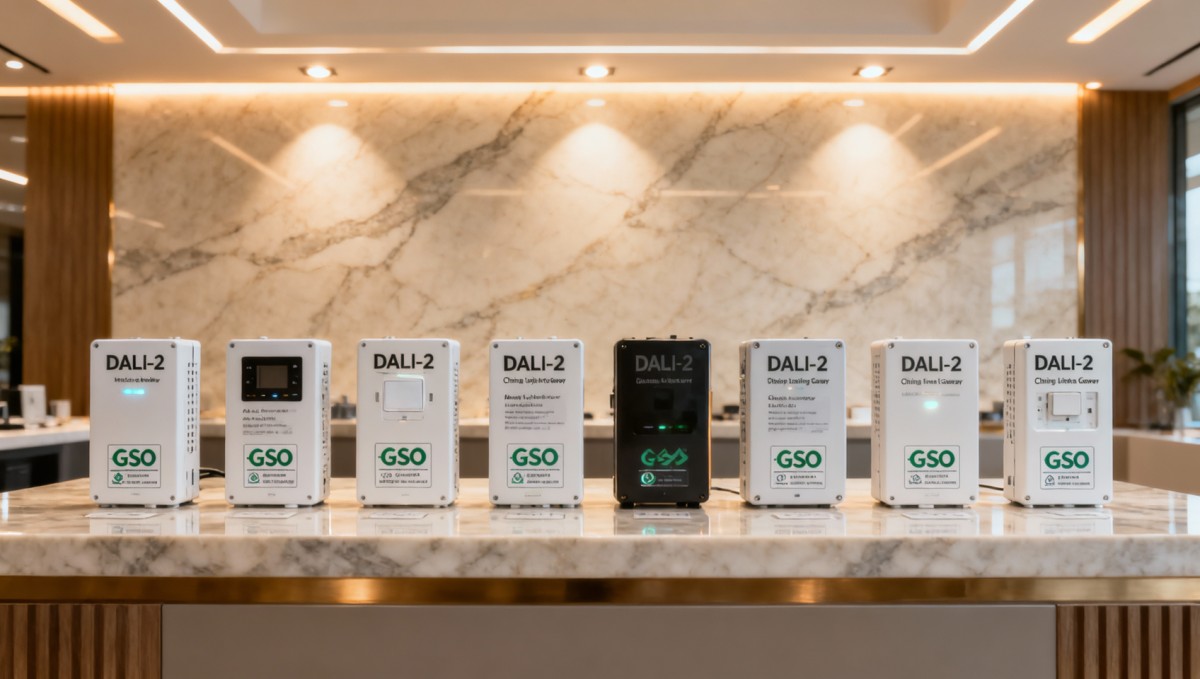
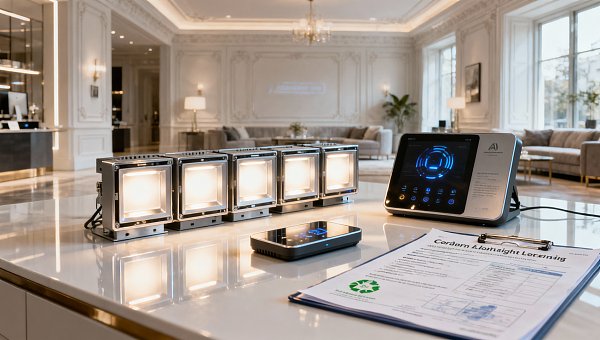
On May 14, 2026, the Gulf Standardization Organization (GSO), in coordination with energy regulators from Saudi Arabia, the UAE, Qatar, and three other Gulf Cooperation Council (GCC) states, updated its Smart Lighting Green Procurement White List V2.3—adding eight Chinese manufacturers of DALI-2 protocol gateways. This development directly affects lighting exporters, smart building solution providers, and suppliers engaged in public-sector infrastructure projects across the GCC region.
Event Overview
On May 14, 2026, the Gulf Standardization Organization (GSO), together with national energy regulatory authorities from six GCC countries—including Saudi Arabia, the United Arab Emirates, and Qatar—released Version 2.3 of the Smart Lighting Green Procurement White List. The update includes eight China-based manufacturers of DALI-2 compliant lighting control gateways. To qualify, each manufacturer’s products must pass the GSO 2026-LED-07 test protocol, which covers spectral health safety, power grid harmonic suppression, and over-the-air (OTA) firmware upgrade security. Products listed on the White List are exempt from redundant energy efficiency certification for government procurement, five-star hotel deployments, and smart city initiatives across the six countries—reducing average delivery timelines by 28 days.
Industries Affected
Direct Exporters of Lighting Control Hardware
Manufacturers exporting DALI-2 gateways from China to GCC markets face revised market access conditions. Inclusion on the White List removes a major compliance bottleneck—specifically, the need for repeated national-level energy certification—thereby lowering entry barriers and shortening time-to-market for qualified products.
Smart Building System Integrators
Firms specifying or deploying lighting control systems in GCC public and hospitality sectors now have a streamlined path to pre-qualified hardware. White-listed gateways can be selected without revalidating core compliance parameters, accelerating design approval and project tendering cycles—particularly for large-scale smart city or hospitality retrofit programs.
Supply Chain & Certification Service Providers
Third-party testing labs, certification consultants, and logistics partners supporting Chinese exporters must adapt to the GSO 2026-LED-07 test requirements. Unlike prior versions, this revision introduces mandatory verification of OTA security and spectral health—two domains requiring specialized lab capabilities not previously emphasized in GCC lighting conformity assessments.
What Enterprises and Practitioners Should Monitor and Do Now
Track official GSO implementation guidance and national adoption timelines
The White List is issued jointly by GSO and six national regulators; however, enforcement timing and administrative procedures may vary by country. Enterprises should monitor national gazettes and GSO technical circulars for rollout schedules, especially regarding retroactive application or transitional arrangements for pending certifications.
Verify product eligibility against the full GSO 2026-LED-07 test scope—not just DALI-2 conformance
Inclusion requires passing all three validation pillars: spectral health, harmonic suppression, and OTA upgrade security. Manufacturers must ensure their test reports explicitly cover all three criteria under the 2026-LED-07 framework—not older DALI-2 or generic EMC/EMI test standards.
Distinguish between policy signal and operational readiness
While the White List simplifies certification, it does not override local import licensing, customs classification, or post-installation inspection protocols. Companies should treat inclusion as a compliance enabler—not an end-to-end market access guarantee—and continue aligning with national import procedures.
Prepare documentation and communication materials for downstream buyers
End users—including government agencies and hotel developers—will require clear evidence of White List status and test report traceability. Exporters should consolidate GSO-issued listing references, test certificate numbers, and version-controlled product datasheets ahead of tender submissions or sales outreach.
Editorial Perspective / Industry Observation
Observably, this update signals a maturing phase in GCC regional harmonization—not just for energy efficiency, but for holistic lighting quality and cybersecurity. The inclusion of OTA security and spectral health metrics suggests a shift toward lifecycle-based evaluation, moving beyond static performance thresholds. Analysis shows this is less a one-time expansion and more a structural step toward integrating digital trust and human-centric metrics into green procurement frameworks. From an industry standpoint, it reflects growing alignment between GCC sustainability goals and international smart infrastructure expectations—but actual procurement uptake will depend on national implementation rigor and buyer awareness.
Conclusion
This White List expansion marks a procedural milestone—not a market-opening event. Its primary value lies in reducing certification redundancy for qualifying products, not in creating new demand or altering tariff structures. It is better understood as a calibration of existing regulatory infrastructure than as a transformative policy shift. Stakeholders should prioritize verification, documentation, and cross-border procedural alignment over strategic reinterpretation.

Source Attribution
Main source: Official release of Smart Lighting Green Procurement White List V2.3, published by the Gulf Standardization Organization (GSO) on May 14, 2026, in coordination with national energy regulators of Saudi Arabia, the United Arab Emirates, Qatar, Kuwait, Bahrain, and Oman.
Points requiring ongoing observation: National-level enforcement timelines, interpretation of OTA security requirements in field deployments, and potential future extensions of the White List to non-gateway DALI-2 devices.Recommended News
 Aug 02, 2026EU EN 16798-2:2026 Raises Smart Lighting Export BarEN 16798-2:2026 reshapes smart lighting exports to the EU with stricter CE-related testing, faster compliance deadlines, and new customs risks. Learn what buyers and manufacturers must do now.
 Jul 23, 2026How to Choose Commercial LED Lighting for Offices, Retail Stores, and WarehousesCommercial LED lighting guide for offices, retail stores, and warehouses. Learn how to compare performance, controls, and lifecycle cost to choose smarter, longer-lasting solutions.
 Jul 15, 2026UL 1598C v2.1 Takes Effect for Smart LightingUL 1598C v2.1 takes effect for smart lighting, making cybersecurity certification mandatory for U.S. market entry. Learn who is affected, what products are in scope, and how to stay compliant.
 Jul 14, 2026UL 1598C v2.1 Makes Cybersecurity a Gate for Smart LightingUL 1598C v2.1 makes cybersecurity mandatory for smart lighting in the U.S. and Canada. Learn what cULus changes mean for compliance, exports, ODMs, and market access before Dec 1, 2026.
 Jul 13, 2026UL 1598C Rule Tightens Access for Smart Lighting ExportsUL 1598C Rule Tightens Access for Smart Lighting exports to the U.S. and Canada. Learn how OTA security, firmware verification, and network isolation now impact certification, listings, and shipment continuity.
 Jul 10, 2026UL 62368-3:2026 Reshapes U.S. Smart Lighting ExportsUL 62368-3:2026 reshapes U.S. smart lighting exports with new dynamic blue light and system certification rules. Learn the compliance risks, listing impact, and actions exporters should take now.
 Jun 28, 2026ISH 2027 Signals New Hotel Lighting Bid RulesISH 2027 highlights new hotel lighting bid rules as smart lighting buyers favor DALI-2 and Bluetooth Mesh. See what exporters and suppliers must prepare to win more hotel projects.
 Jun 27, 2026ITMA 2026 Countdown: Smart Lighting Enters Hotel TendersITMA 2026 smart lighting tenders are reshaping hotel procurement. Discover how DALI-2, EnOcean, ISO 50001 data, and EN 50131-1 may impact supplier shortlist access.
 Jun 26, 2026Berlin ITMA 2026 Signals New Hotel Buying RulesBerlin ITMA 2026 signals new hotel buying rules as smart lighting shifts into compliance. Learn how certification, BEMS interoperability, and procurement standards may reshape supplier selection.
 Jun 25, 2026Beijing Summit Report Makes Smart Lighting a New Procurement BenchmarkSmart lighting is emerging as a new procurement benchmark after the Beijing Summit report. See how DALI-2, Bluetooth Mesh, AI optimization, and response latency may reshape tourism infrastructure tenders.
 Jun 24, 2026HiYue Sets Up Singapore Unit for Smart Lighting ComplianceSmart Lighting exporters should watch HiYue’s new Singapore unit as it may streamline ASEAN origin certification, SGS energy-efficiency labeling, and REACH market-entry compliance.
 Jun 23, 2026CME Disruption Delays Quotes, Raises Copper Cost RisksCME disruption delays quotes and heightens copper cost risks, pressuring Smart Lighting Q3 pricing, surcharges, and supply chains. See what exporters and buyers should monitor now.
 Jun 23, 2026Zhejiang E-commerce Expo Opens with Compliance FocusZhejiang E-commerce Expo Opens with Compliance Focus, highlighting overseas warehousing, logistics, and cross-border compliance support to help exporters enter 22 markets with confidence.
 Jun 22, 2026Vietnam Requires VietCloud SDK in Smart Lighting ImportsVietnam Requires VietCloud SDK in Smart Lighting Imports from Sept. 1, 2026. Learn compliance steps, VIEPA testing impact, and how exporters can avoid licensing delays.
 Jun 21, 2026Vietnam Tightens Smart Lighting Entry RulesSmart lighting exporters face new Vietnam entry rules as VIEPA ties imports to VnCloud-IoT connectivity and lab verification. Learn the key compliance risks, timeline, and trade impact.
 Jun 20, 2026Indium Export Review Raises Display Module ConcernsIndium export review raises display module concerns for OLED and Mini-LED supply. Learn how sourcing, compliance, BOM costs, and delivery risks may impact smart hardware projects.
 Jun 18, 2026EU Sets 2026 Carbon Footprint Label Rule for Smart LightingEU 2026 carbon footprint label rule for smart lighting: learn how EPD, EN 15804+A2 verification, and new EU compliance deadlines will affect exporters, buyers, and project planning.
 Jun 17, 2026EU Moves to Require Carbon Labels for Smart LightingEU carbon labels for Smart Lighting are set to reshape compliance. Learn how ESPR rules, CE DoC carbon modules, and third-party verification impact EU exports and guestroom automation projects.
 Jun 16, 2026EU Enforces System-Level Smart Lighting Energy CertificationEU smart lighting energy certification now shifts to system-level testing under EN 15193-1:2026. Learn the new EU compliance rules, third-party certification impact, and export risks.
 Jun 15, 2026EU Rule Takes Effect: Smart Lighting Exports Need EN 15193-1:2026EU Rule Takes Effect: Smart Lighting Exports Need EN 15193-1:2026. Learn who must prove system-level energy efficiency, avoid EU customs holds, and protect shipments.
 Jun 14, 2026EU EPBD Rule Raises Integration Bar for Smart LightingEU EPBD Rule Raises Integration Bar for Smart Lighting from May 2026. Learn how EU smart lighting compliance, building automation, Matter, DALI-253, and SRI may reshape tenders and market access.
 Jun 13, 2026EU Enforces EN 63284-1:2026 for Smart LightingEU enforces EN 63284-1:2026 for smart lighting, making CE compliance and new certification essential for EU market access. Learn the risks, scope, and urgent actions for exporters and buyers.
 Jun 12, 2026EU Starts EN 63284-1:2026 Certification for Smart LightingEU Starts EN 63284-1:2026 Certification for Smart Lighting: learn how the new EU rules on EMC, cybersecurity, OTA security, and AI dimming affect exports, customs clearance, and market access.
 Jun 10, 2026UL 60335-2-107:2026 Adds New Tests for Smart LightingUL 60335-2-107:2026 adds new tests for smart lighting, including RF immunity and thermal runaway checks. Learn how the Dec 1, 2026 rule affects US exports, documents, and lead times.
Quarterly Executive Summaries Delivered Directly.
Join 50,000+ industry leaders who receive our proprietary market analysis and policy outlooks before they hit the public library.