Search News
TerraVista Metrics (TVM)Industry Portal
TerraVista Metrics (TVM)Hot Articles
TerraVista Metrics (TVM)- How to Evaluate Spark Plug Suppliers for Consistent Quality and Lead TimesSpark plugs supplier evaluation guide: compare quality control, traceability, fitment, total cost, and reliable lead times to secure dependable engine maintenance supply.
- What Drives System Interoperability Testing Service Costs in Complex Projects?System interoperability testing service cost depends on integration scope, workflows, environments, and assurance needs. Learn how to budget smarter and reduce project risk.
- Project Planning Sourcing Guides: How to Qualify Suppliers Before Work StartsSourcing guides project planning helps teams qualify suppliers before work begins—verify compliance, delivery capacity, financial strength, and sustainability to reduce risk and protect project outcomes.
Popular Tags
TerraVista Metrics (TVM)Industry NewsMiddle East Smart Lighting White List Effective: DALI-2 Gateways Require UAE ESMA Registration
auth.Lydia Vancini (Smart Hospitality IoT Consultant)Time
Oct 07, 2026Click Count
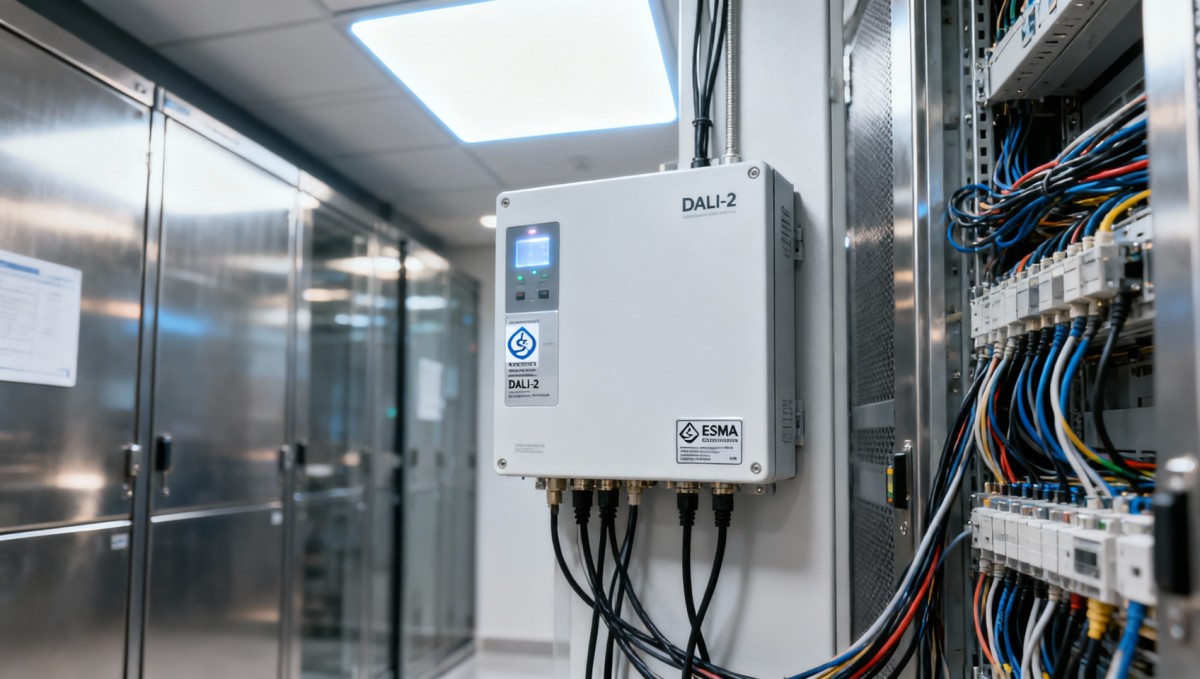
On May 20, 2026, the Emirates Authority for Standardization and Metrology (ESMA) — in coordination with Saudi Arabia, Qatar, and three other Gulf Cooperation Council (GCC) countries — officially launched a joint Middle East Smart Lighting Product White List. This regulatory development directly impacts exporters of smart lighting systems, particularly manufacturers and suppliers of DALI-2 protocol-based intelligent gateways. The requirement signals a tightening of market access conditions across six key regional markets.
Event Overview
Effective May 20, 2026, ESMA, together with national standardization bodies from five additional Middle Eastern countries, activated a unified Smart Lighting White List. Under this framework, all DALI-2-compliant smart lighting gateway devices placed on the market in the six participating countries must complete mandatory registration with ESMA and bear a harmonized compliance marking. Unregistered products will be prohibited from customs clearance as of July 1, 2026. Chinese suppliers are required to align with ESMA’s updated testing protocols and engage local authorized representatives for registration.
Industries Affected
Direct Exporters (OEM/ODM Smart Lighting Manufacturers)
These companies face immediate eligibility constraints: DALI-2 gateways exported from China to the six countries must now carry ESMA registration prior to shipment. Non-compliance results in customs rejection after July 1, 2026. Impact includes delayed deliveries, potential contract renegotiation, and increased pre-market lead time due to mandatory third-party verification and local agent engagement.
Supply Chain Service Providers (Certification Agencies, Local Representatives)
Entities offering conformity assessment, ESMA registration support, or local representation services will see elevated demand. However, capacity constraints may arise if registration volumes surge unexpectedly. Impact centers on workload scalability, documentation accuracy under new technical requirements (e.g., DALI-2 version alignment), and verification of local agent authorization status per ESMA’s updated delegation rules.
Channel Distributors & System Integrators
Distributors importing or reselling DALI-2 gateways into the six markets must verify registration status before accepting shipments or placing orders. Failure to do so risks inventory write-offs post-July 1. Impact manifests in tightened procurement checks, revised vendor onboarding criteria, and possible shifts toward pre-registered SKUs — potentially narrowing product selection and compressing margins.
Key Focus Areas and Recommended Actions
Monitor official ESMA guidance and GCC harmonization updates
While the White List is active, implementation details—including accepted test reports, recognized laboratories, and proxy registration scope—remain subject to clarification. Companies should subscribe to ESMA’s official notifications and track updates from national counterparts in Saudi Arabia (SASO) and Qatar (Qatar General Organization for Standardization and Metrology).
Prioritize registration for high-volume DALI-2 gateway models
Given limited processing capacity and a two-month window before enforcement, exporters should identify top-selling SKUs by destination country and initiate registration sequentially—not globally. This avoids bottlenecks and ensures continuity for priority lines ahead of the July 1 deadline.
Distinguish between policy signal and operational readiness
The May 20 activation marks formal launch, but full customs enforcement relies on system integration across six national ports. Observably, initial inspections may focus on high-risk consignments; however, compliance must be verified at point of entry—not during transit or post-clearance. Pre-shipment verification remains non-negotiable.
Confirm local representative authority and update technical documentation
ESMA requires registered gateways to list an authorized local representative in the UAE. Suppliers must validate that their appointed agent holds current ESMA delegation status and ensure all submitted test reports reference the correct DALI-2 certification version (e.g., DALI-2 Part 102, Part 207). Outdated or mismatched documentation is a leading cause of registration delay.
Editorial Perspective / Industry Observation
This development is better understood as a structural shift in regional market access—not merely a procedural update. Analysis shows it reflects growing coordination among GCC regulators to consolidate conformity requirements for interoperable smart infrastructure components. From an industry perspective, it signals increasing emphasis on traceability, protocol-specific validation, and localized accountability—trends likely to extend to other IoT-enabled building systems beyond lighting. Current observability suggests enforcement will ramp gradually, but the July 1 date establishes a firm inflection point for supply chain planning. Continued attention is warranted not only for regulatory adherence but also for early insight into broader GCC digital infrastructure standardization pathways.

Conclusion: The ESMA-led Smart Lighting White List introduces a binding, cross-border compliance checkpoint for DALI-2 gateway exports. Its significance lies less in novelty and more in enforceability: it transforms previously voluntary or nationally fragmented assessments into a coordinated, mandatory gate. For affected stakeholders, this is best interpreted not as a one-time certification task—but as the first formalized layer of a maturing regional regulatory architecture for smart building technologies.
Source: Official announcement issued by the Emirates Authority for Standardization and Metrology (ESMA), effective May 20, 2026. Implementation timeline and scope confirmed via ESMA public notice No. ESMA/SL/2026/05. Further details on registration procedures remain under review and are subject to official updates.
Recommended News
 Aug 02, 2026EU EN 16798-2:2026 Raises Smart Lighting Export BarEN 16798-2:2026 reshapes smart lighting exports to the EU with stricter CE-related testing, faster compliance deadlines, and new customs risks. Learn what buyers and manufacturers must do now.
 Jul 23, 2026How to Choose Commercial LED Lighting for Offices, Retail Stores, and WarehousesCommercial LED lighting guide for offices, retail stores, and warehouses. Learn how to compare performance, controls, and lifecycle cost to choose smarter, longer-lasting solutions.
 Jul 15, 2026UL 1598C v2.1 Takes Effect for Smart LightingUL 1598C v2.1 takes effect for smart lighting, making cybersecurity certification mandatory for U.S. market entry. Learn who is affected, what products are in scope, and how to stay compliant.
 Jul 14, 2026UL 1598C v2.1 Makes Cybersecurity a Gate for Smart LightingUL 1598C v2.1 makes cybersecurity mandatory for smart lighting in the U.S. and Canada. Learn what cULus changes mean for compliance, exports, ODMs, and market access before Dec 1, 2026.
 Jul 13, 2026UL 1598C Rule Tightens Access for Smart Lighting ExportsUL 1598C Rule Tightens Access for Smart Lighting exports to the U.S. and Canada. Learn how OTA security, firmware verification, and network isolation now impact certification, listings, and shipment continuity.
 Jul 10, 2026UL 62368-3:2026 Reshapes U.S. Smart Lighting ExportsUL 62368-3:2026 reshapes U.S. smart lighting exports with new dynamic blue light and system certification rules. Learn the compliance risks, listing impact, and actions exporters should take now.
 Jun 28, 2026ISH 2027 Signals New Hotel Lighting Bid RulesISH 2027 highlights new hotel lighting bid rules as smart lighting buyers favor DALI-2 and Bluetooth Mesh. See what exporters and suppliers must prepare to win more hotel projects.
 Jun 27, 2026ITMA 2026 Countdown: Smart Lighting Enters Hotel TendersITMA 2026 smart lighting tenders are reshaping hotel procurement. Discover how DALI-2, EnOcean, ISO 50001 data, and EN 50131-1 may impact supplier shortlist access.
 Jun 26, 2026Berlin ITMA 2026 Signals New Hotel Buying RulesBerlin ITMA 2026 signals new hotel buying rules as smart lighting shifts into compliance. Learn how certification, BEMS interoperability, and procurement standards may reshape supplier selection.
 Jun 25, 2026Beijing Summit Report Makes Smart Lighting a New Procurement BenchmarkSmart lighting is emerging as a new procurement benchmark after the Beijing Summit report. See how DALI-2, Bluetooth Mesh, AI optimization, and response latency may reshape tourism infrastructure tenders.
 Jun 24, 2026HiYue Sets Up Singapore Unit for Smart Lighting ComplianceSmart Lighting exporters should watch HiYue’s new Singapore unit as it may streamline ASEAN origin certification, SGS energy-efficiency labeling, and REACH market-entry compliance.
 Jun 23, 2026CME Disruption Delays Quotes, Raises Copper Cost RisksCME disruption delays quotes and heightens copper cost risks, pressuring Smart Lighting Q3 pricing, surcharges, and supply chains. See what exporters and buyers should monitor now.
 Jun 23, 2026Zhejiang E-commerce Expo Opens with Compliance FocusZhejiang E-commerce Expo Opens with Compliance Focus, highlighting overseas warehousing, logistics, and cross-border compliance support to help exporters enter 22 markets with confidence.
 Jun 22, 2026Vietnam Requires VietCloud SDK in Smart Lighting ImportsVietnam Requires VietCloud SDK in Smart Lighting Imports from Sept. 1, 2026. Learn compliance steps, VIEPA testing impact, and how exporters can avoid licensing delays.
 Jun 21, 2026Vietnam Tightens Smart Lighting Entry RulesSmart lighting exporters face new Vietnam entry rules as VIEPA ties imports to VnCloud-IoT connectivity and lab verification. Learn the key compliance risks, timeline, and trade impact.
 Jun 20, 2026Indium Export Review Raises Display Module ConcernsIndium export review raises display module concerns for OLED and Mini-LED supply. Learn how sourcing, compliance, BOM costs, and delivery risks may impact smart hardware projects.
 Jun 18, 2026EU Sets 2026 Carbon Footprint Label Rule for Smart LightingEU 2026 carbon footprint label rule for smart lighting: learn how EPD, EN 15804+A2 verification, and new EU compliance deadlines will affect exporters, buyers, and project planning.
 Jun 17, 2026EU Moves to Require Carbon Labels for Smart LightingEU carbon labels for Smart Lighting are set to reshape compliance. Learn how ESPR rules, CE DoC carbon modules, and third-party verification impact EU exports and guestroom automation projects.
 Jun 16, 2026EU Enforces System-Level Smart Lighting Energy CertificationEU smart lighting energy certification now shifts to system-level testing under EN 15193-1:2026. Learn the new EU compliance rules, third-party certification impact, and export risks.
 Jun 15, 2026EU Rule Takes Effect: Smart Lighting Exports Need EN 15193-1:2026EU Rule Takes Effect: Smart Lighting Exports Need EN 15193-1:2026. Learn who must prove system-level energy efficiency, avoid EU customs holds, and protect shipments.
 Jun 14, 2026EU EPBD Rule Raises Integration Bar for Smart LightingEU EPBD Rule Raises Integration Bar for Smart Lighting from May 2026. Learn how EU smart lighting compliance, building automation, Matter, DALI-253, and SRI may reshape tenders and market access.
 Jun 13, 2026EU Enforces EN 63284-1:2026 for Smart LightingEU enforces EN 63284-1:2026 for smart lighting, making CE compliance and new certification essential for EU market access. Learn the risks, scope, and urgent actions for exporters and buyers.
 Jun 12, 2026EU Starts EN 63284-1:2026 Certification for Smart LightingEU Starts EN 63284-1:2026 Certification for Smart Lighting: learn how the new EU rules on EMC, cybersecurity, OTA security, and AI dimming affect exports, customs clearance, and market access.
 Jun 10, 2026UL 60335-2-107:2026 Adds New Tests for Smart LightingUL 60335-2-107:2026 adds new tests for smart lighting, including RF immunity and thermal runaway checks. Learn how the Dec 1, 2026 rule affects US exports, documents, and lead times.
Quarterly Executive Summaries Delivered Directly.
Join 50,000+ industry leaders who receive our proprietary market analysis and policy outlooks before they hit the public library.