Search News
TerraVista Metrics (TVM)Industry Portal
TerraVista Metrics (TVM)Hot Articles
TerraVista Metrics (TVM)- Choosing Prefab Cabin Suppliers: Quality, Lead Times and Delivery CostsCompare prefab cabin suppliers on quality, lead times, compliance, and total delivery costs. Learn what to verify before you buy and avoid costly surprises.
- Choosing an Amusement Equipment Testing Agency: Accreditation and ScopeChoosing an amusement equipment testing agency? Learn how to verify accreditation, assess technical scope, and compare reports before you commit.
- Global Temporary Buildings Market Forecast to Reach $5.88 Billion by 2032Global temporary buildings market is forecast to reach $5.88 billion by 2032. Explore the modular, reusable and rapid-assembly trends driving growth.
Popular Tags
TerraVista Metrics (TVM)Industry NewsSASO Expands Smart Lighting Voice Localization to Thai & Dialects
auth.Lydia Vancini (Smart Hospitality IoT Consultant)Time
Nov 07, 2026Click Count
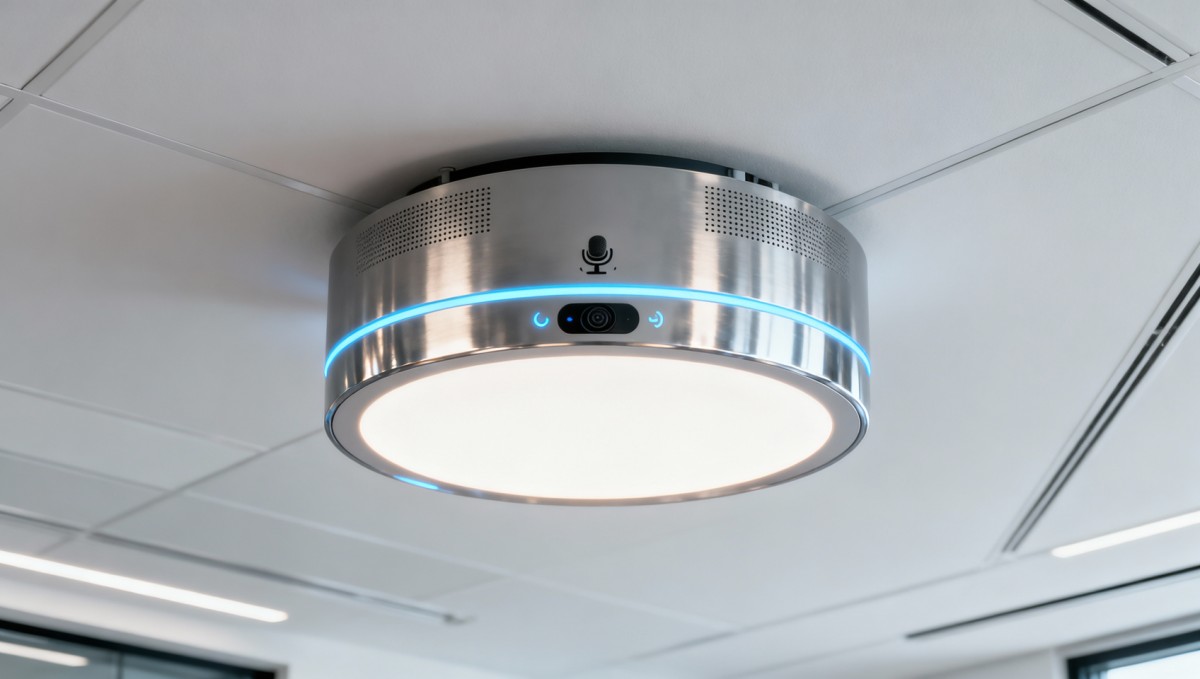
Saudi Standards, Metrology and Quality Organization (SASO) updated Appendix C of SASO IEC 62471:2026 on April 22, 2026, extending voice interaction localization requirements for smart lighting products to include Thai language and regional Arabic dialects (Najdi and Hejazi). This change directly affects exporters, manufacturers, and certification service providers in the global smart lighting supply chain — particularly those based in China supplying to the Saudi market — as non-compliant products will fail to obtain the mandatory SASO Certificate of Conformity (CoC), resulting in customs rejection.
Event Overview
On April 22, 2026, SASO issued an update to Appendix C of SASO IEC 62471:2026. The revision expands the existing Arabic-language voice interaction requirement for smart lighting products to also mandate pre-installed, functional speech recognition (ASR) and natural language understanding (NLU) engines supporting Thai, Najdi Arabic, and Hejazi Arabic. Certification now requires blind testing at SASO-designated laboratories. Products lacking compliant local-language voice capabilities are ineligible for the SASO CoC.
Which Subsectors Are Affected
Direct Exporters & OEM/ODM Manufacturers
These entities face immediate compliance pressure: voice functionality is now a mandatory technical feature — not optional — for market access. Impact manifests in product design cycles, firmware development timelines, and certification cost structures. Late-stage retrofitting of multilingual ASR/NLU is technically complex and may delay time-to-market.
Smart Lighting Component Suppliers (e.g., voice module vendors)
Suppliers providing voice interface modules or embedded AI stacks must verify whether their current offerings support Thai and the specified Arabic dialects out-of-the-box — including acoustic model training data coverage, linguistic rule sets, and real-world dialect variation handling. Lack of validated dialect support limits downstream adoption by lighting OEMs targeting SASO compliance.
Certification & Testing Service Providers
Third-party labs and conformity assessment bodies must confirm capacity to conduct blind testing per the revised Appendix C — including test script development, native speaker involvement for dialect validation, and evaluation protocols for Thai and dialect-based interactions. Labs not yet accredited for these language scopes may be unable to issue valid test reports for SASO CoC applications.
What Enterprises Should Monitor and Do Now
Track official SASO implementation guidance and transitional timelines
The April 22, 2026 update is effective upon publication, but SASO may issue phased enforcement dates or grace periods. Enterprises should monitor SASO’s official portal and authorized notification channels for formal announcements on applicability cutoffs and grandfathering provisions for existing certified models.
Verify voice capability scope against exact language and dialect specifications
“Arabic” is no longer sufficient. Compliance requires explicit validation for Najdi and Hejazi dialects — two distinct spoken varieties with phonological, lexical, and syntactic differences. Similarly, “Thai” refers to Central Thai (the national standard); regional Thai variants are not included. Confirm that ASR/NLU engines cover only the mandated variants — over-scoping adds cost without benefit; under-scoping causes failure.
Initiate firmware and lab coordination early — especially for blind testing readiness
Blind testing requires anonymized evaluation by testers unaware of product identity or vendor affiliation. Preparing test assets (e.g., prompt sets, scenario scripts, pass/fail criteria) and coordinating with SASO-designated labs takes lead time. Start engagement now — lab slots may fill quickly, and retesting incurs delays and additional fees.
Review supply chain documentation for language-related dependencies
Assess whether voice firmware updates, cloud-based NLU services, or dialect-specific acoustic models rely on external vendors or hosted infrastructure subject to export controls, data residency rules, or licensing restrictions — especially when involving Thai or GCC-based service endpoints.
Editorial Perspective / Industry Observation
From industry perspective, this update signals SASO’s shift from basic safety and EMC compliance toward human-centered interoperability requirements — treating voice interface as integral to product safety and usability in local contexts. Analysis来看, it reflects broader Gulf regulatory trends prioritizing digital inclusion and localized user experience, rather than solely hardware performance. Current more appropriately understood as a formalized compliance gate — not a pilot or recommendation — given its binding effect on CoC issuance. Observation来看, it underscores that smart home device regulation in GCC markets is increasingly converging with EU-style ‘digital product’ expectations, where software behavior is certifiable and auditable.

Conclusion
This SASO update marks a material escalation in regulatory expectations for smart lighting entering Saudi Arabia — moving beyond electrical and photobiological safety into embedded software localization. It does not represent a broad market barrier, but rather a targeted technical threshold requiring precise alignment across product development, component sourcing, and certification execution. For affected stakeholders, the change is best interpreted as a defined, actionable requirement — not a vague policy signal — demanding focused technical preparation rather than strategic reassessment.Information Sources
Main source: Official SASO announcement regarding amendment to Appendix C of SASO IEC 62471:2026, published April 22, 2026.
Note: Transitional arrangements, lab accreditation status for Thai/dialect testing, and potential future expansion to other GCC markets remain under observation and are not confirmed in the current update.Recommended News
 Aug 02, 2026EU EN 16798-2:2026 Raises Smart Lighting Export BarEN 16798-2:2026 reshapes smart lighting exports to the EU with stricter CE-related testing, faster compliance deadlines, and new customs risks. Learn what buyers and manufacturers must do now.
 Jul 23, 2026How to Choose Commercial LED Lighting for Offices, Retail Stores, and WarehousesCommercial LED lighting guide for offices, retail stores, and warehouses. Learn how to compare performance, controls, and lifecycle cost to choose smarter, longer-lasting solutions.
 Jul 15, 2026UL 1598C v2.1 Takes Effect for Smart LightingUL 1598C v2.1 takes effect for smart lighting, making cybersecurity certification mandatory for U.S. market entry. Learn who is affected, what products are in scope, and how to stay compliant.
 Jul 14, 2026UL 1598C v2.1 Makes Cybersecurity a Gate for Smart LightingUL 1598C v2.1 makes cybersecurity mandatory for smart lighting in the U.S. and Canada. Learn what cULus changes mean for compliance, exports, ODMs, and market access before Dec 1, 2026.
 Jul 13, 2026UL 1598C Rule Tightens Access for Smart Lighting ExportsUL 1598C Rule Tightens Access for Smart Lighting exports to the U.S. and Canada. Learn how OTA security, firmware verification, and network isolation now impact certification, listings, and shipment continuity.
 Jul 10, 2026UL 62368-3:2026 Reshapes U.S. Smart Lighting ExportsUL 62368-3:2026 reshapes U.S. smart lighting exports with new dynamic blue light and system certification rules. Learn the compliance risks, listing impact, and actions exporters should take now.
 Jun 28, 2026ISH 2027 Signals New Hotel Lighting Bid RulesISH 2027 highlights new hotel lighting bid rules as smart lighting buyers favor DALI-2 and Bluetooth Mesh. See what exporters and suppliers must prepare to win more hotel projects.
 Jun 27, 2026ITMA 2026 Countdown: Smart Lighting Enters Hotel TendersITMA 2026 smart lighting tenders are reshaping hotel procurement. Discover how DALI-2, EnOcean, ISO 50001 data, and EN 50131-1 may impact supplier shortlist access.
 Jun 26, 2026Berlin ITMA 2026 Signals New Hotel Buying RulesBerlin ITMA 2026 signals new hotel buying rules as smart lighting shifts into compliance. Learn how certification, BEMS interoperability, and procurement standards may reshape supplier selection.
 Jun 25, 2026Beijing Summit Report Makes Smart Lighting a New Procurement BenchmarkSmart lighting is emerging as a new procurement benchmark after the Beijing Summit report. See how DALI-2, Bluetooth Mesh, AI optimization, and response latency may reshape tourism infrastructure tenders.
 Jun 24, 2026HiYue Sets Up Singapore Unit for Smart Lighting ComplianceSmart Lighting exporters should watch HiYue’s new Singapore unit as it may streamline ASEAN origin certification, SGS energy-efficiency labeling, and REACH market-entry compliance.
 Jun 23, 2026CME Disruption Delays Quotes, Raises Copper Cost RisksCME disruption delays quotes and heightens copper cost risks, pressuring Smart Lighting Q3 pricing, surcharges, and supply chains. See what exporters and buyers should monitor now.
 Jun 23, 2026Zhejiang E-commerce Expo Opens with Compliance FocusZhejiang E-commerce Expo Opens with Compliance Focus, highlighting overseas warehousing, logistics, and cross-border compliance support to help exporters enter 22 markets with confidence.
 Jun 22, 2026Vietnam Requires VietCloud SDK in Smart Lighting ImportsVietnam Requires VietCloud SDK in Smart Lighting Imports from Sept. 1, 2026. Learn compliance steps, VIEPA testing impact, and how exporters can avoid licensing delays.
 Jun 21, 2026Vietnam Tightens Smart Lighting Entry RulesSmart lighting exporters face new Vietnam entry rules as VIEPA ties imports to VnCloud-IoT connectivity and lab verification. Learn the key compliance risks, timeline, and trade impact.
 Jun 20, 2026Indium Export Review Raises Display Module ConcernsIndium export review raises display module concerns for OLED and Mini-LED supply. Learn how sourcing, compliance, BOM costs, and delivery risks may impact smart hardware projects.
 Jun 18, 2026EU Sets 2026 Carbon Footprint Label Rule for Smart LightingEU 2026 carbon footprint label rule for smart lighting: learn how EPD, EN 15804+A2 verification, and new EU compliance deadlines will affect exporters, buyers, and project planning.
 Jun 17, 2026EU Moves to Require Carbon Labels for Smart LightingEU carbon labels for Smart Lighting are set to reshape compliance. Learn how ESPR rules, CE DoC carbon modules, and third-party verification impact EU exports and guestroom automation projects.
 Jun 16, 2026EU Enforces System-Level Smart Lighting Energy CertificationEU smart lighting energy certification now shifts to system-level testing under EN 15193-1:2026. Learn the new EU compliance rules, third-party certification impact, and export risks.
 Jun 15, 2026EU Rule Takes Effect: Smart Lighting Exports Need EN 15193-1:2026EU Rule Takes Effect: Smart Lighting Exports Need EN 15193-1:2026. Learn who must prove system-level energy efficiency, avoid EU customs holds, and protect shipments.
 Jun 14, 2026EU EPBD Rule Raises Integration Bar for Smart LightingEU EPBD Rule Raises Integration Bar for Smart Lighting from May 2026. Learn how EU smart lighting compliance, building automation, Matter, DALI-253, and SRI may reshape tenders and market access.
 Jun 13, 2026EU Enforces EN 63284-1:2026 for Smart LightingEU enforces EN 63284-1:2026 for smart lighting, making CE compliance and new certification essential for EU market access. Learn the risks, scope, and urgent actions for exporters and buyers.
 Jun 12, 2026EU Starts EN 63284-1:2026 Certification for Smart LightingEU Starts EN 63284-1:2026 Certification for Smart Lighting: learn how the new EU rules on EMC, cybersecurity, OTA security, and AI dimming affect exports, customs clearance, and market access.
 Jun 10, 2026UL 60335-2-107:2026 Adds New Tests for Smart LightingUL 60335-2-107:2026 adds new tests for smart lighting, including RF immunity and thermal runaway checks. Learn how the Dec 1, 2026 rule affects US exports, documents, and lead times.
{item.publish_time}{item.title}{item.description}Quarterly Executive Summaries Delivered Directly.
Join 50,000+ industry leaders who receive our proprietary market analysis and policy outlooks before they hit the public library.