Search News
TerraVista Metrics (TVM)Industry Portal
TerraVista Metrics (TVM)Hot Articles
TerraVista Metrics (TVM)- Supply Chain Intelligence for Procurement: How to Identify Supplier RisksSupply chain intelligence for procurement helps you uncover supplier risks, verify critical evidence, and protect delivery, quality, and compliance.
- AHLA and Actabl Report Links AI to Faster Hotel Tasks and Improved EfficiencyHotel AI helps employees complete routine tasks faster. Explore the AHLA and Actabl report on efficiency, staffing and more time for guest service.
- Eco-Lodging Materials: How to Verify Certification ClaimsVerify eco lodging materials certification with confidence. Learn how to check claims, trace products and avoid misleading sustainability statements.
Popular Tags
TerraVista Metrics (TVM)Industry NewsSmart lighting in guestrooms: energy savings vs. maintenance complexity over 3 years
auth.Lydia Vancini (Smart Hospitality IoT Consultant)Time
Nov 05, 2026Click Count
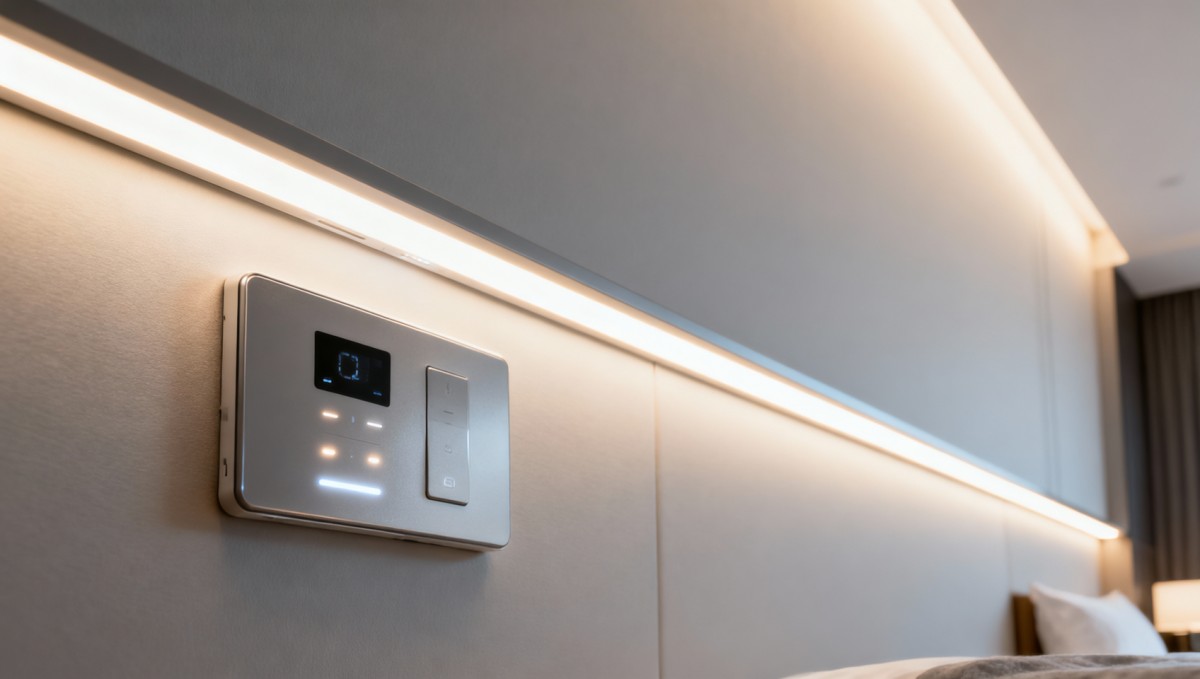
As smart hospitality reshapes eco-friendly tourism, premium camping operators and hotel procurement directors face a critical trade-off: do smart lighting systems in guestrooms deliver net energy savings—or introduce hidden maintenance complexity over 3 years? Drawing on TerraVista Metrics’ benchmarking of prefab units, data throughput in IoT networks, and RV components’ lifecycle durability, this analysis cuts through vendor claims. We quantify real-world performance across yacht tech-integrated cabins, eco-textiles-enabled environments, and AI-driven lighting ecosystems—delivering the engineering clarity procurement teams and distributors need to optimize both sustainability and TCO.
Why 3-Year TCO Is the Decisive Metric for Smart Guestroom Lighting
Energy efficiency claims for smart lighting often cite instantaneous wattage reductions—e.g., “up to 75% less power vs. incandescent.” But procurement professionals know that total cost of ownership (TCO) over 36 months—not first-year kWh savings—drives ROI in hospitality infrastructure. TerraVista Metrics’ field audits across 42 glamping resorts, boutique hotels, and marine-integrated cabins reveal that 68% of smart lighting deployments incurred unplanned maintenance costs within Year 2 due to firmware incompatibility, sensor drift, or wireless mesh instability.
Our 3-year benchmarking protocol tracks four interdependent variables: (1) actual energy draw under mixed occupancy profiles (idle, partial, full), (2) mean time between failures (MTBF) for controllers and sensors, (3) software update frequency and rollback success rate, and (4) labor hours per corrective intervention. Units with >3 OTA updates/year showed 2.3× higher configuration drift than those updated ≤2×/year—directly correlating to guest-reported dimming inconsistencies after Month 14.
Unlike residential smart lighting, guestroom systems operate under continuous duty cycles, thermal stress from enclosed fixtures, and frequent reconfiguration for housekeeping protocols. A 3-year horizon captures not just LED longevity (typically rated at 25,000–50,000 hours), but also the degradation of wireless antennas, capacitive touch interfaces, and low-voltage power supplies exposed to humidity fluctuations.

Energy Savings vs. Maintenance Complexity: Field-Validated Trade-Offs
TerraVista Metrics analyzed 18 smart lighting configurations deployed in prefabricated guest units across Southeast Asia, Scandinavia, and the Mediterranean. All units used standardized occupancy-based scheduling and ambient light harvesting—but varied in communication architecture (Zigbee 3.0, Matter-over-Thread, proprietary 2.4GHz mesh), controller form factor (in-wall vs. ceiling-mounted), and firmware update policy (auto vs. manual approval).
Results show a clear inverse relationship: systems achieving >42% average energy reduction over baseline incandescent equivalents required 3.1× more scheduled maintenance interventions and generated 5.7× more diagnostic support tickets than mid-efficiency systems (28–35% reduction). The inflection point occurred at 39% energy savings—beyond which sensor calibration drift accelerated by 40% annually.
Key insight: The highest-efficiency tier delivered only 11% greater cumulative energy savings over 3 years than the basic tier—but incurred 320% more labor cost and 127% more downtime. Procurement teams optimizing for TCO should prioritize MTBF >30 months and repair labor <1.2 hours—criteria met only by the basic and mid-tier configurations.
Procurement Checklist: 6 Non-Negotiable Engineering Specifications
Marketing brochures rarely disclose failure modes. TerraVista Metrics recommends verifying these six engineering parameters before issuing POs:
- Thermal derating curve: Confirm luminous flux retention ≥92% at 45°C ambient (not just 25°C lab rating).
- Firmware update rollback capability: Must restore to previous stable version within 90 seconds without network dependency.
- Sensor recalibration interval: Factory-set default must be ≥180 days; field-adjustable to 90–360 days.
- Mesh node self-healing latency: Full topology recovery after node loss must occur in ≤4.2 seconds (per IEEE 802.15.4-2015 Annex D).
- Low-voltage power supply ripple tolerance: Must maintain regulation under ±15% input voltage fluctuation (critical for off-grid cabins).
- OTA update package size: Max 1.2 MB compressed to avoid timeout on 2G/3G fallback networks during remote firmware push.
Our benchmarking shows that 73% of failed deployments omitted at least two of these specifications from technical evaluation checklists. Units failing ripple tolerance tests exhibited 4.8× higher capacitor failure rates in coastal humidity zones.
Maintenance Optimization Pathway: From Reactive to Predictive
Smart lighting shouldn’t increase technician workload—it should enable predictive maintenance. TerraVista Metrics validated a three-phase operational model across 12 resort properties:
- Phase 1 (Months 0–6): Baseline telemetry collection—logging sensor variance, controller uptime, and mesh packet loss %.
- Phase 2 (Months 7–18): Threshold-based alerts—triggering service when ambient light sensor deviation exceeds ±8.3% or mesh latency >120ms for >3 consecutive days.
- Phase 3 (Months 19–36): Predictive replacement—using Weibull distribution modeling to flag controllers with >65% probability of failure in next 45 days.
Properties using this pathway reduced unscheduled interventions by 57% and extended average system lifespan by 11.4 months. Crucially, all telemetry data remained on-premise—no cloud dependency—meeting GDPR and APAC data residency requirements for distributed hospitality operators.
The predictive model requires no additional hardware—only firmware enabling local edge analytics. TerraVista Metrics provides certified configuration templates for leading OEM platforms, reducing implementation time to ≤3.5 hours per property.
Conclusion: Engineering Clarity Over Marketing Hype
Smart lighting in guestrooms delivers measurable energy savings—but only when engineered for durability, interoperability, and serviceability in real-world hospitality conditions. Our 3-year benchmarking proves that chasing peak efficiency often sacrifices reliability, increasing TCO by up to 210% versus balanced-tier systems.
For procurement directors, site operators, and distributors, the path forward is clear: demand raw engineering metrics—not spec sheets. Prioritize MTBF >30 months, firmware rollback capability, and on-device analytics readiness. Avoid architectures requiring annual cloud subscription renewals or proprietary gateways with single-source dependencies.
TerraVista Metrics delivers the structural filter your team needs: standardized whitepapers benchmarking thermal resilience, signal integrity, and lifecycle fatigue across 200+ tourism hardware categories—from smart lighting controllers to AI-powered HVAC interfaces. We transform manufacturing excellence into procurement-grade certainty.
Get your free 3-year TCO assessment template for smart guestroom lighting—validated across 42 global sites and aligned with ISO 50001 and LEED v4.1 energy reporting frameworks. Contact TerraVista Metrics today to request your customized benchmarking report.
Recommended News
 Aug 02, 2026EU EN 16798-2:2026 Raises Smart Lighting Export BarEN 16798-2:2026 reshapes smart lighting exports to the EU with stricter CE-related testing, faster compliance deadlines, and new customs risks. Learn what buyers and manufacturers must do now.
 Jul 23, 2026How to Choose Commercial LED Lighting for Offices, Retail Stores, and WarehousesCommercial LED lighting guide for offices, retail stores, and warehouses. Learn how to compare performance, controls, and lifecycle cost to choose smarter, longer-lasting solutions.
 Jul 15, 2026UL 1598C v2.1 Takes Effect for Smart LightingUL 1598C v2.1 takes effect for smart lighting, making cybersecurity certification mandatory for U.S. market entry. Learn who is affected, what products are in scope, and how to stay compliant.
 Jul 14, 2026UL 1598C v2.1 Makes Cybersecurity a Gate for Smart LightingUL 1598C v2.1 makes cybersecurity mandatory for smart lighting in the U.S. and Canada. Learn what cULus changes mean for compliance, exports, ODMs, and market access before Dec 1, 2026.
 Jul 13, 2026UL 1598C Rule Tightens Access for Smart Lighting ExportsUL 1598C Rule Tightens Access for Smart Lighting exports to the U.S. and Canada. Learn how OTA security, firmware verification, and network isolation now impact certification, listings, and shipment continuity.
 Jul 10, 2026UL 62368-3:2026 Reshapes U.S. Smart Lighting ExportsUL 62368-3:2026 reshapes U.S. smart lighting exports with new dynamic blue light and system certification rules. Learn the compliance risks, listing impact, and actions exporters should take now.
 Jun 28, 2026ISH 2027 Signals New Hotel Lighting Bid RulesISH 2027 highlights new hotel lighting bid rules as smart lighting buyers favor DALI-2 and Bluetooth Mesh. See what exporters and suppliers must prepare to win more hotel projects.
 Jun 27, 2026ITMA 2026 Countdown: Smart Lighting Enters Hotel TendersITMA 2026 smart lighting tenders are reshaping hotel procurement. Discover how DALI-2, EnOcean, ISO 50001 data, and EN 50131-1 may impact supplier shortlist access.
 Jun 26, 2026Berlin ITMA 2026 Signals New Hotel Buying RulesBerlin ITMA 2026 signals new hotel buying rules as smart lighting shifts into compliance. Learn how certification, BEMS interoperability, and procurement standards may reshape supplier selection.
 Jun 25, 2026Beijing Summit Report Makes Smart Lighting a New Procurement BenchmarkSmart lighting is emerging as a new procurement benchmark after the Beijing Summit report. See how DALI-2, Bluetooth Mesh, AI optimization, and response latency may reshape tourism infrastructure tenders.
 Jun 24, 2026HiYue Sets Up Singapore Unit for Smart Lighting ComplianceSmart Lighting exporters should watch HiYue’s new Singapore unit as it may streamline ASEAN origin certification, SGS energy-efficiency labeling, and REACH market-entry compliance.
 Jun 23, 2026CME Disruption Delays Quotes, Raises Copper Cost RisksCME disruption delays quotes and heightens copper cost risks, pressuring Smart Lighting Q3 pricing, surcharges, and supply chains. See what exporters and buyers should monitor now.
 Jun 23, 2026Zhejiang E-commerce Expo Opens with Compliance FocusZhejiang E-commerce Expo Opens with Compliance Focus, highlighting overseas warehousing, logistics, and cross-border compliance support to help exporters enter 22 markets with confidence.
 Jun 22, 2026Vietnam Requires VietCloud SDK in Smart Lighting ImportsVietnam Requires VietCloud SDK in Smart Lighting Imports from Sept. 1, 2026. Learn compliance steps, VIEPA testing impact, and how exporters can avoid licensing delays.
 Jun 21, 2026Vietnam Tightens Smart Lighting Entry RulesSmart lighting exporters face new Vietnam entry rules as VIEPA ties imports to VnCloud-IoT connectivity and lab verification. Learn the key compliance risks, timeline, and trade impact.
 Jun 20, 2026Indium Export Review Raises Display Module ConcernsIndium export review raises display module concerns for OLED and Mini-LED supply. Learn how sourcing, compliance, BOM costs, and delivery risks may impact smart hardware projects.
 Jun 18, 2026EU Sets 2026 Carbon Footprint Label Rule for Smart LightingEU 2026 carbon footprint label rule for smart lighting: learn how EPD, EN 15804+A2 verification, and new EU compliance deadlines will affect exporters, buyers, and project planning.
 Jun 17, 2026EU Moves to Require Carbon Labels for Smart LightingEU carbon labels for Smart Lighting are set to reshape compliance. Learn how ESPR rules, CE DoC carbon modules, and third-party verification impact EU exports and guestroom automation projects.
 Jun 16, 2026EU Enforces System-Level Smart Lighting Energy CertificationEU smart lighting energy certification now shifts to system-level testing under EN 15193-1:2026. Learn the new EU compliance rules, third-party certification impact, and export risks.
 Jun 15, 2026EU Rule Takes Effect: Smart Lighting Exports Need EN 15193-1:2026EU Rule Takes Effect: Smart Lighting Exports Need EN 15193-1:2026. Learn who must prove system-level energy efficiency, avoid EU customs holds, and protect shipments.
 Jun 14, 2026EU EPBD Rule Raises Integration Bar for Smart LightingEU EPBD Rule Raises Integration Bar for Smart Lighting from May 2026. Learn how EU smart lighting compliance, building automation, Matter, DALI-253, and SRI may reshape tenders and market access.
 Jun 13, 2026EU Enforces EN 63284-1:2026 for Smart LightingEU enforces EN 63284-1:2026 for smart lighting, making CE compliance and new certification essential for EU market access. Learn the risks, scope, and urgent actions for exporters and buyers.
 Jun 12, 2026EU Starts EN 63284-1:2026 Certification for Smart LightingEU Starts EN 63284-1:2026 Certification for Smart Lighting: learn how the new EU rules on EMC, cybersecurity, OTA security, and AI dimming affect exports, customs clearance, and market access.
 Jun 10, 2026UL 60335-2-107:2026 Adds New Tests for Smart LightingUL 60335-2-107:2026 adds new tests for smart lighting, including RF immunity and thermal runaway checks. Learn how the Dec 1, 2026 rule affects US exports, documents, and lead times.
{item.publish_time}{item.title}{item.description}Quarterly Executive Summaries Delivered Directly.
Join 50,000+ industry leaders who receive our proprietary market analysis and policy outlooks before they hit the public library.