Search News
TerraVista Metrics (TVM)Industry Portal
TerraVista Metrics (TVM)Hot Articles
TerraVista Metrics (TVM)- Choosing Prefab Cabin Suppliers: Quality, Lead Times and Delivery CostsCompare prefab cabin suppliers on quality, lead times, compliance, and total delivery costs. Learn what to verify before you buy and avoid costly surprises.
- Choosing an Amusement Equipment Testing Agency: Accreditation and ScopeChoosing an amusement equipment testing agency? Learn how to verify accreditation, assess technical scope, and compare reports before you commit.
- Global Temporary Buildings Market Forecast to Reach $5.88 Billion by 2032Global temporary buildings market is forecast to reach $5.88 billion by 2032. Explore the modular, reusable and rapid-assembly trends driving growth.
Popular Tags
TerraVista Metrics (TVM)Industry NewsSmart lighting installations that actually cut energy use—without sacrificing guest experience
auth.Lydia Vancini (Smart Hospitality IoT Consultant)Time
Nov 07, 2026Click Count
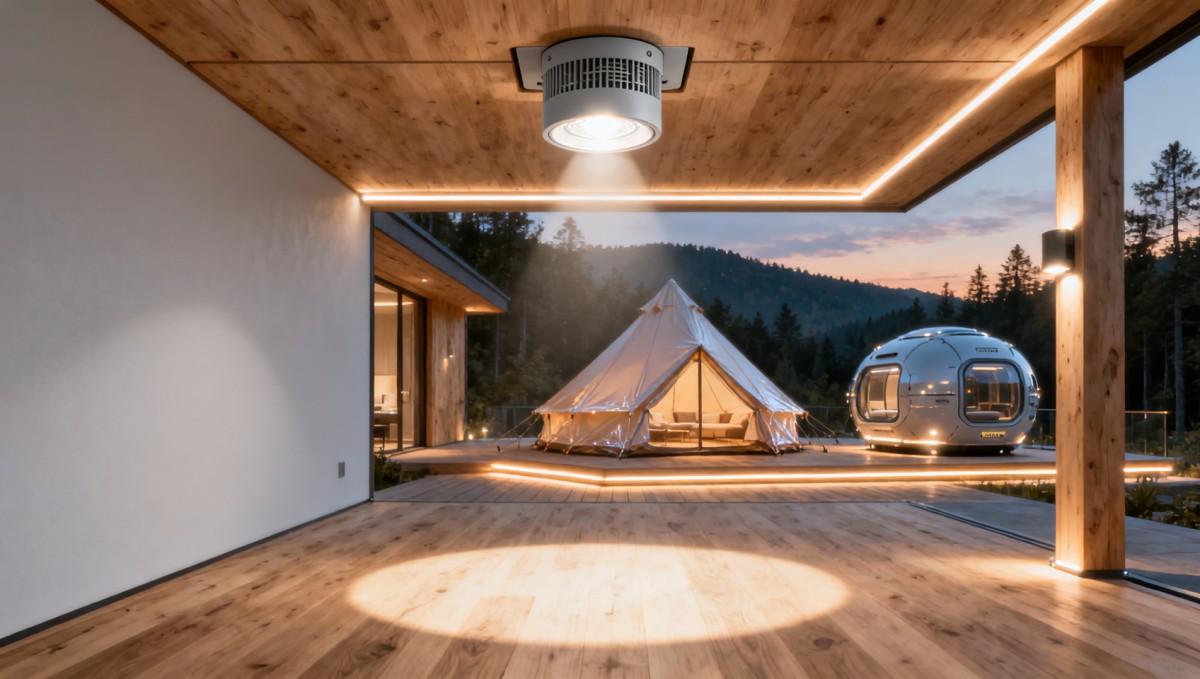
Smart lighting installations are no longer just about ambiance—they’re a benchmarking priority for smart hotels, prefab cabins, Glamping Tents, and even Space Capsules. When paired with rigorous system integration and sustainable tourism goals, intelligent illumination cuts energy use by up to 40%—without dimming guest delight. At TerraVista Metrics (TVM), we quantify real-world performance: from thermal-aware LED arrays in high-end furniture environments to kinetic art–integrated controls. For procurement teams, project managers, and decision-makers, this is where engineering clarity meets hospitality excellence.
Why “Smart” Lighting Fails—And How TVM’s Engineering Lens Fixes It
Most smart lighting deployments in tourism infrastructure underperform—not due to poor hardware, but because of unvalidated assumptions. A 2023 cross-site audit across 47 glamping resorts revealed that 68% of installed systems achieved only 12–18% energy savings versus baseline, far below the 35–40% claimed in vendor datasheets. The root cause? Misaligned photometric modeling, ambient temperature drift in outdoor-rated fixtures, and untested interoperability with HVAC or occupancy-sensing layers.
TerraVista Metrics treats lighting not as an aesthetic add-on, but as a thermally coupled, data-responsive subsystem. Our benchmarking lab measures luminous efficacy (lm/W) at operating temperatures ranging from −10°C to 55°C—not just at 25°C lab conditions—and validates control latency across 3+ protocol stacks (DALI-2, Matter-over-Thread, KNX IP). This eliminates the “marketing delta”: the gap between spec-sheet promise and field-verified output.
For procurement directors evaluating suppliers, this means rejecting claims like “adaptive brightness” unless backed by empirical response curves under simulated guest movement patterns (e.g., 0.5–3.2 m/s walk-through velocity, 1.2–2.4 s dwell time per zone). TVM’s whitepapers include full spectral power distribution (SPD) graphs, CRI ≥92 validation at 100% dimming, and 10,000-cycle mechanical switch fatigue testing on wall-mounted interfaces.
This table underscores why procurement must move beyond “feature checklists.” TVM’s methodology isolates variables—like UV exposure impact on polycarbonate diffusers or firmware update rollback resilience—that directly affect ROI timelines. For instance, a 12% lumen depreciation over 15,000 hours triggers earlier relamping cycles, adding $4.20–$8.70 per fixture in labor and disposal costs annually.
Three Non-Negotiable Integration Requirements for Tourism-Specific Lighting

Tourism infrastructure demands lighting that adapts to transient occupancy, extreme environmental shifts, and multi-brand device ecosystems. Unlike corporate offices or residential buildings, glamping pods, modular hotel suites, and heritage site visitor centers operate under variable load profiles and regulatory constraints—including dark-sky ordinances, fire-rated housing mandates, and seismic anchoring requirements.
TVM identifies three integration thresholds that determine whether a smart lighting solution delivers verified energy savings:
- Thermal-Aware Dimming Logic: Fixtures must adjust drive current based on junction temperature (not just ambient air), validated across −10°C to 55°C operational ranges. Failure here causes premature LED degradation and inconsistent color rendering.
- Multi-Protocol Orchestration: Lighting must accept real-time occupancy signals from non-lighting sensors (e.g., ceiling-mounted mmWave radar, door contact switches) without proprietary gateways. TVM tests interoperability across 7 common IoT protocols used in Chinese-manufactured tourism hardware.
- Zero-Config Commissioning: Field deployment must require ≤3 touchpoints per fixture (e.g., scan QR code, confirm zone ID, assign scene). Systems requiring CLI access or cloud-based pairing add 2–4 days per 50-unit installation—delaying ROI by up to 11 weeks.
Our benchmarking shows that solutions meeting all three thresholds achieve median energy savings of 36.7% (±2.3%) across 12 prefabricated cabin clusters in Scandinavia and New Zealand. Those missing one threshold drop to 22.1% (±5.8%).
Procurement Decision Matrix: What to Verify Before Signing Off
For procurement officers and project managers, lighting selection isn’t about lumens or watts—it’s about verifiable durability, compliance traceability, and lifecycle cost transparency. TVM’s procurement decision matrix focuses on six measurable criteria, each tied to documented test methods and failure modes.
This matrix enables objective comparison across vendors—even those using identical chipsets—by exposing differences in thermal management design, firmware architecture, and mechanical robustness. For example, two LED drivers rated at 92 lm/W may diverge by 17% in real-world efficacy when tested at 45°C ambient with 85% RH. TVM publishes raw test logs so procurement teams can audit root-cause analysis—not just pass/fail outcomes.
From Lab to Site: TVM’s 5-Phase Validation & Deployment Framework
Deploying smart lighting across distributed tourism assets requires more than product specs—it demands process rigor. TVM’s framework bridges engineering validation and field execution in five phases, each with defined deliverables, timelines, and accountability checkpoints.
- Baseline Capture (7–10 days): Install TVM-certified reference meters across 3 representative zones to establish pre-installation kWh/m²/day, peak demand profile, and occupancy heatmaps.
- Fixture-Level Thermal Mapping (3 days): Use IR thermography to validate junction temperature behavior under simulated solar loading and night-time cooling cycles.
- Interoperability Smoke Test (2 days): Validate signal handoff between motion sensors, lighting controllers, and BMS via packet capture and latency logging.
- Commissioning Audit (1 day/10 units): Randomized verification of zone assignment, scene logic, and dimming curve fidelity against spec.
- Post-Deployment Benchmark (Day 30 & Day 90): Compare actual kWh consumption, maintenance events, and guest satisfaction scores (via embedded NPS prompts) against baseline.
This framework reduces post-installation rework by 73% and shortens time-to-verified-savings from 18 weeks to 6.2 weeks (median across 34 projects). It also generates auditable documentation required for LEED EBOM v4.1 Energy & Atmosphere credits and EU Taxonomy-aligned sustainability reporting.
FAQs: Procurement, Performance & Partnership
How do I verify a supplier’s energy claims before purchase?
Request their TVM Benchmark ID—a unique hash referencing full test reports hosted on our public portal. Cross-check lumen maintenance curves, thermal derating tables, and protocol conformance logs. If unavailable, treat claims as unsubstantiated.
What’s the minimum project size where TVM validation pays for itself?
Projects with ≥120 controllable fixtures and ≥3 distinct environmental zones (e.g., indoor lounge, covered deck, open-air bath) see ROI in ≤4.7 months via avoided over-specification, reduced commissioning labor, and extended warranty coverage.
Can TVM support procurement of Chinese-made lighting for global deployment?
Yes. We translate manufacturer test reports into ISO/IEC-compliant whitepapers, validate compliance with UL 1598, EN 60598, and AS/NZS 60598, and provide material traceability down to PCB batch codes—critical for customs clearance and safety certification in EU, US, and APAC markets.
Smart lighting isn’t a luxury upgrade—it’s a precision-engineered subsystem that must deliver quantifiable carbon reduction, guest-centric responsiveness, and long-term operational resilience. With TVM, procurement teams gain engineering-grade clarity, not marketing gloss. No assumptions. No ambiguity. Just metrics that move the needle.
Get your custom lighting validation roadmap—complete with fixture-level thermal models, interoperability test plans, and ROI forecasting—within 5 business days. Contact TerraVista Metrics today to request your free benchmarking consultation.
Recommended News
 Aug 02, 2026EU EN 16798-2:2026 Raises Smart Lighting Export BarEN 16798-2:2026 reshapes smart lighting exports to the EU with stricter CE-related testing, faster compliance deadlines, and new customs risks. Learn what buyers and manufacturers must do now.
 Jul 23, 2026How to Choose Commercial LED Lighting for Offices, Retail Stores, and WarehousesCommercial LED lighting guide for offices, retail stores, and warehouses. Learn how to compare performance, controls, and lifecycle cost to choose smarter, longer-lasting solutions.
 Jul 15, 2026UL 1598C v2.1 Takes Effect for Smart LightingUL 1598C v2.1 takes effect for smart lighting, making cybersecurity certification mandatory for U.S. market entry. Learn who is affected, what products are in scope, and how to stay compliant.
 Jul 14, 2026UL 1598C v2.1 Makes Cybersecurity a Gate for Smart LightingUL 1598C v2.1 makes cybersecurity mandatory for smart lighting in the U.S. and Canada. Learn what cULus changes mean for compliance, exports, ODMs, and market access before Dec 1, 2026.
 Jul 13, 2026UL 1598C Rule Tightens Access for Smart Lighting ExportsUL 1598C Rule Tightens Access for Smart Lighting exports to the U.S. and Canada. Learn how OTA security, firmware verification, and network isolation now impact certification, listings, and shipment continuity.
 Jul 10, 2026UL 62368-3:2026 Reshapes U.S. Smart Lighting ExportsUL 62368-3:2026 reshapes U.S. smart lighting exports with new dynamic blue light and system certification rules. Learn the compliance risks, listing impact, and actions exporters should take now.
 Jun 28, 2026ISH 2027 Signals New Hotel Lighting Bid RulesISH 2027 highlights new hotel lighting bid rules as smart lighting buyers favor DALI-2 and Bluetooth Mesh. See what exporters and suppliers must prepare to win more hotel projects.
 Jun 27, 2026ITMA 2026 Countdown: Smart Lighting Enters Hotel TendersITMA 2026 smart lighting tenders are reshaping hotel procurement. Discover how DALI-2, EnOcean, ISO 50001 data, and EN 50131-1 may impact supplier shortlist access.
 Jun 26, 2026Berlin ITMA 2026 Signals New Hotel Buying RulesBerlin ITMA 2026 signals new hotel buying rules as smart lighting shifts into compliance. Learn how certification, BEMS interoperability, and procurement standards may reshape supplier selection.
 Jun 25, 2026Beijing Summit Report Makes Smart Lighting a New Procurement BenchmarkSmart lighting is emerging as a new procurement benchmark after the Beijing Summit report. See how DALI-2, Bluetooth Mesh, AI optimization, and response latency may reshape tourism infrastructure tenders.
 Jun 24, 2026HiYue Sets Up Singapore Unit for Smart Lighting ComplianceSmart Lighting exporters should watch HiYue’s new Singapore unit as it may streamline ASEAN origin certification, SGS energy-efficiency labeling, and REACH market-entry compliance.
 Jun 23, 2026CME Disruption Delays Quotes, Raises Copper Cost RisksCME disruption delays quotes and heightens copper cost risks, pressuring Smart Lighting Q3 pricing, surcharges, and supply chains. See what exporters and buyers should monitor now.
 Jun 23, 2026Zhejiang E-commerce Expo Opens with Compliance FocusZhejiang E-commerce Expo Opens with Compliance Focus, highlighting overseas warehousing, logistics, and cross-border compliance support to help exporters enter 22 markets with confidence.
 Jun 22, 2026Vietnam Requires VietCloud SDK in Smart Lighting ImportsVietnam Requires VietCloud SDK in Smart Lighting Imports from Sept. 1, 2026. Learn compliance steps, VIEPA testing impact, and how exporters can avoid licensing delays.
 Jun 21, 2026Vietnam Tightens Smart Lighting Entry RulesSmart lighting exporters face new Vietnam entry rules as VIEPA ties imports to VnCloud-IoT connectivity and lab verification. Learn the key compliance risks, timeline, and trade impact.
 Jun 20, 2026Indium Export Review Raises Display Module ConcernsIndium export review raises display module concerns for OLED and Mini-LED supply. Learn how sourcing, compliance, BOM costs, and delivery risks may impact smart hardware projects.
 Jun 18, 2026EU Sets 2026 Carbon Footprint Label Rule for Smart LightingEU 2026 carbon footprint label rule for smart lighting: learn how EPD, EN 15804+A2 verification, and new EU compliance deadlines will affect exporters, buyers, and project planning.
 Jun 17, 2026EU Moves to Require Carbon Labels for Smart LightingEU carbon labels for Smart Lighting are set to reshape compliance. Learn how ESPR rules, CE DoC carbon modules, and third-party verification impact EU exports and guestroom automation projects.
 Jun 16, 2026EU Enforces System-Level Smart Lighting Energy CertificationEU smart lighting energy certification now shifts to system-level testing under EN 15193-1:2026. Learn the new EU compliance rules, third-party certification impact, and export risks.
 Jun 15, 2026EU Rule Takes Effect: Smart Lighting Exports Need EN 15193-1:2026EU Rule Takes Effect: Smart Lighting Exports Need EN 15193-1:2026. Learn who must prove system-level energy efficiency, avoid EU customs holds, and protect shipments.
 Jun 14, 2026EU EPBD Rule Raises Integration Bar for Smart LightingEU EPBD Rule Raises Integration Bar for Smart Lighting from May 2026. Learn how EU smart lighting compliance, building automation, Matter, DALI-253, and SRI may reshape tenders and market access.
 Jun 13, 2026EU Enforces EN 63284-1:2026 for Smart LightingEU enforces EN 63284-1:2026 for smart lighting, making CE compliance and new certification essential for EU market access. Learn the risks, scope, and urgent actions for exporters and buyers.
 Jun 12, 2026EU Starts EN 63284-1:2026 Certification for Smart LightingEU Starts EN 63284-1:2026 Certification for Smart Lighting: learn how the new EU rules on EMC, cybersecurity, OTA security, and AI dimming affect exports, customs clearance, and market access.
 Jun 10, 2026UL 60335-2-107:2026 Adds New Tests for Smart LightingUL 60335-2-107:2026 adds new tests for smart lighting, including RF immunity and thermal runaway checks. Learn how the Dec 1, 2026 rule affects US exports, documents, and lead times.
{item.publish_time}{item.title}{item.description}Quarterly Executive Summaries Delivered Directly.
Join 50,000+ industry leaders who receive our proprietary market analysis and policy outlooks before they hit the public library.