Search News
TerraVista Metrics (TVM)Industry Portal
TerraVista Metrics (TVM)Hot Articles
TerraVista Metrics (TVM)- Choosing an Amusement Equipment Testing Agency: Accreditation and ScopeChoosing an amusement equipment testing agency? Learn how to verify accreditation, assess technical scope, and compare reports before you commit.
- Global Temporary Buildings Market Forecast to Reach $5.88 Billion by 2032Global temporary buildings market is forecast to reach $5.88 billion by 2032. Explore the modular, reusable and rapid-assembly trends driving growth.
- Product Benchmarking: How to Compare Material Performance and DurabilityMaster product benchmarking and material comparison with practical tips for evaluating test data, durability and lifecycle costs. Make confident purchasing decisions.
Popular Tags
TerraVista Metrics (TVM)Industry NewsUL draft adds EMC test for smart lighting exports
auth.Lydia Vancini (Smart Hospitality IoT Consultant)Time
Nov 07, 2026Click Count
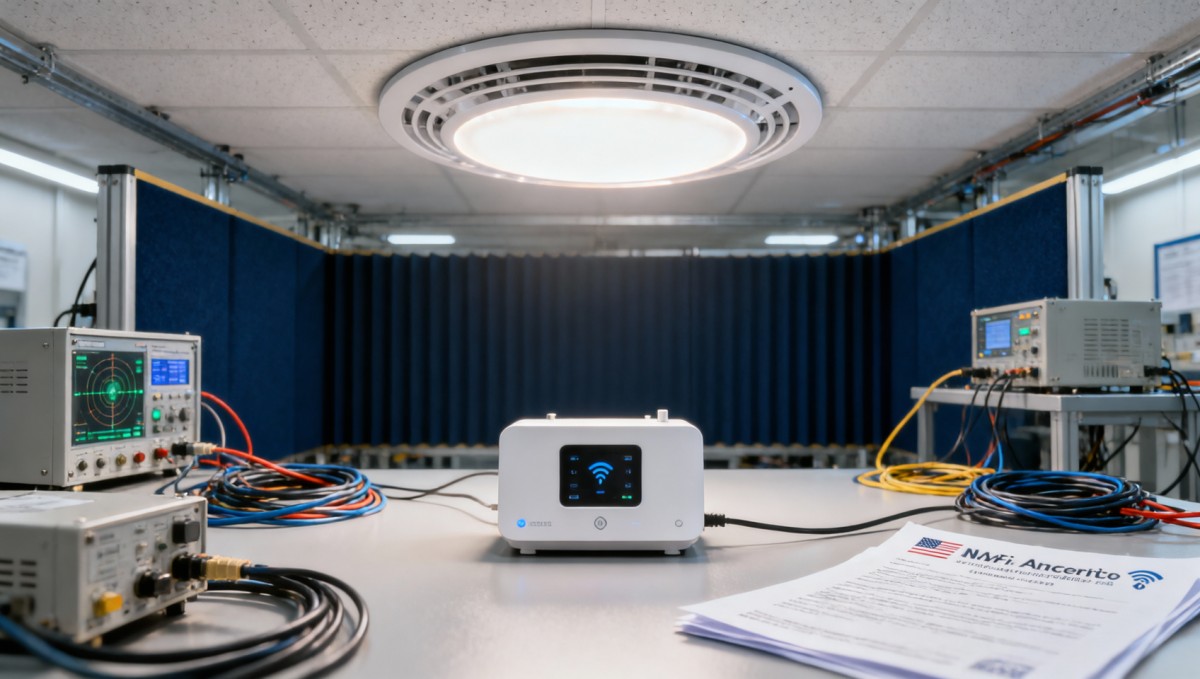
On June 4, 2026, UL opened a public comment process for the second-edition draft of UL 60335-2-107 covering smart lighting equipment. The draft introduces a mandatory RF immunity test under IEC 61000-4-3 Level 3 for products using Wi-Fi, Bluetooth, or Zigbee modules. Because the standard is expected to take effect in Q4 2026, the update is worth close attention from exporters, manufacturers, certification teams, buyers, and testing-related service providers involved in access to the U.S. and Canadian markets.

What the draft changes at this stage
According to the provided event summary, UL publicly released the draft of UL 60335-2-107:2026 on June 4, 2026 for comments. The draft is described as the second edition of the safety standard for smart lighting equipment. The confirmed change in the draft is the addition of a mandatory RF immunity test item for Wi-Fi, Bluetooth, and Zigbee modules, with the cited requirement being IEC 61000-4-3 Level 3. The same summary states that the standard is expected to be formally implemented in Q4 2026 and that this change will directly affect market access pathways and certification timelines for Chinese smart lighting manufacturers exporting to the United States and Canada.
Where the pressure is likely to appear first
Export programs tied to certification timing
From an industry perspective, exporters of smart lighting products to the U.S. and Canadian markets may be affected first because certification timing is directly linked to shipment planning and market entry. The practical concern is not only the presence of a new test item, but also whether ongoing or upcoming certification projects need to account for an additional EMC immunity requirement in their technical preparation and scheduling.
Product design and manufacturing coordination
Manufacturers using Wi-Fi, Bluetooth, or Zigbee modules may need to pay closer attention to how module selection, product integration, and technical documentation align with the proposed test requirement. Analysis shows that any change in mandatory testing can influence design verification, sample readiness, and communication between hardware, compliance, and production teams, especially where export models are developed for North American market access.
Testing and certification service workflows
Certification-related companies and testing service institutions may see an operational impact because the draft points to an added compulsory test item rather than a voluntary benchmark. What deserves closer attention is how applicants prepare reports, technical files, and test plans for products containing wireless modules, and whether existing project timelines remain realistic once the expected Q4 2026 implementation window approaches.
Buyers, sourcing teams, and delivery planning
Buyers, sourcing teams, and supply chain service providers may also need to review whether compliance expectations for smart lighting products change in procurement documents, supplier qualification checks, or delivery commitments. Observably, when a market access standard adds a new mandatory test requirement, procurement and delivery discussions can shift toward report completeness, certification status, and schedule buffers, even before formal implementation.
What companies should monitor now
Review products that use wireless modules
Companies shipping smart lighting products should first identify which export models use Wi-Fi, Bluetooth, or Zigbee modules, because those are the products explicitly referenced in the provided draft summary. This is a practical screening step for compliance, technical, and export teams.
Check ongoing certification files and test plans
Analysis shows that businesses with active certification work should pay attention to whether current applications, laboratory coordination, and technical files may need adjustment if the draft proceeds in its current direction. The key point is not to assume an immediate final rule, but to avoid treating the new RF immunity item as irrelevant to projects already in preparation.
Track execution language and document requirements
Because the input does not provide detailed implementation language beyond the draft notice and expected Q4 2026 timing, companies should continue monitoring future official wording, certification interpretation, and any related changes in test documentation, compliance statements, or buyer-facing technical materials.
Build more room into delivery and sourcing decisions
It is more appropriate to understand this stage as a signal to recheck certification-dependent delivery plans rather than as a completed enforcement outcome. For suppliers and exporters, that means watching for possible effects on product launch sequencing, sourcing decisions, and customer commitments linked to certification completion.
Why this looks like an execution signal, not a finished outcome
Observably, this development should not yet be read as a fully settled enforcement result, because the provided information describes a draft released for public comment rather than a final text already in force. At the same time, analysis shows that the signal is commercially meaningful: the proposed addition of a mandatory RF immunity test points to a more explicit EMC expectation for smart lighting products with wireless modules. For the industry, the immediate value of this update lies in early preparation, close reading of future certification language, and continued attention to how the requirement is reflected in actual market-access workflows.
How to read this update at the current stage
At this point, the development is best understood as a rule change in progress with a clear compliance direction but not yet as a completed implementation event. The confirmed facts already indicate that certification pathways and timelines may be affected for Chinese smart lighting suppliers targeting the U.S. and Canadian markets. A neutral reading is that companies should neither overstate the immediate effect nor ignore the practical implications for compliance planning, project timing, and customer-facing delivery commitments.
Basis of this article and points still to verify
This article is generated from the user-provided news title, event date, and event summary. For developments of this type, relevant source categories usually include official notices, regulator or standards body releases, standard documents, industry association updates, trade authority information, and reporting by authoritative media. No specific official source link was provided in the input, so the exact official link remains to be further verified. What still requires continued observation includes the final text of the standard, the implementation wording, certification interpretation, any changes in procurement or tender documents, market feedback, and how affected companies execute against the new requirement in practice.
Recommended News
 Aug 02, 2026EU EN 16798-2:2026 Raises Smart Lighting Export BarEN 16798-2:2026 reshapes smart lighting exports to the EU with stricter CE-related testing, faster compliance deadlines, and new customs risks. Learn what buyers and manufacturers must do now.
 Jul 23, 2026How to Choose Commercial LED Lighting for Offices, Retail Stores, and WarehousesCommercial LED lighting guide for offices, retail stores, and warehouses. Learn how to compare performance, controls, and lifecycle cost to choose smarter, longer-lasting solutions.
 Jul 15, 2026UL 1598C v2.1 Takes Effect for Smart LightingUL 1598C v2.1 takes effect for smart lighting, making cybersecurity certification mandatory for U.S. market entry. Learn who is affected, what products are in scope, and how to stay compliant.
 Jul 14, 2026UL 1598C v2.1 Makes Cybersecurity a Gate for Smart LightingUL 1598C v2.1 makes cybersecurity mandatory for smart lighting in the U.S. and Canada. Learn what cULus changes mean for compliance, exports, ODMs, and market access before Dec 1, 2026.
 Jul 13, 2026UL 1598C Rule Tightens Access for Smart Lighting ExportsUL 1598C Rule Tightens Access for Smart Lighting exports to the U.S. and Canada. Learn how OTA security, firmware verification, and network isolation now impact certification, listings, and shipment continuity.
 Jul 10, 2026UL 62368-3:2026 Reshapes U.S. Smart Lighting ExportsUL 62368-3:2026 reshapes U.S. smart lighting exports with new dynamic blue light and system certification rules. Learn the compliance risks, listing impact, and actions exporters should take now.
 Jun 28, 2026ISH 2027 Signals New Hotel Lighting Bid RulesISH 2027 highlights new hotel lighting bid rules as smart lighting buyers favor DALI-2 and Bluetooth Mesh. See what exporters and suppliers must prepare to win more hotel projects.
 Jun 27, 2026ITMA 2026 Countdown: Smart Lighting Enters Hotel TendersITMA 2026 smart lighting tenders are reshaping hotel procurement. Discover how DALI-2, EnOcean, ISO 50001 data, and EN 50131-1 may impact supplier shortlist access.
 Jun 26, 2026Berlin ITMA 2026 Signals New Hotel Buying RulesBerlin ITMA 2026 signals new hotel buying rules as smart lighting shifts into compliance. Learn how certification, BEMS interoperability, and procurement standards may reshape supplier selection.
 Jun 25, 2026Beijing Summit Report Makes Smart Lighting a New Procurement BenchmarkSmart lighting is emerging as a new procurement benchmark after the Beijing Summit report. See how DALI-2, Bluetooth Mesh, AI optimization, and response latency may reshape tourism infrastructure tenders.
 Jun 24, 2026HiYue Sets Up Singapore Unit for Smart Lighting ComplianceSmart Lighting exporters should watch HiYue’s new Singapore unit as it may streamline ASEAN origin certification, SGS energy-efficiency labeling, and REACH market-entry compliance.
 Jun 23, 2026CME Disruption Delays Quotes, Raises Copper Cost RisksCME disruption delays quotes and heightens copper cost risks, pressuring Smart Lighting Q3 pricing, surcharges, and supply chains. See what exporters and buyers should monitor now.
 Jun 23, 2026Zhejiang E-commerce Expo Opens with Compliance FocusZhejiang E-commerce Expo Opens with Compliance Focus, highlighting overseas warehousing, logistics, and cross-border compliance support to help exporters enter 22 markets with confidence.
 Jun 22, 2026Vietnam Requires VietCloud SDK in Smart Lighting ImportsVietnam Requires VietCloud SDK in Smart Lighting Imports from Sept. 1, 2026. Learn compliance steps, VIEPA testing impact, and how exporters can avoid licensing delays.
 Jun 21, 2026Vietnam Tightens Smart Lighting Entry RulesSmart lighting exporters face new Vietnam entry rules as VIEPA ties imports to VnCloud-IoT connectivity and lab verification. Learn the key compliance risks, timeline, and trade impact.
 Jun 20, 2026Indium Export Review Raises Display Module ConcernsIndium export review raises display module concerns for OLED and Mini-LED supply. Learn how sourcing, compliance, BOM costs, and delivery risks may impact smart hardware projects.
 Jun 18, 2026EU Sets 2026 Carbon Footprint Label Rule for Smart LightingEU 2026 carbon footprint label rule for smart lighting: learn how EPD, EN 15804+A2 verification, and new EU compliance deadlines will affect exporters, buyers, and project planning.
 Jun 17, 2026EU Moves to Require Carbon Labels for Smart LightingEU carbon labels for Smart Lighting are set to reshape compliance. Learn how ESPR rules, CE DoC carbon modules, and third-party verification impact EU exports and guestroom automation projects.
 Jun 16, 2026EU Enforces System-Level Smart Lighting Energy CertificationEU smart lighting energy certification now shifts to system-level testing under EN 15193-1:2026. Learn the new EU compliance rules, third-party certification impact, and export risks.
 Jun 15, 2026EU Rule Takes Effect: Smart Lighting Exports Need EN 15193-1:2026EU Rule Takes Effect: Smart Lighting Exports Need EN 15193-1:2026. Learn who must prove system-level energy efficiency, avoid EU customs holds, and protect shipments.
 Jun 14, 2026EU EPBD Rule Raises Integration Bar for Smart LightingEU EPBD Rule Raises Integration Bar for Smart Lighting from May 2026. Learn how EU smart lighting compliance, building automation, Matter, DALI-253, and SRI may reshape tenders and market access.
 Jun 13, 2026EU Enforces EN 63284-1:2026 for Smart LightingEU enforces EN 63284-1:2026 for smart lighting, making CE compliance and new certification essential for EU market access. Learn the risks, scope, and urgent actions for exporters and buyers.
 Jun 12, 2026EU Starts EN 63284-1:2026 Certification for Smart LightingEU Starts EN 63284-1:2026 Certification for Smart Lighting: learn how the new EU rules on EMC, cybersecurity, OTA security, and AI dimming affect exports, customs clearance, and market access.
 Jun 10, 2026UL 60335-2-107:2026 Adds New Tests for Smart LightingUL 60335-2-107:2026 adds new tests for smart lighting, including RF immunity and thermal runaway checks. Learn how the Dec 1, 2026 rule affects US exports, documents, and lead times.
{item.publish_time}{item.title}{item.description}Quarterly Executive Summaries Delivered Directly.
Join 50,000+ industry leaders who receive our proprietary market analysis and policy outlooks before they hit the public library.