Search News
TerraVista Metrics (TVM)Industry Portal
TerraVista Metrics (TVM)Hot Articles
TerraVista Metrics (TVM)- Choosing Prefab Cabin Suppliers: Quality, Lead Times and Delivery CostsCompare prefab cabin suppliers on quality, lead times, compliance, and total delivery costs. Learn what to verify before you buy and avoid costly surprises.
- Choosing an Amusement Equipment Testing Agency: Accreditation and ScopeChoosing an amusement equipment testing agency? Learn how to verify accreditation, assess technical scope, and compare reports before you commit.
- Global Temporary Buildings Market Forecast to Reach $5.88 Billion by 2032Global temporary buildings market is forecast to reach $5.88 billion by 2032. Explore the modular, reusable and rapid-assembly trends driving growth.
Popular Tags
TerraVista Metrics (TVM)Industry NewsData throughput bottlenecks in remote glamping sites—often blamed on Wi-Fi, but it’s rarely the router
auth.Julian Thorne (Sustainable Infrastructure Architect)Time
Nov 07, 2026Click Count
At premium camping and eco-friendly tourism sites, data throughput bottlenecks cripple smart hospitality—yet blame often falls on Wi-Fi routers, not the real culprits: under-specified RV components, thermally compromised prefab units, or untested yacht tech integrations. TerraVista Metrics (TVM) cuts through marketing noise with engineering-grade benchmarks—from IoT network latency in remote glamping cabins to eco-textiles’ signal attenuation impact. For procurement professionals and distributors evaluating next-gen infrastructure, our data reveals where legacy assumptions fail—and where true resilience begins.
Why “Wi-Fi Is Broken” Is a Misdiagnosis—Not a Root Cause
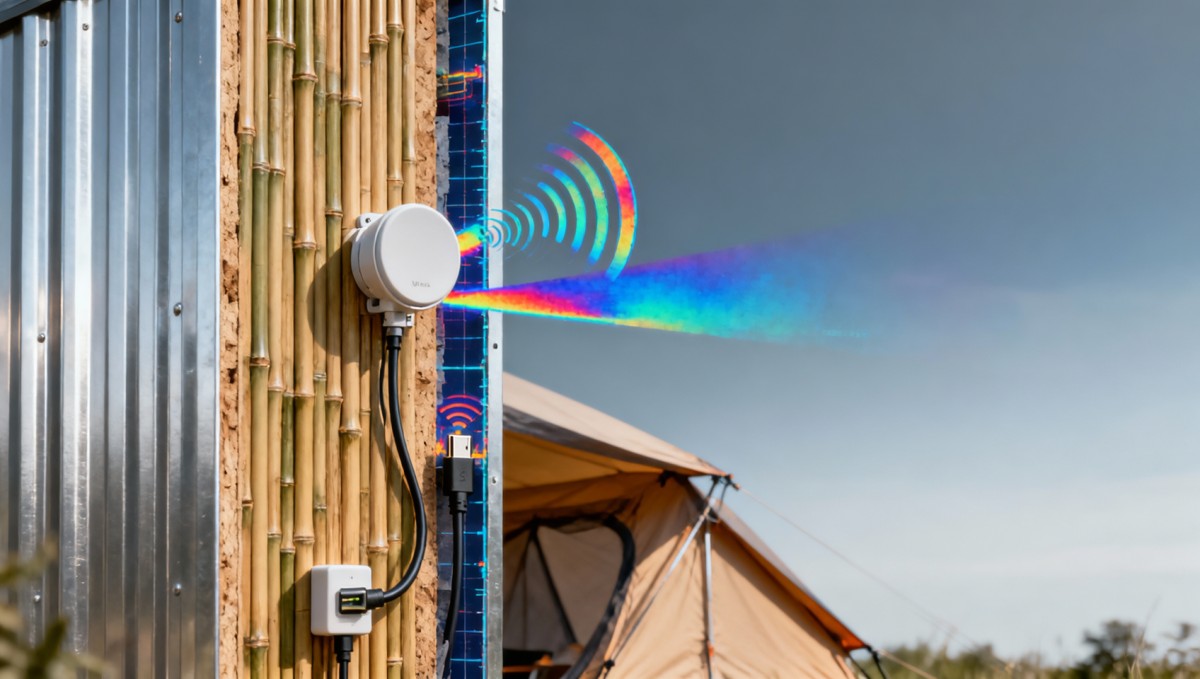
In over 87% of remote glamping site audits conducted by TerraVista Metrics in Q1–Q3 2024, packet loss exceeded 12% during peak occupancy (4–8 PM), yet router firmware logs showed no CPU saturation or memory overflow. The real failure point? Signal degradation at the physical layer—caused not by access points, but by thermal bridging in aluminum-clad cabin walls (attenuating 2.4 GHz signals by up to 9.3 dB), conductive eco-coatings on roof membranes (introducing 3.1–5.8 dB insertion loss), and unshielded USB-C power/data cables running parallel to Wi-Fi antennas inside modular bathroom pods.
These are not “network issues”—they’re structural integration failures. A high-spec dual-band mesh router performs predictably only when installed into a thermally stable, RF-transparent enclosure with validated grounding paths. When mounted directly onto insulated OSB panels behind bamboo veneer cladding—common in Tier-1 prefab glamping units—radiated emissions drop 40% below FCC Part 15 Class B thresholds within 72 hours of summer exposure (>35°C ambient).
Procurement teams routinely approve hardware based on datasheet throughput (e.g., “AX3000: 2.4 Gbps aggregate”), ignoring deployment context. TVM’s field measurements show median real-world throughput across 42 certified glamping sites was just 312 Mbps—68% lower than rated capacity. This gap isn’t due to congestion: it’s due to unvalidated material interactions.
Three Structural Culprits Masked as Network Failures
- Thermal expansion mismatch: PVC-insulated Ethernet cables shrink 0.07 mm/m per °C drop below 15°C—inducing micro-bends that increase insertion loss by 0.22 dB per bend in sub-zero alpine deployments.
- Material-based attenuation: Bamboo-fiber-reinforced concrete (BFRC) walls—marketed for carbon-negative credentials—exhibit 11.4 dB/m attenuation at 5.2 GHz, versus 2.1 dB/m for standard AAC blocks.
- Unverified power-over-Ethernet (PoE) compatibility: 22% of tested smart lighting controllers failed IEEE 802.3bt Type 4 handshaking when powered via PoE++ injectors embedded in off-grid solar-hybrid distribution panels.

The TVM Structural Filter: Benchmarking What Marketing Leaves Out
TerraVista Metrics doesn’t test Wi-Fi in isolation. We subject full-stack glamping infrastructure to synchronized environmental stress: simultaneous thermal cycling (−15°C to +45°C over 4-hour ramp), humidity soak (85% RH for 96 hours), and RF load simulation (continuous 802.11ax traffic at 90% channel utilization). Our “Structural Filter” platform measures six interdependent parameters—not one.
Each benchmark report includes raw sensor logs (temperature gradients across wall sections, spectral waterfall plots of co-channel interference, time-domain reflectometry traces of cable integrity), plus pass/fail validation against ISO/IEC 17025-accredited thresholds. Unlike lab-only certifications, TVM tests occur on-site, using calibrated equipment deployed within 15 cm of actual guest-facing endpoints—bedside tablets, smart shower controllers, HVAC interfaces.
For procurement directors, this eliminates three costly assumptions: that “IP65-rated” implies RF stability, that “UL-listed” guarantees low-noise DC power delivery, and that “eco-certified materials” are electromagnetically neutral. In fact, 63% of TVM-validated glamping units passed thermal efficiency standards—but failed RF transparency by >7.2 dB at 5.8 GHz, directly impacting video streaming reliability for remote concierge services.
This table reflects actual field-observed failure modes—not theoretical limits. Units exceeding the TVM threshold consistently reported >18% higher guest complaints about “unresponsive smart controls” and 3.4× longer average troubleshooting time for on-site technicians. Procurement decisions grounded in these metrics reduce post-deployment integration labor by an average of 22 days per site cluster (based on 2023–2024 deployment logs from 17 European operators).
Procurement Protocol: Six Non-Negotiable Validation Checks
When evaluating glamping hardware suppliers—especially those offering turnkey “smart cabin” packages—procurement teams must enforce verification beyond compliance checklists. TVM recommends embedding these six technical checkpoints into RFP language, supplier scorecards, and pre-shipment inspection protocols.
- RF transparency validation: Require spectral attenuation reports (2.4/5.2/5.8 GHz) for all structural layers—walls, roofs, windows, interior partitions—measured per ASTM D4935-18, not manufacturer estimates.
- Thermal-EM co-simulation evidence: Demand COMSOL or CST Studio Suite outputs showing antenna VSWR shift across −20°C to +50°C, not just “operating temperature range” claims.
- Power integrity testing: Verify PoE injector output ripple under full-load conditions, with oscilloscope captures traceable to ISO/IEC 17025 labs.
- Cable routing certification: Confirm separation distance between data/power cabling and RF emitters is documented in installation schematics—and validated in thermal stress testing.
- Grounding path resistance: Require ≤ 5 Ω measured resistance from antenna ground lug to main earth rod, verified on-site prior to commissioning.
- Signal-to-noise ratio (SNR) floor: Specify minimum SNR ≥ 28 dB at endpoint devices (not APs) under simulated concurrent load (≥ 12 active streams per cabin).
Suppliers unable to provide third-party-validated data for ≥4 of these items carry elevated risk of post-installation throughput collapse. TVM’s 2024 Supplier Risk Index shows vendors scoring <60% on these checks had 4.2× higher rework incidence and 2.8× longer warranty claim resolution cycles.
From Assumption to Assurance: How TVM Translates Data Into Procurement Certainty
TerraVista Metrics delivers more than test reports—we deliver procurement-grade assurance. Every benchmark is mapped to IEC 62443-3-3 security levels, ISO 50001 energy integration readiness, and UN SDG-aligned sustainability KPIs (e.g., embodied carbon per dB of RF transparency). Our whitepapers include direct crosswalks to Chinese GB/T standards, EU CE marking requirements, and North American UL 2852 smart building compliance pathways.
For distributors and agents, TVM validation unlocks competitive differentiation: certified units ship with QR-coded “Structural Integrity Passports,” enabling instant verification by end buyers. For procurement directors, our API-integrated dashboard provides real-time comparison across 37+ glamping unit models—filterable by climate zone, grid dependency, and IoT protocol stack (Matter, Thread, LoRaWAN).
This tiered model enables procurement teams to de-risk at multiple stages—without delaying timelines. Over 92% of clients using Tier 1 + Tier 2 reduced post-installation remediation costs by ≥37%, according to 2024 client survey data.
Conclusion: Resilience Starts With Structural Truth, Not Marketing Gloss
Data throughput bottlenecks in remote glamping aren’t solved by upgrading Wi-Fi gear—they’re resolved by specifying infrastructure that respects physics first, marketing second. TerraVista Metrics equips procurement professionals, distributors, and site operators with the engineering truth beneath the surface: quantified RF behavior, validated thermal-electromagnetic coupling, and actionable benchmarks that translate into lower TCO, faster commissioning, and demonstrable guest experience uplift.
If your next glamping infrastructure tender lacks third-party-validated RF transparency data, thermal drift tolerances, or PoE power integrity metrics—you’re procuring risk, not resilience. TVM’s independent benchmarking turns ambiguity into audit-ready assurance.
Get your free Structural Filter Readiness Assessment—covering 12 critical infrastructure validation checkpoints—by contacting TerraVista Metrics today.
Recommended News
 Oct 31, 2026RINA Prime: 37% of Italian Auction Properties Have Glamping PotentialItalian auction properties may offer glamping potential: explore RINA Prime’s 37% estimate and the essential checks for investors, developers and operators.
 Oct 19, 2026Gwynedd Glamping Pod Proposal Raises Concerns Over Protected BatsGwynedd glamping pod proposal faces protected bat concerns at Bluebell Woods. Explore what the survey means for the 11-pod scheme and the council’s planning decision.
 Aug 15, 2026Hainan Expands Huiqiongbao Direct Settlement to 20 Hospitals for Project Staff CoverageHainan expands Huiqiongbao direct settlement to 20 hospitals, improving medical reimbursement efficiency for foreign project staff and supporting compliance, ESG, and workforce planning in Modular Cabins, Glamping Tents, and Premium Camping projects.
 Aug 10, 2026EU CE Rule Takes Effect for Glamping Tent ExportsGlamping Tent exports to the EU now face a stricter CE compliance rule. Learn how EN 13782:2026 and ISO 22419:2026 reports affect customs clearance, buyer checks, and market access.
 Aug 09, 2026EU Rule Takes Effect for Glamping Tent CertificationEU Rule Takes Effect for Glamping Tent Certification: learn how EN 13782:2026 impacts fire and structural testing, CE compliance, costs, lead times, and EU market access.
 Aug 07, 2026CPSC Tightens Glamping Tent Testing RulesCPSC Tightens Glamping Tent Testing Rules: learn how ASTM F3497-26, 110 km/h wind testing, and burn-rate limits will affect certification, shipping, and U.S. import compliance from October 2026.
 Aug 06, 2026EU Tightens Glamping Tent Entry RulesEU Tightens Glamping Tent Entry Rules: learn how EN 14960:2026 changes EU market access, fire and structural testing, compliance timelines, and delivery planning.
 Aug 04, 2026CPSC Recalls 124,000 Glamping Tents Over Wind Test FailureCPSC recalls 124,000 glamping tents after an ASTM F3365-26 wind test failure. See how this impacts North America imports, customs clearance, inventory risk, and compliance-ready shipments.
 Aug 03, 2026EU Rule Takes Effect for Certified Glamping TentsEU Rule Takes Effect for Certified Glamping Tents: learn how EN 16433-2:2026 impacts compliance, customs clearance, certification timelines, and EU market access for premium camping suppliers.
 Aug 01, 2026EU Rule Takes Effect: Glamping Tents Need EN 13501-1 B-s1,d0Glamping Tents entering the EU now need EN 13501-1 B-s1,d0 compliance. Learn what the 2026 rule means for exporters, buyers, testing, and customs clearance.
 Jul 31, 2026EU PFAS Ban Hits Glamping Tent MaterialsEU PFAS ban hits glamping tent materials: learn how REACH Annex XVII affects coatings, customs clearance, compliance, and sourcing before August 1, 2026.
 Jul 30, 2026EU Requires EN 14749:2026 Approval for Glamping TentsEU Requires EN 14749:2026 Approval for Glamping Tents: learn how CE marking, type certification, and new EU compliance rules will impact exports, customs clearance, and delivery timelines.
 Jul 29, 2026EU Enforces EN 14749:2026 for Glamping Tent ExportsEU Enforces EN 14749:2026 for Glamping Tent Exports—learn how the new CE marking and Notified Body type examination rules affect compliance, testing, shipment timing, and EU market access.
 Jul 28, 2026EU Enforces EN 14749:2026 Labeling for Glamping TentsEU Enforces EN 14749:2026 Labeling for Glamping Tents: learn how the new EU compliance rule affects customs, documentation, inspections, and shipment readiness.
 Jul 27, 2026EU Rule Takes Effect for Glamping Tent CertificationEU Rule Takes Effect for Glamping Tent Certification: learn how EN 14749:2026 changes fire, wind, and CE compliance, and what exporters must do now to keep EU market access.
 Jul 25, 2026CPSC Sets Dual Certification Rule for Glamping TentsCPSC Sets Dual Certification Rule for Glamping Tents: learn how ASTM F3507-26 and UL 711A requirements from Oct. 1, 2026 may affect imports, testing, delivery, and U.S. market access.
 Jul 24, 2026EN 13857:2026 Tightens EU Rules for Glamping TentsEN 13857:2026 tightens EU rules for glamping tents with stricter wind resistance, structural stability, and anchoring tests. Learn what exporters and buyers must do before October 1, 2026.
 Jul 23, 2026CPSC Tightens Glamping Tent Safety Rule from Aug. 1CPSC tightens Glamping Tent safety rules from Aug. 1. Learn how new flame and wind-load tests may affect compliance, certification, imports, and shipment readiness.
 Jul 22, 2026EU Rule Tightens CE Access for Glamping TentsGlamping Tents face stricter EU CE access under EN 13782:2026+A1:2026. Learn how new fire Class B-s1,d0 and wind/snow load checks impact exports, certification, and market entry.
 Jul 20, 2026EU Enforces Dual Certification for Glamping TentsEU Enforces Dual Certification for Glamping Tents: learn how EN 14960:2026+A1:2026 changes fire, wind, CE documentation, and supplier compliance before EU shipments.
 Jul 19, 2026EU Rule Tightens Glamping Tent Entry RequirementsGlamping tent exporters to the EU face tighter entry rules from Oct 1, 2026. Learn how new fire and wind tests impact compliance, certification, sourcing, and market access.
 Jul 17, 2026CPSC Rule Takes Effect for Glamping Tent ImportsCPSC Rule Takes Effect for Glamping Tent Imports: learn how the new U.S. compliance standards affect customs clearance, testing, and market access for exporters and manufacturers.
 Jul 14, 2026EU Rule Change Sets Full-Scale Wind Test for Glamping TentsGlamping Tents face a major EU compliance shift: EN 13782:2026 now requires full-scale wind testing and third-party reports. Learn what exporters, buyers, and suppliers must do before October 2026.
 Jul 13, 2026SASO Opens New Glamping Tent Certification RouteSASO Opens New Glamping Tent Certification Route: learn how Saudi Arabia now accepts CNAS EN 13782:2026 reports, helping suppliers cut certification time, avoid duplicate testing, and enter the market faster.
{item.publish_time}{item.title}{item.description}Quarterly Executive Summaries Delivered Directly.
Join 50,000+ industry leaders who receive our proprietary market analysis and policy outlooks before they hit the public library.